Reader’s Digest Version

FRANCIE: Actually, I have something I’d like to put on the table to be discussed.

PARIS: Oh, okay. Well, we only have a couple of minutes, so give us the Reader’s Digest version.

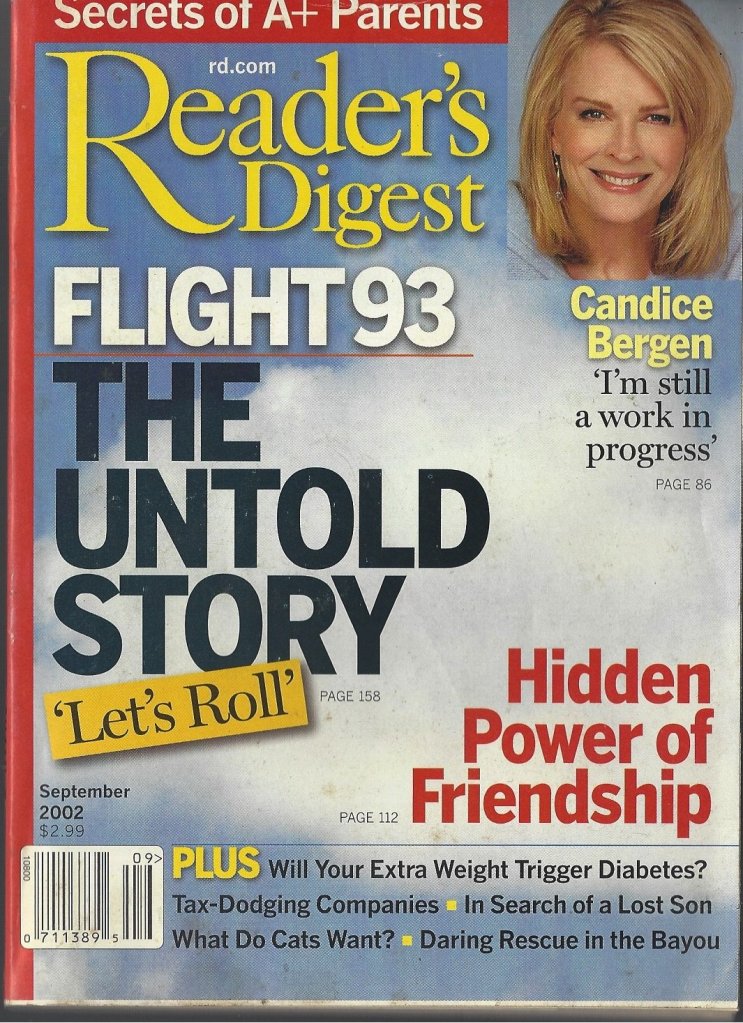
Reader’s Digest, a general interest family magazine founded in 1922 by DeWitt Wallace and his wife Lila Bell Wallace. Formerly based in Chappaqua, New York, and now headquartered in Manhattan, Reader’s Digest was for many years the best-selling magazine in the US. The periodical has a global circulation of 10.5 million, making it the largest paid-circulation magazine in the world.

DeWitt’s idea was to gather of sampling of his favourite articles on various subjects from monthly magazines, often rewriting and condensing them – this might be what Paris means by the Reader’s Digest version. She may also refer to Reader’s Digest Condensed Books – hardcover anthologies of classic and bestselling novels in abridged (“condensed”) form. These were published from 1950 to 1997, after which it became softcover and called Reader’s Digest Select Editions.

To condense, the Reader’s Digest version is the short version of something.
The French Revolution and The Crusades

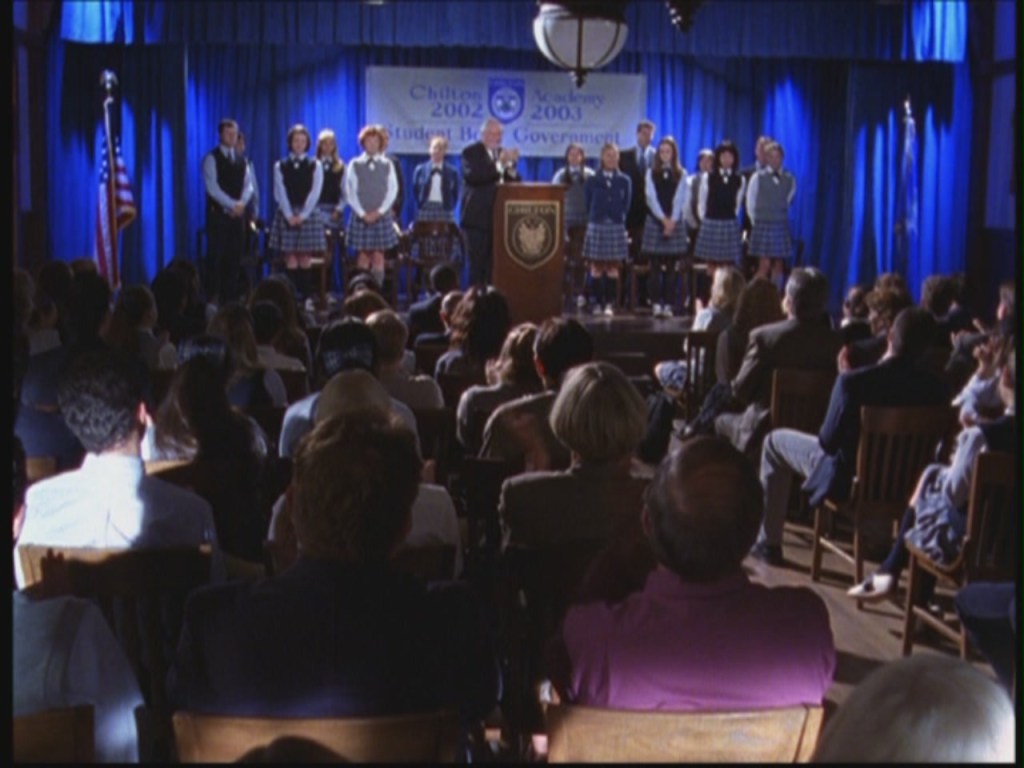
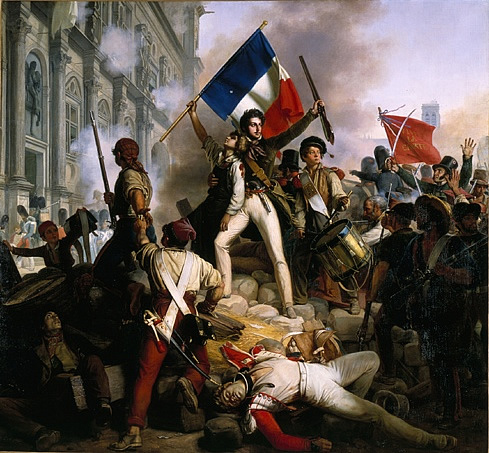
PARIS: But this year – everything changes, starting with the library. It’s completely out of proportion with its subjects. I mean, there’s five hundred volumes on the French Revolution, yet only three on the Crusades.

The French Revolution, previously mentioned. A period of radical political and societal change in France from 1789 to 1799. Many of its ideas are considered fundamental principles of liberal democracy, while phrases like liberté, égalité, fraternité reappeared in other revolts, such as the 1917 Russian Revolution, and inspired campaigns for the abolition of slavery and universal suffrage. The values and institutions it created dominate French politics to this day.

The Crusades, a series of religious wars initiated, supported, and sometimes directed by the Roman Catholic Church in the medieval period. Beginning with the First Crusade which resulted in the recovery of Jerusalem in 1099, dozens of Crusades were fought, providing a focal point of European history for centuries.

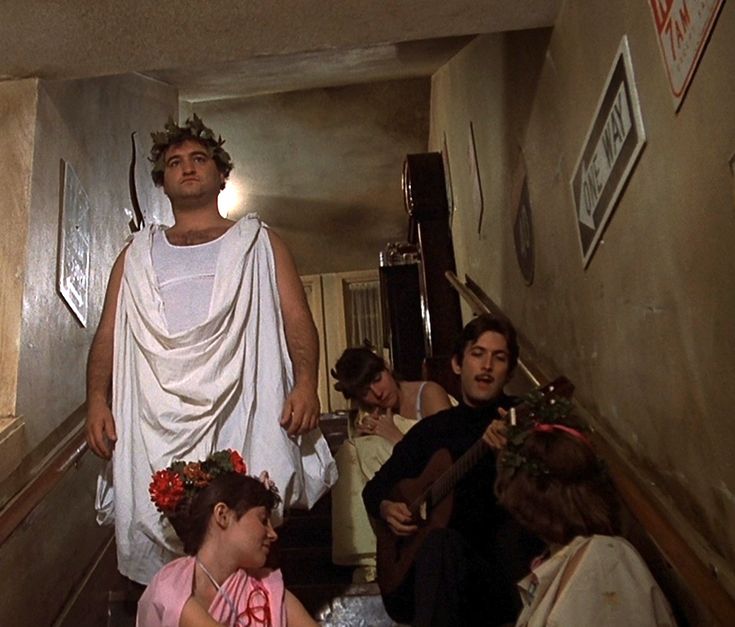
“Toga!”

PARIS: Look, let’s face it, the last administration might have just as well been running around yelling ‘Toga!’ for all the brilliant things they accomplished.”

Paris references the 1978 comedy film National Lampoon’s Animal House, directed by John Landis, produced by Ivan Reitman, and written by Harold Ramis, Douglas Kenney, and Chris Miller. It was inspired by stories written by Miller and published in humour magazine National Lampoon. The stories were based on Ramis’s experience in the Zeta Beta Tau fraternity at Washington University in St. Louis, Miller’s Alpha Delta Phi experiences at Dartmouth College in New Hampshire, and producer Reitman’s at McMaster University in Hamilton, Ontario.

The film, starring John Belushi in his first screen role, is about a trouble-making under-performing fraternity called Delta Tau Chi whose members challenge the authority of the dean of the fictional Faber College. The film received mixed reviews upon its release, but was a huge commercial hit, becoming the #3 film of 1978 at the box office, and the highest grossing comedy of its time. The film almost single-handedly launched the gross-out comedy genre which became a Hollywood staple, and it is regarded as one of the greatest comedies (or even the greatest comedy), and one of the best films of all time.

The toga party, a staple of college life, is immortalised in Animal House. Whenever the guys at Delta House decide to have a toga party, they start mindlessly chanting, “Toga! Toga! Toga!”. Paris is saying that the previous student government were a bunch of idiots who were only interested in partying.

“All great empires have fallen”

PARIS: In the past, all great empires have fallen. The feeling seems to be that it’s inevitable – that something like what the Romans built could not last.

Paris refers to the Roman Empire, previously mentioned.

The Roman Empire was the post-Republican era of Roman civilisation, lasting from the accession of the first Roman Emperor, Augustus, in 27 BC to 395 AD, when it disintegrated under onslaughts from Germanic tribes such as the Goths and the Huns after the death of Theodosius the Great, the last Roman Emperor.

The fall of the Roman Empire is often invoked whenever a particular long-standing institution is threatened, or is perceived to be threatened, by destructive outside forces.

[Painting shown is The Course of Empire, Destruction by Thomas Cole, 1836].

Hanes

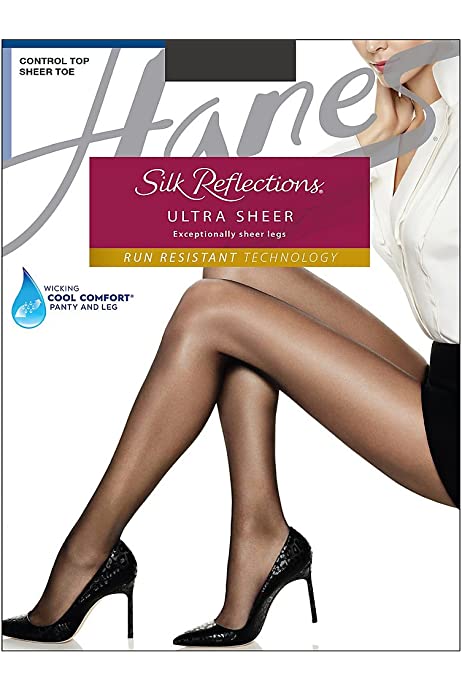
LORELAI: When I was in school, Linda Lee was class treasurer and she could not keep her knees closed if they were magnetized. Hanes should’ve given her an endorsement deal.

Hanes is a clothing company founded in 1900 by John Wesley Hanes in Winston, North Carolina, which became known as Hanes Hosiery Mills in 1914, merging with P.H. Hanes Knitting Company (founded by John’s brother Pleasant Hanes) in 1965. In 1978, it was bought by Consolidated Foods (Sara Lee). Although Hanes sell a variety of men’s and women’s clothing, it is perhaps best known for its pantyhose.

“Dim-witted, drunken, or drug-addicted relative”

LORELAI: Honey, you have power, brains, now all you need is a dimwitted, drunken or drug-addicted relative to constantly humiliate you while you serve in office.

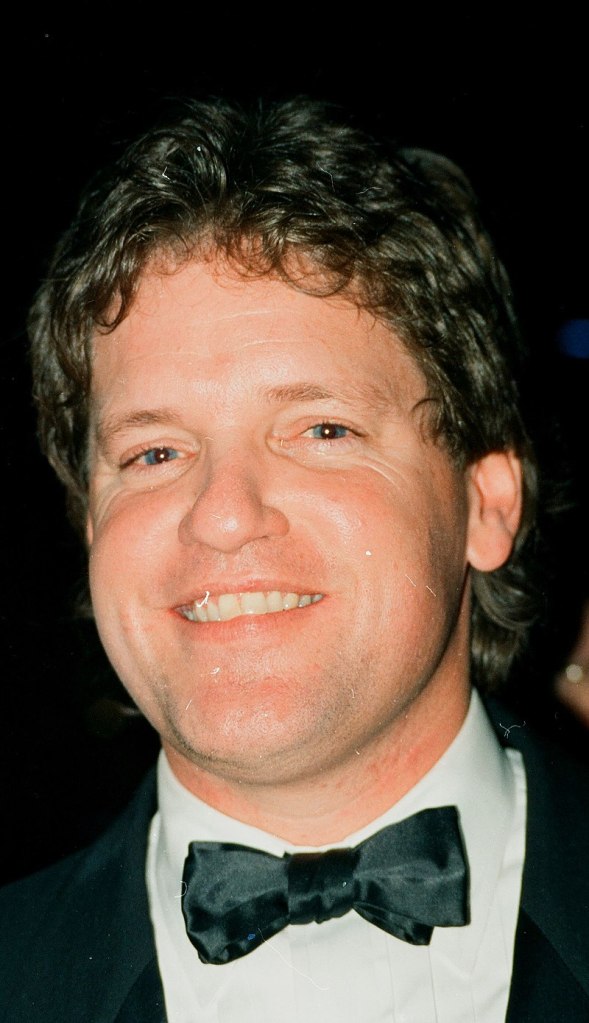
Lorelai is probably referring to Bill Clinton’s younger half-brother, Roger Clinton Jr. He was given the codename “Headache” by the Secret Service, due to his controversial behaviour, which included accepting bribes from mobsters, and dangerous drink driving offences. He received a presidential pardon from his brother for a 1985 conviction for cocaine trafficking, meaning that although he had served a prison sentence, the crime was removed from his criminal record.

We Are Family

RORY: Hey, we are family.

LORELAI: Yeah, well, look how great that worked out for Sister Sledge.

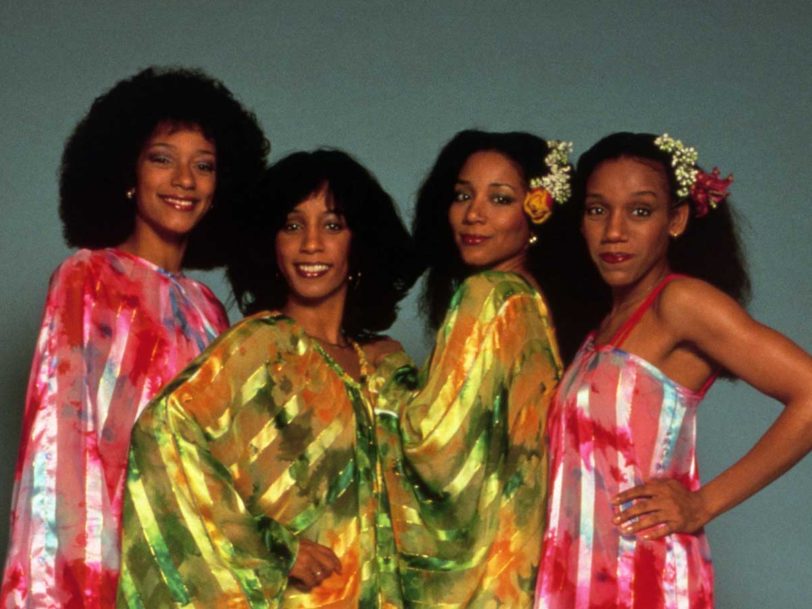
“We Are Family” by vocal group Sister Sledge, previously discussed, and now the third mention of this song on the show.

The group were made up of four sisters – Debbie, Joni, Kim, and Kathy Sledge, who began their musical careers in 1971. Lorelai makes it sound as if some terrible fate befell the Sledge sisters, but in fact “We Are Family” was a worldwide smash hit, and the group was named Billboard’s Best New Artists. They continued on to further career success, touring internationally, and performed at the White House for President Clinton in 2000, and for the Pope in 2015. Although Joni died in 2017, the other three sisters are still performing as Sister Sledge.

Lorelai is very possibly thinking of the period in the early 2000s when Debbie, Joni, and Kim produced solo works. Their final 2003 album remains unreleased, but by 2005 they’d got over this hitch, and performed at Glastonbury. In 2002, it might have seemed as if Sister Sledge was washed up, but they really did get through it all by sticking together as a family.

Vince Foster

RORY: Okay, I have something to tell you.

LORELAI: Is it about Vince Foster?

Vincent “Vince” Foster (1945-1993), attorney who served as deputy White House counsel during the first six months of the Clinton administration. A childhood friend of Bill Clinton, he was unhappy working in politics, and became severely depressed. He was found dead from a gunshot wound in Fort Marcy Park in Virginia, just outside Washington DC, with a torn up resignation letter in his briefcase. His death was ruled a suicide, but several tabloids and newsletters speculated that he had been murdered, possibly involving the Clintons themselves.

Lorelai jokingly questions Rory, as if she is expecting her to provide inside information on the case (because Rory is in student government now).

Lorelai in Hiding

LORELAI: All right . . . we’re gonna have to move … Take off in the middle of the night, leave everything behind, assume different identities. I’ll join a local community theater and I’ll drive you to soccer. It’ll work for many years until the FBI comes to get me, and by that time, you’re on your own.

Lorelai jokes that rather than tell Kirk she’s not interested in dating him she will leave town and begin a new life (this is sounding a bit like when she dumped Max by immediately fleeing Stars Hollow to hide out in another state!).

Lorelai says that she will join a local community theatre – in fact, she takes part in amateur dramatics in Stars Hollow too, and received rave reviews for taking the lead in Fiddler on the Roof. Lauren Graham began her acting career by doing two years of summer stock in Michigan, suggesting that this may be an inside joke.

By the end, Lorelai seems to have forgotten the original reason she became a fugitive, saying that the FBI will eventually track her down, as if she has committed a crime, rather than simply moved towns to avoid Kirk.