“Formerly known as”

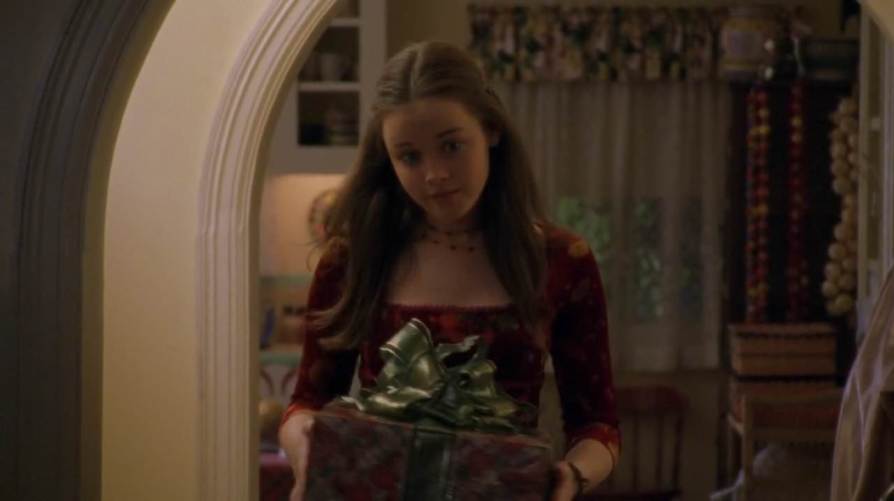
RORY: Fine, forget it. Should I put your name on Grandma’s present?
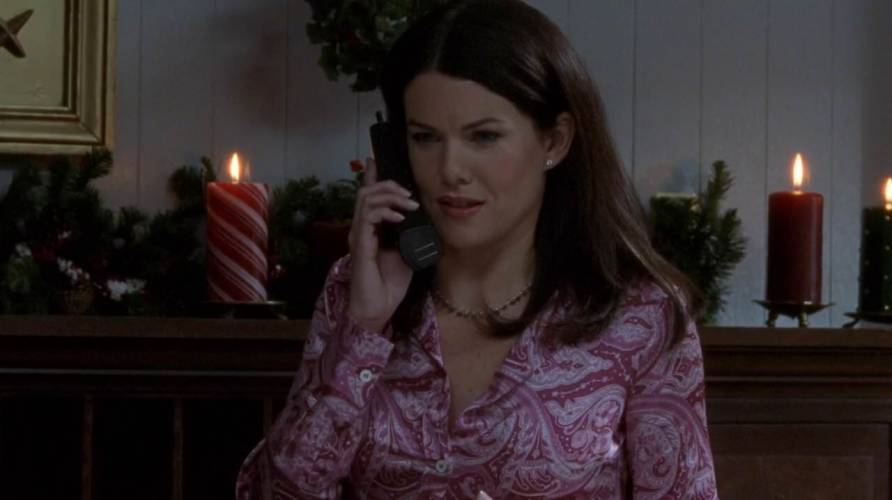
LORELAI: Yes, sign it the inn keeper formerly known as her daughter.

Lorelai is making a reference to the American pop singer Prince (1958-2016). In 1993, after a battle with Warner Bros., who refused to release his huge backlog of music at a steady pace, Prince changed his name to a symbol which combined the symbol for male with that for female, and which he later copyrighted as Love Symbol #2 – it had already featured on his 1992 album The Love Symbol Album (it has to be called that as the actual name cannot be said).

Because Prince’s new name was unable to be spoken, he was referred to as “The Artist Formerly Known as Prince” until May 2000, when he reverted to his real name of Prince (he was born Prince Nelson).

Lorelai is saying that her relationship with her mother has come to a complete and bitter end, much like Prince’s relationship with his record label – although in fact Prince was to re-sign with Warner in 2014.

Lorelai refers to herself as an innkeeper rather than an executive manager because she is still thinking of the Christmas pageant, where the innkeeper refuses entrance to Mary and Joseph, forcing them to spend the night in the stable, where Jesus is born. She likewise doesn’t feel like admitting her family into her life.

Stairmaster

RORY: You just wanna hold a grudge.
LORELAI: Yes, it burns more calories.
RORY: That’s not true.
LORELAI: Yes it is, how do you think your grandma got those legs of hers? She’s not exactly a StairMaster gal.

StairMaster is an American company which makes exercise equipment, founded in 1983. Their first piece of equipment was a stair climbing machine.

Kelly Bishop, who plays Emily, got “those legs” of hers training in ballet, and working as a chorus line dancer for many years. We learn in the next season that Emily does in fact follow an exercise regimen to stay in shape.

German measles

LORELAI: I had the German measles in the fifth grade, I still had to show up to the Christmas party … My polka dot dress matched my face and still I had to sit through twelve courses.

German measles, also known as rubella, is an infection caused by the Rubella virus. It is often mild in children, and symptoms include low-grade fever, sore throat, fatigue, and a rash. The disease can be considerably more severe if an adult catches it, and worst of all for women in the early stages of pregnancy – it increases the chance of miscarriage, and there is a high chance of the baby being born with disabilities such as blindness, deafness, mental retardation, and heart defects.

A vaccine against the virus was developed in 1969 and it was added to the MMR vaccine in 1971, so it was possible for Lorelai to be vaccinated against German measles. In 1977 (when Lorelai was 8-9) the US developed a nationwide childhood immunisation initiative – children are usually 10-11 in fifth grade, so Lorelai should theoretically have been vaccinated by then. This does fit in with Amy Sherman-Palladino’s age though, as she is two years older than Lorelai and would have been in 5th grade around 1977 – maybe just too late to avoid getting the disease.

In any case, Emily was irresponsible and selfish to force Lorelai to attend a party with German measles. The disease is highly infectious, and any female of child-bearing age would be at risk, as you don’t usually know you are pregnant in the early stages.

There is no excuse for ignorance either, as there was a rubella epidemic in the US in 1964-65, not that long before Lorelai’s birth, leading to about 16 000 children being born disabled, as well as 2000 neonatal deaths, and 11 000 abortions and miscarriages due to the disease.

“The world doesn’t always revolve around you”

LORELAI: Well Mom, there’s been a lot going on around here lately, your Christmas shindig’s not exactly high on my list of things to obsess about.
EMILY: Well I’m sorry if the timing is bad Lorelai, but the world doesn’t always revolve around you.

A lesson that Lorelai could never learn – probably because Emily’s example taught her the opposite so well.

Little Bo Peep

INN ASSISTANT (looking through Christmas ornaments): So this isn’t a fairy?
MICHEL: That is Little Bo Peep.

Little Bo Peep is a well known nursery rhyme, in which the character of Little Bo Peep is a shepherdess – hence the staff that the ornament carries, which the assistant thinks is a fairy wand. The song dates to the 19th century, but bo peep was known in the Middle Ages to mean that someone was being punished in the pillory, and the link with sheep is also very old.

The Metamorphosis

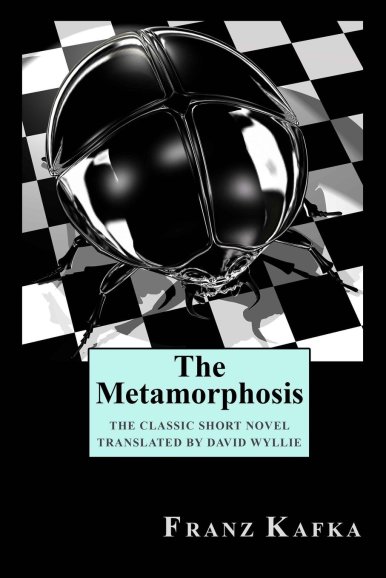
This 1915 absurdist novella by Czech author Frank Kafka is the book that Rory buys Dean for Christmas.

The story is about a travelling salesman named Gregor Samsa who wakes one morning to find that he has been transformed into a large and verminous beetle-like insect, becoming a disgrace to his family and an outsider in his own home. Both harrowing and comical, the book is a meditation on human guilt and isolation. Translated into English in 1933, The Metamorphosis is one of the most influential literary works of the twentieth century.

Rory believes that the book is a “romantic” present. Lane quite rightly tries to talk her out of this, describing the book as a “confusing Czechoslovakian novel”. She urges Rory to consider what Dean will think of the present, and says that she is giving Dean something that she would like, comparing it to Dean giving Rory a football for Christmas.

Lane’s counsel is sound, and she is hinting that once again Rory is using literature to keep others at an emotional distance, since she identifies the potential Christmas gift as saying “let’s be friends”. It’s a genuinely terrible present for Dean, and shows that Rory is still trying to turn her boyfriend into someone he isn’t.

We never discover if Rory took Lane’s advice or gave the book to Dean anyway. At the end of the scene she sounded unconvinced but also unsure, so you could argue it either way.

Rory’s idea of a book by a famous Czech author was probably inspired by her grandfather’s recent trip to Prague. In the last episode Emily told her that Richard was going to bring her back something special, and my bet is that he brought her something from the gift shop at the Kafka Museum, probably a book (possibly even this book). Rory may have thought that since she loved getting a book by Kafka as a present, Dean would as well.

Rory’s attraction to The Metamorphosis is obvious: like Gregor Samsa, she feels that she has become an object of disgust to her family, and is likewise suffering from feelings of intense shame and isolation – she is not speaking to her mother, and has not even spoken to Dean since they overslept at Miss Patty’s.

The Metamorphosis begins with Gregor Samsa oversleeping, and then finding he is trapped in a waking nightmare without reason or explanation. We can be sure that this is exactly how Rory feels, and the ending where Samsa voluntarily dies rather than burden his family any further shows just how deep her feelings of depression are. Quite possibly Rory has wished herself dead.

Rory might be playing her situation for laughs by making jokes about The Miracle Worker and Narcolepsy Boy, but make no mistake, she is suffering horribly. Like The Metamorphosis, there is both comedy and misery in equal measure.

By giving Dean the book, Rory was hoping to show him exactly how she feels; the “romantic” part of the present is her sharing her deepest emotions and fears with Dean, reaching out and laying herself completely bare to him. Unfortunately, Lane is right, and Dean would have no way to interpret it as anything other than a strange, confusing book about a big bug.

The Miracle Worker

LANE: Let me guess. You and Lorelai haven’t made up yet?
RORY: Nope. Things are still very Miracle Worker at my house.

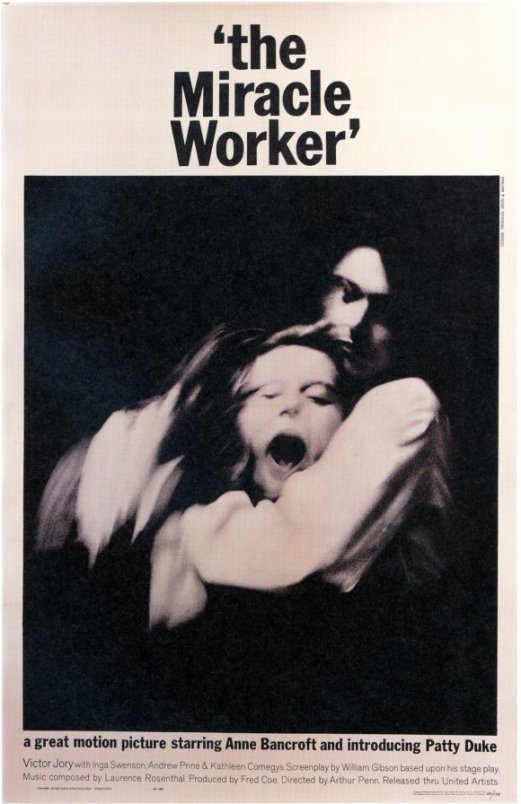
Most likely a reference to the 1962 biographical film The Miracle Worker, directed by Arthur Penn and based on the 1959 play of the same name by William Gibson (originally part of the 1957 television drama anthology Playhouse 90); Gibson wrote the screenplay for the movie.

The film is the story of Anne Sullivan (1866-1936), the sight-impaired teacher of Helen Keller (1880-1968), who had become both blind and deaf at a very early age. Anne was able to break through Helen’s almost total isolation from lack of language, allowing her to communicate with the world by spelling words into her hand and teaching her to read Braille.

Helen made remarkable progress at a school for the blind with Anne’s support, and went on to become the first blind person to earn a bachelor of arts degree, forging an inspirational career as an author, political activist, and lecturer.

William’s Gibson’s source for The Miracle Worker was Helen Keller’s 1902 autobiography, The Story of My Life, and the title comes from Mark Twain‘s description of Anne Sullivan as “a miracle worker”.

The Miracle Worker received rave reviews, and is still considered one of the most inspirational films ever made. Anne Bancroft, who played Anne Sullivan, won the Academy Award for Best Actress, while Patty Duke, who played Helen Keller, won the Academy Award for Best Supporting Actress (in the 1979 television remake, Patty Duke played Anne Sullivan).

Rory possibly means that she and her mother are still not talking, just as Helen Keller was not able to communicate until she was taught to by Anne Sullivan. She could also be referring to the famous fight scene in the movie, shown on the poster, where Anne Sullivan struggles physically with Helen Keller in an effort to make her eat politely at the breakfast table, to mean that she and Lorelai still fighting.

It’s Beginning to Look A Lot Like Christmas

LORELAI: Find the arm?
RORY: Nope.
LORELAI (sourly): It’s beginning to look a lot like Christmas. [pan to dog with doll arm in mouth]

It’s Beginning to Look a Lot Like Christmas (originally titled It’s Beginning to Look like Christmas) is a Christmas song written by Meredith Wilson in 1951. It was a hit in 1951 for Perry Como & The Fontane Sisters, and has been recorded numerous times.