Diva Glam


LORELAI: Diva Glam.
RORY: I’ve got it.
LORELAI: Bring it up.

This seems to be the lipstick that Lorelai and Rory favour. I think it was made by MAC Cosmetics; the company was founded in Canada in 1984, and by 1998 were owned by Estee Lauder. Famous for their celebrity endorsements, and widely available in department stores such as Macy’s and Bloomingdale’s, MAC is one of the biggest-selling make-up brands world-wide. You will remember that Rory linked Lorelai’s make-up to RuPaul, who was the face of MAC in the late 1990s.


“Your name wouldn’t be Lithium?”

[Rory sitting on a bench reading. Dean come out, sees her and goes and sits with her]
DEAN: Is there anything in there about me?
RORY: I don’t know. You name wouldn’t be Lithium would it?

Rory is reading The Unabridged Journals of Sylvia Plath, edited by Karen V. Kukil. It was first published in 2000. The American poet, novelist, and short story writer Sylvia Plath (1932-1963) suffered from clinical depression which at times was severe.

Plath was hospitalised in a psychiatric ward for several months while in college, receiving electroconvulsive therapy, and required intermittant psychiatric support for the rest of her life. She died a suicide at the age of 30.

Rory may have been drawn to Sylvia Plath’s life story because she was highly driven academically, and a star student in both high school and college. She easily won prizes for poetry, short story-writing, and journalism, and one of her early writing achievements was being chosen as part of a group of college-aged guest editors for fashion magazine Mademoiselle.

On a darker note, among the several factors that pushed Plath into her first suicide attempt was a rejection from a Harvard summer school writing class. Sylvia Plath is a potent example to Rory of the pressures an ambitious young woman might face at college.

I’m actually not sure what Rory means by her comment, as to my knowledge Sylvia Plath was never treated with lithium. It may be an error by the writer (Amy Sherman-Palladino). In any case, it’s impossible not to feel that her quip is completely wasted on Dean.

“Run with the wolves”

SOOKIE: But I mentioned it once, it’s his [Jackson’s] turn.
LORELAI: Alright, let’s say it is his turn. You can spend a lot of time sitting around waiting for him to realise it’s his turn, or you can just run with the wolves and make it your turn again.

Lorelai is referring to the 1992 best-seller Women Who Run with the Wolves: Myths and Stories of the Wild Woman Archetype by Jungian analyst, author, and poet Clarissa Pinkola Estés. The book analyses myths, fairy tales, and folk tales from different cultures to discover the Wild Woman archetype of the feminine psyche, in line with Jungian psychoanalysis.

The book spent three years on the New York Times Best Seller list, a record at the time, and the author won an award for being the first Latina author to make the Best Seller List. It was a highly popular feminist book of the 1990s, so Lorelai is encouraging Sookie to take the initiative and ask Jackson out without worrying about traditional gender roles.

“Weeks ago”

SOOKIE: I asked him [Jackson] if he’d like to have dinner sometime.
LORELAI: I know – weeks ago.

For the first eleven episodes, dates in Gilmore Girls can be plotted on the calendar fairly easily. From now on, time becomes more amorphous and elastic, and sometimes even self-contradicts. At this point, a lot of estimating and even guessing will be needed to form any kind of workable timeline.

When Lorelai says the events of the previous episode happened weeks ago, we have no idea if she means two weeks, three weeks, or six weeks in the past. Most likely it is two or three weeks and we are now in early to mid-February – four or more weeks and she would probably say it was a month, or more than a month.

(It’s not possible for me to align the dates on the blog exactly with the vague calendar in Gilmore Girls at this point, or I will run out of time for events to occur in).

Pattypan Squash

SOOKIE: Uh, squash.
JACKSON: What?
SOOKIE: I need some.
JACKSON: Squash.
SOOKIE: Pattypan.

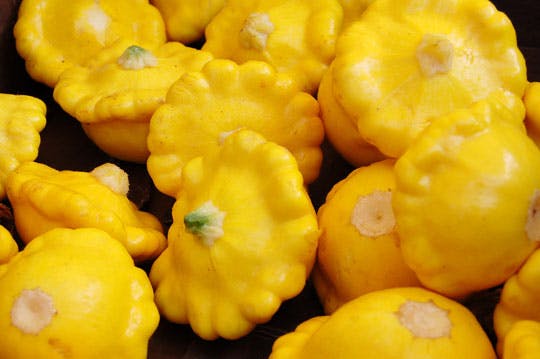
Pattypan squash is a variety of summer squash that is small, round, and with scalloped edges, and comes in white, green, and yellow varieties. It is also known by such names as button squash, custard marrow, scallopini, or (in Australia) as just “squash”.

Alaska and Hawaii

LORELAI: Maybe you could do them [the Baked Alaskas] in the actual shape of Alaska.
SOOKIE: Interesting.
LORELAI: Or you could do little baked Alaskas and Hawaiis.
SOOKIE: Because they joined the union last.

It would be very difficult to make Baked Alaska in the shape of Alaska and Hawaii as Alaska has a multitude of islands around its coastline, and Hawaii is a group of islands. I’m sure it can be done, with some artistic licence. Lorelai is joking though.

Alaska was purchased by America from Russia in 1867, and became a US territory in 1912. It was admitted as the 49th state of the US in January 1959.

The Kingdom of Hawaii was overthrown during a coup d’état in 1893, and the country was annexed by the US in 1898, becoming one of its territories. In August 1959 Hawaii was admitted to the union, becoming the 50th state of the US.

Hawaii is the state where Lauren Graham (who plays Lorelai Gilmore) was born, which might be why it is mentioned here. It also happens to be where Keiko Agena (Lane Kim) was born.

Baked Alaska

LORELAI: Oh! Meringue.
SOOKIE: Yeah, I thought I’d do a variation on a baked Alaska for dessert tonight.

Baked Alaska is a classic American dessert consisting of ice cream in a dish or baking tray which is lined with cake, then the whole thing covered in meringue and quickly browned in the oven. The ice cream won’t melt as the meringue protects it, and the oven is very hot so that cooking time is brief.

According to legend President Thomas Jefferson, earlier mentioned, was the first person to serve Baked Alaska, in 1802. He served a dessert which was warm ice cream in a pastry shell, so not really the same, but shows that the idea of baking ice cream had been around a fair while – and a presidential connection is always a cool thing to have.

The famous Delmenico’s Restaurant in New York City claimed that their chef Charles Ranhofer named the dessert to mark America’s purchase of Alaska from Russia in 1867. The actual dish was probably created some time after the purchase, and Ranhofer called his dessert “Alaska, Florida” to indicate the extremes of heat and cold in the dessert. He published the recipe in 1893.

The first known published recipe for something resembling Baked Alaska is in Mary J.B. Lincoln’s Frozen Dainties in 1888. It seems to be much the same as the modern dish and she calls the dessert Ice-cream en Deguiser (“ice cream dressed up”). Lincoln was the first principal of the Boston Cooking School, so the dish has a distinguished pedigree.

“Necesito las hojas grandes”

Sookie says this phrase to one of her kitchen assistants; it means “I need the large sheets of paper” in Spanish. She is making meringue, and needs the sheets of baking paper to line the baking tray.

The Spanish-speaking kitchen staff at the inn isn’t very realistic, as the Hispanic population in rural Connecticut isn’t that big, and the majority of Hispanics in Connecticut are American-born and would already speak English. It’s more in keeping with California, where Gilmore Girls was made, which has a Hispanic population of around 39% with a high rate of immigration from Latin America.

Jefferson Suite

LORELAI: OK, put them [the Ruckers] in the Jefferson suite tonight, move them back to their previously booked room tomorrow, and offer them dinner on the house for the inconvenience.

The suite is named after American statesman Thomas Jefferson (1743-1826), one of the Founding Fathers of the United States, and principal author of The Declaration of Independence. He served as the third President of the United States (1801-1809), and was the second Vice-President under John Adams (1797-1801). It is an appropriate name for a suite at the Independence Inn.

Spittoon

LORELAI: Well where did the Ruckers come from?
MICHEL: Well judging from their clothing, a town where high rubber fishing boots and spittoons would be considered formal wear.

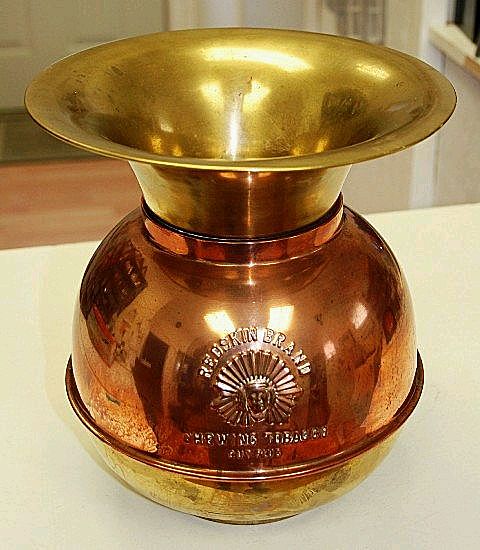
A spittoon is a receptacle made for spitting into, especially used by those using chewing tobacco. They were very common and displayed for public use in the US during the late 19th century, but use declined after the 1918 flu epidemic as they were considered unsanitary (before this, spittoons were actually considered hygienic, as previously people would spit on the ground or the floor). Chewing tobacco also went out of fashion, rendering spittoons less useful.

Spittoons were available in public buildings in the Southern states of the US into the 1970s. The United Sates Senate still has traditional spittoons in their public rooms, but these are just used as rubbish bins. Spittoons are still made, and used for smokeless tobacco, and for wine, coffee, and tea tastings. It is rare to see one in public though.