“Too sexy for your shirt”

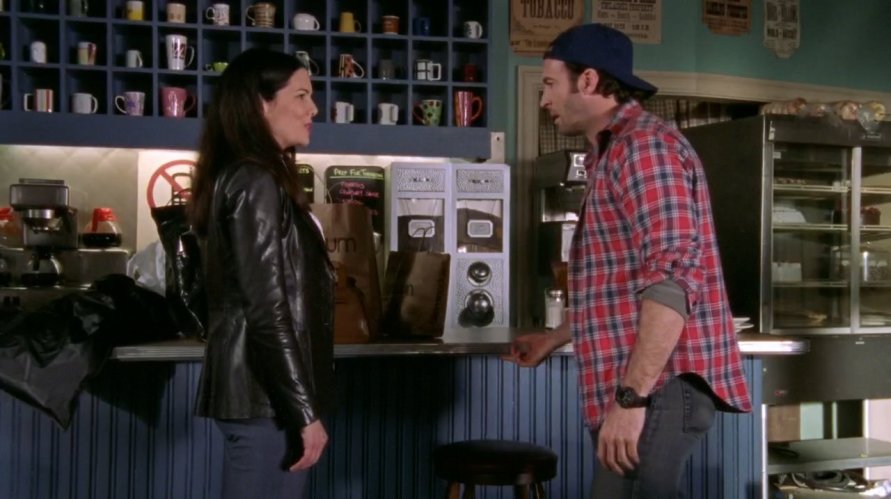
LUKE: Take it back.
LORELAI: Come on. Just the jacket. Just once, be too sexy for your shirt and do a little dance on the catwalk.

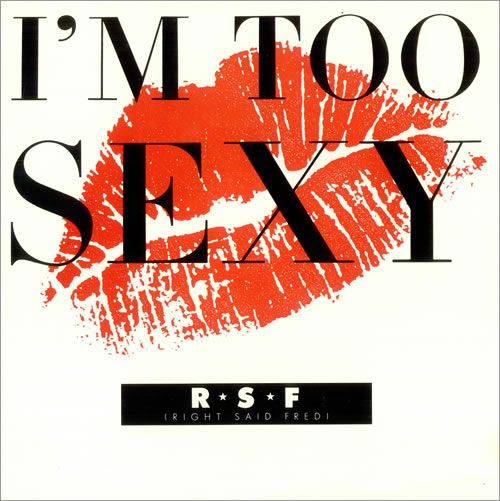
Lorelai is referring to the 1991 dance-pop song I’m Too Sexy, by British band Right Said Fred. The song includes the lines, “I’m too sexy for my shirt”, and “I do my little turn on the catwalk” (not a dance, as Lorelai seems to think).

Fun and cheeky, the song was a massive hit, and went to #1 in the US, Canada, Ireland, Australia, New Zealand, and Austria. It spent weeks at #2 in the UK, but was never able to crack #1 in its own country (Right Said Fred’s more sedate Deeply Dippy was a #1 hit in the UK instead).

I’m Too Sexy was included on Right Said Fred’s 1992 debut album Up. Depending on your point of view, it’s either one of the best songs of the 1990s, or one of the worst of all time.

Seven Brides for Seven Brothers

LUKE: I’m not trying anything on.
LORELAI: Hey, its not like the lumberjack look will ever go out; it won’t. But just once, wouldn’t it be nice not to be dressed like an extra from Seven Brides for Seven Brothers?

Seven Brides for Seven Brothers is a 1954 musical film, directed by Stanley Donen with music by Saul Chaplin and Gene De Paul, lyrics by Johnny Mercer, and choreography by Michael Kidd. The screenplay is inspired by the short story The Sobbin’ Women by Stephen Vincent Benét, a parody of the Rape of the Sabine Women from Roman mythology.

The film is set in the backwoods of Oregon in the 1850s, and is about seven brothers who are tough mountain men, seeking a bride for each of them in spite of a whole town’s opposition. After reading the story by Benét, the brothers kidnap six women (one brother already has a wife) to marry them, and hi-jinks ensue: luckily the women aren’t averse to the kidnapping. Notably, the film is about how these rough men must change their attitudes and appearance in order to attract women and make them happy, just as Lorelai is trying to change Luke’s image.

Seven Brides for Seven Brothers was a commercial success, and did especially well in the UK. It won the Academy Award for Best Music, and is regarded as one of the best musical films, although still more popular with British audiences.

Bloomingdale’s

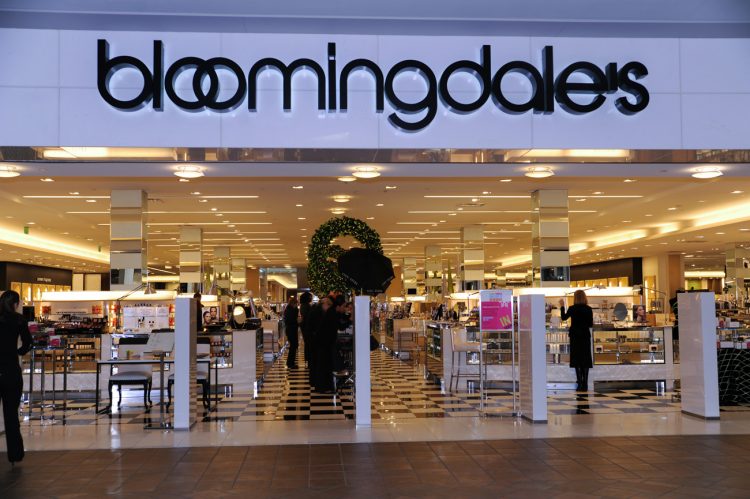
LORELAI: So I’m at the mall, and I’ve already found Rachel’s gifts, and I’ve had two sugar cinnamon pretzels, and I’m buzzed on the sugar, and jazzed about the purchases, and I decide to take a victory lap through Bloomingdale’s, and it just so happens that there was an amazing sale in the men’s department.

Bloomingdale’s is an American department store founded in New York in 1872 by Joseph and Lyman Bloomingdale. The stores are now owned by Macy’s, and are well known for their sales.

Lorelai speaks of going to “the mall” as if she means going shopping in Hartford. However, in real life there is no Bloomingdale’s in Hartford, or anywhere else in Connecticut (there used to be one in Stamford, but it closed in 1990).

In real life, if Lorelai had wanted to shop at Bloomingdale’s, she would have had to drive to the city of White Plains, New York – over an hour’s drive away. That isn’t possible, as she completed her shopping trip in two hours; she would have needed more than that for travel time alone.

Out of Africa

LORELAI: Okay, last week we were talking about Meryl Streep and the whole accent thing, and Rachel said that she loved Out of Africa, but she’d never read the book, remember?
LUKE: Nope.
LORELAI: Okay, so I was like, “Are you crazy? Isak Dinesen is amazing, I love her.” Which is kind of crap because I’d never read the book either, but Rory told me it was amazing, so I felt pretty confident in my recommendation of Out of Africa.

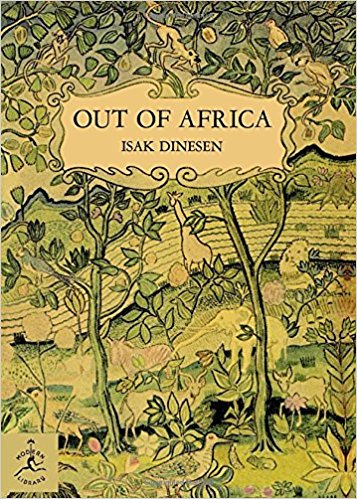
Out of Africa is a 1937 memoir by Isak Dinesen, the pen name of Danish author Karen Blixen. It describes the seventeen years that Blixen spent in Kenya, then called British East Africa. It is a meditation on her life on her coffee plantation, and some of the people she encountered there.

The book is non-chronological in structure, and is notable for its melancholic, poetic style that is above all a tribute to the Africa she knew, and a world that had changed irretrievably. That she helped change it did not seem to make a strong impression on her, although her notes on the African people are understanding and accepting, and they admired her as wise and trustworthy.

It seems appropriate that Rory would enjoy Out of Africa. We know that she admires women writers, books on travel, memoir and autobiography, and works with a certain lyrical sadness to them – she likes things that make her feel “gloomy”.

Out of Africa was adapted into film in 1985, directed by Sydney Pollack, and starring Meryl Streep and Robert Redford in the lead roles. The film has several differences from the book, and focuses on Karen Blixen’s love affair with a hunter named Denys Finch Hatton (an Englishman, although Robert Redford plays him with an American accent). Meryl Streep spent a lot of time listening to tapes of Karen Blixen speaking, and chose an old-fashioned, aristocratic accent for her character, which Sydney Pollack thought excessive; Streep is well known for her mastery of different accents.

Out of Africa was the #5 film of 1985 and won seven Academy Awards, including Best Picture, and Best Director. Despite this, it received mixed reviews from critics.

The fact that Luke can’t remember a word of a conversation with Rachel doesn’t seem very promising for their relationship. As Out of Africa is in part about a doomed love affair, it is possible that Rachel may read something into the gift that Luke has “chosen” for her.
Up With People

LORELAI: Okay, then just meet me in town around four, and we’ll get some Indian food, and spoil our dinner. What do you say to that?
RORY: Whatever.
LORELAI: Hey, love the enthusiasm. Hey, does Up With People know about you?

Up With People is an educational organisation founded in 1965, intended to inspire young people to make a difference. After training, each UWP group is sent on a tour of various communities to participate in service projects, learn about different cultures, and perform peppy musical stage show productions. They have been criticised for their right-wing politics and cult-like behaviour.

In a later season we learn that Lorelai actually can’t stand Indian food, although Rory loves it. It’s not clear if Lorelai offering to get Indian food is a continuity issue, or if Lorelai is making a huge concession for Rory in order to cheer her up. It’s notable that Lorelai plans to eat a second dinner though – possibly because she intends to eat as little Indian food as possible.

Patton

DEAN: So that’s your mom?
LANE: That’s my mom.
DEAN: Has she seen Patton?

Patton is a 1970 biographical film about US General George S. Patton during World War II; it was directed by Franklin J. Schaffner, and starred George C. Scott in the title role. The film shows one of General Patton’s first tasks as head of operations in North Africa was to enforce discipline among the American troops, so Dean is suggesting that Mrs. Kim may have modelled herself on the strict general.

Patton was the #4 film of 1970, and received enthusiastic acclaim from critics; it was also Richard Nixon’s favourite film. The film won seven Academy Awards, including Best Picture and Best Director: George C. Scott won Best Actor, but famously declined the honour, the first person to turn down an Oscar.

Lane and Dean

When she was with Rory, Lane told her that she had to meet her science partner to work on an assignment; now we learn that Dean is her science partner. They are studying spores, moulds, and fungi, which suggests a Biology class.

It is notable that Lane is able to work with Dean, and is reasonably polite and even friendly with him. She doesn’t treat Dean badly because he broke up with Rory, as others have done, or seem to have any problem with him.

From her observations of both, she may have decided it is quite likely that Rory and Dean will eventually get back together and she prudently doesn’t want to be the person who made an enemy of her best friend’s boyfriend. (She even raises the possibility with Dean, suggesting it is something she has thought about).

Another possibility is that Rory has told her, or at least hinted to her, that it isn’t entirely Dean’s fault that they broke up, and that he didn’t dump her on a whim, or do anything horribly cruel to her. Lane does seem to understand that Dean is not a monster, and perhaps knows that Rory has trouble with commitment.

Rory walks in on Lane and Dean studying together, and having a conversation about her behind her back. She didn’t know that it was Dean who was Lane’s science partner, and doesn’t cope well when she finds out this way.

Emma Goldman

LUKE: I hate malls … They underpay employees and overprice merchandise, they contribute to urban sprawl, they encourage materialism, and the parking’s a horror. You drive in, you pay a buck, and even if you’re only there for five …
LORELAI: Okay, Emma Goldman, I’ll tell you what. I’ll go for you.

Emma Goldman (1869-1940) was a Russian-born American anarchist, political activist, and writer. She played a pivotal role in the development of anarchist political philosophy in the early twentieth century, and was strongly influenced by Freidrich Nietzsche, among others. She believed that capitalism was incompatible with human liberty, and in her youth, sanctioned violence and even murder as a legitimate part of the revolutionary struggle.

Le Chat Club

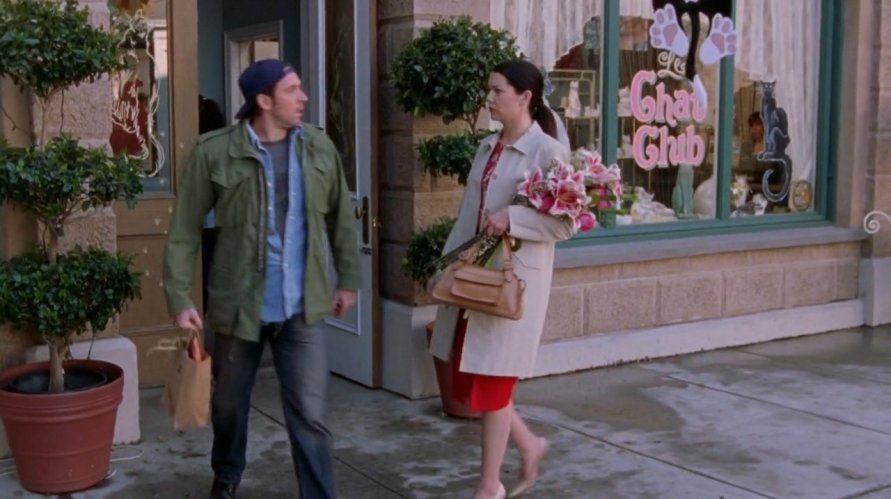
LORELAI: You’ve got a little bag there.
LUKE: I know that.
LORELAI: It’s got a cat paw stamped on it and a little catnip bow.

Le Chat Club (pronounced Le Cat Club) is one of Stars Hollow impossibly twee gift stores. Luke buys Rachel some potholders that make a meowing noise for her birthday, which demonstrates how little he knows her (and that he isn’t so great at choosing gifts). Interestingly, both Lorelai and Rachel have their birthday in April.