Junior League


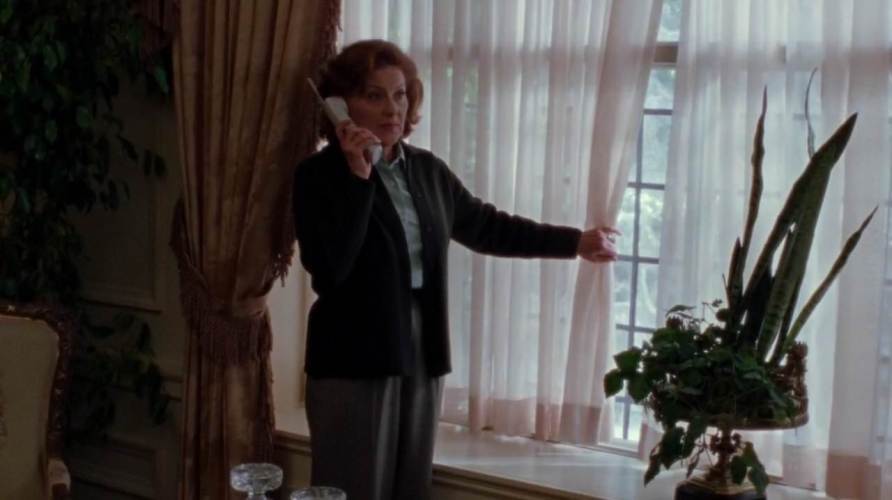
LORELAI: All right now honey, tell Grandma that you arrived there [at her house] not a member of the Junior League; I’d like you to leave there the same way.

The Junior League is a women’s volunteer organisation giving service to the community. It was founded in 1901 by Mary Harriman Rumsey, the daughter of a railroad executive, and through its history, many prominent women have been members, including Katharine Hepburn, Eudora Welty, Shirley Temple Black, Eleanor Roosevelt, and Sandra Day O’Connor.

For many years, the Junior League was thought of as a particularly upper-middle class, WASPY-y sort of organisation, but since the late 1970s has worked hard to become more inclusive, and now the membership much more diverse.

Saddle shoes

LORELAI: Hi. Things bad out there, huh?
RORY: It’s crazy. There’s snow coming down everywhere, and let me just tell you, saddle shoes are not the best all-weather footwear.

Saddle shoes are casual two-toned Oxford shoes that have a distinctive “saddle” shaped decorative panel over the middle; they were popular footwear in the 1950s. They are often worn as part of a school uniform. You can see Rory’s black and white saddle shoes throughout her years at Chilton.

“Fly the invisible plane over”

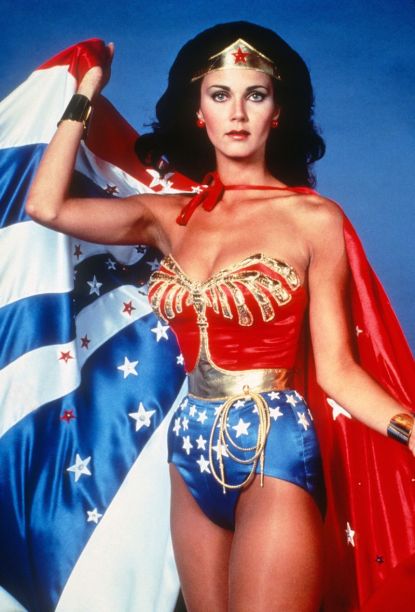
LORELAI: Well, uh, gee, Mom, I don’t know, let me see. Black ice, treacherous roads . . . I guess I’ll just put on my red, white, and blue leotard, grab my golden lasso and fly the invisible plane on over.

Lorelai is referring to the character of Wonder Woman, a DC Comics superhero who is a goddess and princess of the all-female Amazon warrior people. Named Princess Diana, her civilian name when blending in with everyday humans is Diana Prince.

Wonder Woman wears a red, white, and blue costume, and has a magic golden Lasso of Truth, which forces people into submission, and makes them tell the truth. Her mode of transport is the Invisible Plane that can travel at 2000 miles per hour.

Wonder Woman first appeared in All Star Comics #8 in 1941. However, Lorelai probably remembers the character best from the Wonder Woman television show, which ran from 1975 to 1979 (when Lorelai was aged seven to eleven); for the second season the title became The New Adventures of Wonder Woman. The title role was played by Lynda Carter.

I can imagine the young Lorelai enjoying a story based on a strong, beautiful woman with superhuman powers. The show was still on TV in re-runs during the 1990s and early 2000s, so she might have watched it even as an adult.

Charlotte Bronte


DEAN: Wow, she brings me cookies. How can I repay her?
RORY: How about a little Charlotte Brontë?

Charlotte Brontë (1815-1855) was an English novelist whose works have become literary classics. Her best known novel is Jane Eyre (1847).

It might seem natural to go from Jane Austen to Charlotte Brontë, as they are both 19th century female authors – it almost seems as if Rory is devising a reading programme for Dean. They are quite different in style and approach though, so Rory shouldn’t assume that just because Dean liked Emma he would enjoy reading Charlotte Brontë.

Charlotte Brontë herself disliked Jane Austen, although she was probably justifiably prejudiced from having her own works compared to Austen’s.

Hunter Thompson

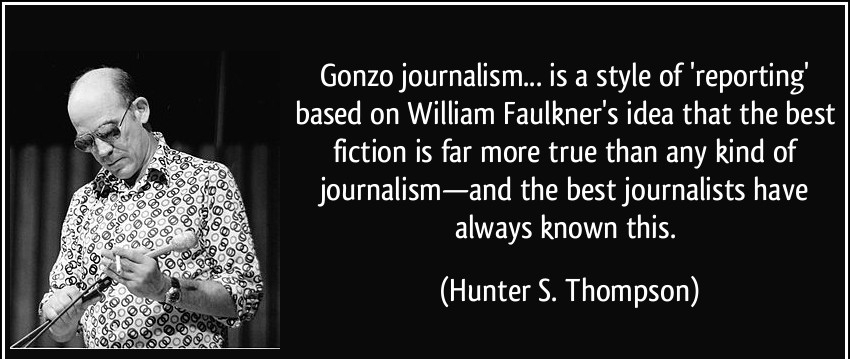
RORY: I told [Dean] he would [like Jane Austen], but he was all, “Forget Jane Austen, you have to read Hunter Thompson.”

Hunter S. Thompson (1937-2005) was an American journalist and author. He became a countercultural icon, and founded what he called “Gonzo Journalism”, where the reporter involves themselves in the action to such an extent that they become a central part of the story. His best known work is Fear and Loathing in Las Vegas (1972), an autobiographical novel about the failure of the 1960s countercultural movement. His output declined as he became so famous that he could no longer insert himself into events without being recognised.

The Rory and Dean who can happily swap book suggestions for each other don’t seem to last long. Maybe Dean only had the one writer to recommend, or simply couldn’t keep up with Rory’s reading.

Emma

RORY: Aha! You liked it, you liked Jane Austen. I knew you would. Lane, Dean likes Jane Austen.

Emma is a 1815 novel by English author Jane Austen. Unlike other of her books, the heroine Emma Woodhouse, blessed with youth, beauty, and intelligence, is independently wealthy and has no need to marry a rich man. In fact, rather than being under any pressure to marry, her elderly father would much prefer she remain as his companion. This is quite similar to Rory’s situation with Lorelai, who certainly isn’t pressuring her into a relationship, and that she has freely chosen Dean.

Emma, who believes she always knows what’s best, has a habit of meddling in her friends’ love lives, and is much more interested in doing so than thinking about romance for herself. Ironically, Rory can’t be bothered listening to her best friend’s love problems, as she is so wrapped up in her new relationship with Dean.

Rory’s choice of book might also remind us of Emma Bovary from Madame Bovary, which Rory was reading when Dean first noticed her: both Emma Woodhouse and Emma Bovary are great readers. It’s a reminder of the two “Emmas” in Rory’s character – the detached, intelligent Emma Woodhouse, and the romantic Emma Bovary who makes foolish choices.

NB: I have more often seen this book identified as Northanger Abbey, but I cannot locate an edition of that novel which resembles the book Dean hands over to Rory. To me it looks as if it might be the 1996 Signet edition of Emma, with an introduction by British author and critic, Margaret Drabble. However, I welcome input on this question, and will edit this entry if the correct edition of Northanger Abbey is shown to me.