LANE: Hello ma’am, I see you’re eyeing the Whip-o-Matic, nice choice! This baby’s right off the truck, and let me tell you, if you’re looking for something to fulfill all your whipping needs, you’ve come to the right place because as Devo says – if a problem comes along you must whip it, as long as you whip it with a Whip-o-Matic!
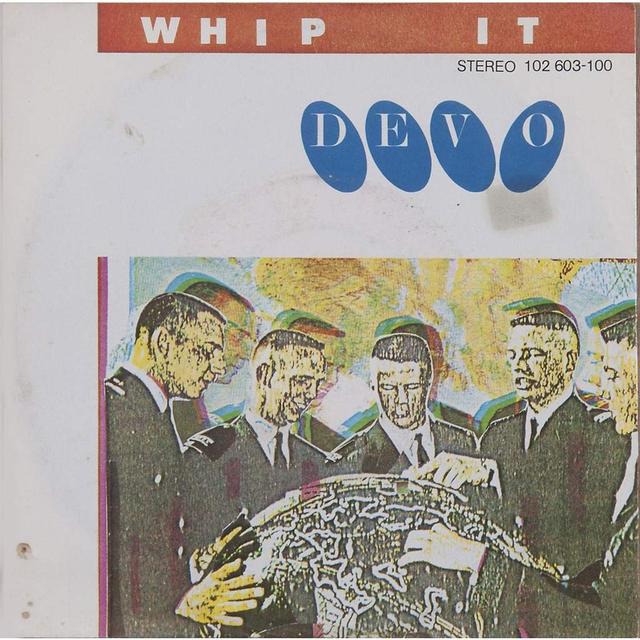
“Whip It”, a 1980 new wave song by rock band Devo, from their album Freedom of Choice. The lyrics, at first glance nonsensical, are a mocking collection of motivational cliches, in a satire on American optimism. The inspiration was apparently communist propaganda posters and the 1973 satirical novel Gravity’s Rainbow, by Thomas Pynchon. The music video plays with the idea that “Whip It” has sexual overtones.
Praised for its originality, and seen as a cornerstone of the new wave musical movement, “Whip It” was the band’s most successful song by far. It reached #14 in the US, and was most popular in Canada and New Zealand, at #11.
The cynical view of optimism revealed by “Whip It” that Lane gives voice to chimes in perfectly with Rory’s reading of Candide.
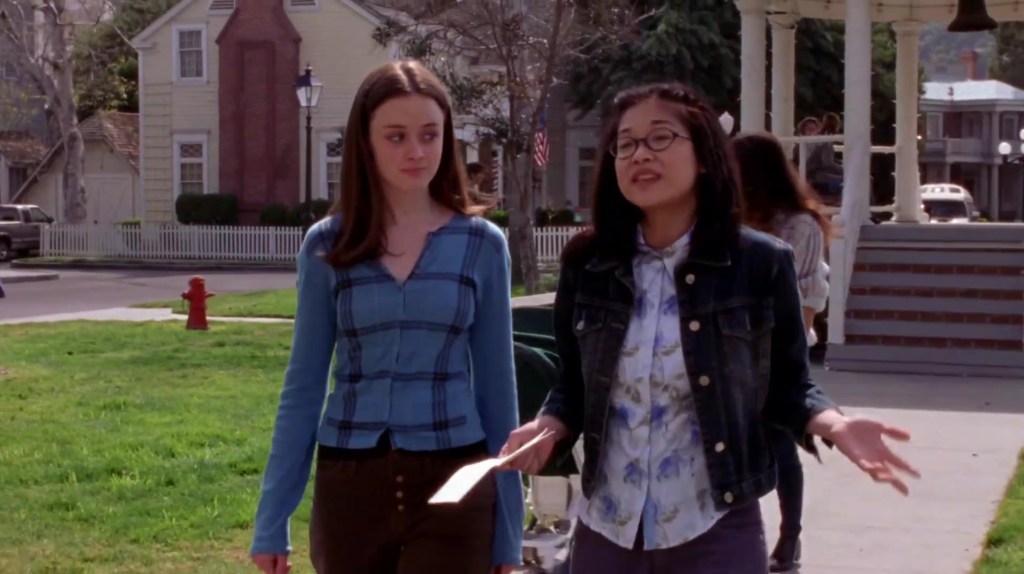
LANE: Lane Kim, you have shown a genuine aptitude for sales.
Lane is dismayed to be told, for the fourth time in a row, that her aptitude test says she has an aptitude for working in retail, like her parents. She is unhappy with the news, but in A Year in the Life, Lane is working in a store, so the test knew where her skills lay.
EMILY: So, tell me Richard, is this how it’s going to be from now on? … I just want to know what to expect from you. Because the bouncing from one thing to another, the moping and silence in your den for days, all of that I accepted … but your turning your back on Rory! … You adore that little girl, she means everything to you, remember? … Are you that lost? I’m incredibly disappointed in you Richard!
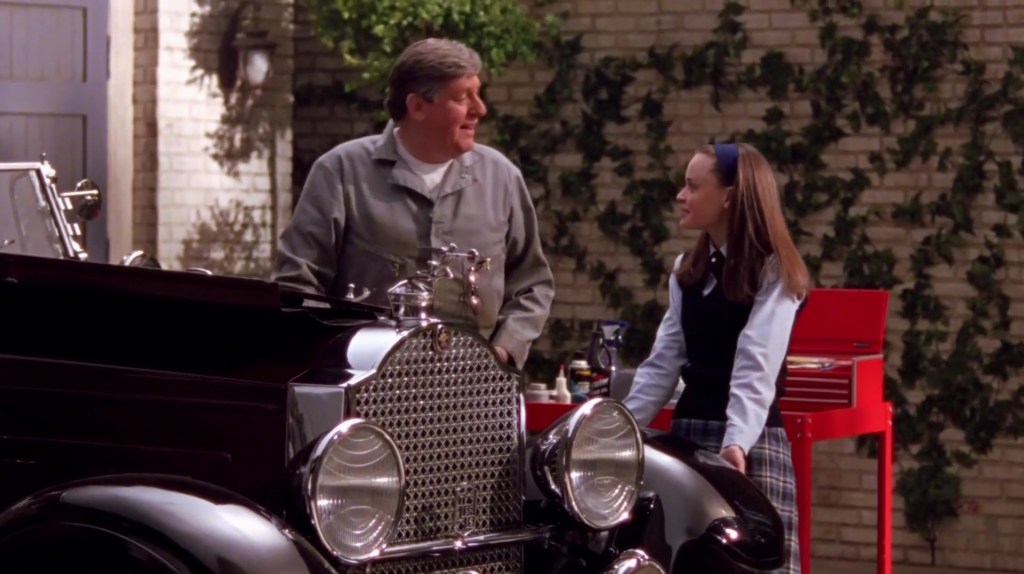
Rory asks her grandfather to be the group adviser for the Economics project, as Lorelai suggested, but Richard declines, saying he’s busy (restoring his antique car), and that Rory has given him very short notice. Really, because Rory said they had three weeks to prepare, and it seemed as if she asked Richard the very next day? Is three weeks short notice?
Emily is upset when she discovers Richard turned down the opportunity to help Rory, especially in her education – something which Richard values highly, and wants Rory to succeed at. Richard has been unhappy and rudderless since he retired, and now he has turned on his back on a chance to do something positive for someone he loves.
Emily lets him know in no uncertain terms how disappointed she is in in, and this appears to be the catalyst for Richard changing his mind and agreeing to be the adviser for Rory’s group.
RICHARD: I would hug you, but I have various forms of viscous fluid on my clothing.
RORY: I’ll take a rain check.
To “take a rain check” is a polite way to turn down an invitation, with the implication that you are only postponing it to a more convenient time. It originates from American baseball, when games would provide tickets to be used in future when games were postponed by rain, and dates to the late 19th century. Rory means she will hug Richard when he is wearing clean, dry clothing again.
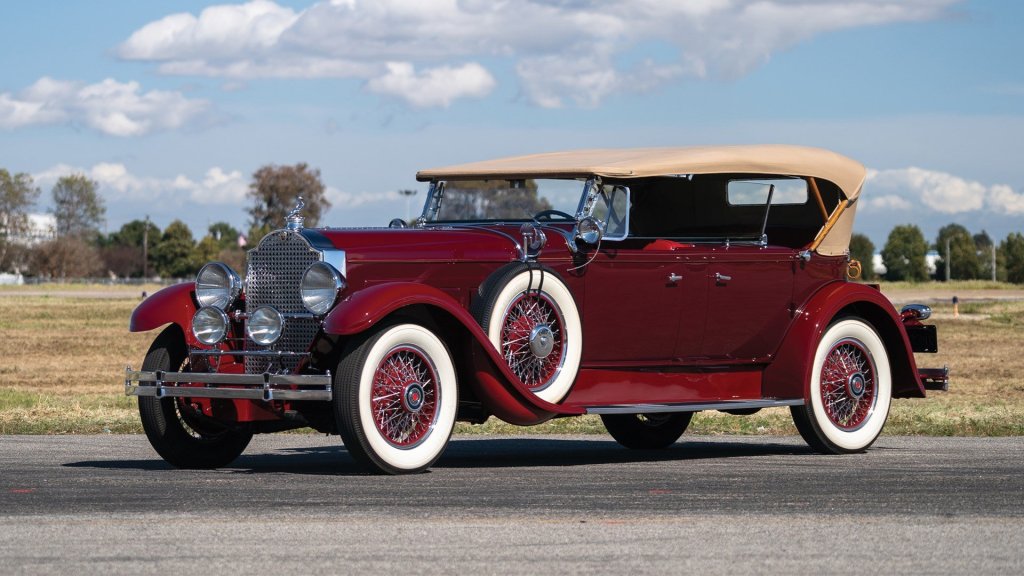
The car that Richard has bought to work on is a 1929 Packard Deluxe Eight Dual Cowl Sport Phaeton (type 640), a convertible sedan in a deep dark red colour. The Series Eight sedan was Packard’s best-selling model for many years, making Packard the best-selling luxury car maker, selling twice as many cars overseas as any other in its high price range; it was the number one designer and manufacturer of luxury vehicles from the turn of the twentieth century until World War II. Note the “Flying Goddess” hood ornament, this style used on Packard cars in the mid to late 1920s is considered a rare find in itself.
A classic car of this type would have cost at least $100 000 in 2002 (today it could go for $250 000), so Richard has bought himself a very expensive little hobby – which he will very soon tire of.
LORELAI: No, but I would’ve felt guilty about not feeling guilty and you can see how that could just go on forever.
RORY: Miss Gilmore and the vicious circle.
A reference to the 1994 biographical drama film, Mrs. Parker and the Vicious Circle, directed by Alan Rudolph. It stars Jennifer Jason Leigh as the writer and critic Dorothy Parker, and depicts the members of the Algonquin Round Table, otherwise known as the Vicious Circle. The film was a critical success, but not a commercial one.
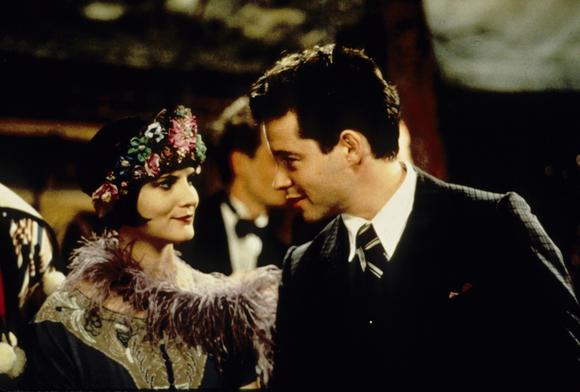
As a huge Dorothy Parker fan, of course Rory would have watched this film. Matthew Broderick is also in the cast, who is apparently one of Rory’s favourites (or at least was when she was younger).
Candide is a 1759 satirical picaresque novella by the French philosopher Voltaire. It is about a young man named Candide, living a sheltered life in an Eden-like paradise, taught to live a life of optimism by his mentor, Professor Pangloss, who teaches that we live in “the best of all possible worlds”. This life abruptly ceases, and the story details the slow disillusionment of the simple Candide as he witnesses and experienced terrible hardships. By the end, if he has not exactly rejected optimism, he has cautiously adopted a more pragmatic approach to life.
Sharply witty, insightful, fantastical, bitter, and matter-of-fact, Candide parodies the adventure and romance genres, as well as the coming-of-age novel. It is considered Voltaire’s greatest work, and has been often mimicked and parodied. Considered part of the Western canon, it is often taught in high schools and colleges.
You can see Rory as a parallel to Candide – raised in the sheltered Eden-like paradise of Stars Hollow, with the vivacious Lorelai raising her to believe she can do anything with enough self-belief, hard work, and Gilmore ability to argue that the usual rules don’t apply to her. Will Rory become increasingly disillusioned with the difficulties of the outside world once she leaves Stars Hollow?
PARIS: Well, she’s all we’ve got so you need to do whatever it takes to make it happen, otherwise maybe you shouldn’t be the group leader.
LOUISE: A coup d’état, how exciting.
A coup d’état (French for “blow of state”), is the sudden violent overthrow of an existing government by a rival faction in an illegal seizure of power.
BRAD: My mom works. She’s a curator at the Hartford Natural History Museum.
In real life, Hartford doesn’t have a natural history museum. The Connecticut State Museum of Natural History was at the University of Connecticut in Storrs, about half an hour’s drive east of Hartford; it closed in 2016. A more famous collection is the Peabody Museum of Natural History, at Yale University [pictured].





 The Annotated Gilmore Girls