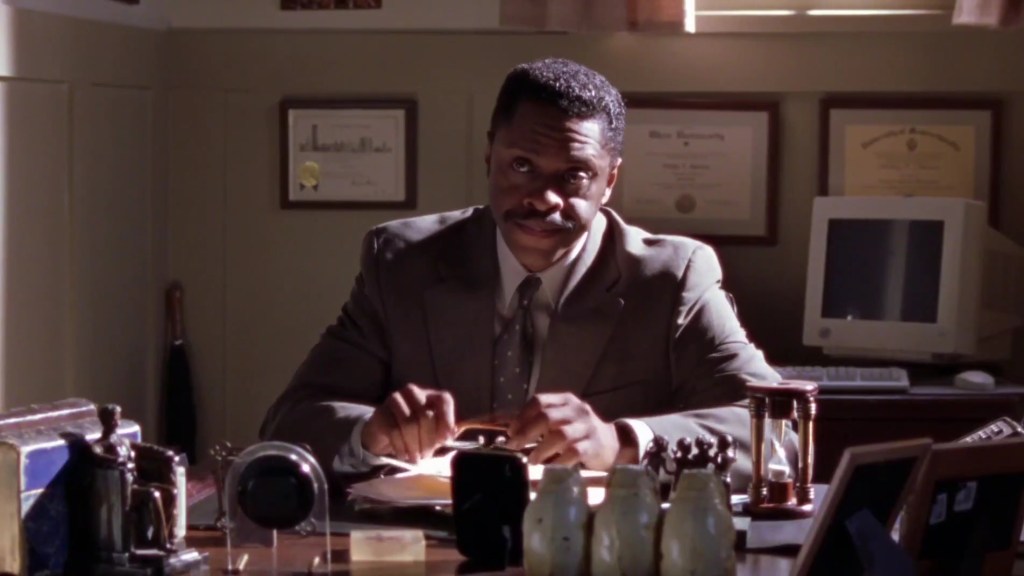
His attitude to teachers ranges from indifference to hostility
He shows no interest in school activities or fellow students
He stole all the baseballs
Principal Merton only tells Luke about all these issues one month before the end of semester! I don’t think it’s just Jess who’s been indifferent to his teachers – they sound like they’ve been indifferent to him as well. It’s almost as if the school has just been waiting for Jess to fail, rather than intervening to help or trying to engage with him – or talking to Luke about all these problems a lot earlier.
Schools really are quite useless in Gilmore Girls. Even if Jess was a model student for the next month, surely that wouldn’t be enough for him to pass, considering he’s had an entire year of doing nothing?
By the way, notice that Principal Merton’s observation that Jess isn’t interested in social activities or making friends at school is very similar to the criticism Mrs Verdinas had of Rory not socialising at Chilton. One might be failing while the other is maintaining a straight A average, but Rory and Jess have more in common academically than people think.
RORY: What about, my mother is two? LORELAI: Never saw it – Angie Dickinson?
RORY: You’re impossible.
LORELAI: You’re right. You’re Impossible was the one with Angie Dickinson.
Angeline “Angie” Dickinson (born Angeline Brown in 1931), actress who began her career on television in the 1950s before making her breakthrough in Western films Gun the Man Down (1956) and Rio Bravo (1959).
In her six-decade career, Dickinson has appeared in more than fifty films, including Ocean’s 11 (1960), Point Blank (1967), and Big Bad Mama (1974). From 1974 to 1978 she starred in the crime series Police Woman, for which she won a Golden Globe and three Emmy Awards. In 1980, she starred in Brian de Palma’s erotic crime thriller Dressed to Kill, for which she received a Best Actress Saturn Award. In her later career, she starred in several TV movies and miniseries, and played supporting roles in films such as Even Cowgirls Get the Blues (1994) and Big Bad Love (2001).
Dickinson often played sultry femmes fatale and provocative roles, becoming known as a sex symbol. She is regarded as one of the sexiest television stars of the twentieth century.
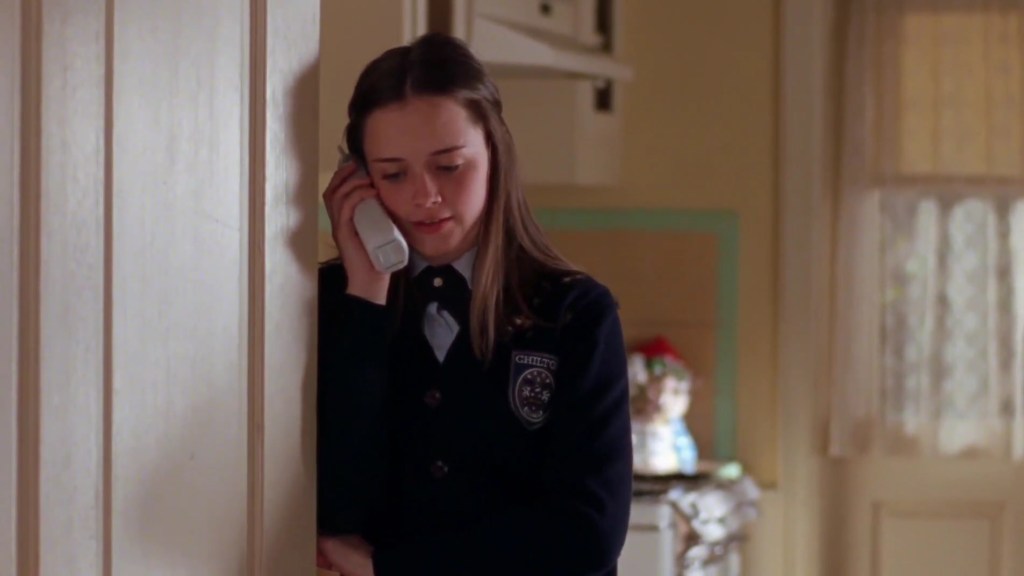
Rory is busy getting ready for school in the morning, how does she have time to talk on the phone? Christopher even says that he can’t talk for long, but he’s sent an email, and to add an extra 40 minutes onto next week’s call. There’s no way she can chat on the phone for 40 minutes before school. It seems as if Christopher has figured out a way to make his weekly phone call just a quick check-in. He is the king of minimal effort fathering.
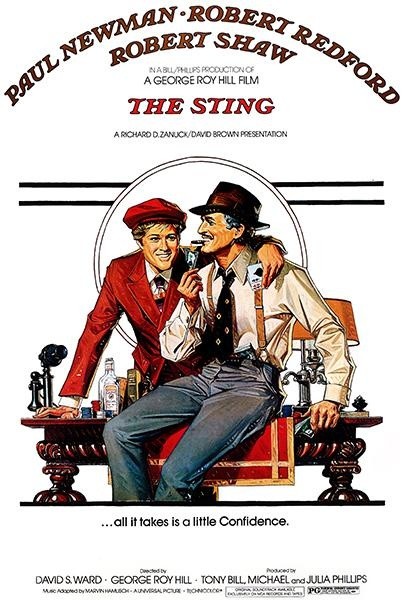
A 1973 caper film directed by George Roy Hill, involving two grifters, played by Paul Newman and Robert Redford, and their plan to con a mob boss, played by Robert Shaw. Set in 1936, it was inspired by real life cons perpetrated by brothers Fred and Charley Gondorff, as told in the 1940 non-fiction book, The Big Con by David Maurer. The Sting received rave reviews and was a box office smash, becoming the #2 film of the year. It won seven Academy Awards, including Best Picture and Best Director.
Rocky
A 1976 sports drama film, directed by John G. Avildsen, with screenplay by Sylvester Stallone, who also stars in the title role as Rocky Balboa. It’s a rags-to-to-riches tale of a working-class small-time boxer in the slums of Philadelphia who gets a shot at a world heavyweight championship. Made on a shoestring budget, it was a sleeper hit, becoming the #1 film of 1976. Critically acclaimed, it solidified Stallone’s career and led to him becoming a major movie star. It won three Academy Awards, including Best Picture, and is regarded as one of the greatest sports films ever made.
Crimes and Misdemeanours
A 1989 existential comedy-drama directed by Woody Allen, who also stars as Clifford Stern, a documentary filmmaker. The other main character is Judah Rosenthal, played by Martin Landau, who commits a very serious crime, and, stricken with guilt, turns to the religious teachings he had rejected. Cliff and Judah only meet once, at the end of the film, which has a philosophical message. A box-office flop, it was lauded by critics, and is regarded as one of Allen’s best films.
The Singing Detective
A 1986 BBC television serial drama, written by Dennis Potter, directed by Jon Amiel, and starring Michael Gambon. It is about a mystery writer, suffering writer’s block and ill in hospital, who enters a fantasy world involving his novel, The Singing Detective. Although ratings were modest, it was highly influential, and greatly praised in America, where it was later shown on PBS and won a Peabody Award. It is regarded as one of the greatest British TV programs ever made. Rory calls it a “mini-series”, but in fact it was six episodes – a normal run on British television.
Arthur
A 1981 comedy written and directed by Steve Gordon. It stars Dudley Moore as Arthur Bach, a drunken New York millionaire about to enter an arranged marriage with an heiress, but who falls for a working-class girl from Queens. The #4 film of 1981, Arthur was critically acclaimed, and considered one of the best films of the year. Its theme song, “Arthur’s Theme”, won an Academy Award for Best Original Song, and Sir John Gielgud won Best Supporting Actor for his role as Arthur’s valet.
Sophie’s Choice
A 1982 psychological drama film written and directed by Alan J. Pakula, adapted from the 1979 novel of the same name by William Styron. Set in 1947, it stars Meryl Streep as Sophie, a Polish immigrant with a dark secret from her past who shares a boarding house in Brooklyn with her lover, played by Kevin Kline, and a young writer, played by Peter MacNichol. It was a commercial and critical success, and Meryl Streep won the Academy Award for Best Actress for her role.
Cabin Boy
A 1994 fantasy comedy film directed by Adam Resnick and co-produced by Tim Burton. It stars comedian Chris Elliot, who co-wrote the screenplay with Resnick. Elliot’s character is a snobbish, unpleasant man who accidentally gets stuck aboard a boat out at sea, and goes on a fantastical voyage of self-discovery. The film received mixed reviews, and it is a matter of opinion whether it’s one of the worst films ever, an underrated work of comedic legend, or so bad that it’s good.
Desperately Seeking Susan
A 1985 comedy-drama film directed by Susan Seidelman, partly inspired by the 1974 French film Céline and Julie Go Boating. Set in New York City, it stars Rosanna Arquette as a bored housewife, who becomes involved with a bohemian drifter named Susan, played by Madonna in her first major screen role. The film was a commercial success, and received mostly positive reviews, with acclaim for both Arquette and Madonna. It’s considered one of the best films of the 1980s.
Fletch
A 1985 neo-noir comedy thriller film directed by Michael Ritchie, based on the 1974 novel Fletch by Gregory Mcdonald. It stars Chevy Chase as undercover reporter Irwin “Fletch” Fletcher who begins investigating a murder scheme that has unexpected links with the story he is working on. The film received positive reviews, and was a commercial success, performing very well on home media, and becoming a cult film.
Urban Cowboy
A 1980 romantic western film directed and co-written by James Bridges and Aaron Latham, adapted from an article of the same name Latham wrote for Esquire magazine. The story revolves around the love-hate relationship between a couple named Buford and Sissy, played by John Travolta and Debra Winger. Set in Pasadena, Texas, much of the action takes place in a honky-tonk bar playing country music. A critical and commercial success, the soundtrack was also a hit.
Lorelai and Rory managed to whittle their list of films down to a trim 75 possibilities!
TAYLOR: It is a fine, wholesome motion picture. Moving story, lovely scenes of nature.
The Yearling, 1946 dramatic family film directed by Clarence Brown, based on the 1938 novel of the same name by Marjorie Kinnan Rawlings. It stars Gregory Peck and Jane Wyman, and was filmed on location in the Ocala National Forest in Florida. The film is about a young boy, played by Claude Jarman Jr, who adopts a troublesome deer, the “yearling” of the title.
The Yearling was praised by critics as a heart-warming family film, and was the #9 film of the year at the box-office. However, high production costs meant that it didn’t actually make a big profit. It won three Academy Awards, including a Juvenile Award for Claude Jarman Jr. A television adaptation was released in 1994.
Note that we later learn in this episode that when Taylor says, “Moving story, lovely scenes of nature”, he is quoting from the description given in the film catalogue.
After Lorelai complains that Taylor has chosen The Yearling for the past three years for Movie Night in the Square, Taylor unexpectedly gives her the job of choosing the movie instead, saying she has never volunteered once to help with this event (which is surprising to learn, since Lorelai loves film, and volunteers for most community festivals).
LORELAI: Just as Marty, aka Eve Harrington, shows up trying to take Dean’s job, Taylor’s ladder mysteriously disappears, suddenly making Dean invaluable no matter what fancy tricks Lon Chaney Junior over there pulls.
Lon Chaney Jr., stage name of Creighton Chaney (1906-1973), actor best known for playing the title character in the 1941 horror film, The Wolf Man. He was the son of Leonidas “Lon” Chaney (1883-1930), a star of silent film and one of the most versatile actors of all time. He was known as “The Man with a Thousand Faces”, due to his ability to completely transform his appearance with make-up.
Creighton Chaney felt overshadowed by his famous father, and Lon Chaney discouraged him from following him into show business. It was only after his father’s death that Creighton began acting in films, often in uncredited roles, or doing stunt work. By 1934 he had a leading role, and the next year was billed as Lon Chaney Jr; by 1942, Universal Studios usually insisted on him being credited as Lon Chaney.
Lorelai is suggesting that now Dean has gone, Marty will be slowly replacing him, just as Creighton Chaney gradually took over his father’s name. Of course, Lorelai isn’t really worried about Marty – all this talk is a replacement for her real fear, that Jess will replace Dean while he’s out of town. She seems to be trying to suggest to Rory that Dean in invaluable and irreplaceable.
LORELAI: Just as Marty, aka Eve Harrington, shows up trying to take Dean’s job, Taylor’s ladder mysteriously disappears …
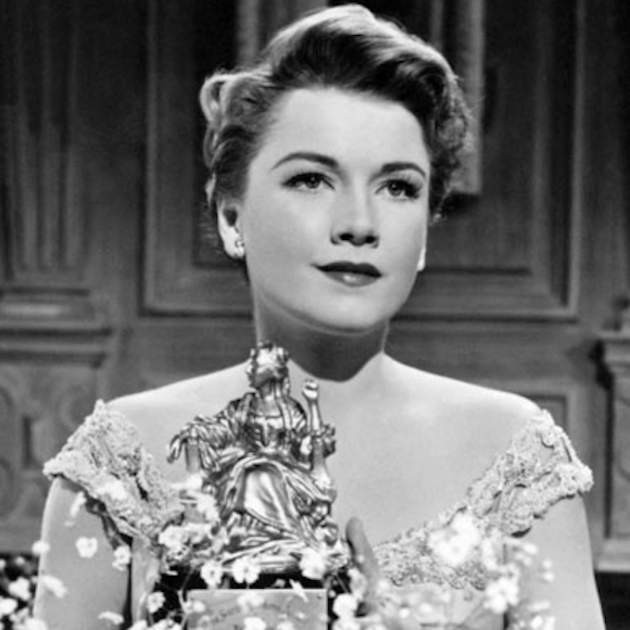
Eve Harrington [pictured] is the title character of the 1950 drama film All About Eve, directed by Joseph F. Mankiewicz, and produced by Daryl F. Zanuck. It is based on the 1946 short story, “The Wisdom of Eve” by Mary Orr, published in Cosmopolitan magazine.
The film stars Bette Davis as Margo Channing, a highly-respected but ageing Broadway star, and Anne Baxter as Eve Harrington, an ambitious young fan who insinuates herself into Margo’s life as her assistant, all the while scheming to take her place. The story was based on the real life experience of Austrian-British actress Elisabeth Bergner, who found herself in the same position as Margo Channing.
All About Eve was overwhelmingly praised by critics, and a box-office success, becoming the #9 film of 1950. It received a record 14 nominations at the Oscars and won six Academy Awards, including Best Picture, Best Director, and Best Screenplay. It is the only film to have ever received four female acting nominations at the Oscars – for Bancroft, Davis, Celeste Holm, and Thelma Ritter. It is regarded as one of the greatest films of all time.
LORELAI: Wow, Marty does the jar twirl before putting the salsa in the bag. Impressive, very Cocktail.
Cocktail, 1988 romantic comedy-drama film directed by Roger Donaldson and written by Heywood Gould; the screenplay was based on his 1984 semi-autobiographical novel of the same name.
It tells the story of a young New York business student, played by Tom Cruise, who takes up bartending in order to make ends meet. An older, more experienced barman, played by Bryan Brown, takes him under his wing and teaches him how to flair – that is, to entertain bar patrons using cocktail shakers and liquor bottles like a juggler. Lorelai suggests that Marty the substitute bag boy is “flairing” the groceries to dazzle the customers.
Cocktail was savaged by critics, who called it “brainless”, “empty”, and “banal”, and it won Worst Picture and Worst Screenplay at the Golden Raspberry Awards. It is generally seen as one of the worst films ever made. Despite this, it was a huge success at the box office, and the #8 film of 1988.
RORY: Oh yeah, that’s Marty. He’s subbing for Dean while he’s out of town.
Dean is suddenly visiting his grandmother out of town in this episode – doesn’t he have to attend school? Considering how upset Dean was at the end of the last episode, it’s possible he has gone to stay with his grandmother to have a break from Stars Hollow and Rory, or to think things through.
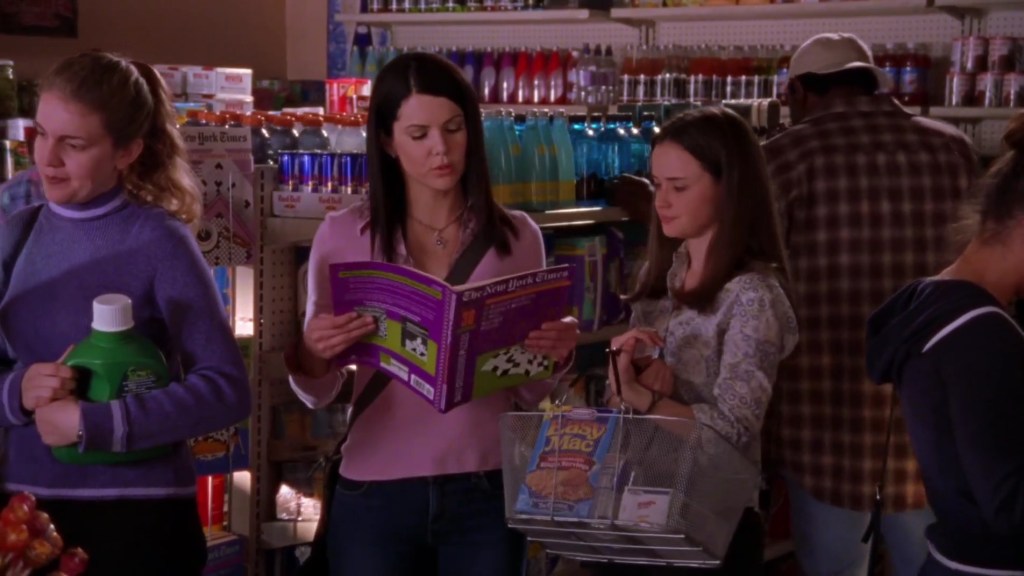
LORELAI: I hate crossword puzzles. They make me feel stupid.
An inside joke. Lauren Graham is very good at crossword puzzles, and would go through several a day on set while waiting for her turn.
Lorelai is looking at a New York Times puzzle book, and judging by the shopping basket Rory is carrying, they are having mac and cheese made from a packet, Twinkies, and a can of Red Bull for dinner that night.





 The Annotated Gilmore Girls