LUKE: Oh, what show? LORELAI: Levittown, it’s a new musical.
The musical that Lorelai is going to see with Alex, Sookie, and Jackson is fictional. Levittown is a hamlet on Long Island, New York, built by Levitt & Sons as a planned community for returning World War II veterans between 1947 and 1951.
It was the first mass-produced suburb, and became a symbol of the American Dream, and of racial discrimination – the Levitts would only allow whites to buy in the suburb, and as late as the 1990s, only a tiny portion of the community were non-white. They built other Levittowns in Pennsylvania, New Jersey, and Puerto Rico.
Oddly enough, a real play called Levittown – a drama, not a musical – opened off-Broadway in 2009, to lukewarm response, although successful enough to be staged a few times since then.
In real life, there weren’t any new musicals debuting in New York in February 2003.
LANE: At 3:40, my mom will be on her way to the yarn store for her bimonthly sew-a-thon with Lacey Schwartz and Bich Ho. DAVE: The yarn store’s on Peach. LANE: Plum. DAVE: That cuts us off from our usual route to the interstate. LANE: There’s a back road that circles around it, but it’s gonna be muddy from the rains. DAVE: How about I have the guys take the usual route, I’ll go by foot on Peach, down the alley behind Al’s, over the fence, and they can pick me up a half a mile down by the Shell station. LANE: Perfect. Uh, what, that’s not complicated.
Lane and Dave have come up with some ingenious plan to avoid seeing Mrs Kim, so that she doesn’t realise Dave is in (gasp) a band. And even worse, that Lane is too. Lane confessed her feelings about Dave to her mother at the family wedding, and we don’t know any more since then. Presumably Mrs Kim is still unable to move on from Dave not being Korean.
We learn a little bit of back story during this scene. Mrs Kim’s life apparently doesn’t revolve entirely around work, church, and family – she also attends a sewing circle (?) once a fortnight at the local yarn store with two women named Lacey Schwartz and Bich Ho (Ho is a common Vietnamese surname, and Bich is a Vietnamese girl’s name meaning “jade”).
The yarn store is on Plum Street, one street over from Peach Street, which is where Dean and his family live. Lorelai described this area to Jess as a desirable residential neighbourhood, so it’s slightly surprising to learn it has shops around it as well – and also leads to the alley behind Al’s, which is always implied to be in the centre of town. Maybe Peach is a very long street? Incidentally, I wonder if this alley is the one Lorelai and Rory were shown walking down in “The Break Up, Part 2”?
Unlike Henry, Dave readily fits in with all of Lane’s zany schemes to keep secrets from her mother, and even comes up with own solutions. They are clearly made for each other.
ZACH: Man, this crunch just now sounded like the drum-fill in “Baba O’Riley”.
“Baba O’Riley”, a song by English rock band the Who, and the opening track to their 1971 album Who’s Next. Written by Pete Townsend, the song refers to his two major inspirations of the time: Indian spiritual master Meher Baba, and American jazz composer Terry Riley.
It was a Top 20 hit in The Netherlands, and a minor hit in Australia. It is considered one of the greatest rock songs of all time, has been highly influential, and is often used in film and television themes and soundtracks.
Keith Moon’s drum fill on the song has a bass pulse underneath while his hands remain busy on the snare drums and toms, in a jazz/swing inspired style. It’s considered a showcase for his signature style.
Crunch refers to a setting when mixing tracks – “crunch” will bring up the high and mid frequencies to add presence to claps, snares, and cymbals.
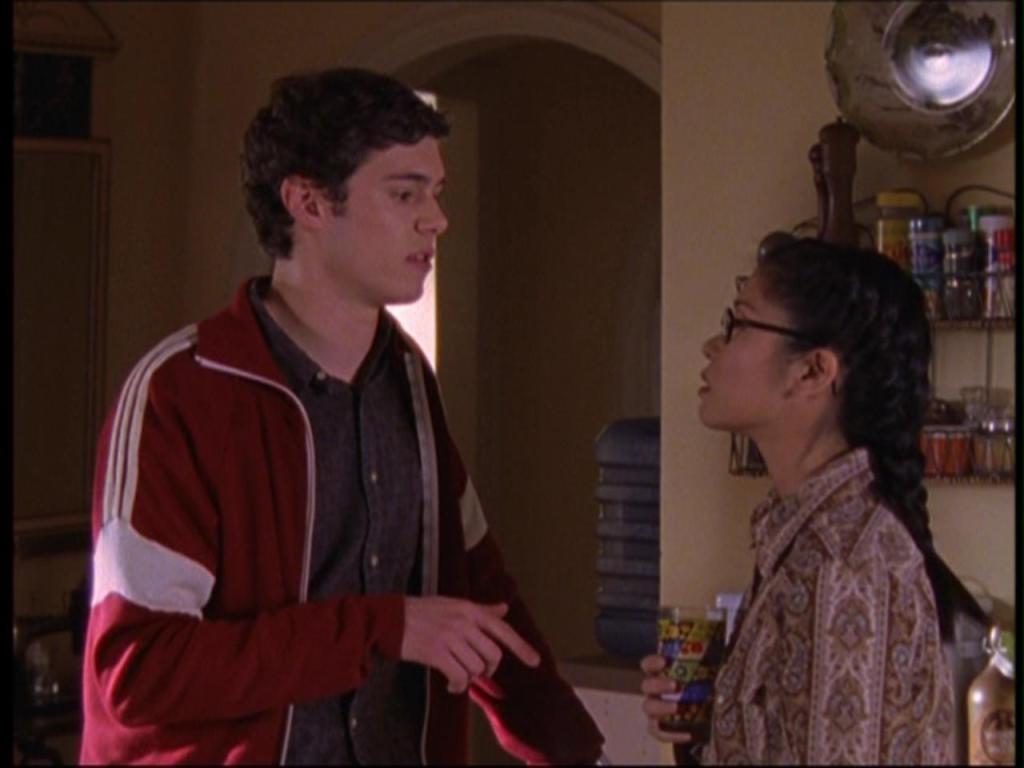
JESS: Were you hanging out there with Dean? RORY: I was not hanging out with Dean. We were both hauled in there to watch her try out material and we were sitting in the same area so we talked a little, and then we left at the same time. That was it. It was all by accident.
Jess confronts Rory with the knowledge that he knew she was with Dean, something she omitted when recounting the events of her day. Keeping this from him possibly reminded him of the all the times Rory omitted to tell Dean when she hung out with Jess.
Unfortunately, due to Dean’s temper and jealousy, Rory learned not to be transparent with her boyfriend – a legacy which Jess is inheriting (which he sort of deserves, since it’s because of him that Rory was most often lacking in candour with Dean).
Unlike Dean, Jess quickly recovers once he realises it was just by chance Rory and Dean spent some time together in public as part of a community event. He asks her to think about letting him know in future, because it’s a shock reading it off a flyer, and then he asks her to spill all the tea on Miss Patty’s show.
It’s seems like a much healthier relationship for Rory, from this perspective, as she no longer has to fear her boyfriend finding things out and putting a suspicious spin on them.
RORY: How was work? JESS: I toted the barge, lifted the bale.
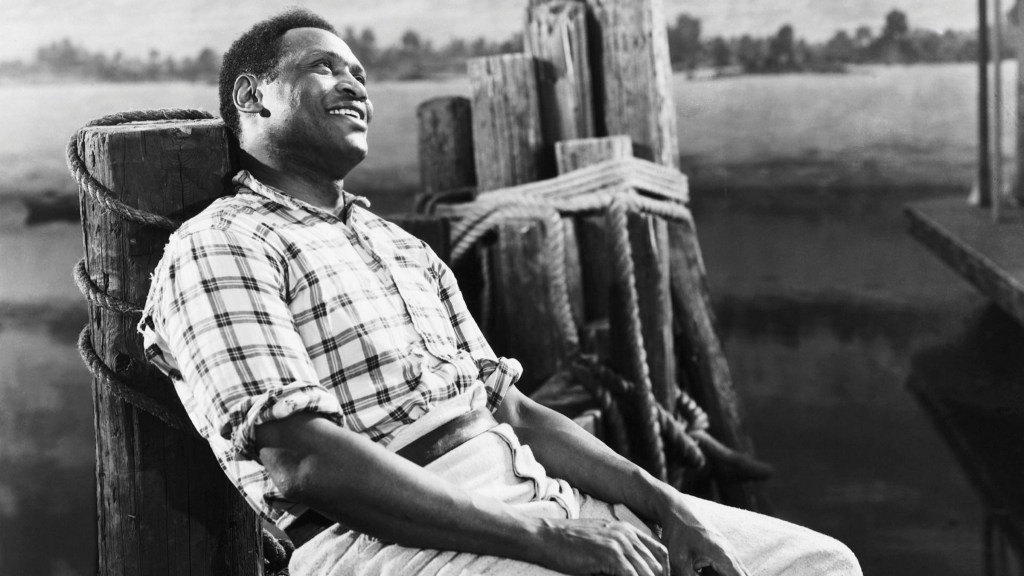
Jess refers to the show tune “Ol’ Man River”, with music by Jerome Kern and lyrics by Oscar Hammerstein III, from the 1927 musical Showboat. The song contrasts the struggles and hardships of African Americans with the endless, uncaring flow of the Mississippi River. It is sung from the point of view of a black dock worker on a showboat, and is the most famous song from the show.
Jules Bledsoe sang the song in the original stage version, and William Warfield in the 1951 film version. In 1928, Paul Robeson recorded the most famous version, which was sung at dance tempo; Robeson’s recording was recorded into the Grammy Hall of Fame in 2006.
The lyrics say, Tote that barge! Lift that bale!, to indicate the hard work undertaken on the river by black workers.
LORELAI: Okay, I think I get it. I have the best intentions. RORY: Bingo.
Bingo, an informal interjection used to mean either, “I have found it”, or “You got it, my point exactly”. The origin is unknown, and the word is the source of the name of the game of chance, Bingo.
RORY: The woman taught me everything I’ve already forgotten about dancing, baton twirling and gymnastics.
We learned in “Rory’s Birthday Parties” that Miss Patty is Rory’s former ballet teacher. Apparently she also learned gymnastics and baton twirling from her. Rory is physically awkward and slightly clumsy – I can’t imagine she did well in any of these classes. It’s also amazing she managed to learn ballet and gymnastics, and still be that physically awkward!
MISS PATTY: [sings] It’s a quarter of three, there is no one in the place, except you and me.
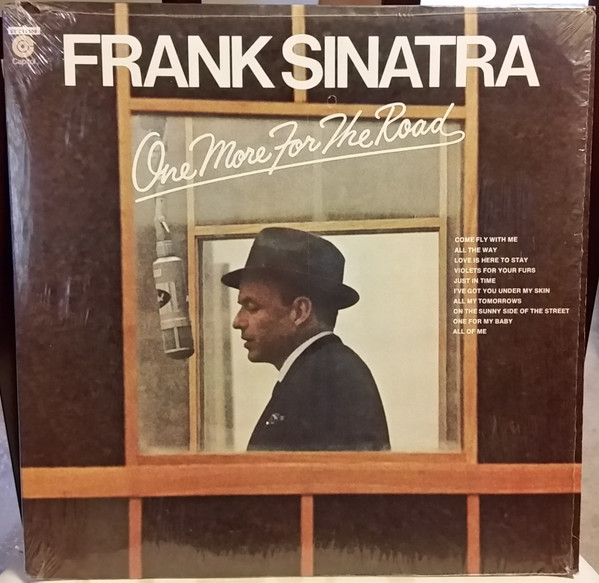
Miss Patty sings, “One For My Baby (And One More For the Road”, a hit song written by Harold Arlen and Johnny Mercer for the 1943 musical film, The Sky’s the Limit, where it was sung by Fred Astaire. It was further popularised by Frank Sinatra, who recorded it several times between the 1940s and 1960s.
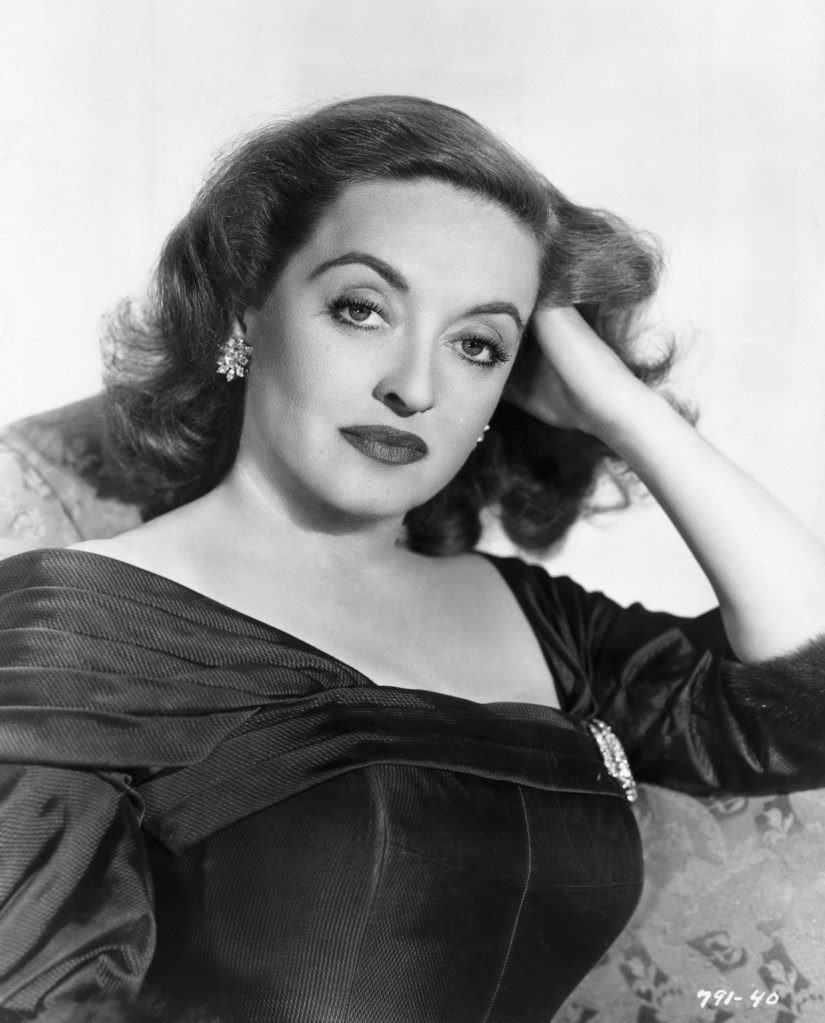
MISS PATTY: I was a chorus girl in a bus-and-truck tour of Guys and Dolls. Beantown, I love that town. And there I was, me and the girls backstage after the show, and in she comes. And who does [Bette Davis] walk right up to, but little old me. And she sized me up, exhaled some smoke from that regal mouth of hers, and said, “Doll, you don’t got the high notes but you sure got the gams.” I’ll always treasure that moment with Bette and I wanna dedicate this song to her.
Guys and Dolls, a 1950 Broadway musical, with music and lyrics by Frank Loesser, and book by Jo Swerling and Abe Burrows. It is based on several short stories of the 1920s and ’30s by Damon Runyon.
The musical received overwhelming critical acclaim, and praise for its faithfulness to Runyon’s stories. It won several Tony Awards, including Best Musical, and had multiple Broadway and London revivals, as well as a 1955 film adaptation starring Marlon Brando, Jean Simmons, and Frank Sinatra. In 1998, the original cast was inducted into the Grammy Hall of Fame. It is considered one of the most significant musicals of all time.
MISS PATTY: Okay, here we go. Hey, did you know that I once met the great Bette Davis?
Ruth Elizabeth “Bette” Davis (1908-1989), Hollywood actress with a career spanning more than 50 years and 100 acting credits. She was noted for playing unsympathetic, sardonic characters, and was famous for her performances in a range of film genres, although her greater successes were in romantic dramas. She won two Academy Awards.




 The Annotated Gilmore Girls