PARIS: Hey, at least I’m not putting her on an iceberg and shoving her off to sea, which considering the fact that you can’t find the Shakespeare section without psychic powers yet the CliffsNotes rack practically smacks you in the face on the way in, is totally justified.
CliffsNotes are a series of student study guides started in Nebraska by Clifton Hillegass in 1958, having gained the US rights to a Canadian series published in Toronto. Hillegass and his wife Catherine started the business in their basement with 16 titles on Shakespeare. By 1964, sales of CliffsNotes had reached one million annually, and there are now CliffsNotes for hundreds of works. IDG Books bought CliffsNotes for $14.2 million in 1998, and it has since been acquired several more times.
RORY: Are you sure the first thing you wanna do in office is to get a ninety-three year old woman sacked?
PARIS: Hey, at least I’m not putting her on an iceberg and shoving her off to sea …
Paris refers to a stereotype of Eskimo culture where the elderly were put on an ice floe to die when they became a burden. Although some Eskimos did practice senilicide (the killing of the elderly), it was rare, usually only practised during famines, and there is no record of anyone being put out on the ice to die – simple abandonment was probably the most common method. In many cases, it may have been what we might refer to as assisted suicide. It is no longer practised in Eskimo culture, and hasn’t been for a very long time.
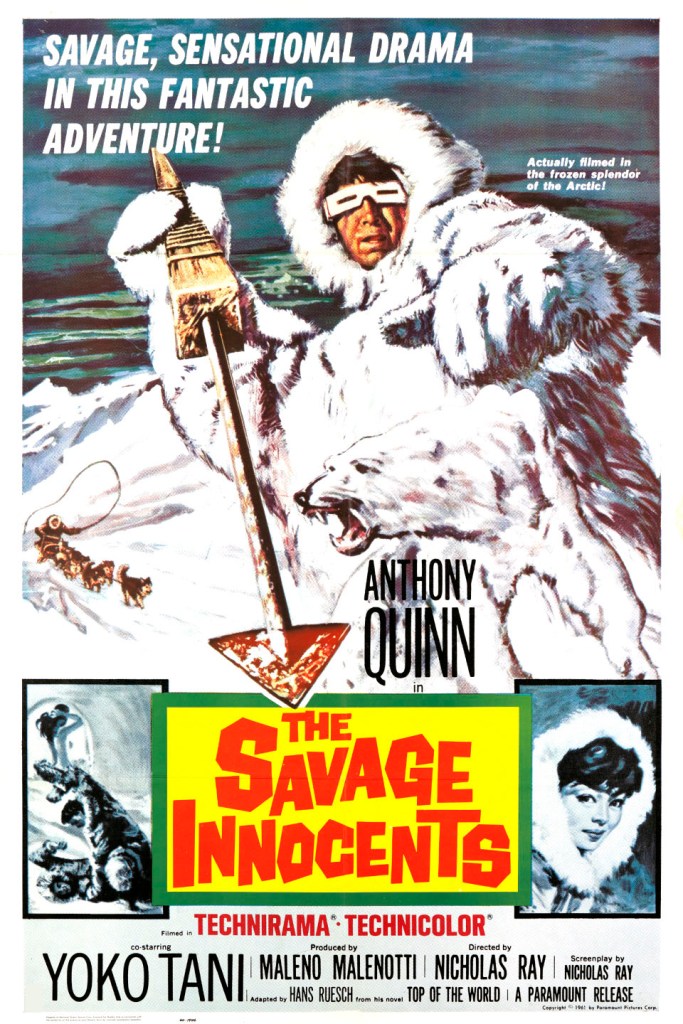
The idea of elderly Eskimos being pushed out to sea on ice floes might have come from the 1960 adventure film, The Savage Innocents, directed and co-written by Nicholas Ray, and based on the 1950 novel Top of the World by Swiss author Hans Ruesch. The film stars Anthony Quinn as an Inuit hunter – which is believed to be the inspiration for Bob Dylan’s 1967 song, “Quinn the Eskimo (The Mighty Quinn)”, successfully recorded by British band Manfred Mann in 1968.
In the film, the hunter’s mother-in-law is put on the ice to die, but is rescued soon after. In another scene, the hunter’s wife walks across the ice to commit suicide; a piece of ice breaks off and she briefly floats on the ice floe before drowning herself. The two scenes together may have suggested the popular idea of the elderly being set adrift on the ice to die.
Although Paris is made to seem a monster by getting rid of the librarian, she is ninety-three years old, and is in intensive care during this episode! Surely it is time for her to retire, on health grounds? I don’t feel as if Paris is being that unreasonable here.
FRANCIE: Actually, I have something I’d like to put on the table to be discussed.
PARIS: Oh, okay. Well, we only have a couple of minutes, so give us the Reader’s Digest version.
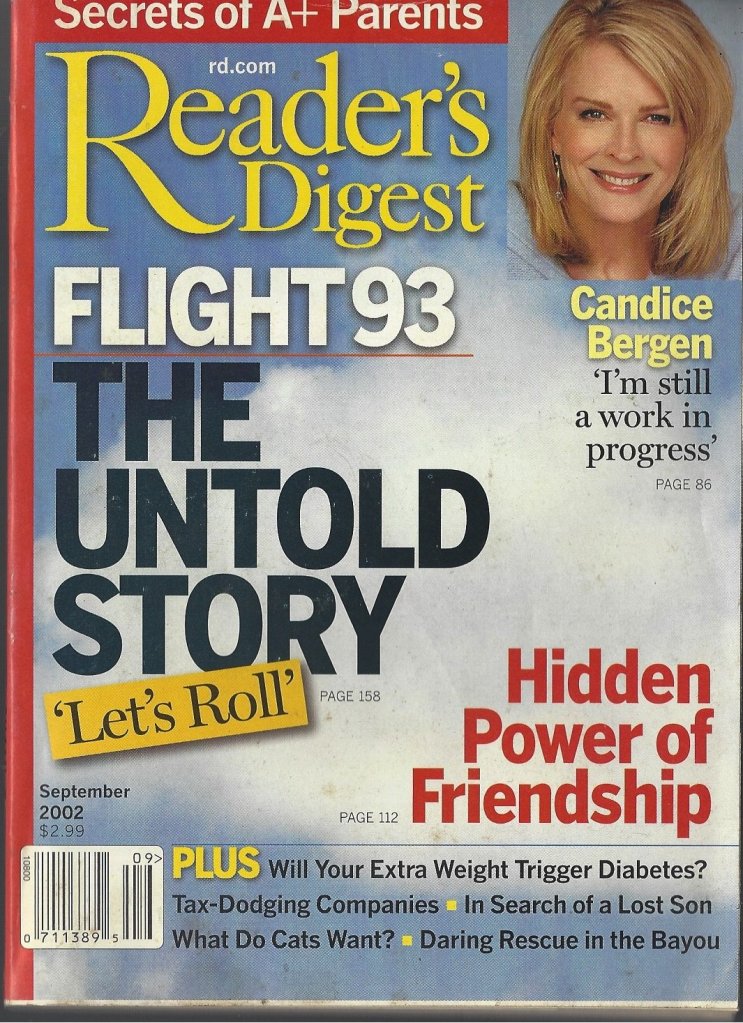
Reader’s Digest, a general interest family magazine founded in 1922 by DeWitt Wallace and his wife Lila Bell Wallace. Formerly based in Chappaqua, New York, and now headquartered in Manhattan, Reader’s Digest was for many years the best-selling magazine in the US. The periodical has a global circulation of 10.5 million, making it the largest paid-circulation magazine in the world.
DeWitt’s idea was to gather of sampling of his favourite articles on various subjects from monthly magazines, often rewriting and condensing them – this might be what Paris means by the Reader’s Digest version. She may also refer to Reader’s Digest Condensed Books – hardcover anthologies of classic and bestselling novels in abridged (“condensed”) form. These were published from 1950 to 1997, after which it became softcover and called Reader’s Digest Select Editions.
To condense, the Reader’s Digest version is the short version of something.
PARIS: But this year – everything changes, starting with the library. It’s completely out of proportion with its subjects. I mean, there’s five hundred volumes on the French Revolution, yet only three on the Crusades.
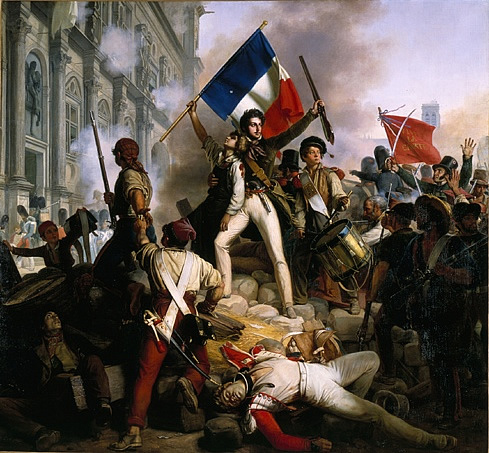
The French Revolution, previously mentioned. A period of radical political and societal change in France from 1789 to 1799. Many of its ideas are considered fundamental principles of liberal democracy, while phrases like liberté, égalité, fraternité reappeared in other revolts, such as the 1917 Russian Revolution, and inspired campaigns for the abolition of slavery and universal suffrage. The values and institutions it created dominate French politics to this day.
The Crusades, a series of religious wars initiated, supported, and sometimes directed by the Roman Catholic Church in the medieval period. Beginning with the First Crusade which resulted in the recovery of Jerusalem in 1099, dozens of Crusades were fought, providing a focal point of European history for centuries.
PARIS: Look, let’s face it, the last administration might have just as well been running around yelling ‘Toga!’ for all the brilliant things they accomplished.”
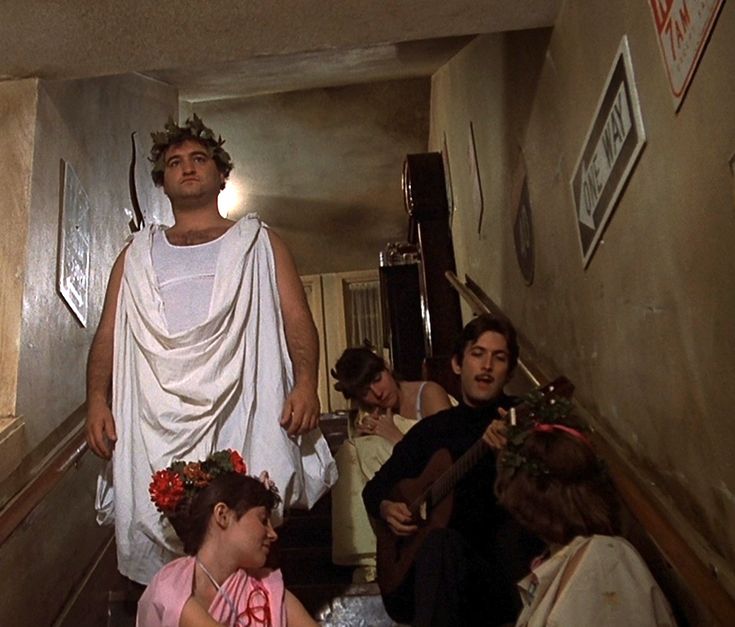
Paris references the 1978 comedy film National Lampoon’s Animal House, directed by John Landis, produced by Ivan Reitman, and written by Harold Ramis, Douglas Kenney, and Chris Miller. It was inspired by stories written by Miller and published in humour magazine National Lampoon. The stories were based on Ramis’s experience in the Zeta Beta Tau fraternity at Washington University in St. Louis, Miller’s Alpha Delta Phi experiences at Dartmouth College in New Hampshire, and producer Reitman’s at McMaster University in Hamilton, Ontario.
The film, starring John Belushi in his first screen role, is about a trouble-making under-performing fraternity called Delta Tau Chi whose members challenge the authority of the dean of the fictional Faber College. The film received mixed reviews upon its release, but was a huge commercial hit, becoming the #3 film of 1978 at the box office, and the highest grossing comedy of its time. The film almost single-handedly launched the gross-out comedy genre which became a Hollywood staple, and it is regarded as one of the greatest comedies (or even the greatest comedy), and one of the best films of all time.
The toga party, a staple of college life, is immortalised in Animal House. Whenever the guys at Delta House decide to have a toga party, they start mindlessly chanting, “Toga! Toga! Toga!”. Paris is saying that the previous student government were a bunch of idiots who were only interested in partying.
ALL STUDENTS ON STAGE: I have faith in the Chilton Handbook, so let it be forever.
Note that instead of swearing on the Bible or other sacred text, the students instead swear on the Chilton Handbook! This seems to comically underline the cult-like nature of Chilton.
PARIS: In the past, all great empires have fallen. The feeling seems to be that it’s inevitable – that something like what the Romans built could not last.
The Roman Empire was the post-Republican era of Roman civilisation, lasting from the accession of the first Roman Emperor, Augustus, in 27 BC to 395 AD, when it disintegrated under onslaughts from Germanic tribes such as the Goths and the Huns after the death of Theodosius the Great, the last Roman Emperor.
The fall of the Roman Empire is often invoked whenever a particular long-standing institution is threatened, or is perceived to be threatened, by destructive outside forces.
[Painting shown is The Course of Empire, Destruction by Thomas Cole, 1836].
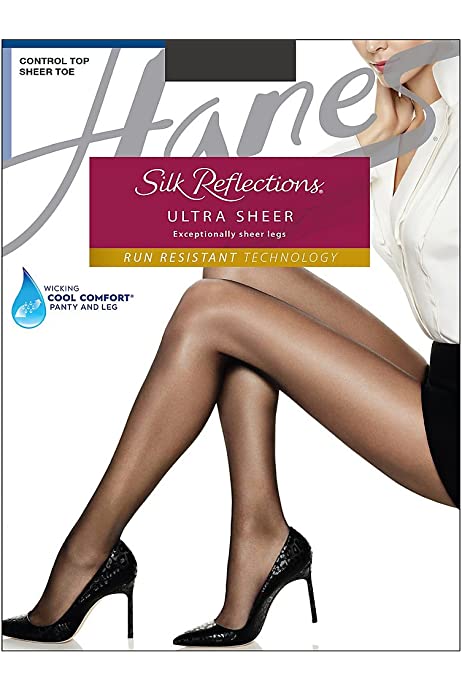
LORELAI: When I was in school, Linda Lee was class treasurer and she could not keep her knees closed if they were magnetized. Hanes should’ve given her an endorsement deal.
Hanes is a clothing company founded in 1900 by John Wesley Hanes in Winston, North Carolina, which became known as Hanes Hosiery Mills in 1914, merging with P.H. Hanes Knitting Company (founded by John’s brother Pleasant Hanes) in 1965. In 1978, it was bought by Consolidated Foods (Sara Lee). Although Hanes sell a variety of men’s and women’s clothing, it is perhaps best known for its pantyhose.
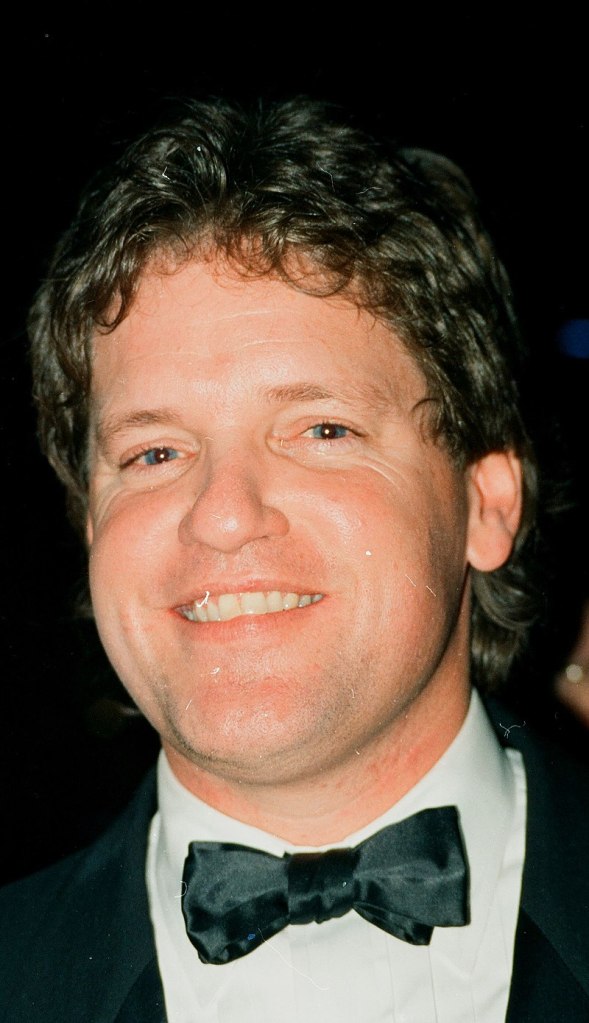
LORELAI: Honey, you have power, brains, now all you need is a dimwitted, drunken or drug-addicted relative to constantly humiliate you while you serve in office.
Lorelai is probably referring to Bill Clinton’s younger half-brother, Roger Clinton Jr. He was given the codename “Headache” by the Secret Service, due to his controversial behaviour, which included accepting bribes from mobsters, and dangerous drink driving offences. He received a presidential pardon from his brother for a 1985 conviction for cocaine trafficking, meaning that although he had served a prison sentence, the crime was removed from his criminal record.




 The Annotated Gilmore Girls