Lorelai teasingly suggests a girlfriend whose name is the opposite of “butch” – a “sissy”, slang for an effeminate man. There’s probably a bit of homophobic humour to Lorelai’s joke.
Lorelai had a friend in high school of this name – “Crazy Sissy”, who talked to her stuffed animals. Sissy has already been on the show as a high school girlfriend – she’s the girl Tristan took to the winter dance at Chilton, because Rory turned him down.
Note that Luke lets Lorelai know that he did have a girlfriend in high school, but he’s not saying her name. As they both went to Stars Hollow High, there’s a good chance she still lives in town.
If Luke was seventeen in 1985, that would make him the same age as Lorelai, both of them born in 1968. If he was any younger that year, he would be younger than Lorelai, which doesn’t seem likely (it’s a stretch of plausibility that he’s the same age – Scott Patterson is almost a decade older than Lauren Graham). I don’t think he can have been eighteen, because he didn’t do his final year of high school.
Luke said he didn’t have a single positive memory from high school, yet he was a star athlete and a state hurdles champion. It can’t have been all bad. It’s definitely a lot better than what Jess has been through at school.
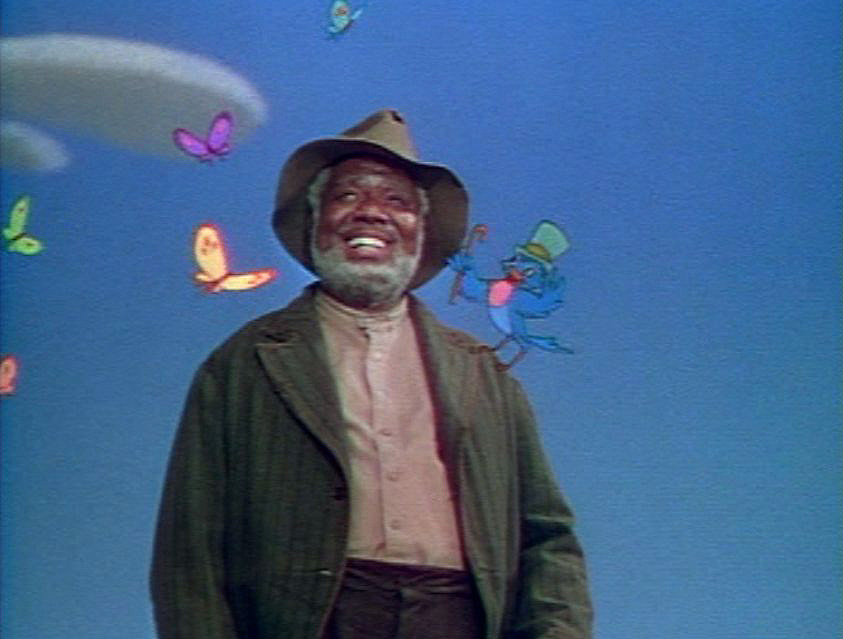
“Zip-a-Dee-Doo-Dah”, a song composed by Allie Grubel with lyrics by Ray Gilbert for the 1946 Disney film, Song of the South. The film combines live action and animation, and is based on the Uncle Remus stories adapted by Joel Chandler Harris, taking place in the Reconstruction era of the South, after the Civil War.
The song is sung by James Baskett in the film, who stars as Uncle Remus, and it won the Oscar for Best Original Song, while Baskett received an Honorary Academy Award, making him the first male black performer to win an Oscar. Song of the South was controversial upon its release for its portrayal of African-Americans, and has remained so.
The song has very upbeat lyrics:
Zip-a-dee-doo-dah, zip-a-dee-ay My, oh, my, what a wonderful day Plenty of sunshine headin’ my way Zip-a-dee-doo-dah, zip-a-dee-ay!
RORY: Oh, a girl told me once that if your scalp is hurting from bleach, drink a 7 Up. It’s something to do with the bubbles.
LANE: The Kim household does not have soft drinks.
RORY: Well, what do you got?
LANE: Something called Salad Water imported from Korea. Believe me, it’s nothing like 7 Up.
7 Up, a lemon-lime flavoured soft drink owned by Dr Pepper, and distributed by Pepsi. It was created by Charles Leiper Grigg in St Louis in 1929, two weeks before the Wall Street stock market crash of that year. Originally called Bib-Label Lithiated Lemon-Lime Soda, it contained lithium citrate, a mood stabiliser used to treat manic states and bipolar disorder. It became 7 Up in 1936, and nobody really knows why that name was chosen – some say that it refers to the seven original ingredients, some that it’s a coded reference to lithium, which has an atomic mass around 7.
7 Up won’t do anything to stop your scalp hurting after bleach (and if it’s the bubbles, wouldn’t any soft drink do the same thing?), but I’ve seen it recommended for stomach ache and the common cold, so there seems to be a lot of belief in it as a folk remedy. I suspect Rory is saying anything to distract Lane, and possibly hoping for a placebo effect.
Salad Water, or Water Salad [pictured], is water flavoured with green salad, produced by Coca-Cola in Japan. I’m not sure why the Kims have imported it from Korea when it’s a Japanese product – perhaps the Korean import-export company imports it from Japan, then exports it to the US.
LANE: Thinking about the last movie I saw. Vin Diesel was in it. Thinking about Vin Diesel now. Thinking about where Vin Diesel got the name Vin Diesel. Thinking about Vin Diesel’s mysterious ethnicity.
Vin Diesel, professional name of Mark Sinclair (born 1967), actor and producer. One of the world’s highest-grossing actors, he is best known for his role in the Fast & Furious film franchise, the first one being released in 2001. His professional name is taken from his mother’s maiden name, Vincent, and the fact that he is highly energetic.
His most recent film at this point was XXX, which came out in August 2002. Vin Diesel plays Xander Cage, a thrill-seeking extreme sports enthusiast, stuntman and rebellious athlete, turned reluctant spy for the National Security Agency. Cage is sent on a dangerous mission to infiltrate a group of potential Russian terrorists in Central Europe. It was a commercial success and received mixed reviews. The film’s soundtrack made #9 on the album charts, and #1 on the soundtrack charts, which might have been a reason Lane wanted to see it. She presumably watched it during her summer vacation.
In a 2001 interview, Vin Diesel described himself as being of “ambiguous ethnicity” – Lane seems to be alluding to this statement. He was raised by his white mother and adoptive African-American father, but his biological father’s origins are a mystery, although reported to be part African-American. Vin Diesel has never met him, and says all he knows from his mother is that he “has connections with many cultures”. He added, “Italian, and a whole lot of other stuff”. (Wouldn’t a DNA test provide some answers?).
Diesel considers himself to be a person of colour, and made a film about his ambiguous ethnicity in 1995 called Multi-Facial. On film, he has played characters from a variety of ethnic backgrounds (Italian, Cuban, Jewish etc), and their ethnic background is never essential to the plot.
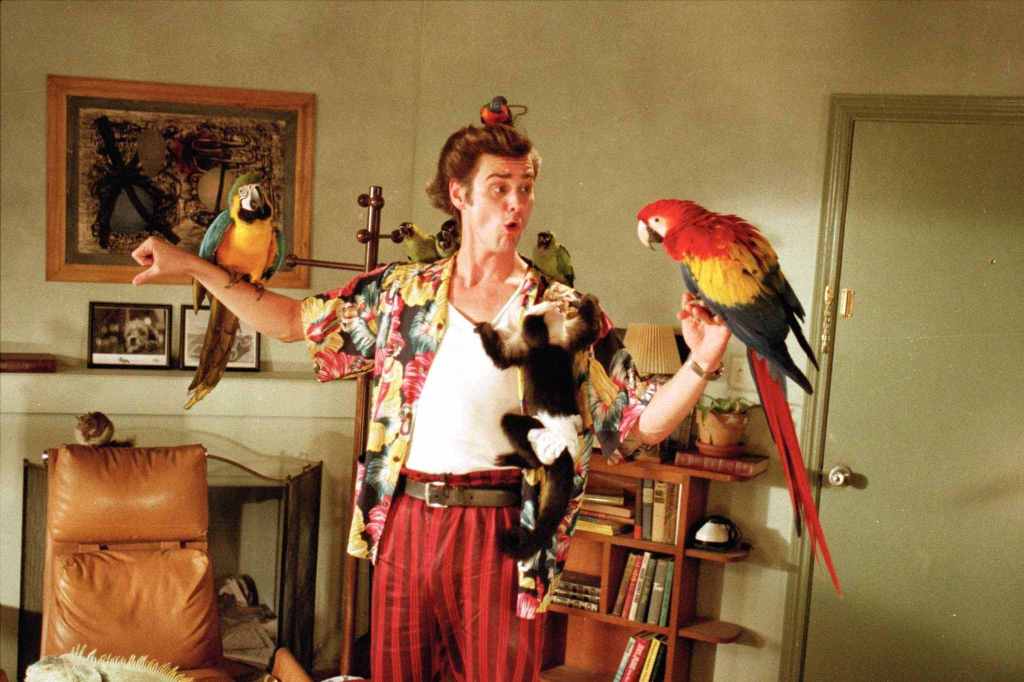
Ace Ventura: Pet Detective, a 1994 comedy directed by Tom Shadyac and starring Jim Carrey in the title role. Ace Ventura is an eccentric animal detective who must find the abducted dolphin mascot of the Miami Dolphins football team.
In the opening scene, Ace Ventura is disguised as a mail delivery man, wearing the brown UPS uniform, but the logo actually says HDS. As the credits roll, he throws and kicks a box marked “FRAGILE” around until it is rattling with what sounds like broken glass. When the man opens his door, Ventura says cheerily, “Got a package for you”.
In fact, the whole set-up has been a ruse to gain access to a dog in the man’s apartment, which comes to the front door, allowing Ventura to nab it while the man is filling out some paperwork Ventura has provided. The man abducted the dog, and Ventura has rescued it on behalf of its owner.
Ace Ventura: Pet Detective was made on a shoestring budget and became an unexpected commercial success, proving a hit with males aged 10 to 20. It received mixed reviews, and has been criticised for being homophobic and transphobic (and that was when it first came out, so I can’t even say it didn’t age well or that times changed). It did well enough to have a 1995 sequel, an animated TV series from 1995 to 2000, and a made-for-TV reboot in 2018.
This is the song playing at Lane’s house when Rory is bleaching her hair, so that it can later be dyed purple.
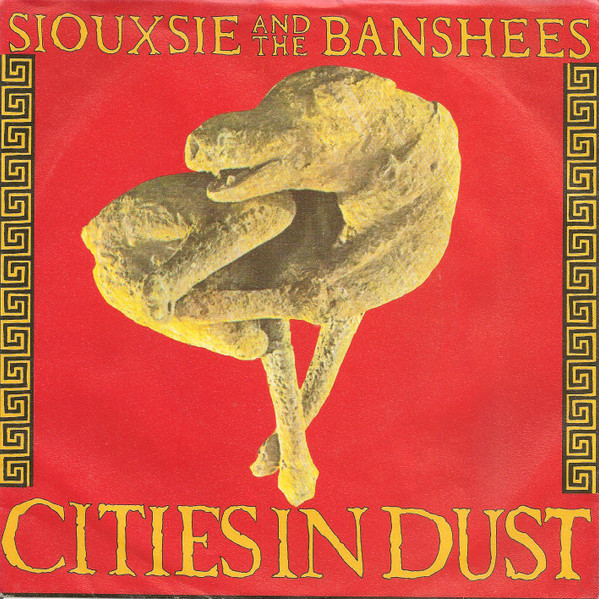
“Cities in Dust” is a 1985 song by English rock band Siouxsie and the Banshees, released as the lead single from their 1986 album Tinderbox. It’s a goth rock and dance-pop song describing the 79 AD destruction of the city of Pompeii by the the volcano Vesuvius. It went to #21 in the UK, and #17 on the Dance Club charts in the US, the band’s first significant success.
The song has quite often been chosen for soundtracks, including by The Marvelous Mrs. Maisel, another Amy Sherman-Palladino TV show.
The lyrics about the burning down of the city seem to mirror Lane’s feelings that she is burning all her bridges by dyeing her hair. This is reinforced by the fact that the bleach soon starts burning her scalp.
Pip pip, dated upper-class British slang which be used as a greeting, a farewell, or as a phrase to create enthusiasm. Lorelai is using it in the third sense. Rarely used in North America, and when it is, used humorously.
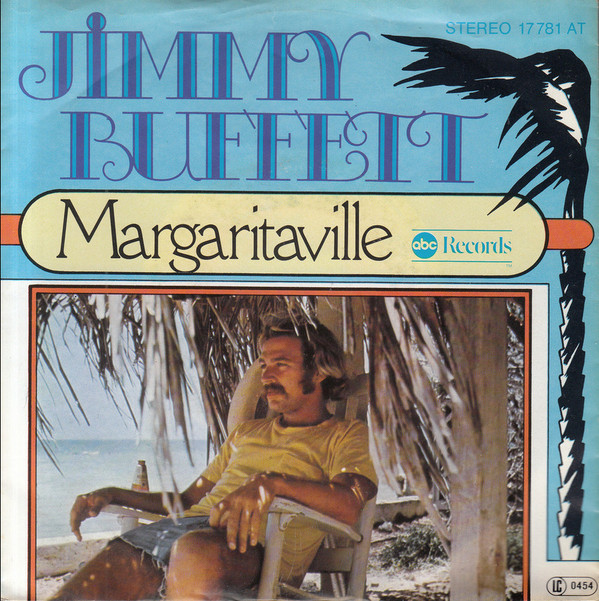
“Margaritaville”, a 1977 song by Jimmy Buffett from his album, Changes in Latitude, Changes in Attitude. The song is written about the margarita cocktail, which Buffett had just discovered, and the first huge surge of tourists which descended on Key West, Florida, around that time. With lyrics reflecting a laid-back tropical lifestyle, it has come to define Buffett’s music and career. The song went to #8 in the US, #1 on the Easy Listening charts, and #13 on the Country Music charts. It was most popular in Canada, going to #1. It remains his highest-charting single, and was inducted into the Grammy Hall of Fame in 2016.
Jimmy Buffett owns the Margaritaville resort chain, named after the song.




 The Annotated Gilmore Girls