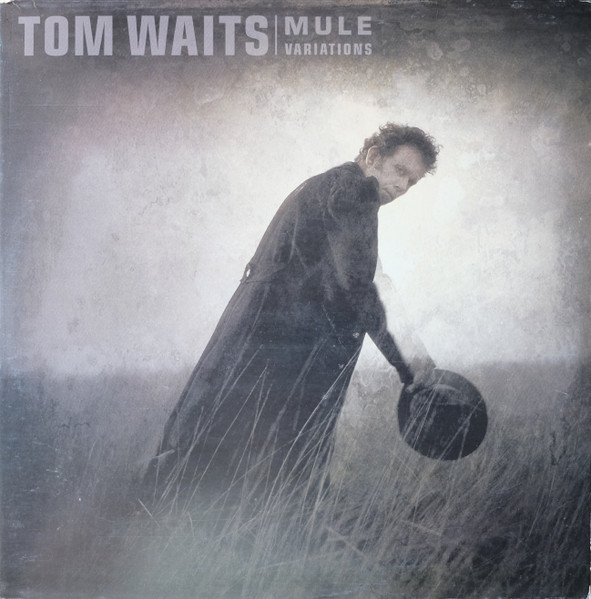
This is the music that Rory hears coming from Carol’s bedroom.
“Big in Japan” is the opening track on the 1999 Tom Waits album, Mule Variations. The album received widespread critical acclaim and was a modest commercial success, going to #30 in the US, #9 in the UK, and most popular in Norway at #1. Ironically, it wasn’t big in Japan, and didn’t chart there. Mule Variations won a Grammy for Best Contemporary Folk Album, and is regarded as one of the greatest albums of all time.
A round-robin tournament is one in which each contestant meets with every other contestant, usually in turn. It’s usually the fairest way of deciding an overall winner, but can be very lengthy. They are common in team sports – Darren’s love of sports might have prompted this idea. The word robin in this context is a corruption of the French word ruban, meaning “ribbon”.
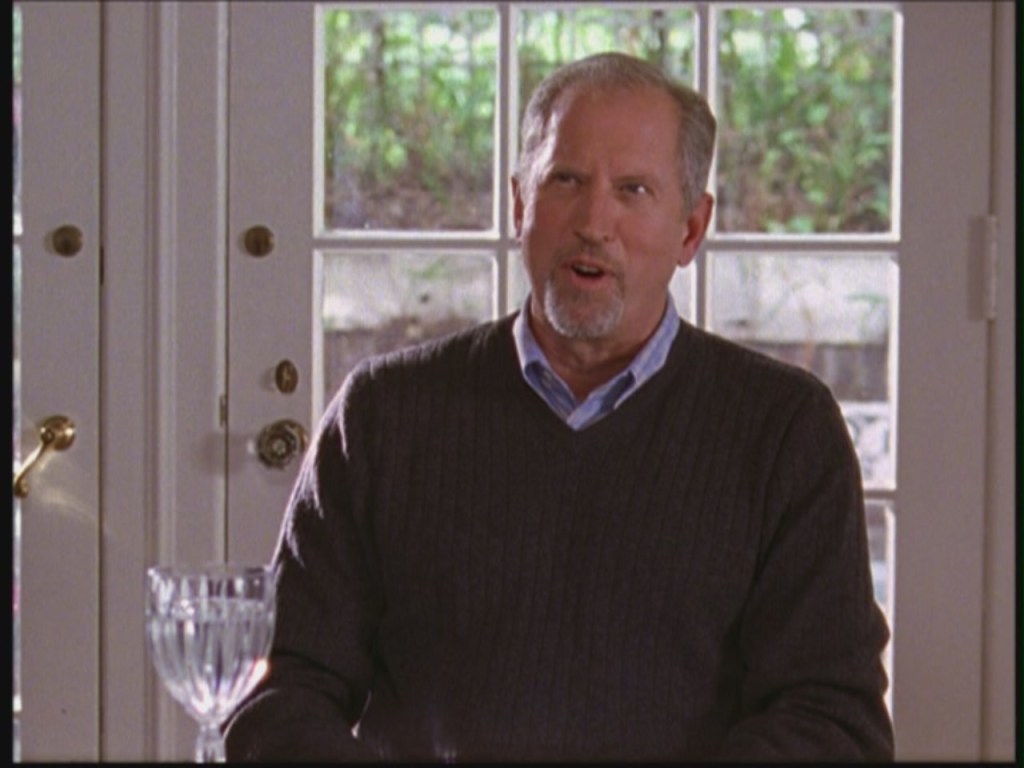
Oddly, Marie (played by Anita Finlay, who, like her onscreen husband and children, had also been on Judging Amy) is never shown taking part in the quizzes or being expected to, as if her role is simply to bring out iced tea and say Darren is brilliant. It doesn’t seem very likely – surely Marie is also a college graduate? Perhaps we just never see her have her turn, and she takes her part during the round-robin tournament.
Lorelai looks very unhappy to be roped into the round-robin tournament. Jennifer looks like Christmas has come early, and Jack looks like he’s forcing himself to smile. I get the feeling he’s not quite as into the competitive quizzes as Jennifer. He doesn’t seem to be as good at them.
DARREN: Anyone know the artistic movement Matisse championed and referred to as the Wild Beasts?
JENNIFER: Oh, Fauvism!
Fauvism is the artistic style of les Fauves (“the wild beasts”), a group of early twentieth century modern artists whose works emphasised seemingly wild brush strokes and strong colours. Henri Matisse was one of the leaders of the movement.
LORELAI: So, that painting there, wow. The colors are so great, I can’t stop staring at it. It’s just beautiful.
DARREN: It is. It’s by a student of Matisse. I think he caught the master’s colors wonderfully.
Henri Matisse (1869-1954), French artist known for his intense use of colour and fluid, original draughtsmanship. He is commonly regarded as one of the leading figures of modern art.
From 1907 to 1911 he taught art at the Academie Matisse in Paris. Most of his pupils were American or Scandinavian. I have been unable to identify the painting shown as the work of any of his students, or to discover its provenance. If anyone knows what it is, please leave a comment!
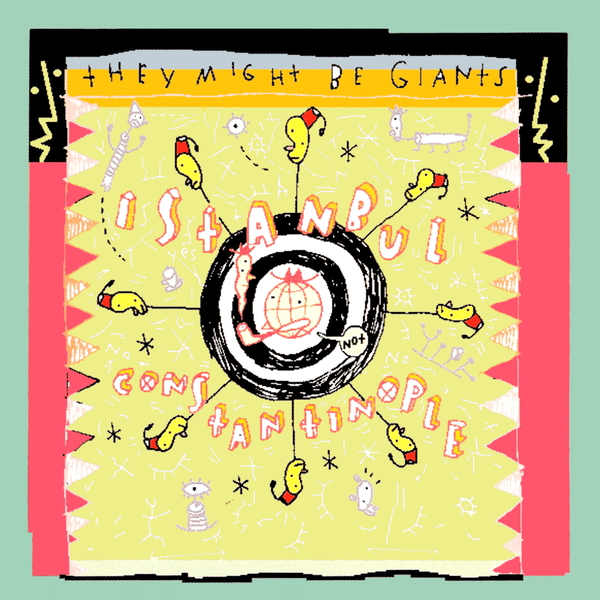
LORELAI: I do know Instanbul is Constantinople, so if you’ve got a date in Constantinople, she’ll be waiting in Instanbul.
Lorelai refers to the 1953 novelty song “Istanbul (Not Constantinople)”, with lyrics by Jimmy Kennedy and music by Nat Simon. Written on the 500th anniversary of the fall of Constantinople to the Ottomans, the lyrics humorously refer to the official renaming of the Turkish city Constantinople to Istanbul. It’s said to be a response to the 1928 song “C-O-N-S-T-A-N-T-I-N-O-P-L-E”, recorded by Paul Whiteman and His Orchestra.
It was originally recorded by Canadian vocal group The Four Lads and peaked at #10 on the charts, becoming their first gold record. It’s been covered several times, and Lorelai might be thinking of the 1990 version by alternative rock band They Might Be Giants, from their album Flood. Released as a single, it went to #61 in the UK, and has been used on the soundtracks of several animated series, including Liquid Television and Tiny Toon Adventures in the 1990s.
The song is a part of the repertoire of the Yale a capella group, The Duke’s Men of Yale. As we later discover that Richard was in a different a capella group at Yale, is it possible Lorelai first learned the song from her father?
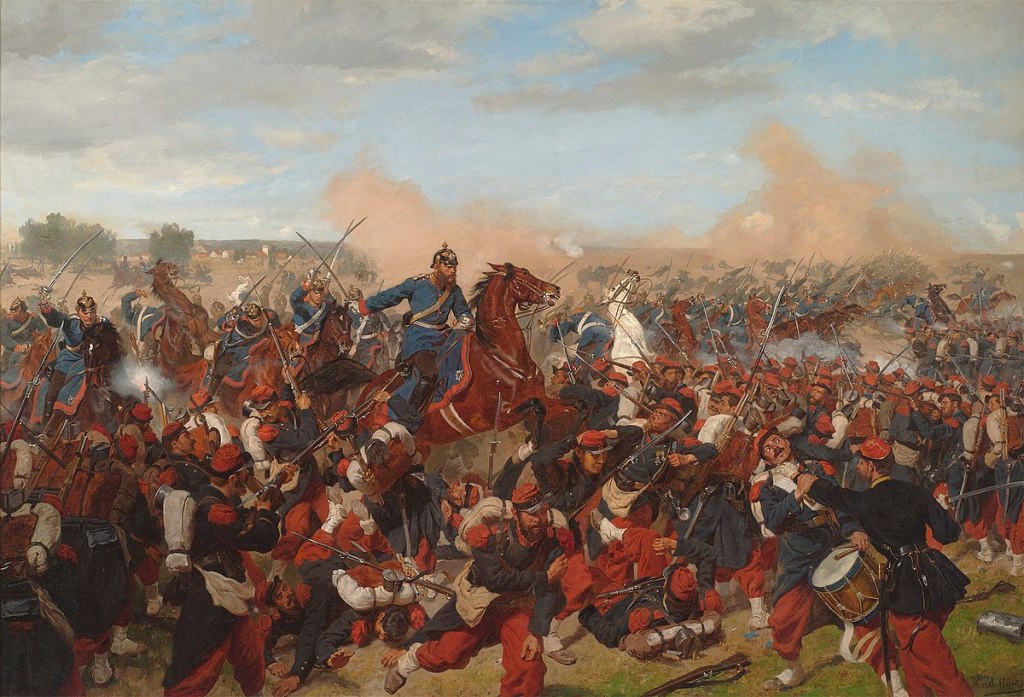
DARREN: What about the year of Germany’s victory in the Franco-Prussian War?
The Franco-Prussian War, often referred to in France as the War of 1870, lasted from 19 July 1870 to 28 January 1871. Germany won after besieging Paris for more than four months, and one of the main consequences of the war was the unification of Germany, leading to the formation of the modern German state, which became the dominant world power in Europe.
[Painting is Battle of Mars-le-Tour, August 16 1870 by Emil Hünten, 1870]
DARREN: Do you know which French city famous for its water was the capital of collaborationist France?
LORELAI: Oh, me? Um, Evian, Perrier, uh, Le Crystal Geyser?
JENNIFER: Vichy.
Vichy is a city in central France on the river Allier, a spa town and resort famous for its warm mineral springs, the direct result of historical volcanic activity – although the volcanoes have been dormant for more than a century. During World War II, it was the seat of government for Vichy France from 1940 to 1942. Officially independent, Vichy France adopted a policy of collaboration with Nazi Germany.
Lorelai quickly says the first brands of mineral water she can think of. Evian has been bottling mineral water from Évian-les-Bains in the French Alps since 1829. Perrier bottles its carbonated mineral water from Vergèze in Southern France, beginning production in 1898. Crystal Geyser is actually an American company, founded in Calistoga, California in 1977.
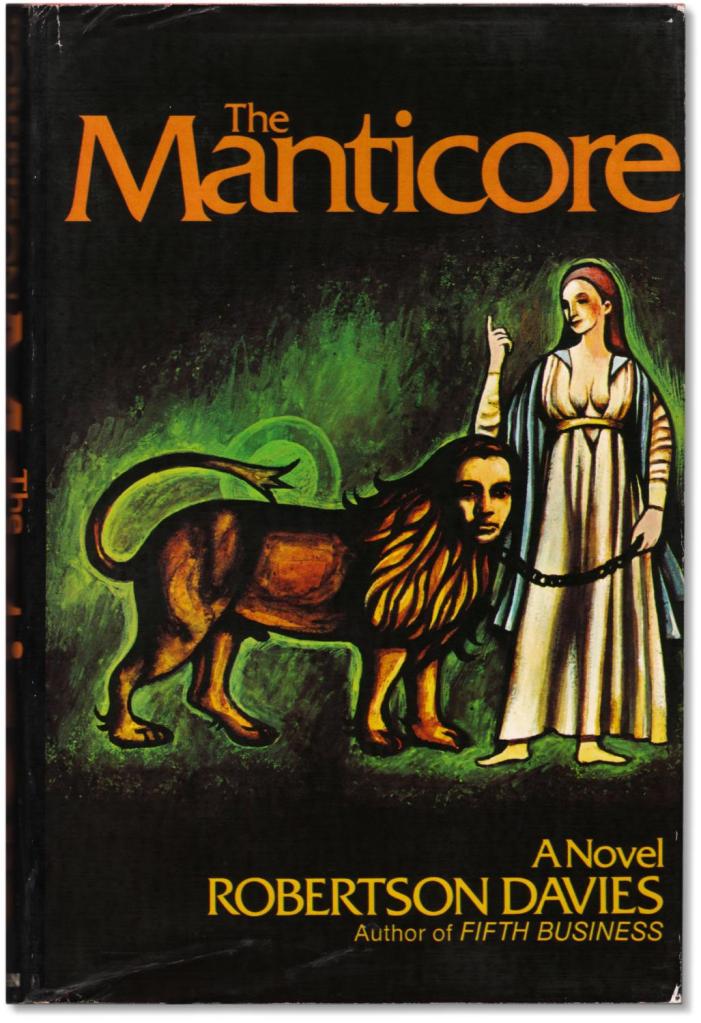
DARREN: Open question – which mythological figure has the head of a man, the body of a lion, and the tail of a scorpion? Here’s a hint – it’s also the title of a novel by Robertson Davies.
RORY: Oh, manticore.
The manticore is a Persian mythological creature with a human head, body of a lion, and a tail of venomous spines – some depict it as like porcupine quills, while others give it a scorpion tail, as Darren says. There are some accounts that the spines can be shot like arrows, making the manticore a lethal predator. It devours its prey whole, using its triple rows of teeth, leaving no traces of its victim behind. Its name comes from the Persian for “man eater”.
The Manticore is a 1972 novel by Canadian author Robertson Davies. It is the second volume in his Deptford Trilogy, three interrelated works set in the fictional town of Deptford, Ontario. The plot of The Manticore revolves around themes of Jungian psychology and psychoanalysis, and the journey towards becoming fully human.
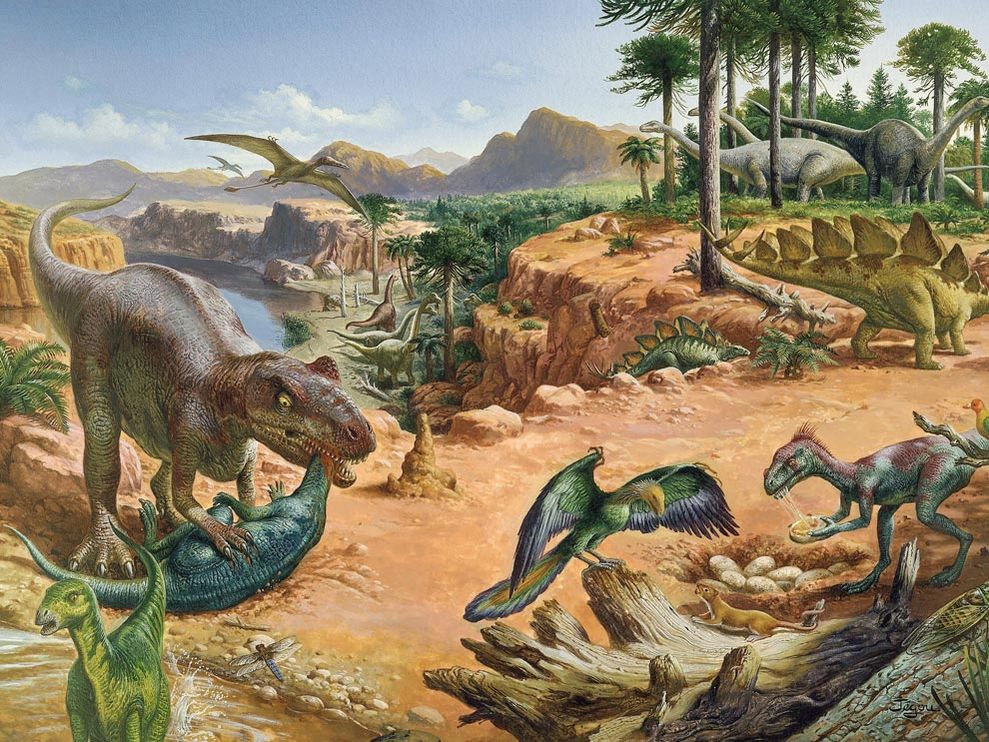
DARREN: Jennifer, can you give me the three sub-classes of the Mesozoic Era?
JENNIFER: Triassic, Jurassic, and Cretaceous … Follow-up – what preceded the Mesozoic Era?
DARREN: Paleozoic.
The Mesozoic Era is the second-last era of Earth’s geological history, lasting from 252 to 66 million years ago, and comprising the Triassic, Jurassic, and Cretaceous periods. It is sometimes called the Age of Reptiles of the Age of Conifers, and is characterised by the dominance of dinosaurs, an abundance of conifers and ferns, a hot greenhouse climate, and the tectonic breakup of the supercontinent Pangaea. The name Mesozoic means “middle life” in ancient Greek.
The Paleozoic Era came before the Mesozoic Era, the earliest of the three eras of geological history, with a name meaning “ancient life”. It was a time of dramatic geological, climatic, and evolutionary change, seeing an explosion of new species emerging, and life beginning in the ocean, but transitioning to the land.



 The Annotated Gilmore Girls