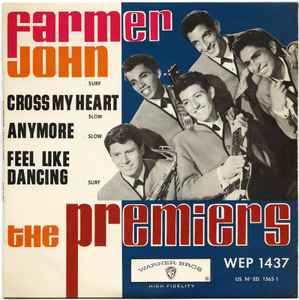
Farmer John, The Butcher Lazar Wolf

LORELAI: So what do we call this guy, alumnus Darren, you know, like you’d say Farmer John or the butcher Lazar Wolf?

Farmer John: a 1959 song about marrying a farmer’s daughter, written and recorded by R&B duo Don and Dewey (Don “Sugarcane” Harris and Dewey Terry). It didn’t get much attention, but was reinvigorated in 1964 by garage rock band The Premiers, whose raw party sound made the song popular, reaching #19 on the charts. It has been covered since several times, including by Neil Young, where it appears on his 1990 album, Ragged Glory.

The Butcher Lazar Wolf: a character from the musical Fiddler on the Roof, previously discussed. The wealthy widower and butcher of the village.

Alumnus, Alumna, Alumni

LORELAI: So, alumna is a girl graduate … And alumnus is a man … And plural is alumni.

RORY: Right, and that can be girls and guys.

A quick run-down on the correct usage of the Latin word alumnus – all terms used more commonly in the US than in other countries.

An alumnus is a man who has graduated from a particular institution, such as “a Harvard alumnus”, while a woman in the same position is an alumna. The plural is alumni, which can be either a group of male graduates, or a group of both males and females. The plural of only female graduates is alumnae. There is also alum – which is a gender neutral term that doesn’t get used as much, but may become more common in the future.

Trixie and Bambi McBimbo

RORY: He’s gonna be expecting Chilton High School senior Trixie McBimbo.

LORELAI: And her mother, Bambi McBimbo.

Trixie and Bambi McBimbo are names Rory and Lorelai invent for their fictional characters of an airheaded teenager and her mother. I have seen these names used a lot, even in published works – but only after this episode aired, so they have gone on to have lives of their own.

Danny Gans

LORELAI: My mother will be there, too. She’s terrific . . . All right, I’ll see you this weekend . . . Mm, bye. [hangs up]

RORY: You’re no Danny Gans.

Daniel “Danny” Gans (1956-2009), singer, comedian, and vocal impressionist. He was a performer in Las Vegas since 1996, billed as “The Man of Many Voices”, and was named Las Vegas Entertainer of the Year for ten years in a row until 2008.

Lorelai Pretends to be Rory on the Phone

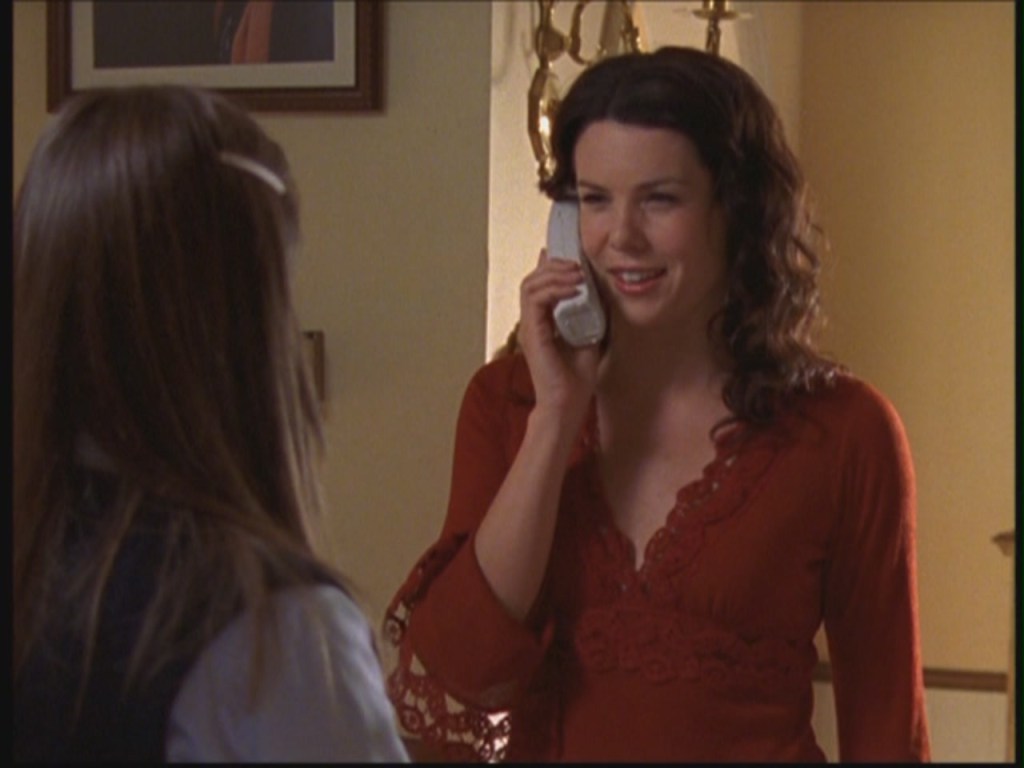
LORELAI: [answers phone in high voice] Hello? Hello, um, this is Rory Gilmore. I believe you were expecting my call . . . Um, oh, well, this is such a wonderful opportunity for me . . . Whatever’s good for you will be great for me . . .

Rory couldn’t go to school on her first day without Lorelai, she needed Lorelai to help her study for a test, and to arrange her first date. Once again, Lorelai steps in and arranges the meeting with Darren Springsteen on Rory’s behalf. She even pretends to be Rory in the process, as if they have finally merged together into one person. This is actually pretty odd, considering she could have arranged the meeting as herself – surely it’s not that unusual for a parent to phone up on behalf of their teenaged child?

Dave Rygalski

DAVE: [on machine] Hey, my name’s Dave Rygalski, I’m calling about the ad. I left my number before, so call when you get a chance.

This is our introduction to Dave Rygalski, who later becomes Lane’s band mate, and eventually her boyfriend. We first hear him on Lorelai’s answering machine, and we know he’s keen, because this is the second time that he’s phoned.

There is a mysterious female voice in the background, leaving it open whether Dave has a girlfriend, a sister, or a female friend.

Suffragette City, Rock ‘n’ Roll Suicide

LORELAI: [on answering machine] Hey, you’ve reached Suffragette City, and if you’re calling about Lane Kim’s ad, sorry we’re not in, but don’t commit rock and roll suide – just crank a message with some feedback.

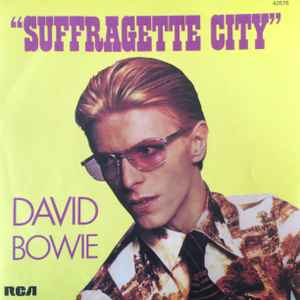
“Suffragette City”, 1972 glam rock song by David Bowie. Originally released as the B-side to “Starman”, and appeared on the classic album The Rise and Fall of Ziggy Stardust and the Spiders from Mars. It was re-released as a single in the US in 1976, where it failed to chart. Influenced by Little Richard and The Velvet Underground, it references Anthony Burgess’ novel A Clockwork Orange, and contains the famous line, “Oooohh wham bam, thank you, ma’am”. Acclaimed by music critics, it is considered one of Bowie’s greatest songs.

“Rock ‘n’ Roll Suicide”, 1972 song by David Bowie, the closing track to The Rise and Fall of Ziggy Stardust and the Spiders from Mars. Bowie suggested the poet Baudelaire and James Brown as inspirations for the song, although it appears to reference a poem by Manuel Machado and a song by Jacques Brel. It has been described as an avant-garde show song. Released as a single in 1974, it got to #22 in the UK.

Star Sixty-Nine

[phone rings] RORY: He star sixty-nined us?

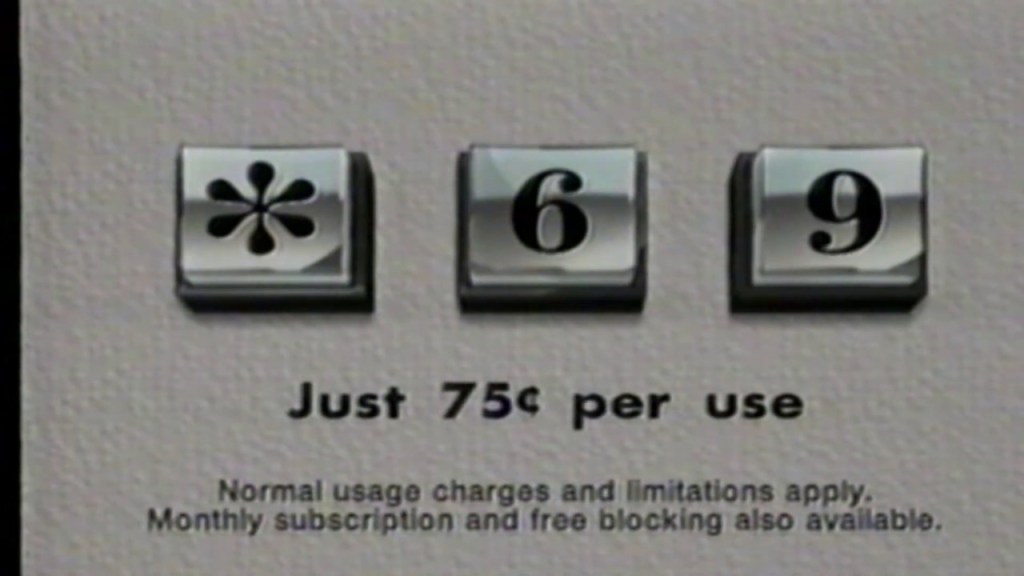
In North American telecommunications, a call return service for landline phones which automatically dials the number from which the last incoming call was made, activated by pressing the ‘star’ (*), 6, and 9 buttons.

In use since the 1990s, it is still available today, and is often a free service, but not always. It seems to still be a paid service in Connecticut in 2002, since Lorelai implies that a wealthy Harvard graduate can afford it.

[Picture shows still from a 1996 advertisement].