Tiny Cities Made of Ashes

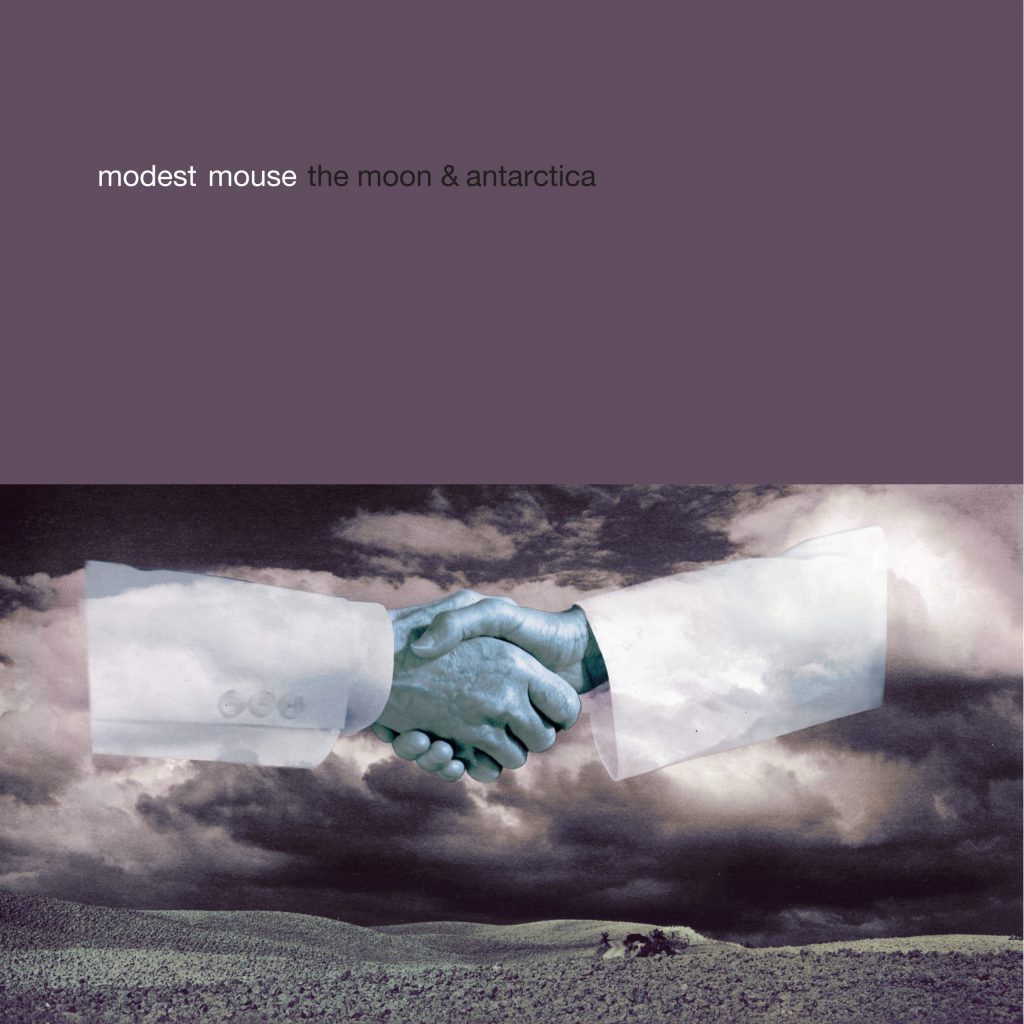
This song by alternative rock band Modest Mouse is playing in Rory’s bedroom during the opening scene. Only later do we discover Lane is in her bedroom, and it is she who is listening to it.

“Tiny Cities Made of Ashes” is a track from the band’s 2000 album, The Moon & Antarctica. The first to be released by the band on a major record label (Epic Records), it led to fans being worried that they would lose their unique sound. However, the album received positive reviews, with some critics feeling that it was actually the band’s “weirdest” album. It was ranked as one of the best albums of that year. The album went to #120 in the US, and has been certified gold, having sold almost half a million copies.

Knowing that Lane is in Rory’s bedroom the whole time in this scene, it seems a bit strange that Rory doesn’t share the big news of the Harvard application arriving with her best friend. I suppose it’s something Rory wants to experience with Lorelai first, and perhaps she doesn’t want to shove her academic opportunities in Lane’s face – and she also knows Lane is too busy concentrating on writing her band ad to listen. Still, it’s a slightly melancholy indication that their lives are going to continue in different directions.
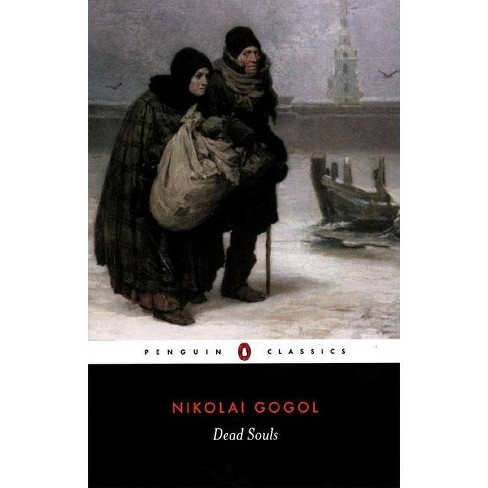
Dead Souls

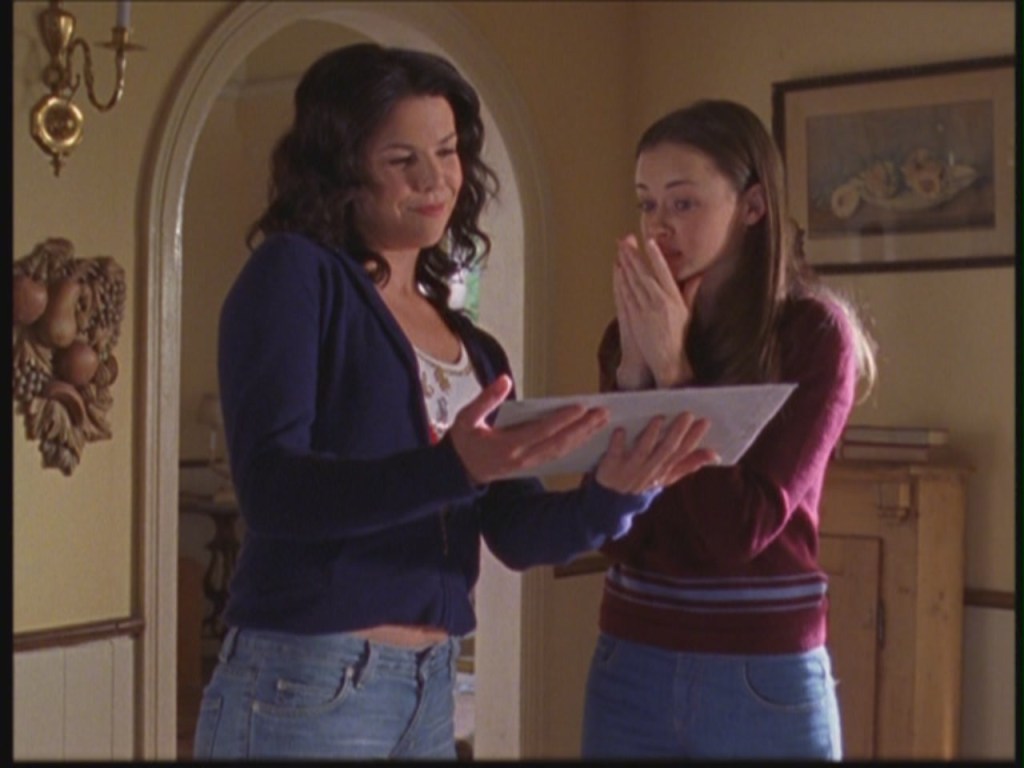
RORY: Oh, geez. Let the record show that when my application to Harvard arrived, we were watching The Brady Bunch Variety Hour … Man, this morning I was reading Dead Souls – it couldn’t have come then?

Dead Souls, a 1842 novel by Russian author Nikolai Gogol, widely regarded as a classic of Russian literature. The novel chronicles the adventures of a mysterious traveller and the people he encounters, and was intended to represent a modern-day Inferno of Dante’s Divine Comedy.

Gogol himself saw his work as an “epic poem in prose”, and within the book characterised it as a “novel in verse”. Gogol intended the novel to be the first part of a three-volume work, but burned the manuscript of the second part shortly before his death. Although the novel ends in mid-sentence, it is regarded by some as complete. It is very possible that Rory is reading Dead Souls for English Literature at school.

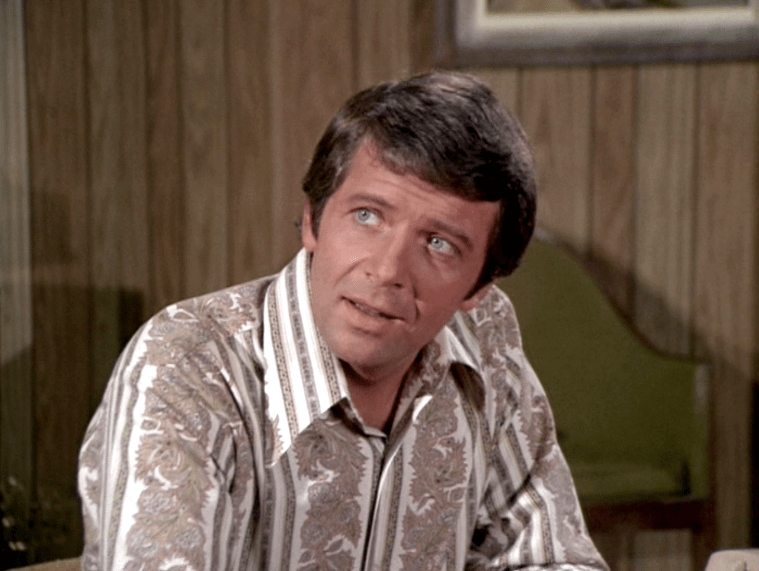
Robert Reed

RORY: I feel dizzy.

LORELAI: Are you sure that’s not just the sight of Robert Reed in the tight clown pants?

Robert Reed, born John Robert Rietz Jr (1932-1992), actor best known for playing father Mike Brady in The Brady Bunch, and its various specials and spin-offs. From the very beginning, Reed was unhappy with his role as Mike Brady, feeling that the show was far too silly for a serious classically-trained Shakespearean actor such as himself. Although he got on very well with the rest of the cast and behaved professionally at all times, he often argued with the creator and producer over the scripts (he was allowed to direct a few episodes to appease him). Despite this, he appeared in all the specials and spin-offs, and actually really loved doing The Brady Bunch Variety Hour, as it gave him the opportunity to sing, dance, and have fun.

Note that the comment about his “tight clown pants” is yet another reference to clowns and circuses on Gilmore Girls.

The Application for Harvard

RORY: Oh my God … It’s here … My application to Harvard.

This episode is focused on Rory receiving her application for Harvard University, and the stress she goes through as a result. The US university application process is somewhat different to many other countries, so it’s necessary to understand a little bit of how it works.

It’s not the case that you simply send off your academic results to the university and if you make the cutoff point, you get in. You are also expected to tell the university about yourself, about your interests, goals, and contributions you’ve made to society, and supply letters of recommendation from teachers and community leaders to bolster your case.

Most importantly, you need to write a short essay, usually around 600 words or so, that somehow convinces them you’re more than academically gifted, you’re also a wonderful person who deserves a college education, but are far too modest to actually say that. As these essays tend to end up very much alike, they also need to be fascinating enough to keep the admissions officer reading them! But they can’t be too edgy or creative either, because then you’ll seem too weird for the college to handle. Stressful or what?

There are also opportunities to have an in-depth personal interview with an alumnus of the university, who hasn’t read your application, and doesn’t know anything about you except your name and contact details. It’s basically a job interview, but instead of trying to get a job, you’re trying to get into college, answering questions about all your positive traits that will serve to make the college a better place, while letting them see what kind of person you are.

The harder a university is to get into, the more rigorous and exacting the entire process is – you will need to have higher grades, more impressive goals and aspirations, and have made some kind of major contribution to the world. You will do well to have letters of recommendation from people who are leaders in their field, or actually famous. Your essay will preferably be of publishable standard. You will dazzle, astound, charm, and knock the socks off your interviewer. And that’s just to get in!

Rory’s application arrives in what appears to be mid-to-late September, but that’s just to fit in with the timing of the season in Gilmore Girls. In real life, Harvard usually sends its applications out around the start of August.

Holmes & Yoyo, Hee Haw Honeys

RORY: I know, [The Brady Bunch Hour‘s] on my top fifty best.

LORELAI: Yeah, right after Holmes & Yoyo and Hee Haw Honeys.

Holmes & Yoyo [pictured], comedy TV series that aired during the 1976-1977 season. The series follows police detective Alexander Holmes (played by Richard B. Shull), and his partner Gregory “Yoyo” Yoyonovich (played by John Schuck), who he discovers to be an android crime-fighting machine, designed as a secret weapon by the police department. Many of the gags involved Yoyo’s constant malfunctions. The series performed poorly and was cancelled after eleven episodes, the final two being shown during the summer. It was #33 on TV Guide‘s worst shows of all time list.

Hee Haw Honeys, a short-lived spin-off from variety show Hee Haw, previously discussed, which aired during the 1978-1979 season. It starred Kathie Lee Johnson (later Gifford) and members of the Hee Haw cast as a family who owned a truck stop restaurant where guest country artists would perform their latest hits. It was #10 on TV Guide‘s worst shows of all time list.

TV Guide

RORY: Did you see that TV Guide had this on their list of the worst fifty shows of all time?

TV Guide Maagazine, a bi-weekly magazine containing the TV schedules, as well as television news, celebrity interviews and gossip, film reviews, and crossword puzzles. It was founded by Lee Wagner of MacFadden Publications, and first printed in 1948 as the The TeleVision Guide, only for the New York area. It began printing nationally as TV Guide in 1953. Since 2015, it’s been owned by NTVB Media.

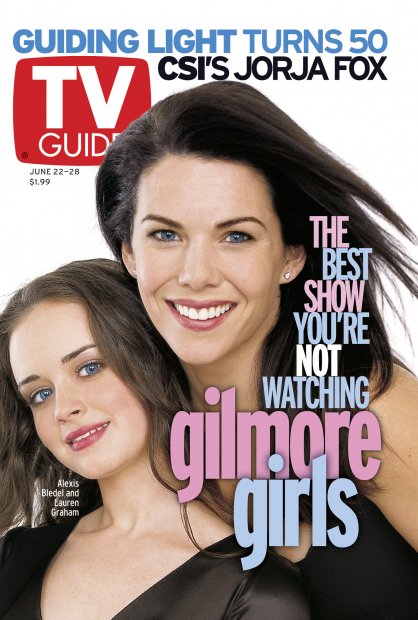
Gilmore Girls had featured in TV Guide in June 2002, with Lauren Graham and Alexis Bledel on the cover, so this feels like a definite shout-out to the publication. As a self-deprecatory inside joke, Lorelai and Rory proceed to criticise the magazine’s opinions of TV shows, since TV Guide had just raved about Gilmore Girls.

Baby Face

This is the first song which is performed on The Brady Bunch Hour, sung by The Brady Bunch, which you can hear at the start of the episode.

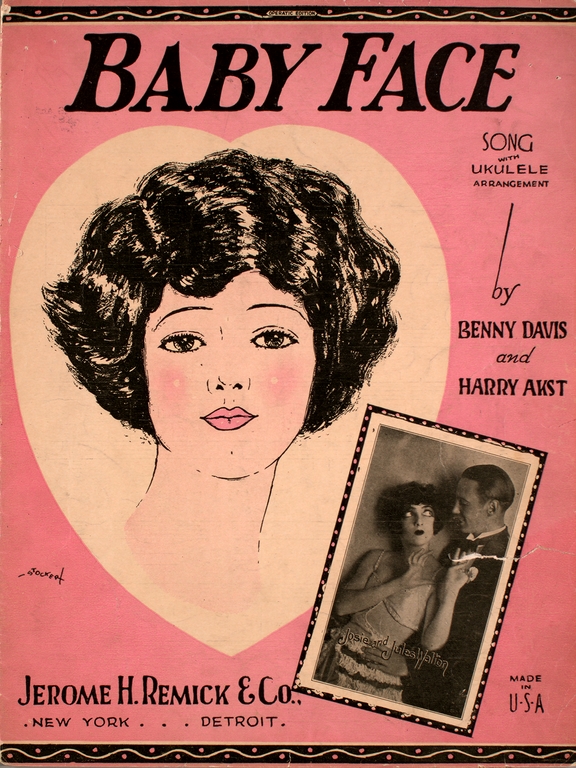
“Baby Face” is a popular Tin Pan Alley jazz song from 1926, with music by Harry Askt, and lyrics by Benny Davis. The first recording was by Jan Garber and his Orchestra, with Benny Davis signing the chorus only. It was a #1 hit in 1926. The same year, the song was recorded in its entirety by “Whispering” Jack Smith, with Arthur Johnston on piano.

It has been covered numerous times, perhaps most notably by Little Richard, who went to #41 with his version of the song in 1958 – it went to #2 in the UK, his highest-charting single in Britain.

The Brady Bunch Variety Hour

This is the show Rory and Lorelai are watching on television when Rory’s college application from Harvard is delivered by the mailman during the cold open.

The Brady Bunch Variety Hour is a variety show featuring sketches and songs, a spin-off from The Brady Bunch sitcom, previously discussed. It features the same cast as the original show, with the exception of Eve Plumb, who played Jan, previously mentioned. She was replaced with Geri Reischl, forever to be known as “Fake Jan”.

The premise of the show is that the Brady Bunch family have been chosen to star in a new variety television show, and moved to southern California. It was originally going to be a one-off one-hour special in November 1976, but high ratings meant it was extended for nine episodes and aired sporadically over six months, ending in May 1977.

There were many problems filming the show, and the erratic scheduling affected ratings. It’s considered an unmitigated disaster, and as this episode says, TV Guide rates it as #4 on the list of worst shows of all time.

Lorelai and Rory are watching the first episode (the pilot) of The Brady Bunch Variety Hour.

Insanity Plea

RORY: When did you see me with Dean?

JESS: At that stupid summer insanity plea the town put on.

An insanity plea, otherwise known as a mental disorder defence, is an argument put forward during a criminal trial that the defendant is not guilty for their crimes due to a psychiatric disease at the time the crime was committed. Using this as a defence goes back in law to the very beginnings of recorded history, and although it’s popular in fiction, it’s rare in the US – used in about 1% of cases, and then, only successful about a quarter of the time. The person who succeeds in winning their case this way will usually have to undergo psychiatric treatment in an institution instead of a prison sentence, or as part of their prison sentence.

“Break into a barn and put on a show”

JESS: Seemed to me like you’re still pretty together. I half expected you to break into a barn and put on a show.

Jess is referring to the 1950 musical film Summer Stock, directed by Charles Walters, starring Judy Garland, and previously mentioned. In the film, Judy Garland’s character, Jane, owns a farm, and one day her actress sister Abigail (played by Gloria DeHaven) breaks into her barn to rehearse with her fiancé, theatre director Joe (played by Gene Kelly), along with their theatre troupe.

Jane reluctantly allows them to go ahead, and inevitably gets sucked into the action by taking part in their show, including their big song and dance numbers. By the end, Jane has dumped her boring farmboy fiance Orville (played by Eddie Bracken), and winds up with Joe, while Abigail has, slightly implausibly, been smitten with Orville. The film was a box office success, and is iconic in popular culture, often referenced in songs and music videos.

Note that Jess likens Rory and Dean to a couple who break up to find different partners – this is essentially what ends up happening.