Rory and Jess Picnic On the Bridge

RORY: On the bridge, that’s where we’re gonna eat?
JESS: Yup.

Jess tells Rory that they will be having sharing their picnic on the bridge over the lake, a place in Stars Hollow that he has grown fond of. Later it will become a special place for he and Rory.

The scene of them having a picnic is a homage to the 1958 Southern Gothic comedy-drama film The Long Hot Summer, directed by Martin Ritter. The screenplay is partially based on the 1955 Tennessee William’s play Cat on a Hot Tin Roof, and three works of William Faulkner, one of Rory’s favourite authors (she can’t resist Southern Gothic).

In the film, Paul Newman plays Ben Quick, a crude, magnetic young man with a bad reputation for burning down barns who is expelled from his town and forced to go elsewhere. Joanne Woodward plays his love interest, rich girl Clara Varner, who fights their sexual tension all the way, but eventually falls in love with him. It turns out the enigmatic drifter’s bad reputation is undeserved, and he is actually very ambitious.

The Long Hot Summer received excellent reviews from critics, but didn’t do well at the box office. Paul Newman won Best Actor at the Cannes Film Festival for his role as Ben. It’s been turned into a television series twice, once in the 1960s, then again in the 1980s.

This is another film with a bidding war over a picnic basket, which the masterful Ben wins, itself a homage to the auction in Oklahoma! There is a scene of Ben and Clara sharing their picnic near a bridge, similar to Jess and Rory on the bridge. In the scene, the icy Clara begins to thaw out to Ben, and reveal some of her true self. In the same way, this is the first time that Rory really begins to open up to Jess. Bridges are symbols of transition, showing that Rory and Jess are moving into a new stage of their relationship.

There is a strong hint from the film that Jess is not as black as he has been painted, and there is a foreshadowing of his hidden ambitious streak.

Paul Newman and Joanne Woodward fell for each other on set, and married shortly after the film. Alexis Bledel and Milo Ventimiglia also dated in real life while filming Gilmore Girls.

Henry Dumps Lane

HENRY: Lane, I like you but I want to be able to actually pick you up, stop the car, and take you out. And I wanna be able to call you, at your house.

Lane’s complicated dating plan predictably goes wrong when Henry tries to call the pay phone at the park where’s having her mother-approved picnic with her cousin David. The phone isn’t working, so Henry calls Lane’s house in desperation, and gets Mrs Kim; he panics and tries to sell her a subscription to the Wall Street Journal.

When Lane calls Henry at his house in Hartford and discovers all this, she suggests they still have time for a date. All he needs to do is drive past, honk twice, go around the block, and on the second go around, Lane will jump in the car while it’s still moving.

Henry rejects this madness, and says he wants a girlfriend he can go on dates with, and phone if he wants to. He has already asked somebody else to attend the prom with him, which is about three months away – I think this means Henry is a year older than Lane, and in his last year of school?

This is the end of Lane’s first relationship with a boy she really likes who returns her feelings, coming to a halt before she even got to go on one date with him. It’s warning to her of what her life will be like if she continues trying to hide everything from her mother.

“The pouting has left the building”

LUKE: I am going to the diner, I am going to get us some edible food and I’m gonna bring it back here for us to eat.
LORELAI: That is so not the point of today. I made this. I am insulted. I will now proceed to pout.
LUKE: I’ll bring back some brownies.
LORELAI: Ooh, the pouting has left the building.

Lorelai is referencing the phrase, “Elvis has left the building”. It’s a phrase that was often used by announcers at the end of Elvis Presley concerts, in order to disperse crowds who were waiting for another encore. It’s since become a catchphrase and a punchline to refer to anyone or anything that has made a final exit.

Jackson Buys Sookie’s Basket From Kirk

KIRK: Two hundred and fifty dollars …
JACKSON: Will you take a check?
KIRK: With two forms of ID.

Jackson eventually convinces Kirk to let him have Sookie’s basket, but it costs him $250 – much more than if he had bid on it originally. This makes Sookie’s the most expensive basket of the day, but the money doesn’t go to charity, but to Kirk!

However, Kirk refuses to take Jackson’s cheque because he doesn’t resemble his photo ID closely enough, so Jackson is paying him back in weekly instalments of crinkle cut carrot sticks. It is not known whether Jackson ever really did pay him back, and no cash seems to have changed hands. It’s possible that Kirk only wanted to mess with Jackson and never intended to make him pay for Sookie’s basket. I think he should have at least got his $35 back though.

“Twelve brothers and sisters”

KIRK: My mother didn’t even make one for me … She made one for all my brothers and sisters but not for me … Twelve brothers and sisters, the only one without a basket – me.

Kirk’s statement could mean either that he has twelve siblings, or that he is one of twelve brothers and sisters. Either way, that’s a very large family. It doesn’t make a huge amount of sense for Kirk’s mother to make baskets for her children – I guess maybe for the girls, so they’ve got something to take to the auction, but shouldn’t the boys be buying other people’s baskets for charity, not getting a free one from their mother???

We never find out if Kirk’s claim is true or not, or if he’s making it up to sound more pathetic. He did talk of going on vacation with his parents, as if he was their only child, and if they chose to only take him over eleven or twelve other siblings, he doesn’t sound neglected by them.

Some fans have wondered if the “swan guy” and “Mick the DSL installer” from the early episodes were actually two of Kirk’s look-alike brothers. However, all the siblings may be entirely imaginary.

Treadmill

LUKE: Huh. You don’t eat with your mouth open do you?
LORELAI: Women don’t eat at all. We just look at food and jump on the treadmill.

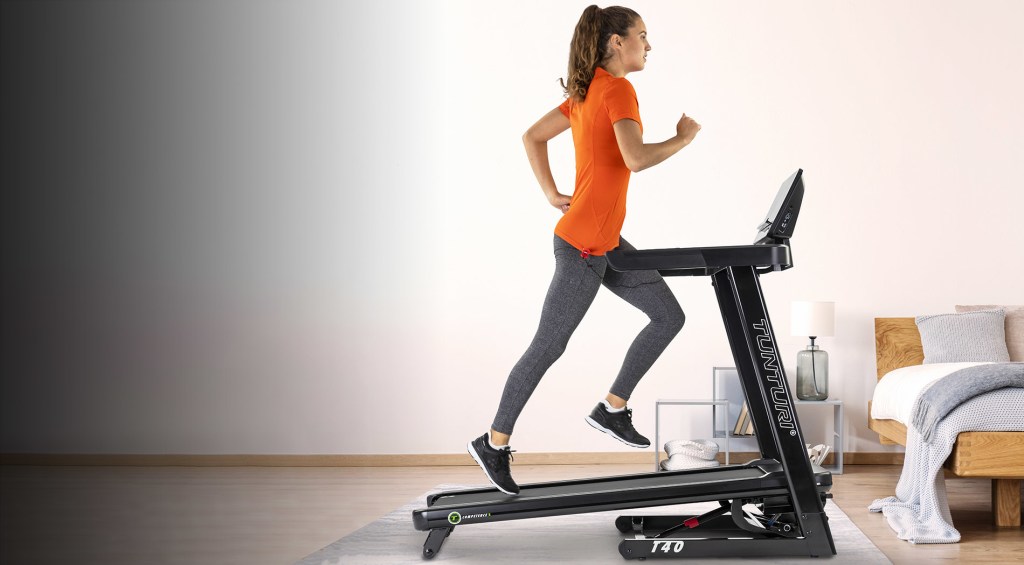
Non-mechanical treadmills have been used since ancient times, usually as a mill worked by humans or animals to produce grain. They were also used as a punishment.

After research in the late 1960s into the value of aerobic exercise, the first mechanical treadmills were manufactured as exercise machines for walking and running. They are the biggest-selling pieces of exercise equipment worldwide.

As well as looking down on women who were careful with their diet, Lorelai also looked down on women who exercised. Maybe breaking her leg doing yoga warped her mind.

Botulism

LUKE: First I have to buy it, then I have to eat it?
LORELAI: Hey, the basket of botulism does come with my company.

Botulism is a rare and potentially fatal illness caused by a toxin produced by bacteria. The illness begins with fatigue and blurred vision, followed by weakness in the chest and limbs. Vomiting and diarrhoea can also occur. Paralysis can last for 2-8 weeks, and 5-10% of cases end in death. The most common cause is food poisoning. There are an average of 145 cases of botulism in the US each year, often caused by home-canned foods.

I’m not sure Lorelai is entirely joking about the chance of botulism.

Dungeons and Dragons

LORELAI: Yes! Ha, ha, sorry guys, don’t feel bad. I’m totally into Dungeons & Dragons.

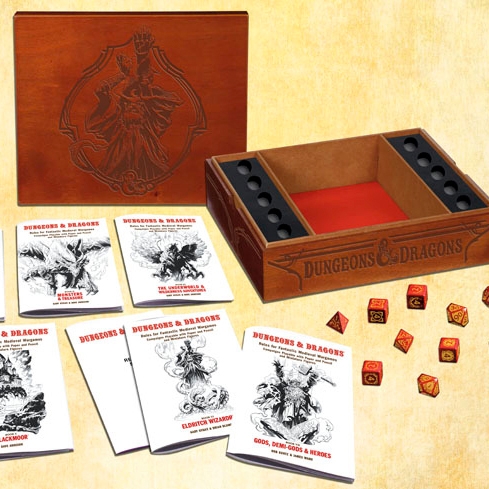
Dungeons & Dragons (often abbreviated to D&D or DnD) is a multi award-winning fantasy tabletop role-playing game originally designed by Gray Gygax and Dave Arneson. First published in 1974 by Tactical Studio Rules Inc, in 1997 it was published by Wizards of the Coast (now owned by Hasbro).

Dungeons & Dragons was developed from miniature wargames, but instead of working in military formation, each player creates their own character to embark on imaginary adventures in a fantasy setting. A Dungeon Master serves as a referee and storyteller. The characters form a party who interact with the world and each other by solving problems, engaging in battle, exploring, gathering treasure, and gaining knowledge. In doing so, characters gain Experience Points, becoming increasingly powerful.

Dungeons & Dragons was the first modern role-playing game, and remains the best known and best selling in the US, with an estimated 20 million people having played the game, and more than $1 billion in sales.

Lorelai tells the guys that they’ve had a lucky escape, because she’s into Dungeons & Dragons (and must therefore be a hopeless nerd). However, today the games have become more popular than ever, and are actually quite fashionable.

[Picture shows the original game].

Luke Wins the Bid for Lorelai’s Basket

LORELAI: Oh, please God.
TAYLOR: Sold for fifty-two fifty.

Worried that she will end up sharing her crummy picnic basket with one of Miss Patty’s choices for her to date, Lorelai begs Luke to save her. After some obligatory grouching, he does the right thing and buys Lorelai’s basket – the Miss Patty Brigade apparently decided to set an upper limit of $50. By bidding $52.50, Luke wins.

This scene is closer to the ending of the box social auction in Oklahoma!, with Luke in the role of the chivalrous Curly who manages to stump up the cash to save his girl. Luke doesn’t have to sell everything he has to buy the basket, but he does find money that the others don’t have or aren’t willing to spend.