Rory’s First Article

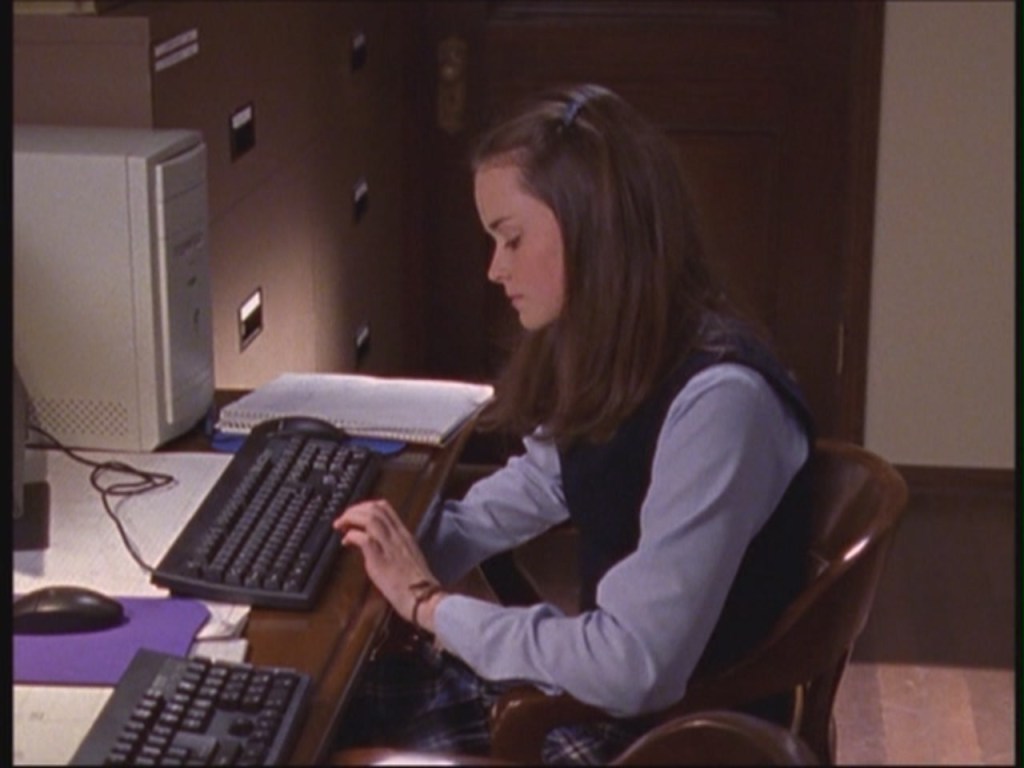
TEACHER: I mean, when you’ve got a reporter who can take an incredibly mundane and seemingly unimportant subject like the re-paving of the faculty parking lot and turn it into a bittersweet piece on how everybody and everything eventually becomes obsolete, then you’ve really got something. Miss Gilmore, I was touched.

This is truly one of the most unbelievable things to happen in regard to Rory’s career as a reporter. The idea that one thousand words on the re-paving of the faculty parking lot, made into a bittersweet piece on how time claims us all, is utterly ludicrous.

It sounds completely hokey and self-indulgent, and a type of journalism more reminiscent of The Simpsons‘ news anchorman Kent Brockman than The New York Times. In real life, Rory would have had her article cut by at least 75%, and a big red pen put through her waffling think piece on re-paving.

And when did Rory hand her article in? It seemed at the last meeting that articles were due at the next day’s meeting (i.e. this meeting). Yet the teacher has already received it from Paris and read it. Possibly Rory was careful to hand it in early, or give it to the teacher herself, to make sure there weren’t any other Paris-caused mix-ups. Or else when Paris said it needed to be “on her desk”, she meant her regular school desk, not her editorial desk. Which seems very confusing.
Careers of Past Editors of The Franklin

PARIS: This is The Franklin, a newspaper that’s been around for almost a hundred years. There have been at least ten former editors of The Franklin that have gone on to work at the New York Times. Six have gone onto the Washington Post. Three are contributing editors at the New Yorker. I think one even went on to win the Pulitzer Prize.

The Washington Post is a daily newspaper published in Washington DC, with a large national readership. Founded in 1877, it is famous for the printing of The Pentagon Papers, which helped spur opposition to the Vietnam War in 1971, and for breaking the news of the Watergate scandal, which led to the resignation of President Richard Nixon in 1974. It has won 69 Pulitzer Prizes, second only to The New York Times.

The Pulitzer Prize was established in 1917, and awards achievements in journalism, literature, and musical composition, in various categories. There is a huge list of past winners, one of which apparently went to Chilton.

The New York Times, previously discussed.

The New Yorker, previously discussed. Paris says that three former editors of The Franklin are current contributing editors at The New Yorker. Of those born in the US, in 2001 they could only be either Michael Agger, Roger Angell, Ben Greenham, Robert Gottlieb, Hendrik Hertzberg, Robert Mankoff, or Amy Davidson Sorkin. Roger Angell is the only one who attended a private school in Connecticut.

According to Paris, about twenty percent of The Franklin’s editors went on to achieve journalistic greatness, which seems very high. The message is clear: working on The Franklin can be a stepping stone to success in journalism.

John and Jackie

MADELINE: Hey, did you hear that Kimber Slately and Tristin are a major item?

LOUISE: I thought that Kimber and Shawn Asher were this year’s John and Jackie.

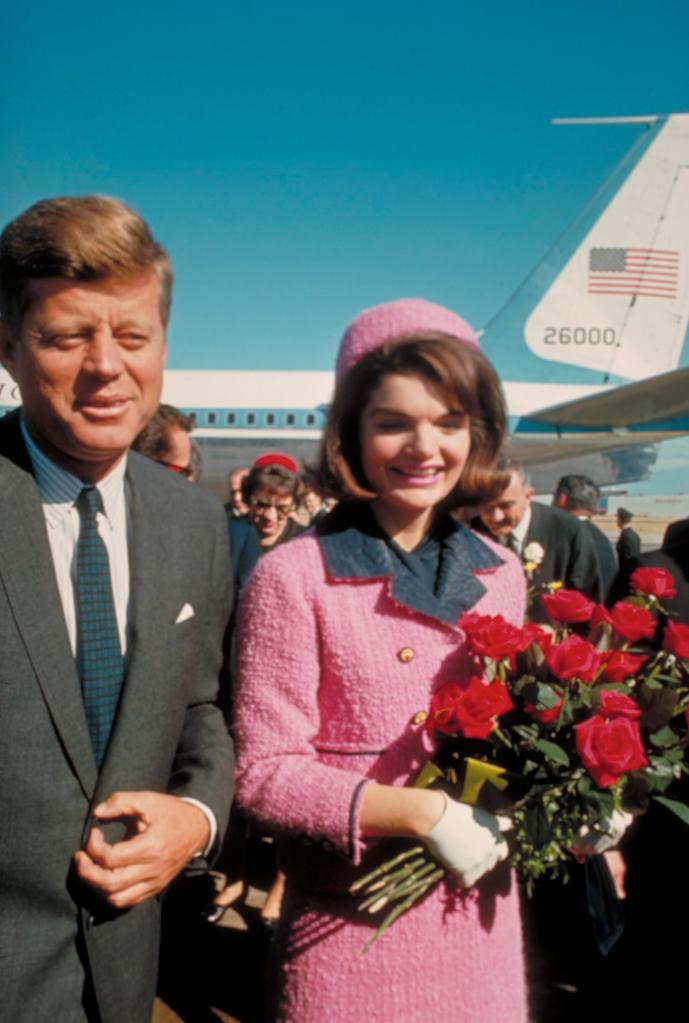
Louise is referring to former President John F. Kennedy (1917-63), and his wife Jacqueline “Jackie” Kennedy, nee Bouvier (1929-94). Good-looking and relatively young when Kennedy took office in 1961, they quickly became a golden couple who were popular in media culture, treated more like movie stars than a political family.

Poker

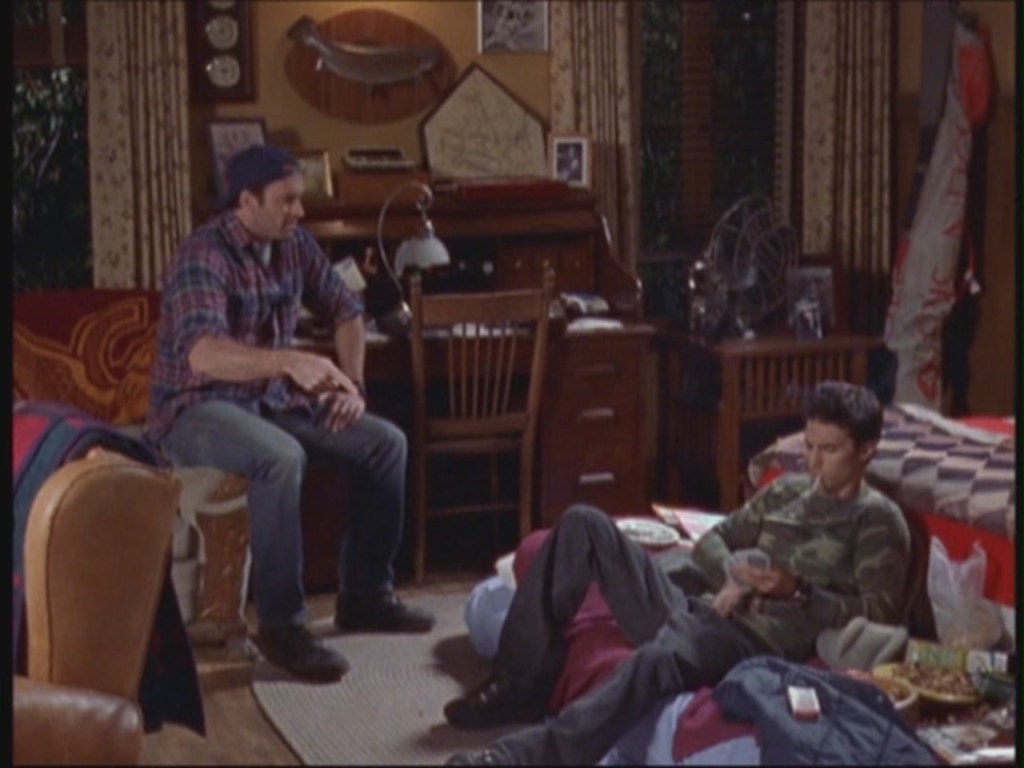
Jess asks Luke if he would like to play poker with him. He seems practised in shuffling the deck, and offers to lay bets, although says he can’t go any higher than $15 a hand.

Poker is an extremely popular American card game, first developed in the 19th century, in which players lay bets according to how much they believe their hand is worth. Players must then match the maximum bet, raise the wager further, or fold by throwing in their hand (losing the money they have bet so far and all involvement in the current hand). As players may bluff by staking a higher wager than their hand justifies, winning the game involves a subtle mixture of luck, psychology, probability, and game theory.

A good poker player needs to be intelligent, disciplined, independent, have a good memory, and exceptional emotional control. They need to “keep their cards close to their chest” – that is, give away very little about themselves. That’s telling us quite a bit about Jess already. Another character has already been shown to be clever and strategic through their choice of card game: the bridge-playing Emily Gilmore. It would be interesting to see a showdown between the two of them.

Jess smoking and playing poker is shorthand to show what a stereotypical bad boy he is. If he’s been involved in gambling, that would be a clue as to what sort of “trouble” he might be headed for. At this point, Luke may be worried that Lorelai’s instincts might be right about Jess. Interestingly, Fredo Corleone from The Godfather Part II worked in the casino trade …

Twenty Questions

LUKE: So you get unpacked?
JESS: Yup.
LUKE: Get enough space in the closet?
JESS: Plenty.
LUKE: You hungry?
JESS: Eighteen.
LUKE: What?

JESS: Just counting how many questions ’til we hit twenty.

Jess is referring to Twenty Questions, an American parlour game originating in the 19th century. One person chooses a particular object or subject, but keeps it a secret. Players take turns asking them questions about it, which can only be answered by “yes”, “no”, and “maybe”. Winning the game involves correctly guessing the answer within twenty questions – if not, the answerer wins the game. Twenty Questions has been made into several successful radio and television quiz shows.

Of course, Luke isn’t trying to guess anything, just asking if Jess has everything he needs, but Jess is clearly not in the mood.

Tool

JESS: You know, I think I hung my Tool tee-shirt next to my Metallica tee-shirt and they don’t really get along.

Tool is an American rock band from Los Angeles, formed in 1990 by Maynard James Keenan and Adam Jones. They had a heavy metal sound on their first album, Undertow (1993), and became a dominant force in the alternative metal movement with their second album, AEnima (1996). Their musical experiments combining the visual arts and a message of personal evolution continued with Lateralus (May 2001).

Tool has won four Grammy Awards, performed worldwide tours, and produced internationally chart-topping albums. Defying easy categorisation, their music spans progressive rock, psychedelic rock, and art rock.

Metallica, previously discussed as one of Lorelai’s favourite bands. It seems as if she and Jess have more in common than she currently realises. Jess’ sarcastic remark about certain clothes not getting along sounds suspiciously like something Lorelai would say as well.

Presumably, Jess says Tool and Metallica wouldn’t get along because they have completely different styles of metal.

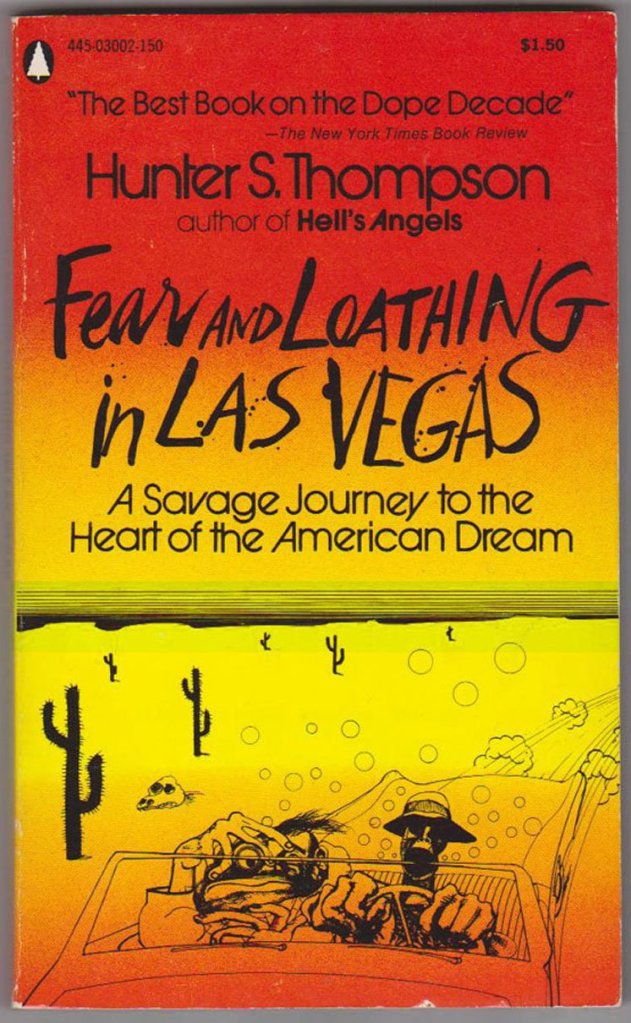
Fear and Loathing in Las Vegas: A Savage Journey to the Heart of the American Dream

This 1972 novel by American author Hunter S. Thompson is one of the books that Jess brought to Stars Hollow with him, seen strewn around the bedroom he shares with Luke.

The book is autobiographical, based on two trips to Las Vegas Hunter S. Thompson took with attorney and political activist Oscar Zeta Acosta (called Dr. Gonzo in the novel) in 1971. In the novel, the characters descend on Las Vegas to chase the American dream in a drug-induced haze, ruminating on the failure of the 1960s counterculture. First published in Rolling Stone, the book is Thompson’s most famous work, and his subjective blend of fact and fiction became known as “gonzo” journalism.

It’s notable that this is another autobiographical novel about travel and the American dream that Jess has brought with him, and the “fear and loathing” a comment about how he feels being dumped on a relative in a small town. Which is interesting, because it means Jess not only hates Stars Hollow, he’s scared by it, and a lot of his sneering and posturing are an attempt to disguise that.

I think we’re meant to be impressed that Jess is reading a book by a journalist, as if to say, “Jess is not only smart and enjoys reading, like Rory, but he’s interested in journalism, like Rory”. Unfortunately the writers already made Dean a fan of Hunter S. Thompson (back in the days when Dean read books and understood films), and he introduced Rory to Thompson. This undercuts Jess’ intellectual status quite a lot, although it does show he and Dean may be more alike than it appears at first sight.

“New dodo on the Regis show”

RORY: What’s [Jess] like?
LORELAI: Well, he’s not gonna be subbing for the new dodo on the Regis show any time soon, let’s put it like that.

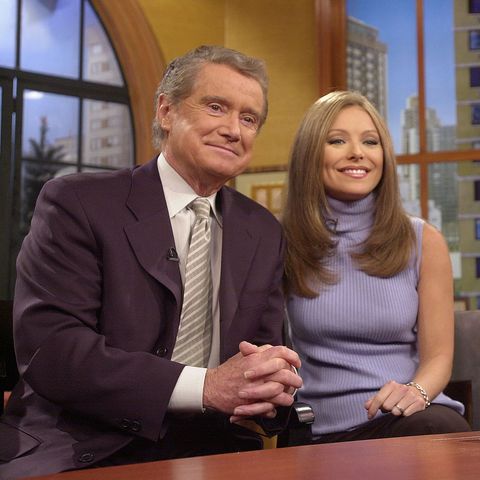
A reference to the talk show hosted by Regis Philbin, previously discussed. His co-host since 1988 was Kathie Lee Gifford, when it was called Live! With Regis and Kathy Lee. After Gifford’s last show in 2000, Regis spent six months auditioning possible co-hosts live on air. In February 2001, he chose dancer and actress Kelly Ripa, and the show’s name was changed to Live! With Regis and Kelly.

Kelly Ripa seems to be “the new dodo” (the new idiot) Lorelai is referring to. She’d been co-host for nearly seven months at this point, but I guess that’s still new for someone who is used to Kathy Lee Gifford.

“Subbing” is short for “substituting, so Lorelai is saying that Jess isn’t suitable to fill in for a talk show host (i.e., he isn’t chatty).

Fellini

LORELAI: Sookie will cook, Rory will be there. It’ll be a little ‘Hey, welcome to Stars Hollow and see, everyone here’s not straight out of a Fellini film’ kind of an evening.

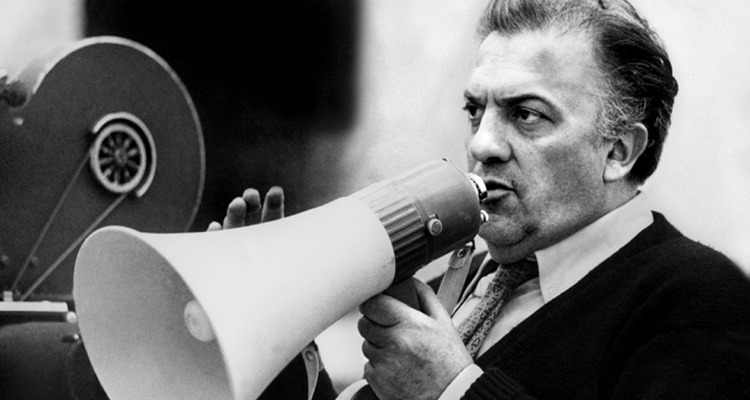
Federico Fellini (1920-1993) was an Italian film director known for his distinctive style, blending fantasy, baroque, and earthy sexuality. Recognised as one of the greatest and most influential directors, his most famous film is La Dolce Vita (1960).

Lorelai is simply saying that Jess will be able to see not everyone in town is weird.