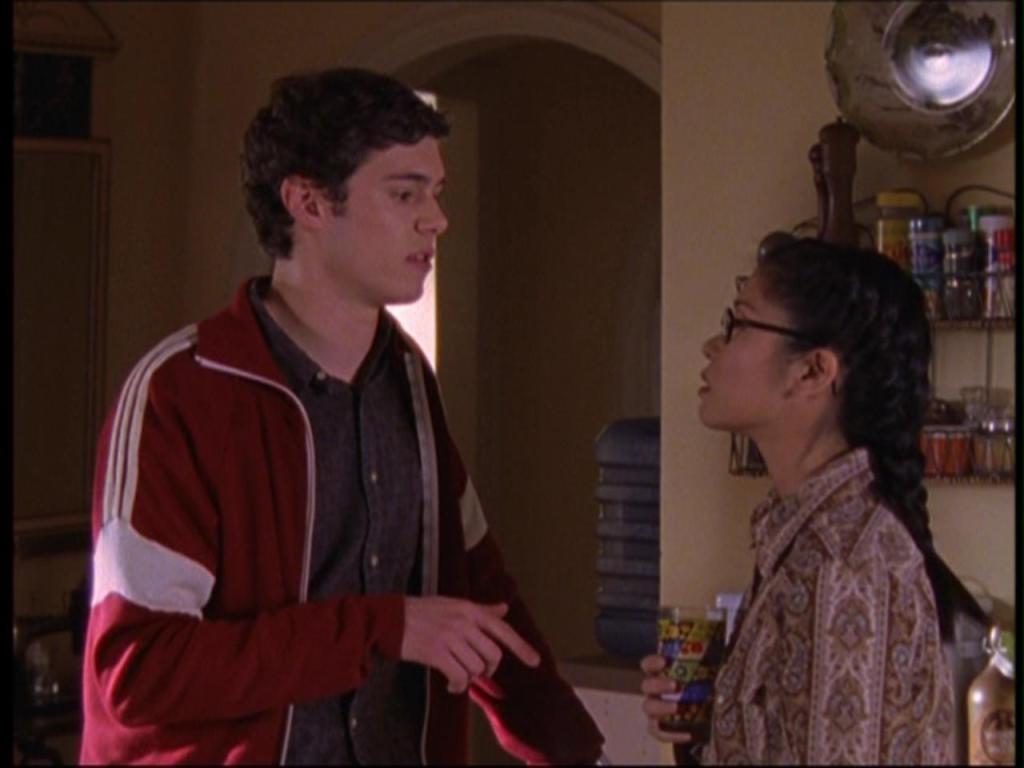
LORELAI: I found everything – including a couple coupling. LUKE: Oh, Rory and Jess? LORELAI: No, Ben and J. Lo. Yes, Rory and Jess.
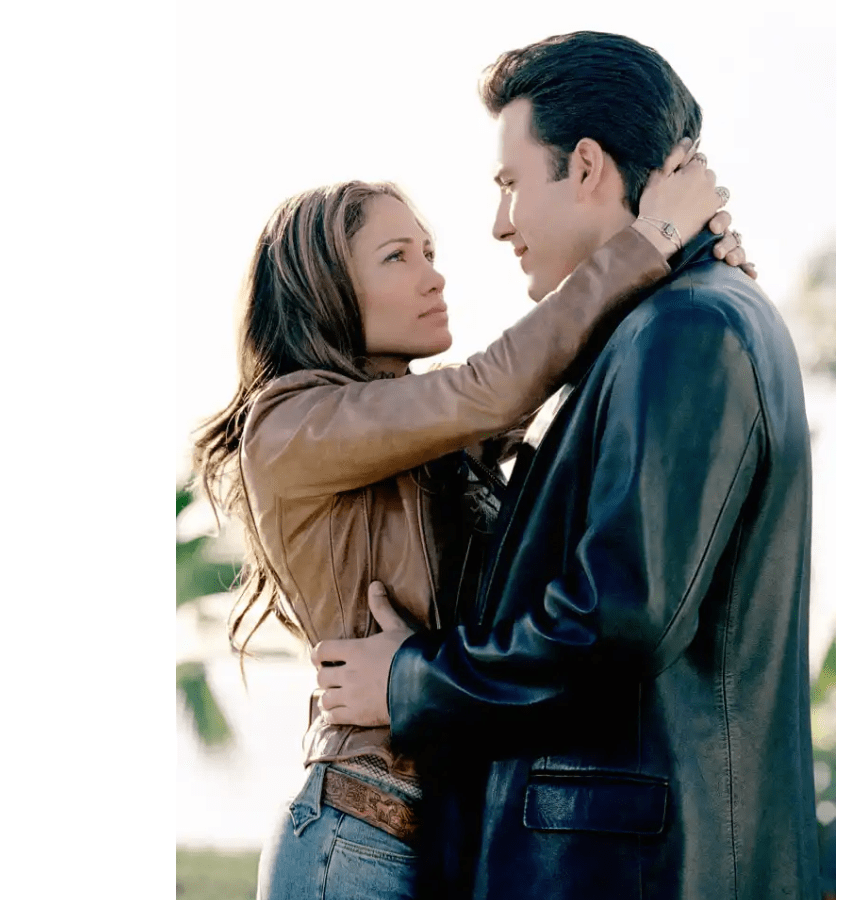
Ben Affleck and Jennifer Lopez, who were in a romantic relationship from 2002 to 2004. This attracted intense scrutiny by the press, and although they became engaged in November 2002, they called it off in January 2004, citing “excessive media attention”. Despite this, and both subsequently marrying other people, they continued to speak of each other fondly, and expressed regret over their split.
In a twist only Lorelai could have seen coming, Affleck and Lopez resumed their relationship in 2021, and were married in 2022. They still get a fair bit of media attention, but have probably learned how to deal with it better by now.
Déjà vu, French loanword (literally “already seen”) for the phenomenon of feeling as though one has lived through the present situation before. It is an illusion of memory whereby – despite a strong sense of recollection – the time, place, and context of the “previous” experience are uncertain or impossible. Approximately two-thirds of people report experiencing déjà vu at least once in their lives.
Lorelai and Rory use the word jokingly to refer to the fact that they have each recently caught the other one kissing their boyfriend, causing some awkwardness.
JESS: Got a lot of books here. Anything in particular? LORELAI: It’s one of Luke’s. JESS: Well, if it doesn’t have Encyclopedia Brown in the title, that narrows it down a lot.
Encyclopedia Brown, a series of 29 children’s books written by Donald J. Sobol; the first one was in 1963, and the last in 2012 (posthumous). The books follow the adventures of a boy detective, Leroy Brown, nicknamed “Encyclopedia” for his intelligence and range of knowledge.
Jess’ comments suggests that most of the books Luke has are his Encyclopedia Brown books from his childhood. Note the similarity with Lorelai reading all the Nancy Drew books when she was young.
LUKE: Got a great book, it has walking tours of old historic Manhattan. You know, before Disney got a hold of it. The SoHo one’s pretty good.
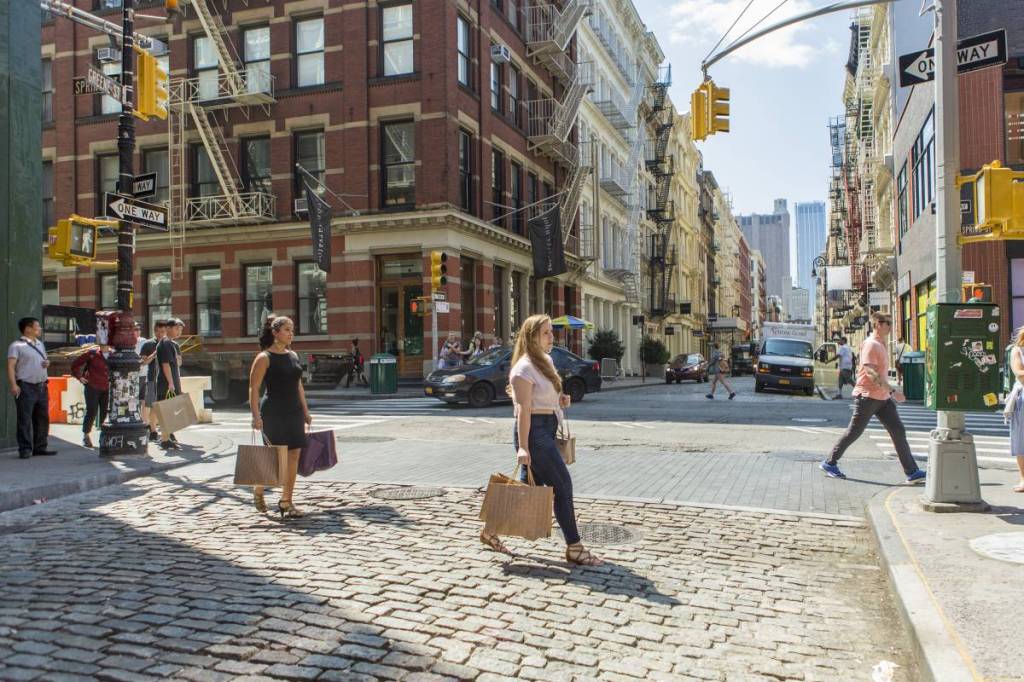
SoHo, neighbourhood in Lower Manhattan, New York City. Since the 1970s, the neighborhood has been the location of many artists’ lofts and art galleries, and has also been known for its variety of shops ranging from trendy upscale boutiques to national and international chain store outlets.
The name “SoHo” derives from the area being “South of Houston Street”, and was coined in 1962 by urban planner Chester Rapkin. The name also recalls Soho, an area in London’s West End.
Note a few changes in Luke since he started dating Nicole – he readily discusses fashion, musicals, and historic walking tours with Lorelai. She is a little surprised at how authoritative he has become in these areas so quickly. I can’t help feeling Luke is slightly rubbing her face in it, since he has always resisted Lorelai’s attempts to get him interested in such things.
The book Luke has is possibly fictional, although there are plenty of books in real life with historic walking tours of New York.
LUKE: Got a great book, it has walking tours of old historic Manhattan. You know, before Disney got a hold of it.
I don’t know if you can say Disney “got a hold” of Manhattan, but they do have a significant presence there, like other major corporations. Their offices were at this time on the Upper West Side, there was a Disney store on Fifth Avenue [pictured], a TV station in Times Square, and the New Amsterdam Theatre on Broadway, to name a few. The Disney cruise lines also dock at a pier on the Hudson River.
“Broadway Baby”, a song from the musical Follies, with music and lyrics by Stephen Sondheim and book by James Goldman. First performed in 1971, it takes place in a crumbling Broadway theatre, and follows a reunion of former showgirls who performed in the 1920s and ’30s. It won seven Tony Awards, and “Broadway Baby” has become a popular standard.
LORELAI: I cannot picture you watching Hairspray. LUKE: It was okay. I liked The Producers better.
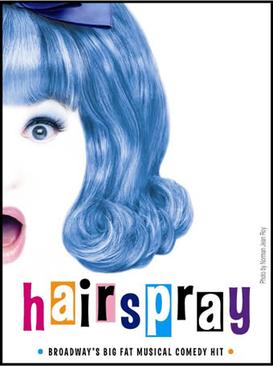
Hairspray, musical with music by Marc Shaiman and lyrics by Marc Shaiman and Scott Wittman, with book by Mark O’Donnell and Thomas Meehan, based on John Water’s 1988 film of the same name. Set in 1962 Baltimore, the story follows teenage Tracy Turnblad’s dream to dance on a local TV dance program. When Tracy wins a role on the show, she becomes a celebrity overnight, leading to social change as Tracy campaigns for the show’s racial integration.
The musical opened in Seattle in 2002 and moved to Broadway later that year. In 2003, Hairspray won eight Tony Awards, including one for Best Musical. It ran for 2,642 performances before closing in 2009. Hairspray has also had national tours, a West End production, numerous foreign productions, and was adapted as a 2007 musical film.
The Producers, previously discussed. Lorelai mentioned wanting to see this musical, but thought it was too hard to get tickets. Luke and Nicole don’t seem to have had any trouble – a sign of Luke leaving Lorelai behind a little bit through his relationships with Nicole.
LUKE: Oh, what show? LORELAI: Levittown, it’s a new musical.
The musical that Lorelai is going to see with Alex, Sookie, and Jackson is fictional. Levittown is a hamlet on Long Island, New York, built by Levitt & Sons as a planned community for returning World War II veterans between 1947 and 1951.
It was the first mass-produced suburb, and became a symbol of the American Dream, and of racial discrimination – the Levitts would only allow whites to buy in the suburb, and as late as the 1990s, only a tiny portion of the community were non-white. They built other Levittowns in Pennsylvania, New Jersey, and Puerto Rico.
Oddly enough, a real play called Levittown – a drama, not a musical – opened off-Broadway in 2009, to lukewarm response, although successful enough to be staged a few times since then.
In real life, there weren’t any new musicals debuting in New York in February 2003.
LANE: At 3:40, my mom will be on her way to the yarn store for her bimonthly sew-a-thon with Lacey Schwartz and Bich Ho. DAVE: The yarn store’s on Peach. LANE: Plum. DAVE: That cuts us off from our usual route to the interstate. LANE: There’s a back road that circles around it, but it’s gonna be muddy from the rains. DAVE: How about I have the guys take the usual route, I’ll go by foot on Peach, down the alley behind Al’s, over the fence, and they can pick me up a half a mile down by the Shell station. LANE: Perfect. Uh, what, that’s not complicated.
Lane and Dave have come up with some ingenious plan to avoid seeing Mrs Kim, so that she doesn’t realise Dave is in (gasp) a band. And even worse, that Lane is too. Lane confessed her feelings about Dave to her mother at the family wedding, and we don’t know any more since then. Presumably Mrs Kim is still unable to move on from Dave not being Korean.
We learn a little bit of back story during this scene. Mrs Kim’s life apparently doesn’t revolve entirely around work, church, and family – she also attends a sewing circle (?) once a fortnight at the local yarn store with two women named Lacey Schwartz and Bich Ho (Ho is a common Vietnamese surname, and Bich is a Vietnamese girl’s name meaning “jade”).
The yarn store is on Plum Street, one street over from Peach Street, which is where Dean and his family live. Lorelai described this area to Jess as a desirable residential neighbourhood, so it’s slightly surprising to learn it has shops around it as well – and also leads to the alley behind Al’s, which is always implied to be in the centre of town. Maybe Peach is a very long street? Incidentally, I wonder if this alley is the one Lorelai and Rory were shown walking down in “The Break Up, Part 2”?
Unlike Henry, Dave readily fits in with all of Lane’s zany schemes to keep secrets from her mother, and even comes up with own solutions. They are clearly made for each other.
ZACH: Man, this crunch just now sounded like the drum-fill in “Baba O’Riley”.
“Baba O’Riley”, a song by English rock band the Who, and the opening track to their 1971 album Who’s Next. Written by Pete Townsend, the song refers to his two major inspirations of the time: Indian spiritual master Meher Baba, and American jazz composer Terry Riley.
It was a Top 20 hit in The Netherlands, and a minor hit in Australia. It is considered one of the greatest rock songs of all time, has been highly influential, and is often used in film and television themes and soundtracks.
Keith Moon’s drum fill on the song has a bass pulse underneath while his hands remain busy on the snare drums and toms, in a jazz/swing inspired style. It’s considered a showcase for his signature style.
Crunch refers to a setting when mixing tracks – “crunch” will bring up the high and mid frequencies to add presence to claps, snares, and cymbals.