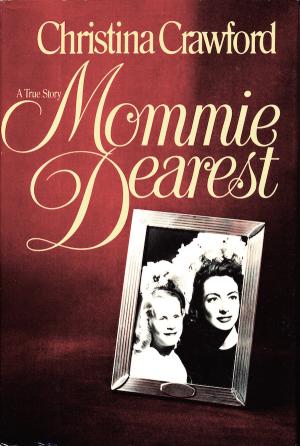
Mommie Dearest

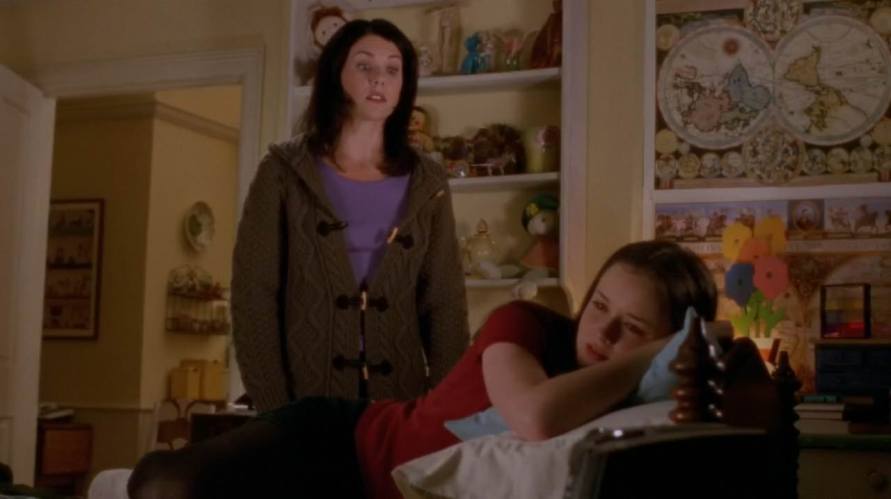
LORELAI: Aw, you’re not gonna give me the Mommie Dearest treatment forever, are ya?

Mommie Dearest is a best-selling 1978 memoir by Christina Crawford, the adopted daughter of Hollywood screen star Joan Crawford. In the book, Christina details the years of alleged physical and psychological abuse she received at the hands of her alcoholic and controlling mother Joan. When the book came out, even people who knew the Crawfords were divided on the accuracy of the book. Some friends of Joan said that Christina exaggerated details of her life, and Christina’s two younger sisters said her stories were untrue. On the other hand, other friends and colleagues of Joan’s said they witnessed many of the incidents in the book first-hand, Joan’s private secretary confirmed Christina’s stories of abuse, and Christina’s brother staunchly defended her. The book helped to raise awareness of child abuse.

The book was made into a film in 1981, directed by Frank Perry and with Faye Dunaway in the role of Joan Crawford. It was panned by critics, but a commercial success. Intended to be a serious biographical drama, Mommie Dearest became a cult classic due to its unintentional campy humour and over the top acting. It seems like the kind of film Lorelai and Rory would have loved to mock.

There are enough references to Rory writing a book about Lorelai one day during the show to suggest that it was a long-standing joke between them, perhaps initially triggered by either reading or watching Mommie Dearest.


“We never fight”

Lorelai

SOOKIE: It was a fight. Mothers and daughters fight.
LORELAI: No, we don’t fight. We never fight.

During the course of the show, Lorelai and Rory had their fair share of fights and arguments, during which the normally meek Rory could be shockingly rude and hurtful to her mother. If Lorelai is to be believed, they never had a single fight until Rory was a few weeks shy of her sixteenth birthday, which would mean that they lived in harmony until Rory began gaining some independence for herself. It’s telling that Rory forming an identity for herself apart from Lorelai is the beginning of their various quarrels.

Of course, Lorelai may be just conveniently forgetting all the fights they had before this one.

Viking

SOOKIE: Oh, God, I killed a Viking. Oh, you should fire me, or make me pay the cost of a new stove out of my paycheck.
LORELAI: Well, whatever you want.
SOOKIE: I can’t afford a new stove! Those things are expensive.

Viking make premium cooking appliances, including gas stoves and ovens. A standard Viking stove will set you back around $15 000 today, so Sookie is not kidding that she can’t afford to replace the one she damaged out of her own funds.

I Try

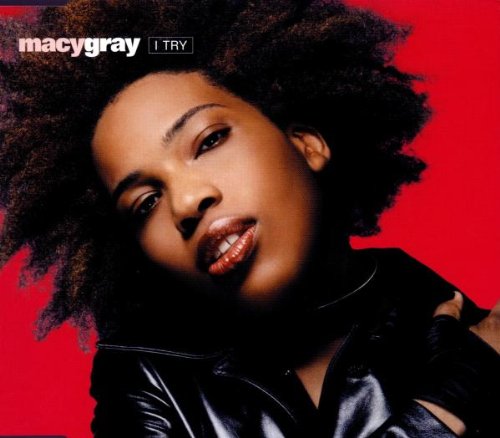
This song by Macy Gray plays while Lorelai and Rory are fighting about her refusal to attend Chilton, with Rory listening to it in her bedroom while Lorelai has it on in the living room. The top-selling single from Macy Gray’s debut album, and her best-selling single to date, it went to #5 in the US and won a Grammy for Best Female Pop Vocal Performance. This is a rare example of the Gilmore girls enjoying Top 40 music, which was usually treated disdainfully by the show.

Flo-Jo

[Rory starts walking quickly down the street, and Lorelai follows her.]
LORELAI: Oh, you’re gonna have to walk faster than that. You’re gonna have to turn into friggin’ Flo-Jo to get away from me.

Flo-Jo was the name given by the press to American track and field athlete Florence Griffith Joyner (1959-1998), who won gold and silver medals for running at the 1984 and 1988 Olympic Games. She is considered to be the fastest woman of all time.


Heartland

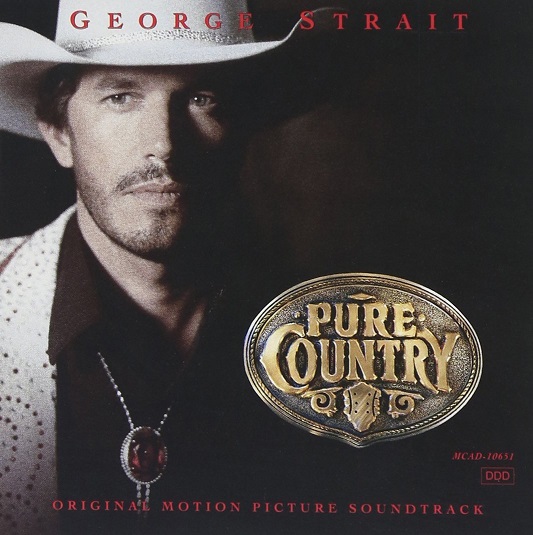
This country song by George Strait plays while Lorelai and Rory leave the diner and walk past the hayride after arguing about Rory’s unexpected reluctance to attend private school. The song is from the 1992 album Pure Country, the soundtrack to the musical western film of the same name, which had Strait in the lead role of Wyatt “Dusty” Chandler. The movie bombed, but the soundtrack was a commercial success, and is George Strait’s best selling album. Heartland went to #1 on the US Country charts.

Madame Bovary

The novel that Rory was reading the week before; her total absorption in the novel is what Dean says first attracted him to Rory. The debut work of French author Gustave Flaubert and first published in 1857, it is considered a literary masterpiece.

Madame Bovary is about a beautiful well-educated young woman who finds herself trapped in a dull marriage to a village doctor. Her longing for romance, fostered by reading popular novels, leads her into affairs with other men, with tragic results. The theme of infidelity is one which will be important in Rory and Dean’s relationship, and the hint is right there in the pilot.

Moby Dick

The novel that Rory is reading. Written by Herman Melville and first published in 1851, it is regarded as one of the Great American Novels and is Melville’s best known work. The novel is about the obsessive quest by a sea captain for revenge against a great white wale named Moby Dick.

Rory tells Dean that she thinks it is “really good”, and that it is her “first Melville”, although she admits that it is a cliche to have Moby Dick as your first Melville. Herman Melville has ten other novels still available, and presumably Rory plans to read more of them.

Is the fact that Rory is reading this novel when she meets Dean an early warning of his own obsessive nature? Or perhaps, like Huck Finn and On the Road, it’s another novel about a specifically American journey, this time upon the sea. The sexual innuendo of a “big Dick” when meeting Dean probably isn’t to be disregarded, either.

Miss Patty’s Place

DEAN: Well, maybe you could show me where this Miss Patty’s place is.
RORY: Yeah, I guess so. I really don’t have anything important to . . . let’s go.

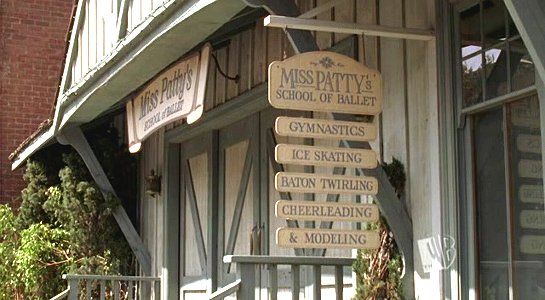
Miss Patty’s School of Ballet, seemingly always known as Miss Patty’s Place, is a very significant location for Dean and Rory’s future relationship. And it was the first place in Stars Hollow they ever went to together.