
Advanced Placement

The Chilton parents are very concerned about whether the texts Mr. Medina has chosen will be covered in the Advanced Placement tests.

In the US and Canada, Advanced Placement (AP) is a program which offers college-level curricula and exmainations to high school students. American colleges and universities may grant placement and course credit to those students who get high scores in the AP exams.

Mr. Medina says that the next AP test will be held in the following month (November), but in real life AP Tests are always held in May.

We learn from this that Rory is in the AP English Literature class to improve her chances of attending university. We don’t know what other AP classes she might be doing at Chilton, but any class that she has with Paris seems like a pretty safe bet.
“Wonder if Versace makes a pacifier”

MICHEL: These are $300 Italian loafers.
DRELLA: Wonder if Versace makes a pacifier.

Versace is an Italian luxury fashion company, founded by Gianni Versace in 1978. It is a favourite brand of numerous celebrities.

A pacifier is what Americans call the rubber teat with a plastic shield given to babies to suck on; in other countries it might be known as a dummy, teether, or soother.

McDonald’s

PARIS: A D however, that would be cause for concern.
LOUISE: A cry for help.
PARIS: A job application at McDonald’s.
LOUISE: Would you like fries with that?

McDonald’s is a global-dominating chain of hamburger and fast food restaurants first founded by Richard and Maurice McDonald in 1940. It was franchised by Ray Kroc in 1955, and he later bought the business from the McDonald brothers, bringing in the aggressive business tactics the company is know for today.

“Would you like fries with that?” is a question commonly asked by McDonald’s employees, in an attempt to further boost sales. The phrase is often used to mock McDonald’s and their workers. At Chilton, working in the fast food industry is clearly a fate worse than death.

MTV

EMILY: I mean, in this age of MTV and 100 television channels, who would’ve imagined that a young girl could still get a thrill spending a simple afternoon with her grandfather?

MTV (originally Music Television) is an American cable station owned by Viacom. Launched in 1981, it was initially for music videos but quickly branched out into other programs; music videos are now limited on the channel.

Cheer

EMILY: You brought us used dessert?
LORELAI: It’s not used. It’s left over.
EMILY: How nice. I’ll just put it in the kitchen next to my half-empty box of Cheer.

Cheer is a brand of laundry detergent sold in the US and Canada, and made by Procter & Gamble. It has been sold since 1950.

It’s very unlikely that Emily really keeps laundry powder in the kitchen, or that she would store cake next to it. She’s just being nasty. Most people are prepared to be magnanimous and conciliatory when they get everything their own way, and are proven right in a disagreement. Not Emily.

Prozac

LORELAI: If the country club life is what she wants, more power to her, right? You know, little white gloves and coming-out parties. That makes some girls happy, right?
SOOKIE: (while admiring the strawberries) Sure, yeah. If they’re on Prozac, absolutely.

Prozac is a brand name for Fluoxetine, a commonly-prescribed antidepressant.

Steinway

We learn from Babette that her husband Morey plays jazz on a Steinway. Steinway & Sons is an American piano company, founded in Manhattan by a German immigrant named Heinrich Steinweg in 1853 – he later changed his name to Henry Steinway. Steinway is known for their high quality pianos which have received numerous awards.

Post-it

SOOKIE: That one has a Post-it on its back.
MICHEL: Oh, well, then that’s Mark. The one on the right is Matt.

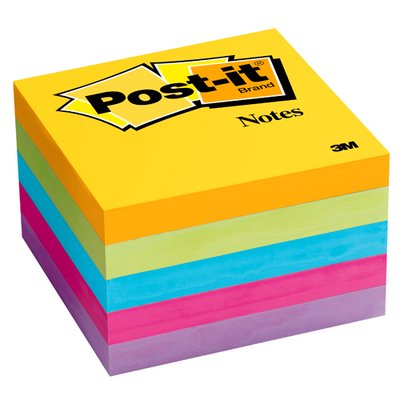
Post-its are small pieces of paper with light adhesive on the back, allowing them to be easily removed and placed elsewhere as needed. They were first brought out by 3M in 1979.

Polaroid

SOOKIE: Can I see these strawberries?
JACKSON: No. …
SOOKIE: How about a Polaroid?

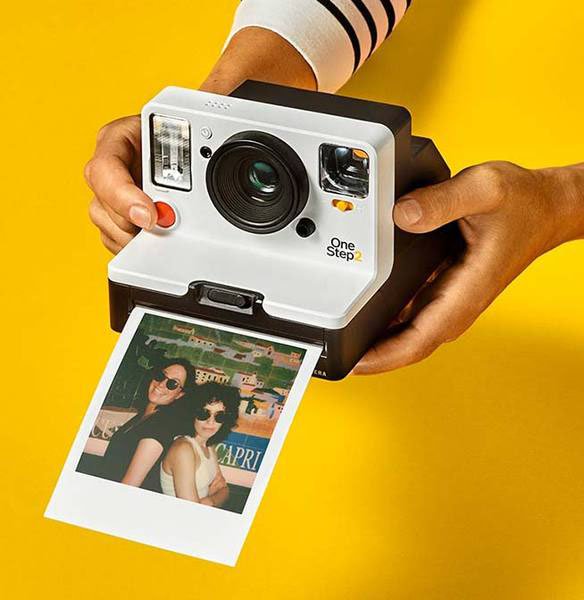
The Polaroid was a popular instant camera which used self-developing film to create a photo shortly after taking a photo, with the resultant photograph also called a Polaroid.

First developed in 1948, Polaroid discontinued production of instant cameras in 2008, digital cameras having superseded them. However, there is still a niche market for instant cameras, and the new brand owners of Polaroid have recently relaunched the product.