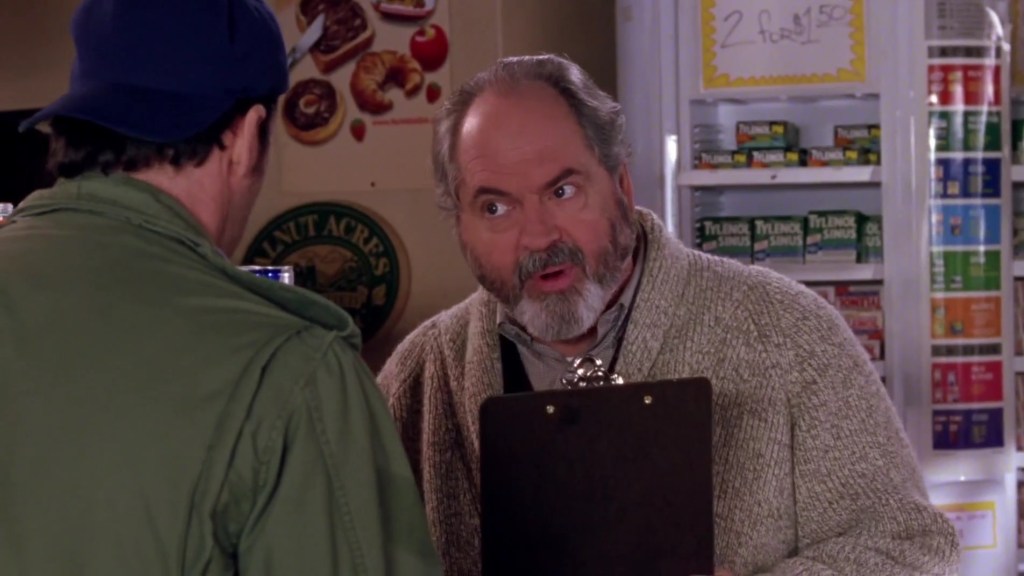
LUKE: We don’t live in a fascist country. TAYLOR: Oh, this isn’t about the fascists – who, by the way, had their faults but their parks were spotless.
Lorelai has already accused Taylor of being a fascist, now Luke does so. It turns out that Taylor does in fact have some admiration for fascists and their “spotless parks”, meaning that Lorelai and Luke are somewhat justified in their name calling.
LUKE: And even if he does stay, it’ll be only for another year, and then he’ll go off to college or Attica or whatever, and it’ll just be me again.
Attica Correctional Facility, a maximum security state prison located in the town of Attica, New York. Constructed in the 1930s, it has held some of the most dangerous convicts of the times. Prisoners are often here because of disciplinary problems in other institutions.
Some of its past infamous inmates include serial killer David Berkowitz “Son of Sam”, and Mark Chapman, the assassin of John Lennon (both now held elsewhere). Ironically, John Lennon and Yoko Ono released a 1972 song called “Attica State”, lamenting the loss of life in the 1971 Attica State prison riots, as well as the poor living conditions and humans rights abuses in the US prison system. It appears on the album Some Time in New York City.
This is a very harsh comment from Luke about Jess, even as a joke. Before Jess arrived, Luke seemed to think he was nothing more than a slightly wayward teen only in need of a stable home. After six months, he seems to think it’s a toss-up whether Jess will go to college or prison (perhaps under Lorelai’s influence, who was saying that before she even met Jess). In fact, Jess will do neither.
Interestingly, the historic region of Attica in ancient Greece was the location of the city of Athens, a centre for learning and culture during its Golden Age. Jess will end up working in a job where his mind is put to good use. He’ll also live in an American city with a Greek name!
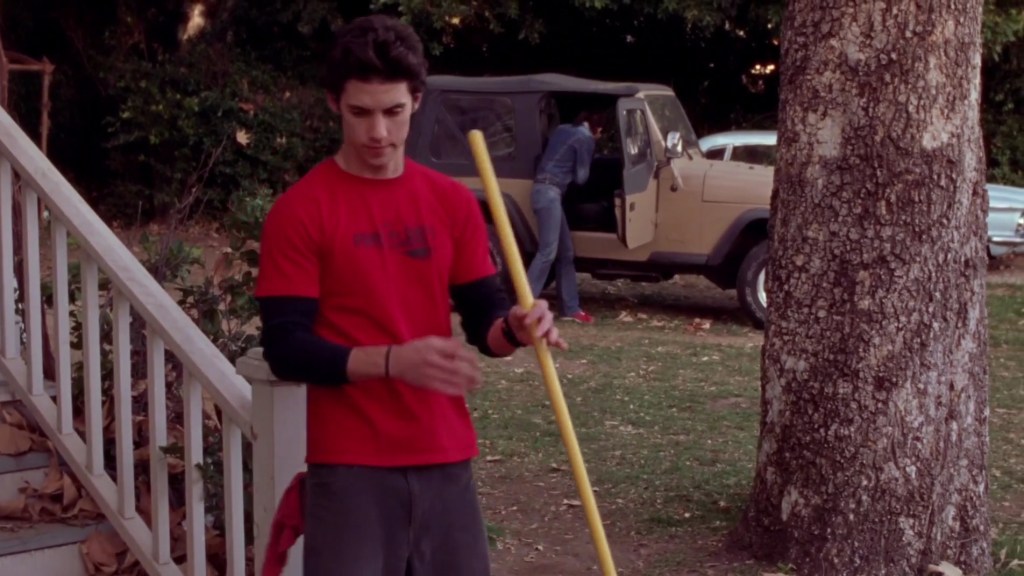
While Lorelai checks the car to see if the bracelet is there, we see Jess outside, staring at the bracelet with a look of unhappy disillusionment. All this time he has been cherishing it as a memento of Rory, something which has actually touched her skin. He must feel such a fool when he discovers he’s been unwittingly sighing over something Dean made for her, and probably concerned when he realises that losing it has upset Rory and caused her to worry about Dean’s reaction.
Jess is actually wearing the bracelet on his wrist, so he has made no effort to conceal that he has it, and both Rory and Lorelai have seen it without realising its significance. Jess wears several leather bracelets, so it doesn’t stand out, although he has been careful to wear Rory’s bracelet on a different wrist from the others. Talk about hiding in plain sight!
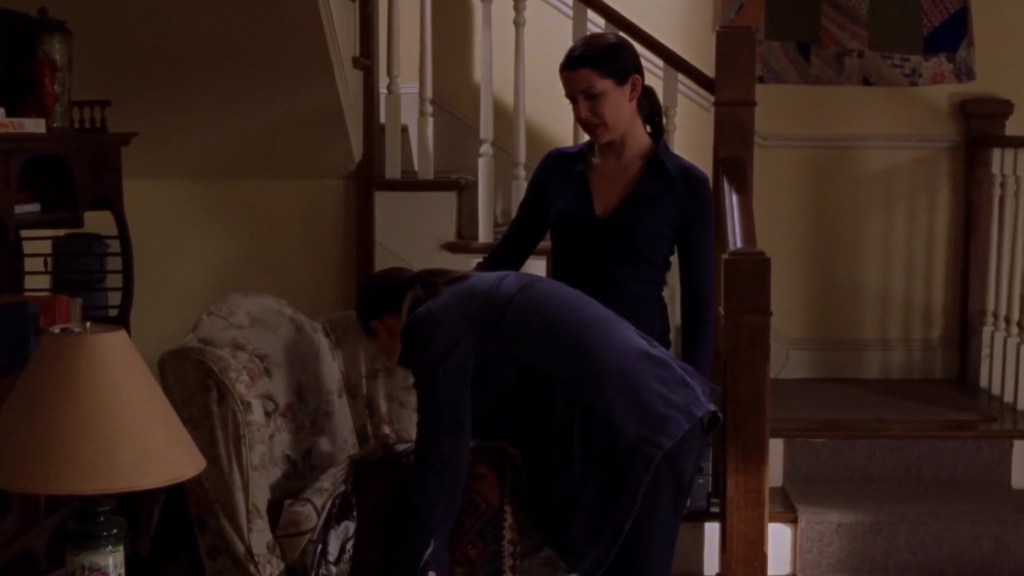
[Rory searches for her bracelet in the living room]
LORELAI: Anything? RORY: Just Grandma’s pen. LORELAI: Leave it there.
While searching for the bracelet, Rory finds the Montblanc pen that Emily gave her for successfully completing a year of study at Chilton. This is a very expensive pen, yet Rory has allowed it to get lost under the seat of an armchair for who knows how long. It’s meant to show how adorably unmaterialistic Rory is (ha!), but it just makes her look spoiled and ungrateful. Lorelai encourages this attitude by telling her to leave the pen there. There are times that one sympathises with Emily.
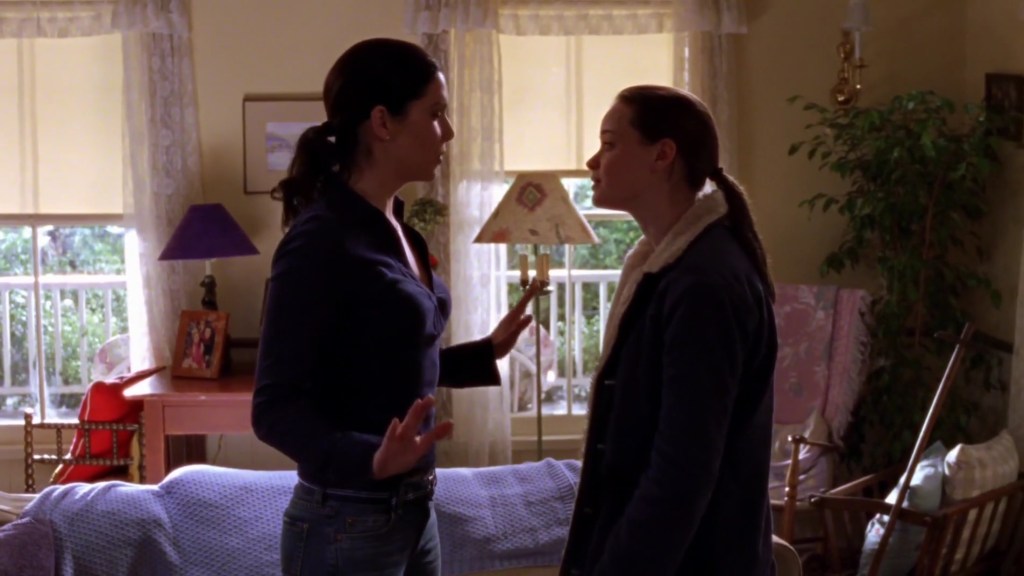
RORY: I don’t know where it is! LORELAI: Where what is? RORY: My bracelet – it’s gone.
Rory runs home in a panic to tell Lorelai that her bracelet is missing. Jess is listening in the background, and he now discovers that Rory’s bracelet was made by Dean, and given to Rory as a gift. Jess has a good poker face, but you can tell this does not come as welcome news.
Jess also learns that Rory thinks Dean will be angry when he finds out the bracelet is gone, and she appears frightened of his temper. This seems like such a red flag – why isn’t Lorelai concerned that her teenage daughter is actually scared of her boyfriend? Instead she soothes Rory, reassuring her that Dean won’t be angry, and he can easily make Rory another bracelet.
Despite Dean apparently being so great and understanding, Lorelai never suggests that Rory be honest with him and tell him the bracelet is missing. Why not, if there is nothing to fear from Dean’s temper? And why doesn’t Dean deserve to know the truth?
Under pressure from Rory, both Lorelai and Jess make an effort to be polite to each other. It is the only time these two characters are ever shown having a civil conversation, which is a shame, because they have a lot in common. They get each other’s references, they both love Luke but love to rag on him, and they are capable of making allowances for each other’s quirks. This scene is a real “what might have been” moment.
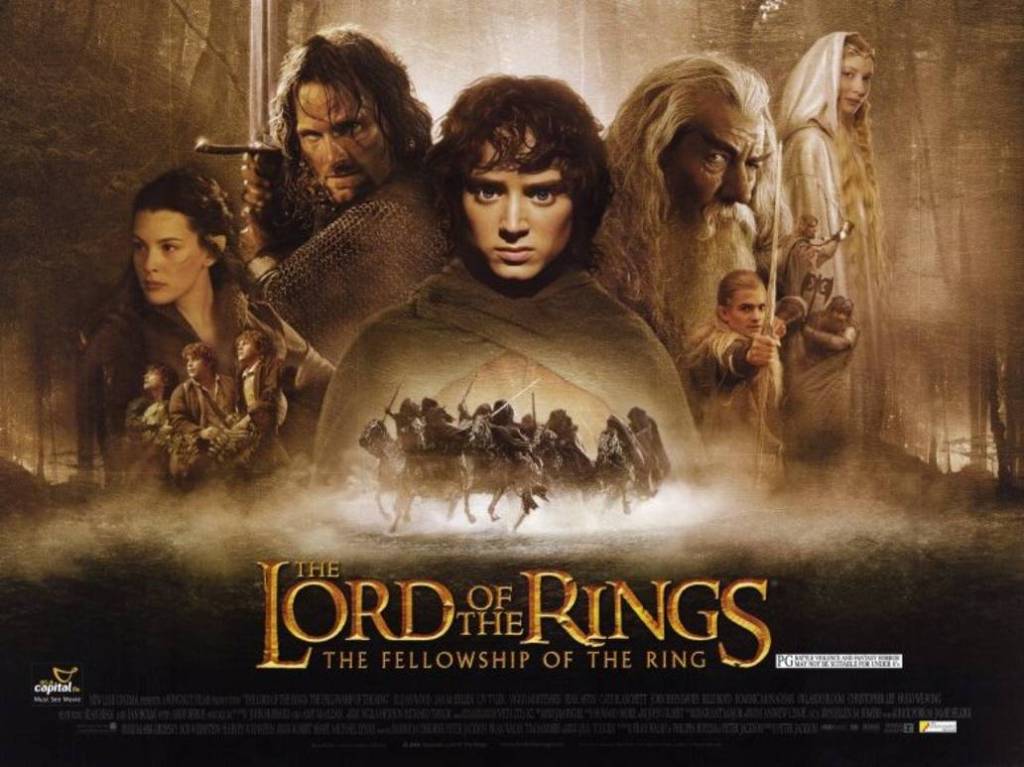
After the book fundraiser, which was something Rory was interested in, Dean suggests they go and watch The Lord of the Rings at the cinema, which is something he wants to do. They have already seen the film three times together in the past three months, and even though Rory enjoyed it, she isn’t enthusiastic about seeing it again.
They can only be talking about the first film in the trilogy, The Lord of the Rings: The Fellowship of the Ring, which was released in December 2001. Directed by New Zealander Peter Jackson, it’s based on the novel, The Fellowship of the Ring by British author J.R.R. Tolkien, the first volume in The Lord of the Rings.
An epic fantasy adventure film featuring an ensemble cast, filmed and edited entirely in New Zealand, the story is set in Middle-Earth and tells of the Dark Lord Sauron who seeks the One Ring, which contains part of his soul, in order to return to power. The fate of Middle-Earth hangs in the balance as a young hobbit named Frodo Baggins (played by Elijah Wood) must take the Ring to be destroyed in the land of Mordor, accompanied by a fellowship of eight other companions.
The film was acclaimed by critics and fans alike, considering it a landmark in filmmaking, and the fantasy genre in particular, and was praised for its fidelity to the source material. It was the #2 film of 2001, and the fifth-highest grossing film of all time upon its release. It won numerous awards, including four Oscars and three BAFTAs, which included Best Film and Best Direction.
Rory buys several books at the fundraiser, but only a couple of the titles are visible. Gypsy the mechanic is volunteering her time to work at the fundraiser, and she points Rory to the astronomy section, as if Rory has an interest in this area, and Gypsy somehow knows about it. Both quite surprising things to learn! The Buy a Book Fundraiser is held outside the library, and may be raising funds for new books.
Inherit the Wind
A 1955 play by Jerome Lawrence and Robert E. Lee, fictionalising the events of the Scopes “Monkey” Trial. This was a legal trial in July 1925 where schoolteacher John Scopes was taken to court by the state of Tennessee for teaching human evolution. There was intense media scrutiny of the case, with publicity given to the high-profile lawyers who had taken the case. The prosecution had former Secretary of State, William Jennings Bryan, while Clarence Darrow defended Scopes – the same lawyer who had defended child murders Leopold and Loeb, previously discussed. Scopes was fined $100, but the case was overturned on a technicality. The case was seen as both a theological contest, and a test as to whether teachers could teach modern science in schools.
The play gives everyone involved in the Scopes Trial different names, and substantially alters numerous events. It is not meant to be a historical account, and is a means to discuss the McCarthy trials of the 1950s, where left-wing individuals were persecuted as Communist sympathisers, under a regime of political repression and a fear-mongering campaign.
Rory might be particularly interested in the play because of the focus it places on the media, with reporter E.K. Hornbeck covering the case for a fictional Baltimore newspaper. He is based on journalist and author H.L. Mencken, previously discussed as one of Rory’s heroes, who gained attention for his satirical reporting on the Scopes Trial for the Baltimore Morning Herald.
Inherit the Wind premiered in Dallas in 1955 to rave reviews, and opened on Broadway a few months later with Paul Muni, Ed Begley, and Tony Randall in the cast. It’s been revived on Broadway in 1996 and in 2007, as well as in Philadelphia, London, Italy, and India.
It was adapted into film in 1960, directed by Stanley Kramer, and with Spencer Tracey starring as the defence lawyer, Dick York as the schoolteacher, and Gene Kelly as the Baltimore journalist. It received excellent reviews and won awards at the Berlin Film Festival. It’s also been made for television in 1966, 1988, and in 1999 (starring George C. Scott, Jack Lemmon, and Beau Bridges). It seems likely that Rory watched the most recent version on television.
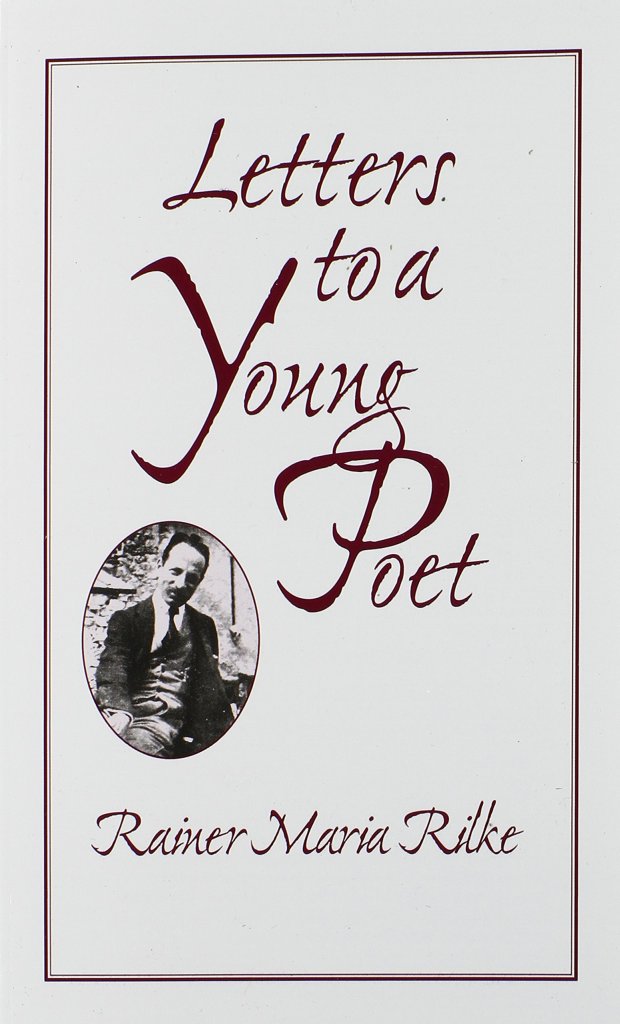
Letters to a Young Poet
A 1929 collection of ten letters written by the Bohemian-Austrian poet Rainer Maria Rilke, to a young officer cadet named Franz Xaver Kappus at the Theresian Military Academy in Wiener Neustadt, Austria between 1902 and 1908.
Kappus had written to Rilke, seeking advice on the quality of his poetry, to help him choose between a literary career, or one as an officer in the Austro-Hungarian Army. Kappus had been reading Rilke’s poetry when he discovered that Rilke had earlier studied at the academy’s lower school in St. Pölten, and decided to write to him for advice.
Rilke gave Kappus very little criticism or suggestions on improving his writing, and said that nobody could advise him or make life decisions for him. Over the course of ten letters, he instead provided essays on how a poet should feel and seek truth in experiencing the world around him. They offer insights into Rilke’s poetic ideas and themes, and his work processes.
Kappus did meet Rilke at least once, and despite his concerns about pursuing a military career, he continued his studies and served for 15 years as an army officer. During the course of his life, he worked as a journalist and reporter, and wrote poems, stories, novels, and screenplays. However, he never achieved lasting fame.
This is a book which features a future journalist – but one who yearns to become a poet. Is it a sign that Rory secretly wishes she could become a creative writer instead? Is she hoping that being successful in journalism will help her become a published author (it’s definitely a help in getting novels published, or at least considered). Is it even a hint that she will become a writer in the future, as she does in A Year in the Life, but is not destined to become famous from her writing? (Most published writers, even quite successful ones, don’t get famous, after all).
And is this correspondence between a poet and a student at a military academy meant to suggest that Rory is still thinking of Tristan, who went away to military school? Are she and Tristan actually writing to each other, or is the show leaving the door open for Tristan to possibly return in a future season, since they didn’t know how long One Tree Hill was going to last?
LUKE: Jess, come on. JESS: Hey, nobody asked me if I wanted to move to Stars Hollow, but I’m here. Pick whatever place you want and I’ll be there too.
A reminder and confirmation that Jess had no say in the decision to send him to Luke, and that his mother didn’t even ask whether he wanted to go or not. Now Luke is telling him that they have to move, and he is going to be uprooted again, with no say in it. He seems prepared to submit to this change too, with the resignation of someone who has no choice in the matter.
Note that Jess is wearing the “emotional” red, covered up with the dark blue of sadness, as if his anger is hidden under a cloak of depression.
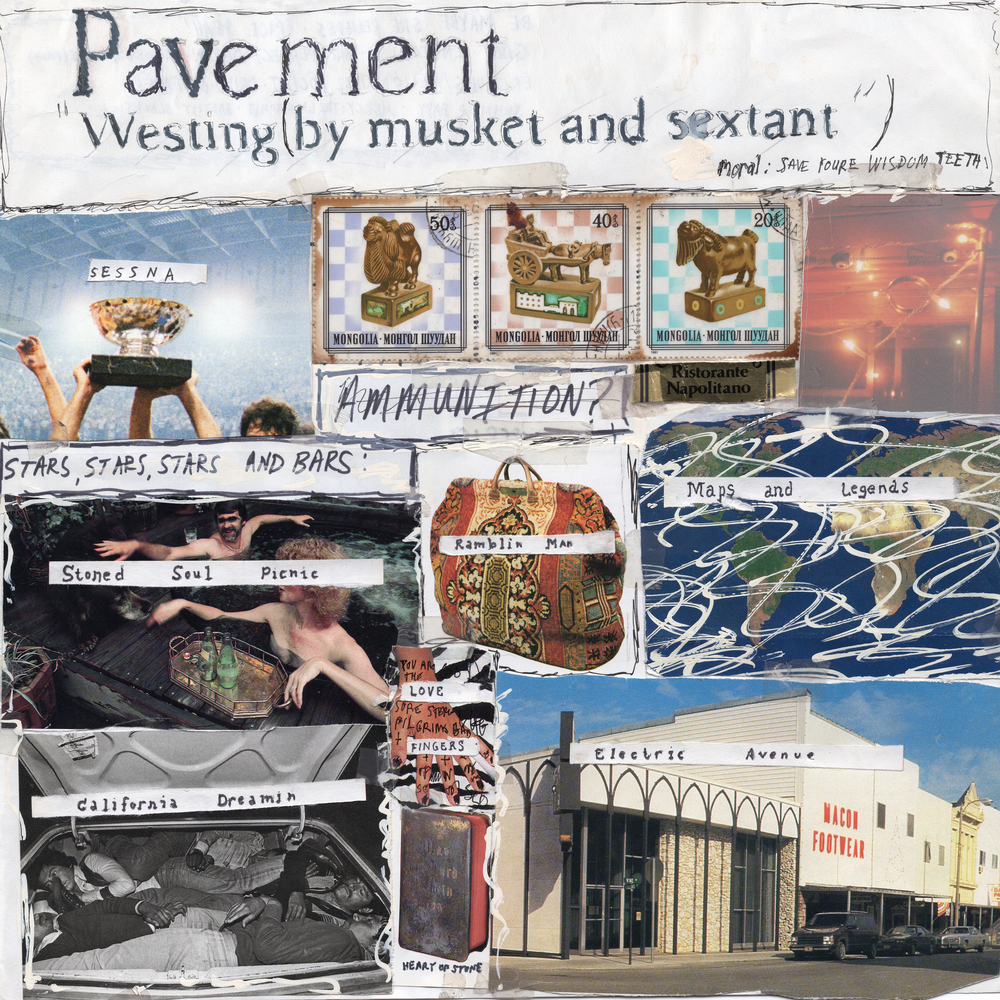
This is the music that Jess is sleeping to when Luke wakes him up. Price Yeah!, is by the American indie rock band Pavement, first released on their EP Slay Tracks: 1933-1969 in 1989. The EP was self-recorded, and is experimental hard-core punk.
The band were partly inspired by their home town of Stockton, California, a place they considered flat and boring that they wanted to escape from – something that Jess can probably relate to.
Being an extremely limited release, copies of this EP quickly became collector’s items selling for hundreds of dollars. Jess is most likely listening to Westing (By Mustang and Sextant), a compilation of Pavement’s early EP’s and singles which was released in 1993.
The song begins:
Just cause I’m fakin’ Doesn’t mean I’m wrong Cause I bought my price, yeah, No I got it at cost
And there’s the things I know Wrote them down on your nib Just remember turning It’s a rapid affair
Jess knows that he is faking it – but is he faking by hiding his true level of misery from Luke and the town, or is he faking by pretending to be less interested in Rory than he makes out? He’s aware of the price he is paying, but considers it worthwhile. The “rapid affair” may allude to how quickly he fell for Rory, and the things he wrote down to the annotations he made in Rory’s book.
Jess says he needs loud music on in order to sleep. Possibly he got into that habit needing to block out the sound of his mother partying or entertaining guests. Or even the sound of Liz having sex or fighting with her companion of the moment. Or they just lived in an apartment block where there was a lot of noise from other people, and little insulation against it.
Either way, it’s a sign that he didn’t have the best environment growing up. Unless he simply hasn’t adjusted to the quietness of the country after living in New York?
If Jess always needs loud music in order to sleep, how on earth has poor Luke been able to get any sleep? For that matter, why is he surprised to learn about it now? Has he just been gritting his teeth for six months and working long days on little sleep, and this is the final straw? And why haven’t any of their neighbours complained?


 The Annotated Gilmore Girls