“She meant to run all those people down”

SHERRY: Maureen’s the instigator of this little soiree. She has her own publicity firm in New York …

MAUREEN: She meant to run all those people down, but you didn’t hear it from me.

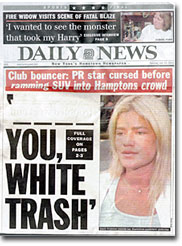
Maureen refers to publicist, manager, and socialite Elizabeth “Lizzie” Grubman (born 1971). In 2001, after being asked by security to remove her vehicle from a fire lane, she intentionally drove her Mercedes Benz SUV into a crowd of outside an inn in the Hamptons, injuring 16 people.

Grubman was later charged with second-degree assault, driving while intoxicated, and reckless endangerment. The trial gained widespread media coverage because of the circumstances and because of Grubman’s profile and attitude. She is alleged to have said, “Fuck you, white trash”, before ploughing her car into the crowd. Later allegations were that she received special treatment from the police.

In 2002, Grubman served thirty-eight days in jail after reaching a plea bargain. She maintains that the incident was accidental.

“Andrew Jackson, not Alfred E. Neuman”

LUKE: And he paid cash? … Did you make sure Andrew Jackson was on the bills, not Alfred E. Neuman or someone?

Andrew Jackson, previously discussed. Former president Andrew Jackson is on the US $20 bill.

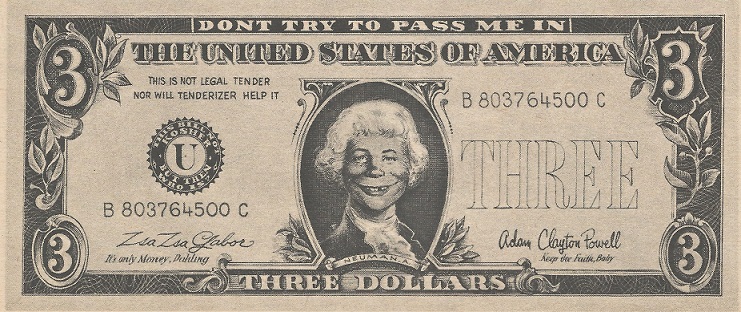
Alfred E. Neuman, the fictitious mascot and cover boy of the humour magazine Mad. The image had been used since the 19th century in advertising, and for Roosevelt’s political campaign in the 1930s. Mad magazine claimed the image in 1954, and named him “Alfred E. Neuman” in 1956. Since his debut, he has appeared on all but a handful of the magazine’s covers.

In 1967, the magazine published pictures of joke coins and a three dollar bill with Alfred E. Neuman’s face on it. Despite being an obvious satire on coin collecting, some readers cut the notes out of the magazine and were able to use them in Las Vegas money-changing machines, leading to federal authorities moving to stamp out this counterfeit operation.

Mad magazine went on to publish fake Monopoly money, and smaller versions of the three dollar bill which were given out as novelties at trade shows and conventions.

Maui

LORELAI: [on phone] You just flew back on your jet, huh? . . . From Maui?

Maui is the second largest island of the state of Hawaii, famous for its beautiful beaches, and a very popular tourist destination.

While Lorelai actually says “Maui”, the audio doesn’t seem to quite match up. Apparently, she originally said “Bali”, an island in Indonesia which is also a popular tourist destination. “Eight O’clock at the Oasis” aired on October 22 2002 – just ten days after a bomb attack in Bali which killed 202 people and left 209 injured, on October 12 2002. Because of that, Bali was re-recorded as Maui.

“Dead mother sitting in a rocking chair”

LORELAI: Let me just say, if we walk in there and his dead mother is sitting in a rocking chair, not a bit surprised.

A reference to the 1960 film Psycho, previously discussed.

In the film, the deranged murderer kills his own mother, but keeps her in the basement sitting in a rocking chair, treating her as if she were still alive. This seems to be another clue that Lorelai suspects Dwight of murdering Beenie Morrison, or being a serial killer.

“Holed up in the Chelsea”

RORY: I don’t know. Your parents just made it sound like . . .

CAROL: Like I was holed up in the Chelsea with a needle sticking out of my arm screaming “Sid” at the top of my lungs?

A reference to Nancy Spungen (1958-1978), American girlfriend of English punk rocker Sid Vicious, and a figure of the 1970s punk rock scene. The two of them were habitutal heroin users, and eventually Nancy’s body was found in the bathroom of their room at the Hotel Chelsea in New York, stabbed to death. Sid Vicious died of an overdose before he could be brought to trial.

Their story is told in the film Sid and Nancy, previously discussed [pictured]. Carol seems to have all the same references as Lorelai as well.

French Skating Judges

RORY: We are not supposed to be brokering backdoor deals and pushing through agendas with intimidation and bribery. I mean, what are we, French skating judges?

Rory refers to the figure skating scandal of the 2002 Winter Olympics, held in Salt Lake City, Utah, in February of that year.

It was alleged that the pairs’ figure skating competition had been fixed, in which a French judge had compromised scores. The Russian team was awarded the gold, to a furious reaction from Canadian commentators, who believed that their team’s performance was clearly superior. The US press supported Canada, and suspicion quickly fell on the French judge, Marie-Reine Le Gougne. Le Gougne admitted being pressured to choose the Russian team, but later denied any wrongdoing.

After limited investigation of the issues, a second award ceremony was held, and two pairs teams received gold medals: the Russian team, and also the silver medalists, from Canada [pictured]. As a result of this scandal, the International Skating Union suspended two officials for three years: Marie-Reine Le Gougne, and the head of the French skating federation. A Russian organised crime boss was arrested for fixing the Olympics while in Italy, but released due to lack of evidence.

Meyer Lansky

FRANCIE: Because talking to Paris is like shopping for a bathing suit in December – frustrating, fruitless, and a complete waste of time. Now, you, you might be the wallflower, but you’re obviously the Meyer Lansky behind this organization.

Meyer Lansky, born Meier Suchowlański (1902-1983), a figure in organised crime instrumental in the development of the National Crime Syndicate, and known as the “Mob’s Accountant”. A member of the Jewish mob, Lansky developed a gambling empire that stretched around the world, had a strong influence with the Italian-American Mafia, and played a large role in the consolidation of the criminal underworld.

Despite nearly 50 years participating in organised crime, Lansky was never found guilty of anything more serious than illegal gambling. He has a legacy of being one of the most financially successful gangsters in American history.

Francie compares Rory to Meyer Lansky, as someone clever and evasive enough to keep her hands clean, and to be the real power behind Paris’ throne. I think the fact that Rory was able to talk her way out of the punishment meted out to the Puffs after the ill-fated initiation ceremony is enough to make Francie think that there is something pretty slippery about her.

“Dim-witted, drunken, or drug-addicted relative”

LORELAI: Honey, you have power, brains, now all you need is a dimwitted, drunken or drug-addicted relative to constantly humiliate you while you serve in office.

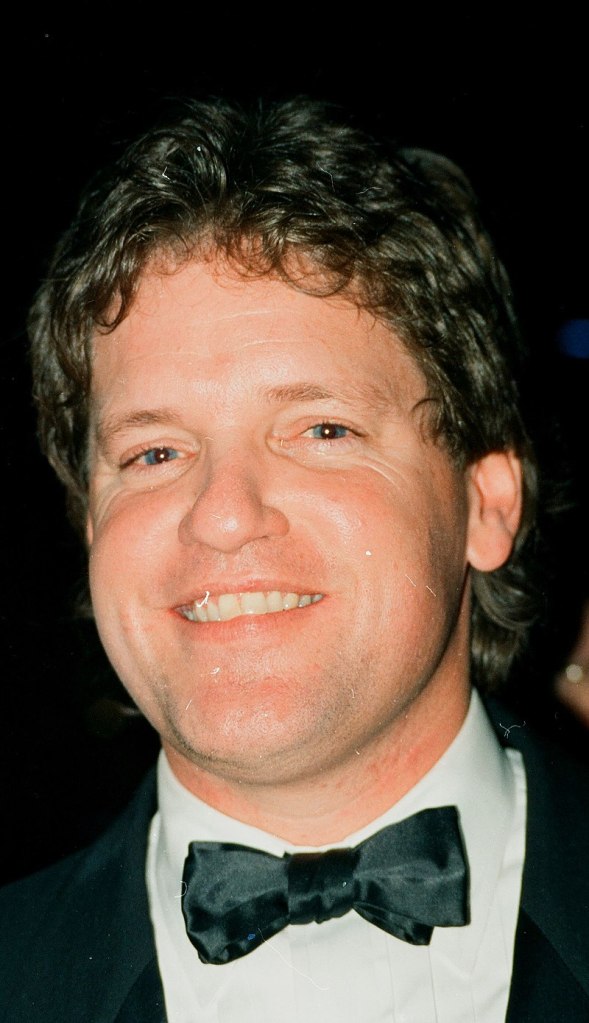
Lorelai is probably referring to Bill Clinton’s younger half-brother, Roger Clinton Jr. He was given the codename “Headache” by the Secret Service, due to his controversial behaviour, which included accepting bribes from mobsters, and dangerous drink driving offences. He received a presidential pardon from his brother for a 1985 conviction for cocaine trafficking, meaning that although he had served a prison sentence, the crime was removed from his criminal record.

Oscar Wilde

SOOKIE: What do you think, manly [holding up statue]?

LORELAI: In an Oscar Wilde sort of way, absolutely.

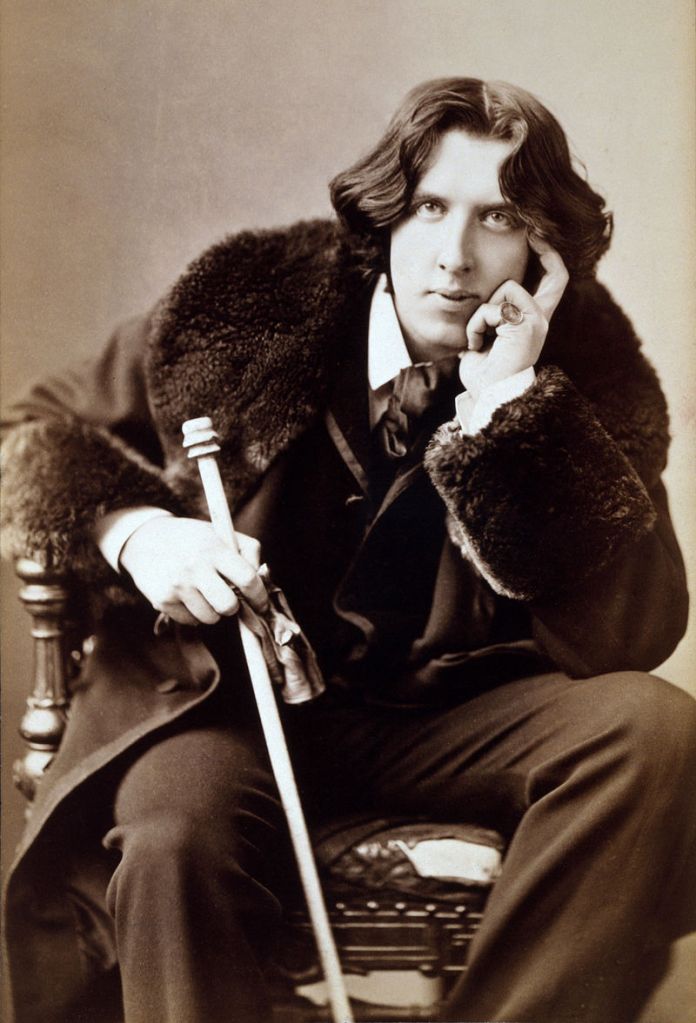
Oscar Wilde (1854-1900), Irish poet and playwright, and one of the most popular playwrights in London in the early 1890s. Best remembered for his sparkling comedies, witty epigrams, and his only novel, The Picture of Dorian Gray (1890).

At the height of his fame and success, while his play The Importance of Being Ernest (1895) was still being performed in London, Wilde prosecuted the Marquess of Queensberry (the father of Wilde’s lover, Lord Alfred Douglas) for libel, but the trial unearthed evidence that led to Wilde’s arrest for indecency with men and boys. He was convicted and sentenced to two years’ hard labour, and imprisoned from 1895 to 1897. On his release, he left for France, and never returned to Ireland or Britain.

The statue that Sookie holds up appears to be a cherub or some other sort of nude small boy. It certainly doesn’t look butch, but Lorelai seems to be saying, not so much that the statue seems “gay”, as slightly paedophilic, because of the subject matter.

Oscar Wilde did take teenagers as young as fourteen as his lover, although to my knowledge, not small children like the statue seems to be (Wilde’s trial was based on his activities with males because of their gender, not specifically with their ages). The full details of Wilde’s case had been published in 2001, with many people shocked, or at least uncomfortable, with how extensive Wilde’s interest in much younger males had been – something which would have seen Wilde imprisoned in our time as well. This may be what Amy Sherman-Palladino had in mind when she wrote this scene.