What Color is Your Parachute?, by Richard Nelson Bolles (a classic guide for job-seekers)
The Graduate on DVD, the 1967 film starring Dustin Hoffman
The Portable Nietzsche, by Friedrich Nietzsche, translated by Walter Kauffman
Application to join the army
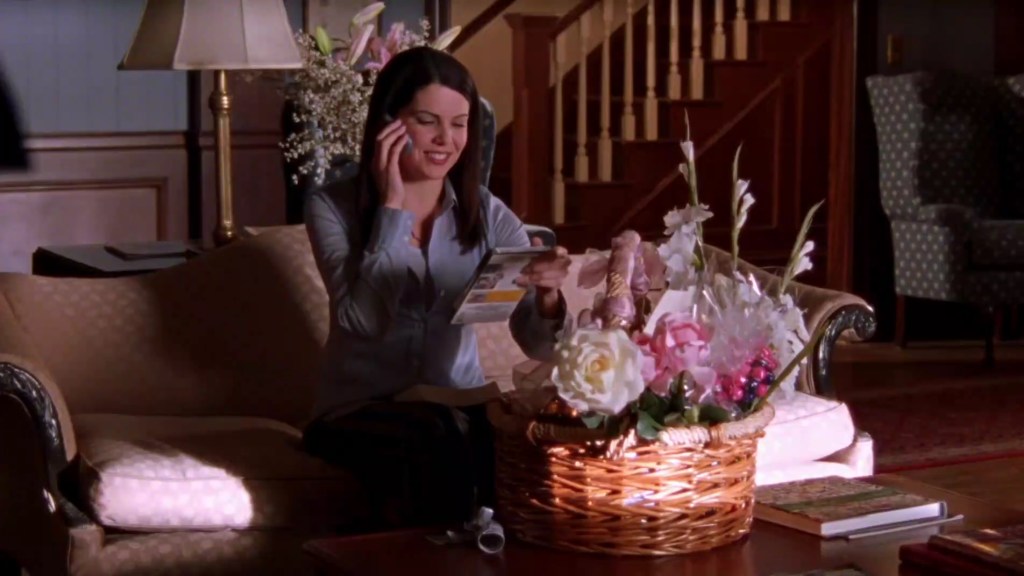
Disposable camera
Pearl necklace in a velvet box
They are all traditional graduation gifts, and/or joke gifts. The camera actually ends up becoming an essential item. Lorelai never seems to consider how Sherry would feel about her boyfriend sending another woman flowers and jewellery.
RORY: That diploma hanging on the wall is going to make this all worthwhile, trust me.
LORELAI: I guess, unless I turn into John Nash and start drooling on people.
John Nash (1928-2015), mathematician who made fundamental contributions to game theory, differential geometry, and the study of partial differential equations. His theories are widely used in economics. Nash is the only person to win both the Abel Prize and the Nobel Memorial Prize in Economics Sciences.
In 1958, Nash began showing clear signs of mental illness and spent several years in psychiatric hospitals being treated for schizophrenia. His condition slowly improved in the 1970s, allowing him a return to academic work by the mid 1980s.
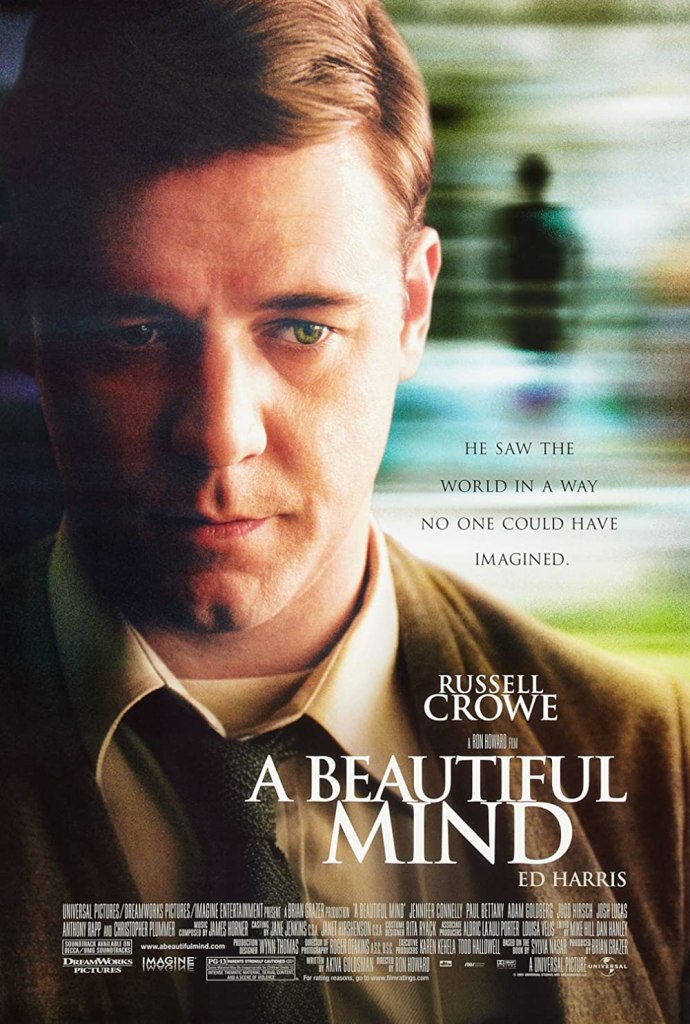
John Nash’s struggles with mental illness and his recovery were highlighted in the 2001 biographical film, A Beautiful Mind, directed by Ron Howard and based on the 1997 best-selling Pulitzer-winning biography of the same name by Sylvia Naser, with Russell Crowe starring as Nash. A Beautiful Mind was a commercial and critical success, winning four Academy Awards, including Best Picture and Best Director.
Michael Landon, born Eugene Orowitz (1936-1991), actor and filmmaker best known for his roles in the television series Bonanza (1959-1973), Little House on the Prairie (1974-1982), and Highway to Heaven (1984-1989).
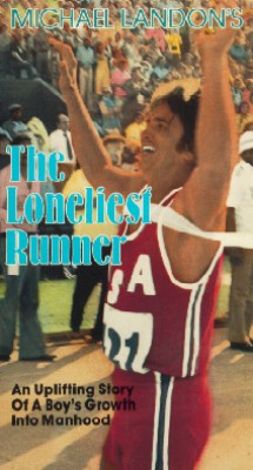
Michael Landon made an autobiographical television film in 1976, called The Loneliest Runner. The story is about a teenage boy named John Curtis, based on Landon himself, who still wets his bed. His mother publicises his problem by hanging the stained sheets from his bedroom window for all to see.
Every day, John runs home from school to take the sheets down before his friends see them. He starts running with the junior track team to channel his anger and forget the shame and hurt of his dysfunctional family life. Ten years later, he is a gold-medal winning Olympic champion, who credits his mother for his athletic success. Landon plays the adult Curtis himself.
Like John Curtis, Michael Landon wet the bed until he was 14, and his mother Peggy hung the sheets out to shame him. He had Olympic ambitions as a javelin-thrower, but a shoulder injury ended his athletic career, which propelled him into acting.
His unauthorised 19991 biography by Aileen Joyce, Michael Landon: His Triumph and Tragedy, relates that the bedwetting was brought on by the stress of having a suicidal mother. As a child, Michael Landon had to save his mother from drowning herself during a beach vacation.
LORELAI: I don’t know, didn’t they feed lead to our jumping frog or something?
RORY: Oh yeah, right after they stoned the woman who won the lottery.
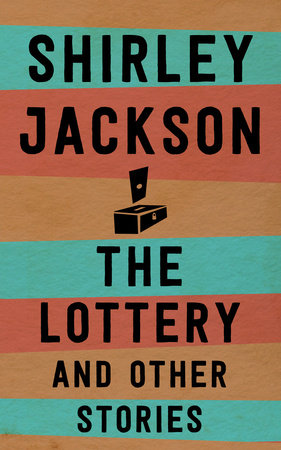
Rory references the 1948 short story, “The Lottery”, by Shirley Jackson. Set on a beautiful summer day in an idyllic New England village (based on Jackson’s own home of Bennington, Vermont), the story tells of an annual ritual known as “the lottery”, an old tradition carried into modern times, and seemingly practised to ensure a good harvest.
People draw slips of paper from a box, and a wife and mother named Tessie Hutchinson eventually “wins” by drawing the marked piece of paper. The entire village begins stoning her to death as she screams of the injustice of the lottery – an injustice that only bothers her when she is the scapegoat marked for death.
The story was first published on June 26 in The New Yorker, and proved so unsettling at the time that The New Yorker received a torrent of letters, the most mail they ever received about a story. Jackson herself received about 300 letters about the story that summer, much of it abusive or hate mail. (Some asked where they could go to watch the “the lottery” take place!).
Since then, “The Lottery” has been analysed in every possible literary and sociological way, its careful construction and symbolism noted, and its themes linked with everything from mob mentality, the military draft, and the death penalty. It is one of the most famous stories in American literature, often reprinted in anthologies and textbooks, and has been adapted for radio, television, film, graphic novel, and even (to Shirley Jackson’s bafflement) a ballet.
Apart from being a short story often read for high school English classes, this seems like a story Rory would enjoy. She has a taste for dark and “gloomy” themes, and is a fan of American Gothic. Like Tessie, Rory is from an idyllic New England town, and has been singled out for special treatment – but in her case, it’s to be loved and glorified by the town.
The story reminds us that even the most charming small towns have a dark side, and that includes Stars Hollow. Rory is no doubt thinking of Jess, vilified and forced to leave because of a minor car accident. (The name Jess even sounds a bit like Tessie).
LORELAI: So, um, what just went down there? … Just now, the handshake with the man in the gray flannel suit – did you score a deal?
The Man in the Gray Flannel Suit, 1956 drama film directed by Nunnally Johnson, based on the 1955 novel of the same name by Sloan Wilson. The film focuses on a young World War II veteran, played by Gregory Peck, trying to support his family in Connecticut in a high-pressure job while dealing with post-traumatic stress syndrome from the war.
The film received mixed reviews at the time, but was very popular with the public for its critique of the increasing demands of corporate organisations upon white-collar workers, striking a chord with 1950s audiences.
RICHARD: Hm, maybe we should start a tab with them so we don’t have to pay cash everyday.
LORELAI: Already done.
RICHARD: Amazing. You’re like the tiny fellow on that M*A*S*H* program, always anticipating.
M*A*S*H* (an acronym for Mobile Army Surgical Hospital), a war comedy-drama television series set during the Korean War in the early 1950s which aired from 1972 to 1983. It was adapted from the 1970 film of the same name, which in turn was based on the novel MASH: The Story of Three Doctors by Richard Hooker, based on the author’s own experiences as a doctor in a field hospital in Korea.
Richard refers to the character Corporal Walter “Radar” O’Reilly on the TV sitcom M*A*S*H*, portrayed by Gary Burghoff. He seems to have extra-sensory perception, appearing at his commander’s side, with whatever paperwork is required, before being called, and finishing his sentences before the officer is anywhere near the end of them. Young and naïve, Radar tends to look up to his superiors as father figures, something Richard would probably like from Lorelai.
Although M*A*S*H* took a while to find its feet, by its second season it was one of the top 10 programs of the year, and stayed in the top 20 for the rest of its run. Becoming an allegory for the Vietnam War, it is considered one of the greatest TV shows of all time, and is still broadcast in syndication.
The hymn they are singing at the Kim house when Lane arrives.
What a Friend We Have in Jesus is a Christian hymn written by Irish-Canadian poet Joseph M. Scriven, a preacher in the Plymouth Brethren movement. He wrote it in 1855 to comfort his mother back in Ireland after hearing she was terribly ill, and only received credit for it in the 1880s. The tune was composed by American attorney Charles Crozat Converse.
Although sometimes criticised for its sentimentality, the hymn remains popular. It has been recorded many times, including by Bing Crosby, Ella Fitzgerald, Aretha Franklin, Tina Turner, Glen Campbell, and Amy Grant. The song features in the film, Driving Miss Daisy, previously discussed.
Lane looks absolutely flushed with happiness as she joins in with the hymn-singing, thrilled with finding her calling in life. It’s a reminder too that Lane has always grown up around music – just not rock music. It feels as if Mrs Kim has unknowingly been bolstering Lane’s passion all this time!
In “Kiss and Tell”, Lane mentioned that it was Sing Your Favourite Hymn Night at the Kim house on the day that Dean first kissed Rory, again linking hymn night with first love. That seemed to be a Thursday evening, suggesting it is Thursday now, and a week after the car accident that Jess and Rory had. (Of course, the Kims could have changed their hymn night in the interim). It’s clearly not night time, but “hymn night” actually seems to be held in the late afternoon (or early evening in the winter months, as it gets dark earlier then).
BABETTE: I met this guy once – gorgeous, tan, looked just like Mickey Hargitay. We had coffee, he gave me a pamphlet. Next thing you know, I’m wearing a muumuu, playing a tambourine, jumping up and down at the airport.
Miklós “Mickey” Hargitay (1926-2006), Hungarian-born bodybuilder, actor and the 1955 Mr Universe. He was married to actress Jayne Mansfield from 1958-1964, and they made four films together, including Will Success Spoil Rock Hunter? (1957). He is the father of actress Mariska Hargitay.
Babette sometimes alludes to the terrible experiences she had with men before fortunately meeting Morey, which she has no compunction about sharing with Rory. The previous season, she told Rory about the time she got pushed out of a car, and this season she tells Rory about how she was lured into a cult! For such a bright and bubbly character, she has a very dark past.
I think the cult that Babette is describing are the Hare Krishnas, who tended to recruit new members at airports in the 1970s, and often used tambourine music and dancing to attract interest. They didn’t actually wear muumuus, but Babette might have thought their orange robes looked like muumuus.
TAYLOR: Rory, you don’t have to explain a thing to me. I know that there is absolutely no way that you would be involved in something like that if it weren’t for that Sal Mineo wannabe, believe me. Chachi, and Chachi alone, will be held responsible for that incident, okay?
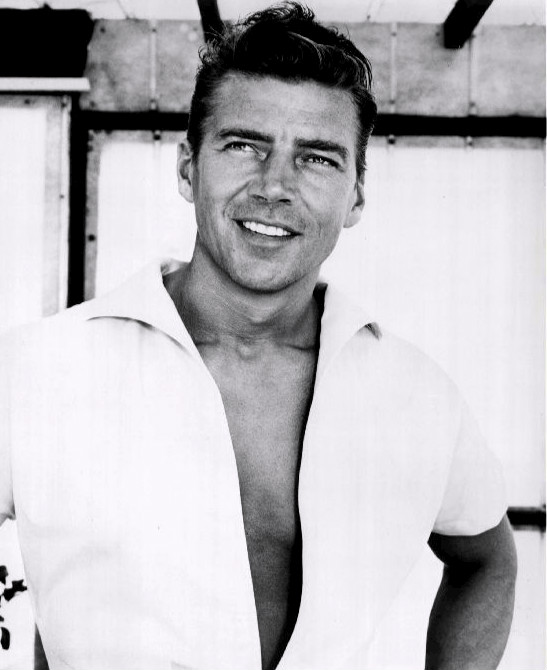
Salvatore “Sal” Mineo (1939-1976) [pictured], actor, singer, and director. He is best known for his role of John “Plato” Crawford, in the 1955 film Rebel Without a Cause, previously discussed. Like Jess, Plato was abandoned by his father and is neglected by his mother, and although treated as a juvenile delinquent, is a sad, lonely boy, desperate for love and affection, and the target of bullies. Plato has a tragic ending, perhaps a bit of wish fulfilment from Taylor.
The role of Plato was played as if the character was a gay teenager in love with James Dean’s character, Jim – the original script even had them sharing a kiss – and Plato is commonly identified as the first gay teen in cinema. Sal Mineo was himself openly bisexual, and unfortunately, like his character, Sal Mineo’s life had a violent ending, as he was murdered in an apparent random mugging.
One fan theory, possibly controversial, suggests that Jess too may be gay or bisexual, and that this is a hint of it – although there’s nothing to disprove that, it seems more likely that Taylor is simply clueless about gay subtext in films.
Chachi, character from television sitcoms Happy Days and Joanie Loves Chachi, previously discussed.
TAYLOR: That boy [Jess] is a walking natural disaster, they should name a tornado after him.
Tornadoes don’t receive personal names, that’s only for hurricanes and tropical cyclones. There has never been a Hurricane Jess, or Tropical Cyclone Jess.
The reference to tornadoes is yet another allusion to The Wizard of Oz [pictured], because it was a tornado that carried Dorothy to the Land of Oz. A possible hint that Jess could provide a gateway to another world for Rory.





 The Annotated Gilmore Girls