LORELAI: Hm. Or we could sit in the corner – you know, the Mafia table so that no one can come up behind you and whack you with a cannoli.
A reference to the 1972 film The Godfather, previously and frequently mentioned. There is a famous scene in the film where the young Michael Corleone (Al Pacino) becomes a made man (full member of the crime family) by taking out a rival mob boss and a corrupt chief of police in an Italian restaurant.
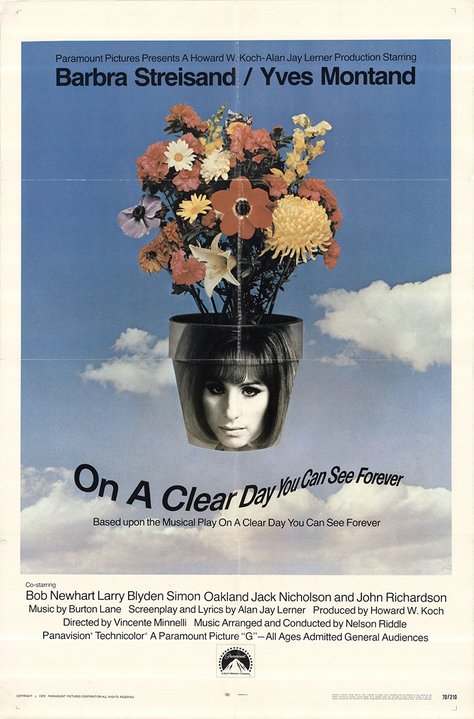
RORY: Tempting. Do you know that on a clear day you can see all the way to the garbage cans behind Al’s Pancake World?
A possible allusion to the 1970 comedy-drama musical film, On a Clear Day You Can See Forever, directed by Vincente Minnelli, and based on the 1965 stage production of the same name, with lyrics by Alan Jay Sherman and music by Burton Lane. It stars Barbra Streisand, a favourite of Lorelai’s, as a woman who undergoes hypnotherapy to give up smoking, but in the process discovers she is the reincarnation of a seductive Regency lady.
The film received mixed reviews, but its reputation has endured over time.
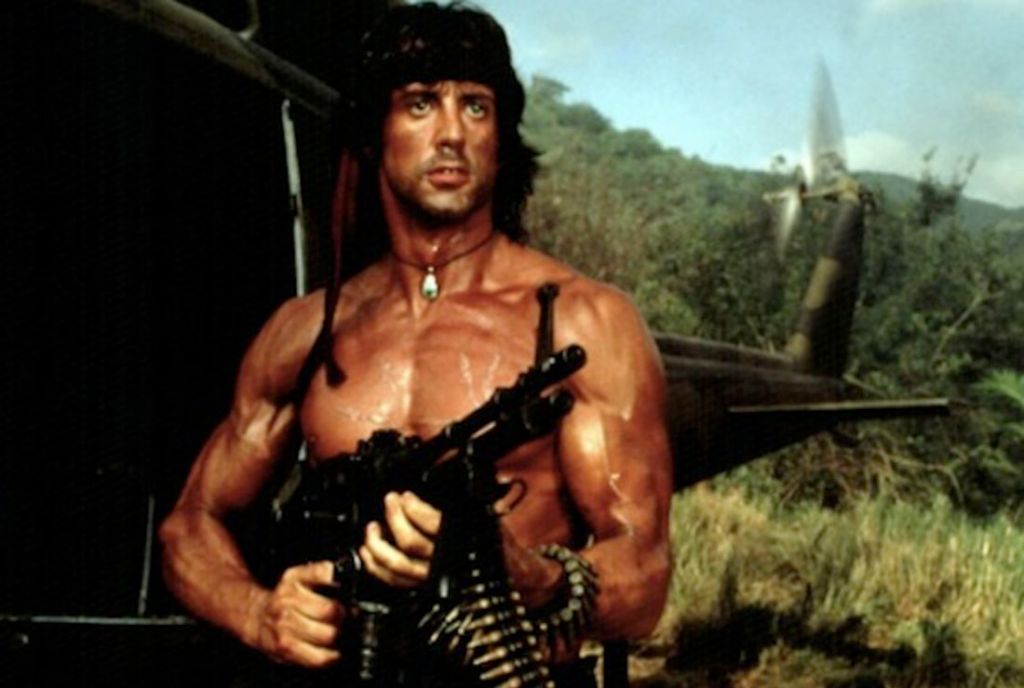
LORELAI: I’ve known guys like Jess. He seems cool because he’s got this dangerous vibe and this problem with authority and he’s seen a lot of Sylvester Stallone movies.
Sylvester Stallone, (born Michael Sylvester Stallone in 1946), actor, screenwriter, producer, and director. He won critical acclaim for his co-starring role in The Lords of Flatbush (1974), and gained his greatest critical and commercial success in Rocky (1976). He is the only actor in US cinema history to have starred in a #1 film across six decades.
Lorelai is probably thinking about Stallone’s roles in the Rambo films, beginning with First Blood (1982), and in a slew of other commercially successful but critically panned action films in the 1980s and ’90s, which made Stallone one of the highest-paid action stars of his era.
Amusingly, Milo Ventimiglia (Jess) played Sylvester Stallone’s son in the 2006 film Rocky Balboa. Casting must have agreed that Jess really did have a bit of a Sylvester Stallone vibe.
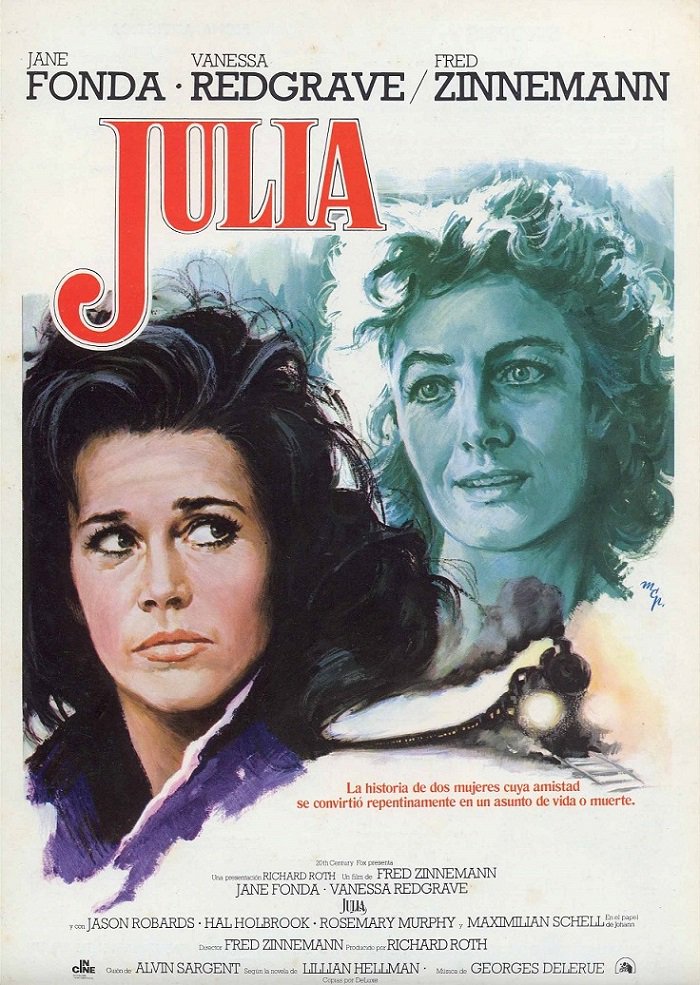
RORY: You said you wanted to read The Children’s Hour. LORELAI: I did? RORY: The other night when we were watching Julia, and Jane Fonda was playing Lillian Hellman.
The Children’s Hour, 1934 play by Lillian Hellman. It is set in a girl’s boarding school run by two women, and when an angry student runs away, she tells her grandmother the women are having a lesbian affair to avoid being sent back. This false accusation destroys the women’s careers, relationships, and lives.
The play is based on an incident which occurred in Scotland in the 19th century, which Hellman read about in a 1930 true crime anthology called Bad Companions by William Roughead. The Children’s Hour was a financial and critical success, and was adapted into a film called These Three in 1936, then again under its original title in 1961; both versions were directed by William Wyler.
Julia, 1977 period drama film [pictured] directed by Fred Zinnemann, based on a chapter in 1973 Lillian Hellman’s controversial book Pentimento: A Book of Portraits. It is about Hellman’s alleged friendship with a woman named Julia, who fought against the Nazis prior to World War II. Jane Fonda plays Lillian Hellman, and Vanessa Redgrave is in the role of Julia. An image of the real Lillian Hellman is shown at the end.
Julia performed well at the box office and received generally positive reviews. However, it was felt, with good reason, that the supposedly true story must have been, at best, heavily fictionalised. At the time of her death, Lillian Hellman was still in the process of suing the writer Mary McCarthy for libel after she cast strong doubt on the story’s veracity.
In 1983, New York psychiatrist Muriel Gardiner claimed that she was the person the “Julia” character was based on. Lillian Hellman had never met Gardiner, but had heard about her through a mutual friend, so they couldn’t possibly have had the relationship or adventures together that Hellman had written about. This does seem the most likely explanation, however.
Muriel Gardiner wrote about her anti-Fascist activities in Vienna of the 1930s in a 1983 book, Code Name Mary: Memoirs of an American Woman in the Austrian Underground.
RORY: Really? Try it. The Fountainhead is classic. JESS: Yeah, but Ayn Rand is a political nut. RORY: Yeah, but nobody could write a forty page monologue the way that she could.
The Fountainhead, 1943 novel by Russian-American author Ayn Rand, and her first literary success. The novel is about a ruggedly individualistic architect named Howard Roark, who battles against conventional standards and refuses to compromise his ideals. Rand said that Roark was the embodiment of her ideal man, and the novel reflects her views that the individual is more valuable than the collective.
Twelve publishers rejected the manuscript before Bobbs-Merrill took a chance on it, and contemporary reviews were mixed. However, it gained a following by word of mouth, and eventually became a bestseller. It has had a lasting influence, especially among architects, business people, conservatives, and libertarians. It was adapted into film in 1949, and turned into a stage play in 2014.
We here learn that Rory attempted to read The Fountainhead when she was ten, without success, but tried again when she was fifteen and liked it. Jess is taken aback by her recommending a text beloved of right-wing libertarians and “political nuts”, but Rory says she enjoys it as a piece of literature. The Fountainhead is absolutely full of characters having lengthy monologues where they clearly explain their philosophies, plans, and ideals.
The character of Howard Roark (allegedly based on architect Frank Lloyd-Wright) is a brooding man of few words, rather like Jess. Could Rory be recommending the book to Jess for that reason, to let him know that she likes a book where the protagonist is like Jess? A literary flirtation, like Jess annotating her copy of Howl?
Jess’ later career has a few things in common with Roark – neither of them graduate because they can’t be fettered by a conventional curriculum, both believe themselves to be misunderstood, both would prefer to take any paying job rather than compromise their creative integrity, and both become successful in their chosen fields.
More eye-raising is the character of Dominique, Roark’s love interest, and said to be his perfect match. Their first sexual encounter is so rough that Dominique describes it as a “rape”, and yet comes back for more, again and again. It’s a risque (or even plain risky) thing for a teenage girl to recommend to a boy she likes, and if this is a flirtation-by-literature, Rory seems to have suggested that Jess make things physical, even without her explicit consent.
RORY: On the bridge, that’s where we’re gonna eat? JESS: Yup.
Jess tells Rory that they will be having sharing their picnic on the bridge over the lake, a place in Stars Hollow that he has grown fond of. Later it will become a special place for he and Rory.
The scene of them having a picnic is a homage to the 1958 Southern Gothic comedy-drama film The Long Hot Summer, directed by Martin Ritter. The screenplay is partially based on the 1955 Tennessee William’s play Cat on a Hot Tin Roof, and three works of William Faulkner, one of Rory’s favourite authors (she can’t resist Southern Gothic).
In the film, Paul Newman plays Ben Quick, a crude, magnetic young man with a bad reputation for burning down barns who is expelled from his town and forced to go elsewhere. Joanne Woodward plays his love interest, rich girl Clara Varner, who fights their sexual tension all the way, but eventually falls in love with him. It turns out the enigmatic drifter’s bad reputation is undeserved, and he is actually very ambitious.
The Long Hot Summer received excellent reviews from critics, but didn’t do well at the box office. Paul Newman won Best Actor at the Cannes Film Festival for his role as Ben. It’s been turned into a television series twice, once in the 1960s, then again in the 1980s.
This is another film with a bidding war over a picnic basket, which the masterful Ben wins, itself a homage to the auction in Oklahoma! There is a scene of Ben and Clara sharing their picnic near a bridge, similar to Jess and Rory on the bridge. In the scene, the icy Clara begins to thaw out to Ben, and reveal some of her true self. In the same way, this is the first time that Rory really begins to open up to Jess. Bridges are symbols of transition, showing that Rory and Jess are moving into a new stage of their relationship.
There is a strong hint from the film that Jess is not as black as he has been painted, and there is a foreshadowing of his hidden ambitious streak.
Paul Newman and Joanne Woodward fell for each other on set, and married shortly after the film. Alexis Bledel and Milo Ventimiglia also dated in real life while filming Gilmore Girls.
LORELAI: Oh, please God. TAYLOR: Sold for fifty-two fifty.
Worried that she will end up sharing her crummy picnic basket with one of Miss Patty’s choices for her to date, Lorelai begs Luke to save her. After some obligatory grouching, he does the right thing and buys Lorelai’s basket – the Miss Patty Brigade apparently decided to set an upper limit of $50. By bidding $52.50, Luke wins.
This scene is closer to the ending of the box social auction in Oklahoma!, with Luke in the role of the chivalrous Curly who manages to stump up the cash to save his girl. Luke doesn’t have to sell everything he has to buy the basket, but he does find money that the others don’t have or aren’t willing to spend.
RORY: [follows him] Please don’t walk away like that. DEAN: Sorry, I’d do a silly walk but I’m not feeling very John Cleese right now.
John Cleese (born 1939), British actor, comedian, screenwriter, and comedian. He is most famous for being a founding member of Monty Python, the comedy troupe responsible for the surreal comedy sketch show, Monty Python’s Flying Circus, initially broadcast on BBC1 from 1969 to 1974.
Although Monty Python had little success in the US during their first American tour, Monty Python’s Flying Circus began airing on the PBS station KERA Dallas in 1974; other PBS stations followed and by 1975 it was the most popular show on these stations. It helped open the door for other British comedies in the US. Monty Python’s Flying Circus also aired on MTV in 1988.
Dean is referring to one of Cleese’s most famous sketches, “The Ministry of Silly Walks”, in series 2, episode 1, entitled “Face the Press”. In the sketch, John Cleese plays a civil servant responsible for developing silly walks, and spends the sketch walking in various silly ways in a thoroughly serious and determined manner.
Rory and Dean may have watched a DVD of the original show, or of the 1982 documentary, Monty Python Live at the Hollywood Bowl, where the Monty Python team performed both classic sketches and new material. It was the last time the “Ministry of Silly Walks” sketch was performed in public. John Cleese had a hip and knee replacement in 2010, so that he was unable to perform the silly walks again.
Dean puts a $5 bid on Rory’s basket, even though Taylor set the bidding at $3. He is expecting that to be the end of the matter, but is shocked when Jess begins bidding against him. Eventually Jess gets Rory’s basket for $90 – Dean, who has only come prepared with a small amount of money, expecting to win the bid straight away, cannot compete.
Rory’s is actually the most expensive basket we see at the auction, even though it’s tiny with only a few leftovers in it. Even Taylor tries to dissuade the boys from bidding so much, despite the fact the money is being raised for charity.
This interaction is an homage to the box social auction scene from the 1955 musical film, Oklahoma!, based on the 1943 stage musical by Rodgers and Hammerstein, which was based on the 1931 play Green Grow the Lilacs by Lynn Riggs.
The film focuses on the love triangle between virginal farm girl Laurey (Shirley Jones), charming cowboy Curly (Gordon MacRae), and unchivalrous farm hand Jud (Rod Steiger). Laurey goes to the box social with Jud to teach Curly a lesson, and the two men end up in a bidding war for Laurey’s picnic hamper at the auction. It seems as if Jud has won, but then Curly sells everything he has in order to raise enough money to get the winning bid.
The clean cut Dean and outsider Jess are clear analogies to Curly and Jud, but unlike the film, Dean has no way of instantly raising the money to get the highest bid. It does suggest that Rory accepts the lunch date with Jess because she’s fed up with Dean, as Laurey accepts Jud’s invitation because she’s tired of the way she’s being match-made with Curly. It also hints at Jess’ obsession with Rory, as Jud becomes obsessed with Laurey.
However, in the film, Laurey and Curly end up married, and Jud is killed in a fight with Curly. Perhaps this is meant reflect a bit of wishful thinking from Dean!



 The Annotated Gilmore Girls