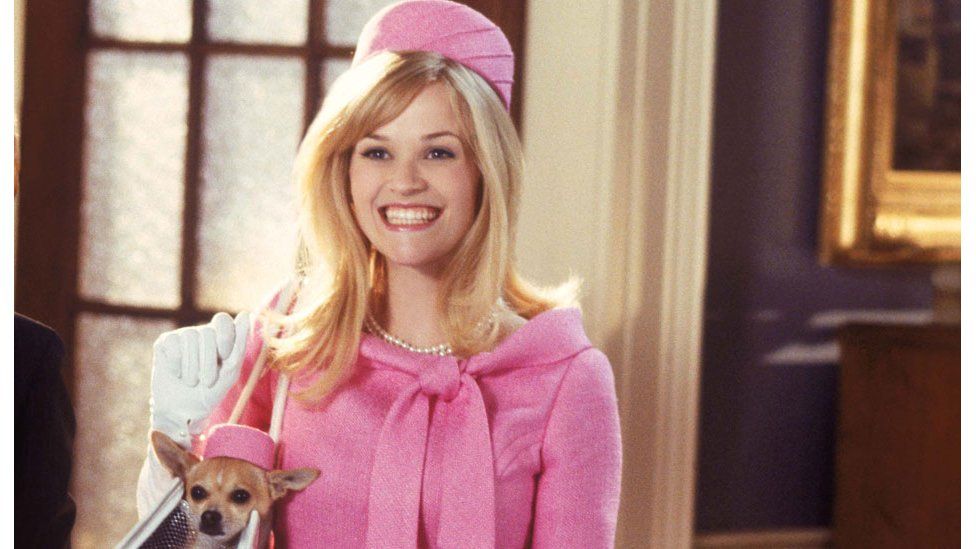
RICHARD: Who’s going to help her get into Harvard? LORELAI: Reese Witherspoon.
Laura Jeanne Reese Witherspoon (born 1976), multi-award winning actress and producer. She has an Academy Award, two Golden Globes, a BAFTA, a Screen Actors Guild Award, and an Emmy. One of the highest-paid actresses in the world, she has been named one of the most powerful women in the world, and one of the most influential.
Lorelai refers to Witherspoon’s 2001 comedy, Legally Blonde, directed by Robert Luketic, and based on the 2001 novel of the same name by Amanda Brown. Witherspoon plays Elle Woods, a sorority girl who attempts to win back her ex-boyfriend by becoming a Doctor of Law at Harvard University. In the process, she overcomes stereotypes about pretty blondes, and triumphs as a successful lawyer through unflappable self-confidence and fashion/beauty know-how.
Legally Blonde was a box-office hit which led to a sequel, a direct to DVD spin-off, and a stage musical. It received generally favourable reviews, and Reese Witherspoon received the 2002 MTV Award for Best Female Performance. Another film in the series is scheduled for 2022.
When Rory shows Richard her bedroom, he checks out her bookshelf. Here are some of the books we can see:
Summer of Fear
A 1993 serial killer novel by T. Jefferson Parker, who writes bestselling police procedural novels set in California. Parker is a journalist who turned novelist – perhaps a tiny hint of where Rory’s career is eventually headed.
The Scarecrow of Oz
A 1915 children’s book by L. Frank Baum, the ninth in his series of Oz books. The Wizard of Oz is a touchstone for Gilmore Girls, and this seems to be a little nod to the land of Oz. The Scarecrow from the original story is the magical helper (the one who didn’t have a brain, but was actually quite smart), and the human protagonists are a man and a little girl from California.
Contact
A 1985 science novel by scientist Carl Sagan. The heroine is a scientist named Ellie who showed a strong aptitude for science and mathematics from a young age, and has been left emotionally bereft by the loss of her father, with a problematic relationship with her mother. Contact with an alien civilisation allows Ellie a strange chance to reconnect with her memories of her father. It feels like something that would resonate with Rory. Ellie is also from California. The novel was a bestseller, and made into a film in 1997, starring Jodie Foster. The film might have given Rory an interest in reading the novel.
The Apocalyptics: Cancer and the Big Lie
Edith Efron was a journalist who began her career at the New York Times Magazine, became a member of Ayn Rand’s circle and wrote for her magazine, and then became editor of TV Guide at the height of its popularity. She was critical of what she perceived as “liberal bias in the media”, but provided a strong voice on race relations (Efron had a biracial son during 1950s segregation). She later wrote for the libertarian publication, Reason. The Apocalyptics is a 1984 exposé of the cancer industry and a criticism of environmental policy which Efron saw as being based on “bad science” (basically saying Rachel Carson etc were all a bunch of doom-merchants). It’s an obscure, controversial, and extremely heavy-going work. An intriguing insight into Rory’s interests.
Working: People Talk About What They Do All Day and How They Feel About What They Do
A 1974 non-fiction book by oral historian and radio broadcaster Louis “Studs” Terkel. An exploration of what makes work meaningful for people, based on interviews with people from all walks of life. It was a bestseller, and turned into a Broadway musical in 1977, and a graphic novel in 2009.
A book by “Tobias Allcot”
This seems to be a fictional book which would have been created by the props department as a slightly odd joke. Tobias Allcot is the name of a Pulitzer Prize-winning author in the film The Man from Elysian Fields, directed by George Hinkenlooper; James Coburn portrays Allcot. The film wasn’t released until September 2002, but had been shown at the Toronto Film Festival in September 2001.
LORELAI: I don’t think I’ve ever loved you quite as much as I love you right now. RORY: Ah, ribs cracking, organs crushing. LORELAI: Yeah, well, love hurts.
Probably a reference to the song Love Hurts, written by Boudloux Bryant, and originally recorded by the Everly Brothers in 1960. It is best known from the 1974 version by Scottish band Nazareth, who turned it from a country song into a hard rock power ballad. It became an international hit, and reached #8 in the US in 1976. It went to #1 in Belgium, Canada, the Netherlands, Norway, and South Africa. It was less successful in their own country, reaching #46 in the UK.
It has been covered numerous times, including by Cher, and often used in advertisements, films, and television. It is on the soundtrack to Sid and Nancy.
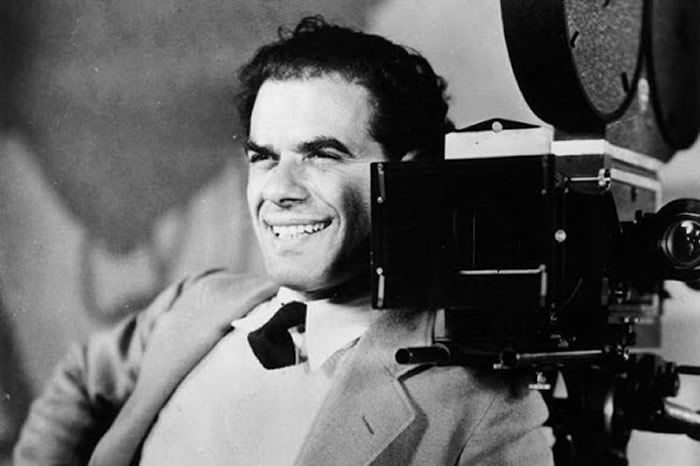
PARIS: Nothing, not even a cigarette butt on the ground, I can’t believe it. This town would make Frank Capra wanna throw up.
Francesco “Frank” Capra (1897-1991), Italian-born American film director, producer and writer, the creative force behind many of the award-winning films of the 1930s and 1940s. He won six Oscars, and numerous other awards, both in the US and in Italy.
He is perhaps best-known for his 1946 Christmas fantasy drama film, It’s a Wonderful Life, based on the 1943 short story, The Greatest Gift by Philip Van Doren Stern, itself loosely based on Charles Dickens’ novella, A Christmas Carol.
The film stars James Stewart as George Bailey, a man who has given up his own dreams to help others, but is driven to despair one Christmas Eve. His guardian angel saves him from suicide by showing him how he has touched the lives of so many others, and how different life would have been for his wife Mary (played by Donna Reed), and his community of Bedford Falls, should he never have been born.
It’s a Wonderful Life made a loss at the box office, and received lukewarm reviews. The FBI thought it was pro-Communist. However, after becoming a Christmas television staple in the 1970s, it became one of the world’s most beloved movies, and is regarded as one of the greatest, and most inspiring, films of all time. It was Frank Capra’s favourite of his own films, and James Stewart’s favourite film in which he starred.
The wholesome, slightly quirky town of Bedford Falls bears more than a passing resemblance to Stars Hollow, and the Christmas setting seems perfect for Lorelai’s love of snow. Also note that in the film, the kindly George Bailey gives bank loans to people based on their good character, not on their financial status – Lorelai seems to have received a shock when she discovered that bankers don’t actually care how nice you are when she was trying to get a loan.
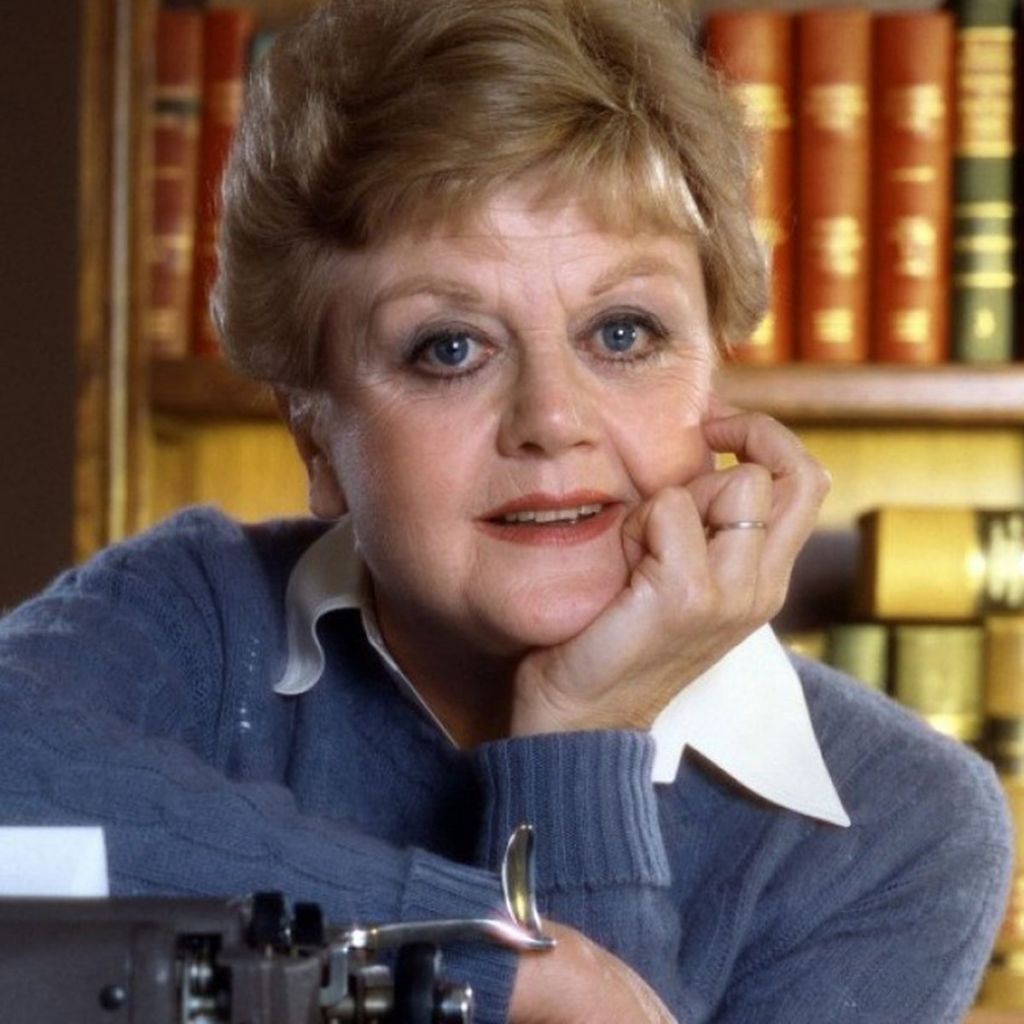
Dame Angela Lansbury (born 1925), British-Irish-American actress with a long and prolific career on radio, stage, film, and television. Her first film role was in the 1944 movie Gaslight, previously discussed. She has received an Honorary Academy Award, a Lifetime Achievement BAFTA Award, A Lifetime Achievement Award from the Screenwriters Guild, five Tony Awards, a Laurence Olivier Award, and six Golden Globe Awards.
She is best known for starring as Jessica Fletcher in the television detective series Murder She Wrote (1984-96). Jessica Fletcher was a retired schoolteacher turned detective novelist who was often called upon to solve murders in her spare time. Although reviews were mixed, the show was very popular and rated extremely well, especially with older viewers.
LORELAI: It’s going to be horrible. It is going to be a bad, depressing Lifetime movie and Nancy McKeon will be playing me. I am Jo.
Nancy McKeon (1966) is an actress best known for playing Jo Polniaczek on the sitcom The Facts of Life, a spin-off of Diff’rent Strokes which ran from 1979 to 1988, making it one of the longest-running sitcoms of the 1980s. The show was set at a private girl’s school, and Jo was an extremely intelligent but rebellious tomboy who rode a motorcycle to school and often got into trouble before graduating as class valedictorian. Jo must have been a role model for the ambitious yet wayward young Lorelai (another TV heroine with a motorcycle!).
Nancy McKeon appeared in television movies based on real life stories, as well Afterschool Special episodes with titles like, “Schoolboy Father”, and “Please Don’t Hit Me, Mom”. She starred in the 1989 domestic violence drama, A Cry for Help: The Tracey Thurman Story, and the 1992 kidnapping drama, Baby Snatcher. These are the types of “bad depressing” movies Lorelai probably has in mind.
Nancy McKeon has only ever been in one Lifetime movie, and it aired in 2003, after this episode was broadcast. Called Comfort and Joy, it’s a quirky romantic Christmas film, and not depressing at all.
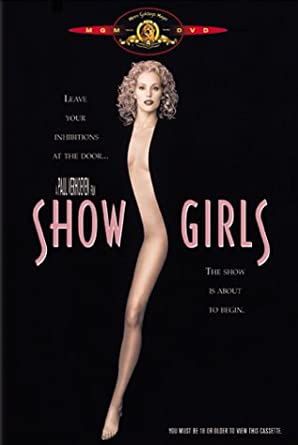
RORY: Hey Kirk, there are a couple of little kids over there and they’re, uh, looking at this tape cover that’s kind of mature. You might wanna put that stuff on a higher shelf or something. KIRK: Mature? How mature? RORY: Uh, it’s a half-naked woman just standing there. KIRK: Is she a blonde?
The video that the boys are looking is Showgirls, a 1995 erotic drama directed by Paul Verhoeven and starring Elizabeth Berkley and Kyle MacLachlan (who played Dale Cooper in the 1990-91 David Lynch television series, Twin Peaks, a secret touchstone for Gilmore Girls). Showgirls is a about a street-smart drifter who goes to Las Vegas and climbs the seedy ladder from stripper to showgirl.
It was the first, and so far, only, NC-17 film given wide release in mainstream cinemas. Critically panned, it was a box office bomb, but a success on the home video market, despite being named as one of the worst films ever made. It’s often cited as a guilty pleasure, a camp classic, or a “so bad it’s good” film. It was made into a stage musical in 2013. (Amy Sherman-Palladino commented on the film Glitter, “It was no Showgirls“.) Some critics now believe it is a brilliant satire.
The video is correctly catalogued under Drama by the video store, and Showgirls was cut to an R rating for video store rentals. R rated videos were not kept in a separate section from other films, so Rory comes across as more of a meddlesome prude than a concerned citizen. The cover doesn’t actually show anything very salacious – just a leg and a tiny bit of side boob.
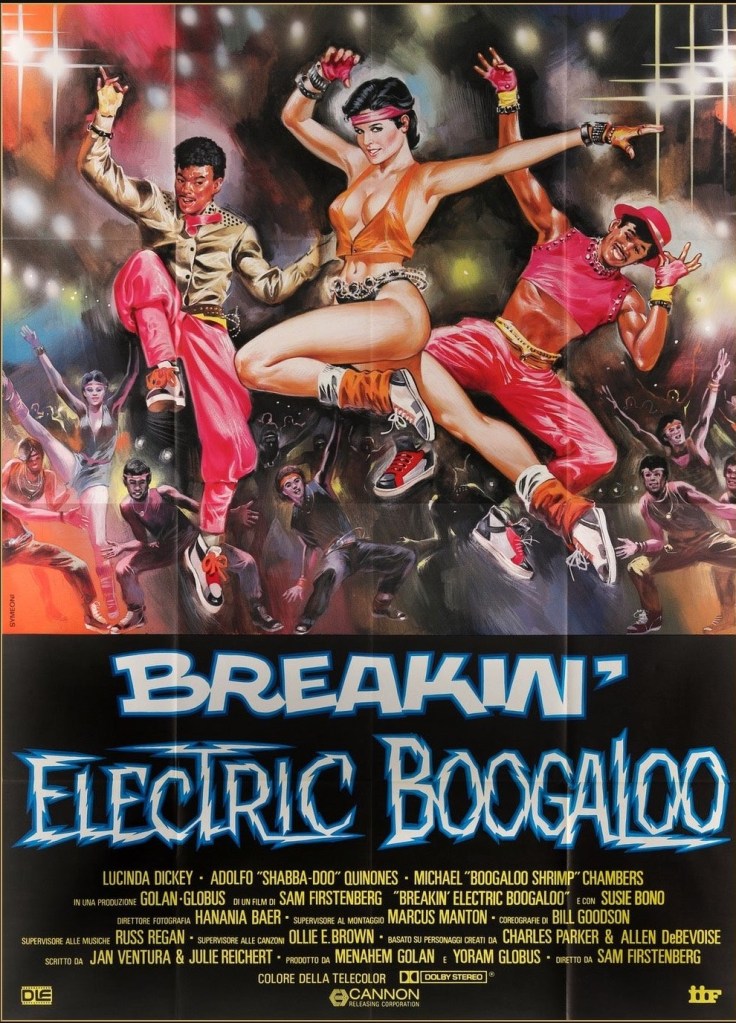
LORELAI: Got it. The worst film festival ever. Cool as Ice, Hudson Hawk, and Electric Boogaloo. RORY: Sold.
Lorelai chooses a triple feature of poorly-received or ill-regarded films.
Cool as Ice, 1991 romantic musical comedy directed by David Kellogg and starring rapper Vanilla Ice in his film debut. The story is about a free-wheeling motorcycling rapper named Johnny who arrives in a small town and meets a student named Kathy (played by Kristin Minter), whose father disapproves of Johnny, but ends up needing his help when Kathy’s brother Tommy is kidnapped. It was a box office failure and received negative reviews. Vanilla Ice won Worst Actor at the Razzies. Kellogg later disowned the movie.
Hudson Hawk, 1991 action comedy film directed by Michael Lehmann and starring Bruce Willis in the title role; Willis also co-wrote the script and the theme song. Willis plays Eddie “Hudson Hawk” Hawkins, a master cat-burglar and safe-cracker trying to save the world from an evil corporation using a machine designed by Leonardo da Vinci. It’s a cartoonish slapstick comedy with surreal humour based on conspiracy theories, secret societies, and historic mysteries. A recurring plot device is Hudson Hawk singing songs with his partner to time and synchronise their exploits. It received harsh reviews, and failed at the box office, but did well on home video, and performed better outside the US. It received Worst Film, Worst Director, and Worst Screenplay at the Razzies. It spawned a video game.
Breakin’ 2: Electric Boogaloo, 1984 dance musical directed by Sam Firstenberg, the sequel to 1984 break dancing movie, Breakin‘. The story is about three dancers who try to save their community recreation centre from being demolished to make way for a shopping mall. The rapper Ice-T plays a role in it. There is a third film in the series, and none of them are connected, except for featuring Ice-T. It had a lacklustre performance at the box-office, and received mostly negative reviews, with a few notable exceptions, such as Roger Ebert. “Electric Boogaloo” has entered the pop culture lexicon to refer to a ridiculous sequel title, or a sequel to an obscure or eclectic film (or other work).
RORY: Ooh, we could do a Ruth Gordon film festival. Harold and Maude, Rosemary’s Baby, and that really great episode of Taxi.
Ruth Gordon Jones (1896-1985), actress, screenwriter, and playwright. She was known for her nasal voice and distinctive personality, and became most successful in later life, being chosen for major screen roles in her 70s and 80s, and winning several awards. She seems to be a favourite of Rory.
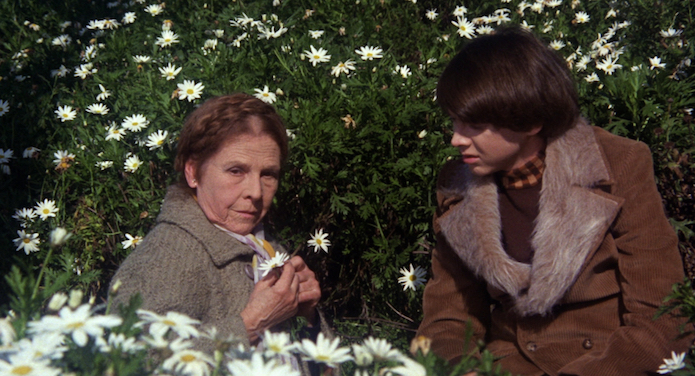
Harold and Maude [pictured], 1971 coming-of-age dark comedy/existentialist drama. Directed by Hal Ashby and written by Colin Higgins, it follows the exploits of Harold (played by Bud Cort), a 19-year-old from a wealthy but emotionally cold family who is obsessed with death. He develops a friendship, later a romance, with 79-year-old Maude (Ruth Gordon), a Holocaust survivor who teaches him about living life to the fullest. It initially received mixed reviews, but became a runaway cult favourite, and is now regarded as one of the best comedies, best romances, and greatest films of all time. Colin Higgins adapted the screenplay into a novel, then a stage play.
Rosemary’s Baby, previously discussed. For this film she won the Academy Award for Best Supporting Actress, as well as a Golden Globe Award and a Kansas City Film Critics Circle Award.
Taxi, award-winning sitcom which aired from 1978 to 1983, focusing on the lives of the employees of the fictional Sunshine Cab Company in Manhattan. Ruth Gordon made a guest appearance in the 1979 episode Sugar Mama, playing a woman who tries to solicit one of the taxi drivers as a male escort. She won an Emmy Award for Outstanding Lead Actress in a Comedy Series.



 The Annotated Gilmore Girls