The Three Faces of Costner, and Tom Petty

LORELAI: The three faces of Costner – Bull Durham, Dances with Wolves, The Postman. Tom Petty playing Tom Petty, that great big speech about “Once upon a time there was a thing called mail”. It’ll make you laugh, it’ll make you cry, it’ll make you wanna mail something.

Kevin Costner (born 1955), award-winning actor and filmmaker. The three faces of Costner seem to be the first big success of his career, the greatest success of his career, and what seemed at the time to be the fading of his career with a failed film. In fact, he was to have renewed success with The Open Range in 2003, and received his star on the Hollywood Walk of Fame that same year, so his comeback was just around the corner.

Bull Durham, 1988 romantic comedy sports film. It’s partly based on writer/director Ron Shelton’s experiences in the baseball minor leagues, and depicts the players and fans of the Durham Bulls from Durham, North Carolina. Kevin Costner plays a veteran catcher brought in to teach a rookie pitcher (played by Tim Robbins) about the game in preparation for moving to the major leagues. It was a commercial and critical success, and was named the #1 sports film ever by Sports Illustrated. It’s also considered one of the best comedies. It helped solidify Costner as an A-list celebrity.

Dances with Wolves, 1990 epic western which stars, and was produced and directed by, Kevin Costner, in his directorial debut. It’s based on the 1988 novel of the same name by Michael Blake, and tells the story of a Union Army Lieutenant who travels to the American frontier to find a military post, and his dealings with a group of Lakota (much of the dialogue is in Lakota with English subtitles). It was a box office hit, and the #4 film of the year. It was also favourably reviewed, and won seven Academy Awards, including Best Picture and Best Director. It is credited with revitalising the western genre in film.

The Postman, 1997 post-apocalyptic action adventure film, which was also produced and directed by Kevin Costner, who plays the lead role. It is based on the 1985 novel of the same name by David Brin. Set in a neo-western version of a disestablished US in the near future of 2013, an unspecified apocalyptic event has led to war and plagues, leaving a huge impact on human civilisation and erasing most technology. A nomadic drifter finds an old uniform of a US Postal Services mail carrier, and unwittingly inspires hope, becoming a national hero. It failed at the box office and was heavily criticised in reviews.

Thomas “Tom” Petty (1950-2017), singer, songwriter, and musician. He was the lead vocalist and guitarist for Tom Petty and the Heartbreakers, formed 1976, and was a member of the supergroup The Traveling Wilburys, as well as performing as a solo artist. He sold more than 80 million records worldwide, making him one of the most successful music artists of all time. He was inducted into the Rock and Roll Hall of Fame in 2002.

He seemingly plays himself as the mayor of Bridge City in The Postman, as Kevin Costner’s character immediately recognises him as a famous person. Tom Petty had a post-apocalyptic themed story in his 1982 song I Got Lucky, and mentioned wanting to have a small part in a futuristic postwar movie. He finally got the chance in this film. [Picture shows Petty as the mayor].
Lorelai’s Triple Feature

LORELAI: How about a triple feature? Three Days of the Condor, Shoah, and The Jerk?
RORY: Uh, Shoah’s like nine and a half hours.
LORELAI: But The Jerk is short.

Lorelai chooses three well-regarded films that are completely different from each other in subject and tone, in contrast to triple features in real life, which are usually connected in some way.

Three Days of the Condor, 1975 political thriller directed by Sydney Pollack, based on the 1974 novel Six Days of the Condor by James Grady. Robert Redford plays a bookish CIA analyst working covertly at a historical society who has to outwit those responsible for massacring his colleagues while he was at lunch. It was well reviewed and won several awards. It was made into a television series, 2018-2020.

Shoah, 1985 French documentary about the Holocaust (known as “Shoah” in Hebrew), directed by Claude Lanzmann. Over nine hours long and 11 years in the making, the film presents Lanzmann’s interviews with survivors, witnesses and perpetrators during visits to German Holocaust sites across Poland, including extermination camps. Hailed as a masterpiece, it won several prominent awards. It was released on video in 2000.

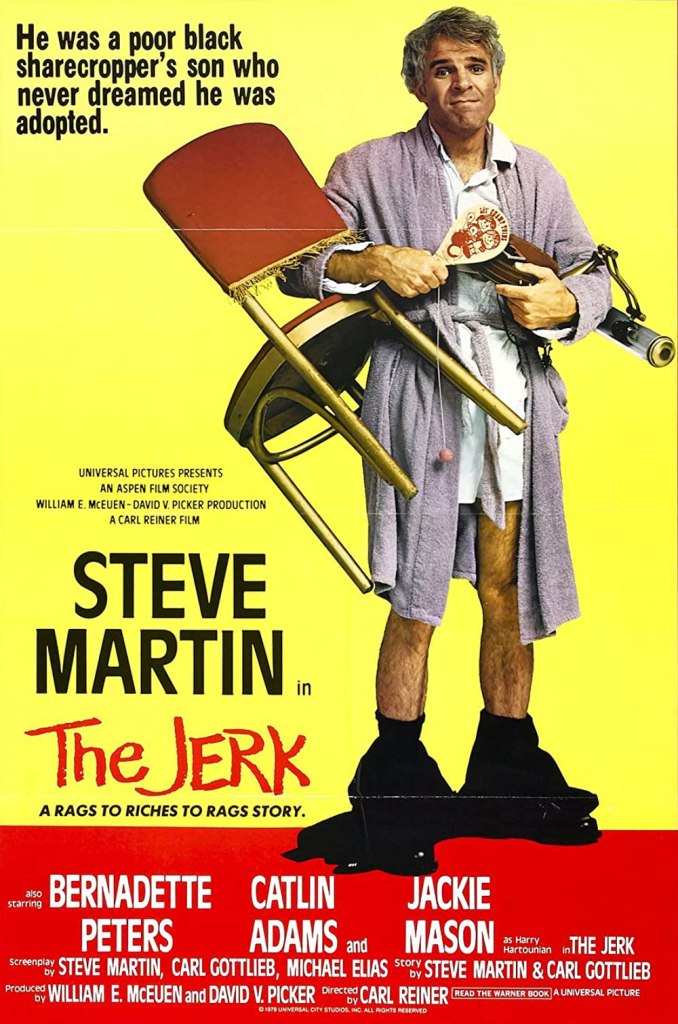
The Jerk, 1979 comedy directed by Carl Reiner, and starring Steve Martin in his debut screen role (he also co-wrote the screenplay). It’s a ludicrous, picaresque tale of rags to riches to rags to riches, with Martin playing a naïve white man who is the adopted son of black sharecroppers, standing out for his skin colour and lack of rhythm. It was a box office smash, becoming the #8 film of the year, was praised by critics, and is considered one of the funniest films of all time. It has a running time of 95 minutes.

The Judds

LORELAI: How are you Mom?
EMILY: Also fine.
LORELAI: Oh, look at that. All three of us fine, just like The Judds.

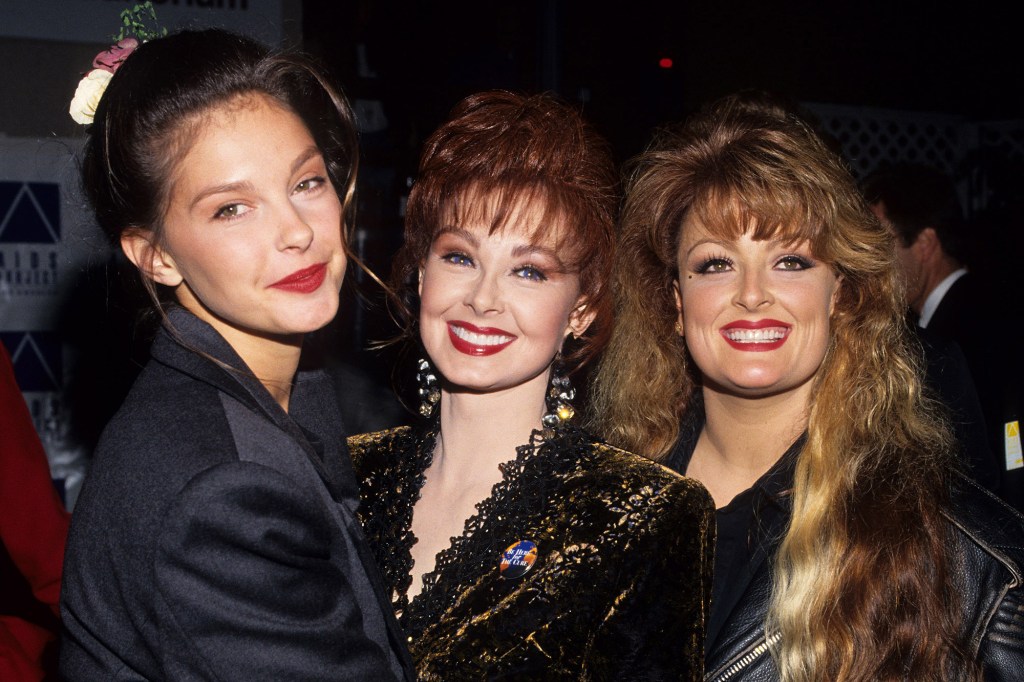
The Judds were a country music duo composed of Naomi Judd and her daughter Wynonna Judd. They were one of the most successful country music acts in history, releasing six studio albums between 1986 and 1991, winning five Grammy Awards and eight Country Music Associations, and had 25 singles in the charts, 14 of which went to #1. They were inducted into the Country Music Hall of Fame in 2021.

The third Judd is Naomi’s other daughter, Ashley Judd, an actress with a long career starring in several successful films. Her most recent film at this time was Someone Like You, earlier mentioned as one of the possible “disgusting cow movies” of 2001.

[In the picture, Naomi is in the middle, Ashley on the left, and Wynonna on the right].

John Waters

RORY: So the music selection, yours I assume?
LANE: Yeah, there was a bit of an education process going on.
RORY: I liked it. Very John Waters.

John Waters (born 1946), filmmaker, actor, writer and artist. He rose to fame in the 1970s making transgressive cult films such as Pink Flamingos (1972), often starring his childhood friend and muse, the drag queen Divine. His films became more mainstream in the 1980s, and his 1988 musical Hairspray became an international success and was turned into a Broadway stage musical. His most recent film in 2002 was the box-office failure, Cecil B. Demented (2000). All his films are set in his home town of Baltimore, Maryland.

Rory is probably suggesting that the cheerleader routine had the same surreal, kitschy appeal as a John Waters film.

Tony Soprano

LORELAI: So, let me get this straight. Uh, you and some guys who actually know what they’re doing are gonna come over and fix my house, and I can pay them back whenever I want?
LUKE: That’s right.
LORELAI: ‘Cause I’m Tony Soprano?

Tony Soprano (played by James Gandolfini) is the central protagonist of the crime drama television series The Sopranos, shown on HBO from 1999 to 2007 (a similar run to Gilmore Girls, oddly enough). Tony becomes the head of the DiMeo crime family, and is the patriarch of the Soprano household.

The Sopranos was a ratings success, despite being on a premium cable service, and was hailed by many critics as the greatest and most ground-breaking television series of all time, with writing, acting, and directing all singled out for praise. It has won numerous awards, and is regarded as extremely influential on the development of television drama as an art form. A prequel film set in the 1960s and ’70s called The Many Saints of Newark was released this year.

As Lorelai loves the Godfather films, it makes sense she would enjoy The Sopranos as well.

Robert Benchley at The Algonquin

RORY: Fine, but we have a real problem here.
LORELAI: Oh, you think I don’t know that? You think I sit around all day swapping witticisms with Robert Benchley at The Algonquin? No! I am thinking and worrying and using the computer, and I hate using the computer!

Robert Benchley (1889-1945), a humorist best known as a newspaper columnist and film actor. He began writing for The Harvard Lampoon while at Harvard University, before writing for Vanity Fair, and most famously, The New Yorker, where his absurdist essays proved highly influential. He made several appearances in films, and his 1935 film How to Sleep, won an Academy Award in the Short Film category.

The Algonquin Hotel is a historic hotel in Manhattan, which first opened in 1902. It had a reputation for hosting a number of literary and theatrical celebrities, including The Algonquin Round Table (or as they called themselves, “the Vicious Circle”). This group of New York writers, critics, actors, and wits met for lunch each day at The Algonquin from 1919 to 1929, engaging in witticisms which were disseminated across the country through their newspaper columns.

Robert Benchley was one of its most prominent members, and Lorelai is probably referencing the writer and critic Dorothy Parker, previously discussed. Dorothy Parker was a close friend of Robert Benchley, and one of the founding members of The Algonquin Round Table.

[Picture shows a painting of Dorothy Parker at The Algonquin Round Table by Carl Purcell]

“I’ll think about it tomorrow – at Tara”

LORELAI: I won’t think about it tonight. I’ll think about it tomorrow – at Tara.

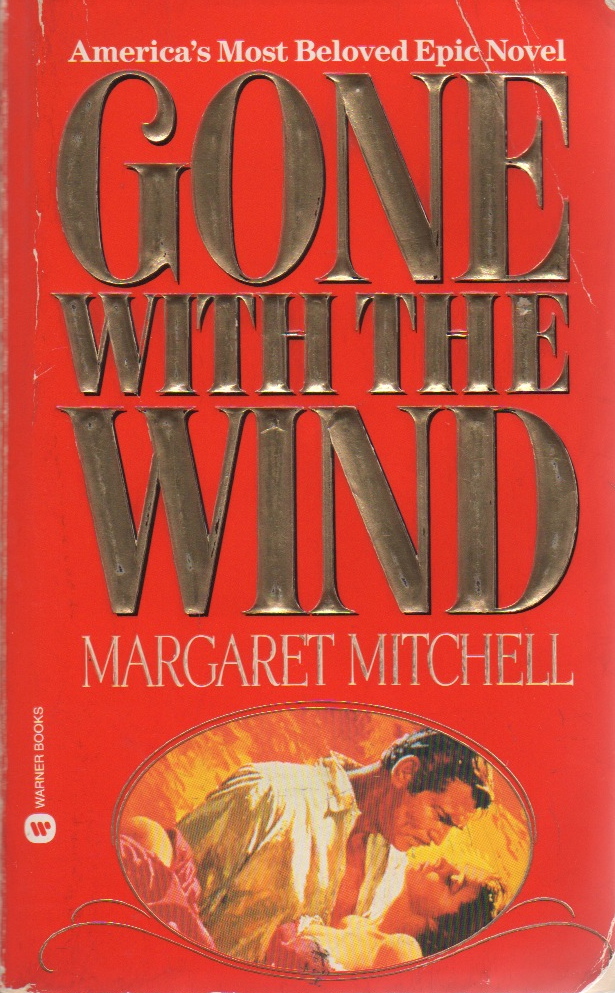
Lorelai slightly misquotes from the 1936 novel Gone with the Wind, by Margaret Mitchell, previously mentioned. Set in the American South at the time of the Civil War and subsequent Reconstruction, the novel’s protagonist is a beautiful, wilful Southern belle named Katie Scarlett O’Hara who is willing to do anything to claw her way out of poverty and save her plantation, named Tara, even while her heart is breaking over her numerous relationship disasters. It takes her too long to discover that the scandalous Rhett Butler is the only man who ever truly loved her.

The full quote is: “I’ll think of it tomorrow, at Tara. I can stand it then. Tomorrow, I’ll think of some way to get him [Rhett] back. After all, tomorrow is another day.” They are the last lines of the novel.

Gone with the Wind was a runaway success, a bestseller before the first reviews of it were even published. Margaret Mitchell won the Pulitzer Prize and the National Book Award, and it was turned into a box-office smash film in 1939, starring Vivien Leigh as Scarlett O’Hara (the film slightly alters the quote from the book). It is the second favourite book of American readers, only beaten by the Bible. It is considered controversial because of its derogatory depiction of African-Americans and romanticisation of white supremacists.

Scarlett O’Hara seems like a forerunner of Lorelai Gilmore – a beautiful, headstrong brunette with a powerful will to survive, and a tendency to mess up all her chances at romantic happiness. Lorelai wanted to give her house a name, like a Southern plantation, and is as deeply attached to it as Scarlett is to Tara. As in Gilmore Girls, blondes tend to be the antagonists in Gone with the Wind. One of the girls at Chilton even suggested to Rory that Lorelai was a Southern belle name. It’s not hard to imagine a teenaged Lorelai reading this novel and identifying with the feisty, rebellious Scarlett.

The Coreys

LORELAI: Aw honey, it’s not the amount of places that turns you down that matters, it’s the quality of the place that turns you down that matters. And when you’ve got Jacko’s Loans and Stuff not wanting your business, you know it’s time to hang out with the Coreys.

The Two Coreys, or The Coreys, are actors Corey Feldman (born 1971) and Corey Haim (1971-2010). In the picture, Feldman is on the left, and Haim on the right.

The Coreys were child actors during the 1980s, and close friends, who appeared in nine films together, including The Lost Boys (1987). They became teen idols, but experienced career downturns in their late teens due to drug use. This is why Lorelai equates “hanging with the Coreys” to being an unsuccessful loser.

After Corey Haim’s death, Corey Feldman became increasingly vocal about the sexual abuse he and Corey Haim were allegedly subjected to as child stars by Hollywood paedophile rings, with Feldman saying he was repeatedly molested and assaulted, but Haim actually raped numerous times. They were each allegedly given drugs before the assaults, the origin of their drug addictions. In 2020, he brought out a documentary called (My) Truth: The Rape of the Two Coreys, identifying the people openly he had earlier only alluded to.

This put their fall from grace in a much darker context, and now unfortunately makes it seem as if Lorelai is calling child sex abuse victims “losers”.

Silkwood

RORY: And then [Mrs Kim] chased me halfway down the street with the hose. It was like a scene from Silkwood.

Silkwood is a 1983 biographical drama film directed by Mike Nichols and starring Meryl Streep, based on the book Who Killed Karen Silkwood? by Howard Kohn. Karen Silkwood was a nuclear power whistleblower and union activist who died in a car crash in 1974 while investigating unsafe practices at the plutonium plant where she worked. Although the film ends with her death, in real life a 1979 lawsuit ended with the jury awarding $10 million in damages to the Silkwood estate, with the company settling out of court for $1.38 million.

The film was a commercial and critical success, with Meryl Streep receiving praise for her performance, as well as supporting actors Kurt Russell and Cher. Silkwood was released on DVD in 1999, so Lorelai and Rory would have seen it within the last couple of years.

In the film, Karen Silkwood and her fellow workers become contaminated by radiation, which the nuclear plant officials try to blame on Silkwood. The decontamination process is brutal, ending with being blasted in the face with a hose – now known as a “Silkwood shower”. Rory compares her treatment from Mrs Kim with Karen Silkwood’s decontamination, as well as the suggestion that she is being unfairly blamed for the termite infestation.

Mrs Kim’s behaviour is, of course, comically wrong. Rory cannot “carry” termites to Mrs Kim’s store, and spraying someone or something with water won’t get rid of termites.

Coyote Ugly

LORELAI: I was thinking about opening a Coyote Ugly lemonade stand.

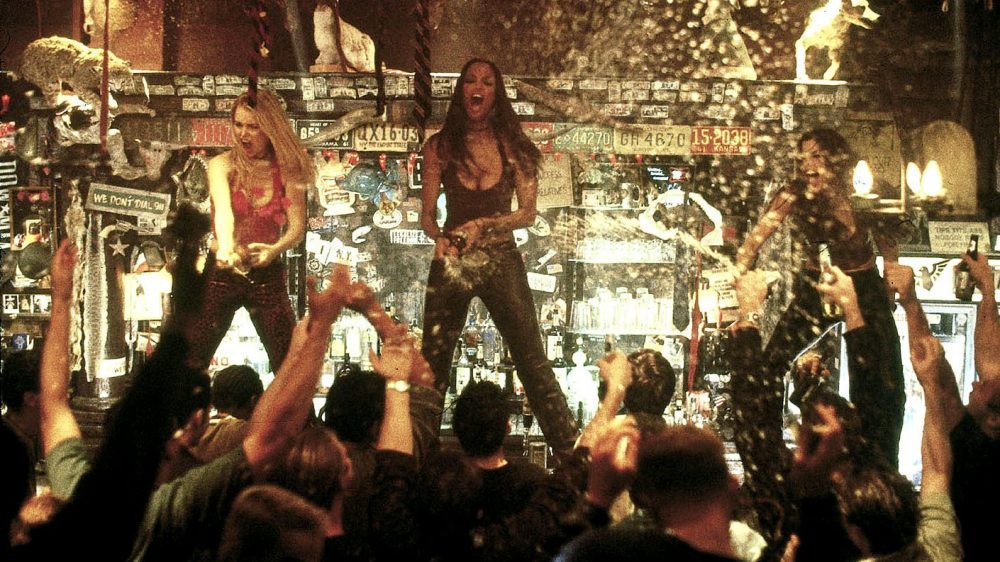
The Coyote Ugly Saloon is a bar which opened in New York in 1993, founded by Lilliana Lovell. It is known for employing female bartenders who entertain the crowd by dancing on tabletops, singing, and giving sass to patrons.

Since then other Coyote Ugly Saloons have opened around the US and internationally, and the bar has inspired a 2000 teen musical comedy-drama film called Coyote Ugly, starring Piper Perabo as an aspiring songwriter who gets a job at the Coyote Ugly Saloon [pictured].