Glitter

LORELAI: I heard [Jess] controls the weather and wrote the screenplay to Glitter.

Glitter is a 2001 romantic drama musical film directed by Vondie Curtis Hall, and starring Mariah Carey, previously discussed. The screenplay was written by Kate Lanier. The film is about a club dancer who aspires to be a professional singer, and falls in love with a nightclub DJ who helps her in her career.

The film came out on September 21, so Lorelai would have seen it in the cinema only recently. It was heavily panned by critics, with Mariah Carey’s acting efforts considered amateurish, and it failed at the box office. It has been called the worst film ever made. Even before the film was released, Mariah Carey was hospitalised with a breakdown, much later revealed to be bipolar disorder. Carey herself expressed a lot of regret over, and disappointment in, the film.

Amy Sherman-Palladino was one of the many people who hated Glitter, which is probably why it gets mentioned here as Lorelai’s joke about the “evil crimes” of Jess. Lorelai doesn’t like Jess, but even she thinks the town is going too far in their treatment of him. She has the good sense not to offer her own issues with Jess (stole beer, talked back to her, prowled around her daughter), as grist for the mill at the meeting.
“If this was the Wild West”

TAYLOR: You weren’t invited because we are dealing with the Jess situation.
LUKE: The Jess situation?
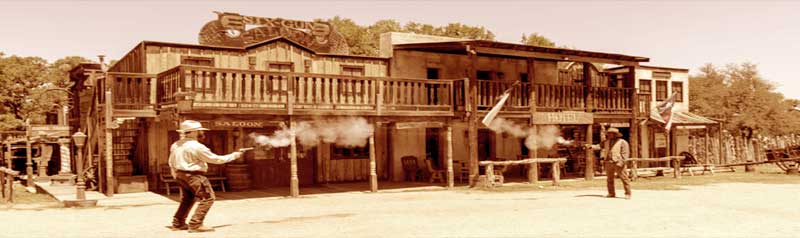
LORELAI: Uh oh. If this was the Wild West, we’d be pushing the horse aside and diving into the water trough right about now.

A trope in Western films, especially in comedy or parody versions – during a gun battle, those who are unarmed or incapable of fighting will dive into a nearby water trough to escape injury or death. Lorelai sees Taylor and Luke as the gunslingers, while they are the innocent bystanders.

Slacker

JESS: Huh.
LUKE: That’s ‘Hello, nice to meet you’ in slacker.

“Slacker” is a term for someone who habitually avoids work or effort (Jess actually works at the diner before and after school every day, so can hardly be considered a literal slacker).

The phrase gained a renewed popularity following its use in the 1985 film Back to the Future, when Marty McFly and his father are referred to as slackers (and a group of teen delinquents in Back to the Future II, 1989). The 1990 comedy film Slacker, directed by Richard Linklater, about a group of twenty-something bohemians and misfits, gave it wider circulation. The 1996 comedy Clerks, directed by Kevin Smith, is regarded as the ultimate slacker cult film.

Subsequently, during the 1990s it became widely used to refer to a subculture of apathetic youth who were uninterested in political or social causes, a stereotype of Generation X. It often has connotations of an educated underachiever, or someone who is aimless in life, sometimes for philosophical or nonconformist reasons. This seems to be what Luke has in mind.

Lucas, Luke

MIA: Nice to see you, Lucas.
LUKE: You’re the only person in the world who can call me that, Mia.

We now discover that Luke’s name is actually Lucas, and Luke is his nickname. Even Lorelai didn’t know that before. It seems like a definite Star Wars reference, with the film featuring a hero named Luke Skywalker, written and directed by George Lucas (who appears to have been inspired by his own name for Luke S, get it? – both were raised in the desert, and have several other parallels, which George Lucas has admitted).

Chalk Outline

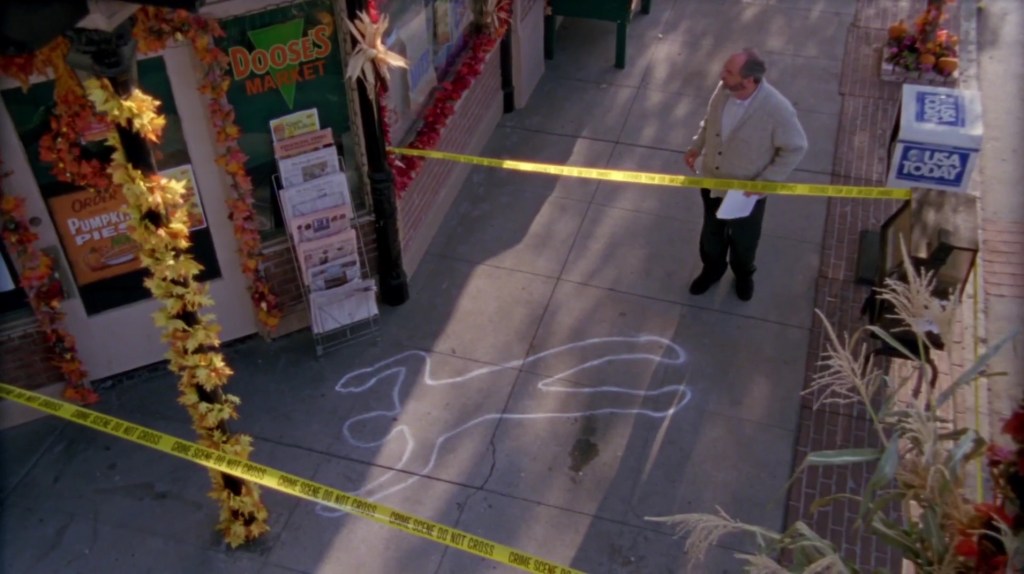
When Rory and Lane walk past Doose’s Market, there is a chalk outline of a person’s body drawn on the pavement outside the store, marked off with police tape. A crowd has gathered, and Taylor is having a fit, being calmed down by a local policewoman.

What the police officer should have told him is that a chalk outline to show where somebody has died is a trope which mostly exists in film and television (first shown in a 1958 episode of Perry Mason). In real life, police don’t usually draw a chalk outline to mark the place where someone was killed. The trope goes back to the days when police did so – not for the public, but to give crime reporters something they could photograph without showing an actual dead person.

She could have at least told Taylor that, in universe, the police did not draw the chalk outline!

The Money Pit

MICHEL: How about ‘The Money Pit’?

In American slang, a “money pit” is any property, possession or business which takes up an increasingly large amount of money to maintain it – usually more than was foreseen or budgeted for.

Michel is possibly referencing the 1986 comedy film The Money Pit, starring Tom Hanks and Shelley Long as a couple struggling to renovate their recently bought house. It closely parallels the 1948 Cary Grant comedy, Mr Blandings Builds His Dream House, and received lukewarm reviews. The movie does have a happy ending, a possible foreshadowing that Lorelai and Sookie will have one too.

“Chickie run down at the salt flats”

LUKE: Go. Stay out of trouble.
JESS: Guess that means calling off the chickie run down at the salt flats.

Jess references the 1955 drama film, Rebel Without a Cause, directed by Nicholas Ray and starring James Dean, previously discussed. It was a groundbreaking attempt to portray the moral decay of American youth and inter-generational conflict, focused on a Los Angeles teenager named Jim Stark. Released less than a month after James Dean’s death in a car accident, and the only film where he received top billing, it is now regarded as a cultural landmark.

At one point, Jim takes on Buzz, the leader of the local gang, in a “chickie run”, where two people drive headlong towards each other, or towards some object of doom – the first one to swerve away to save themselves is the “chickie” (chicken, coward). In the film, the chickie run is headed straight for some seacliffs, so that there is a serious risk of one or both ending up mortally injured, and indeed, it ends tragically for the gang leader, whose jacket becomes entangled with the door when he tries to jump out and save himself.

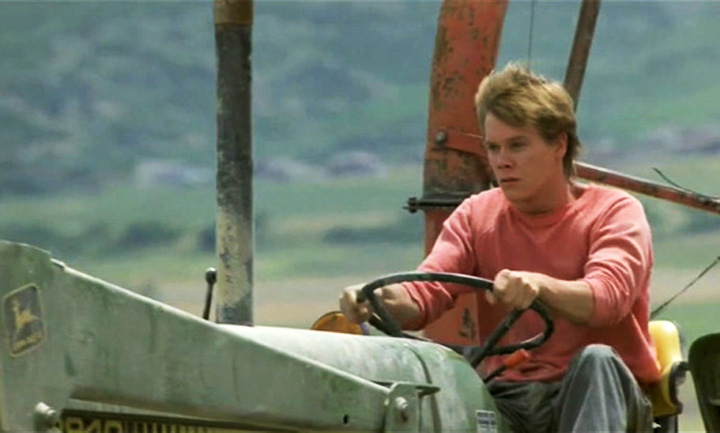
A chickie run at the salt flats is a reference to the 1984 dance movie Footloose, set in salty flat Utah and previously discussed. In a homage to Rebel Without a Cause, the film’s hero Ren takes part in a chickie run on tractors against a rival. Like Buzz, he suffers a technical glitch when his shoelace gets stuck in the vehicle’s pedals. Unlike Buzz, this causes him to win the chickie run and emerge triumphant.

It’s interesting that Jess references Footloose, one of Lorelai’s favourite films. It’s another reminder how much these two characters have in common.

“Warning, warning … Danger, Will Robinson, danger!”

EMILY: So do I. We really ought to do something.
RORY: Yes, I agree.
LORELAI: Warning, warning.
EMILY: I’m glad to hear you say that Rory, because I thought of a wonderful way to cheer him up.
RORY: Cool, what?
LORELAI: Danger, Will Robinson, danger!

Lorelai is referencing the science-fiction television series Lost in Space (1965-1968). Inspired by the 1812 novel The Swiss Family Robinson, it followed the adventures of the Robinson family, pioneering space colonists, struggling to survive in the depths of space.

Will Robinson (played by Bill Mumy) was the youngest member of the family, a precocious nine-year-old who was a whizz with electronics and computers. He was accompanied by a robot (played by Bob May, voiced by Dick Tufeld), who was tasked with protecting Will. His catchphrases to alert Will when faced with potential hazards were, “Warning, warning”, and “Danger, Will Robinson, danger”.

The series received reasonable ratings and its catchphrases became part of popular culture, although never given much respect as a work of science-fiction. It was adapted into a film in 2004, and rebooted as a television series on Netflix (2018-2021).

The Hunchback of Notre Dame

LORELAI: Who do you think you are, the Hunchback of Notre Dame? Are you French, are you circular? I don’t think so.

Lorelai teases Rory for her lame initiation ceremony by comparing her to that other famous bell-ringer, Quasimodo, the Hunchback of Notre Dame, previously discussed.

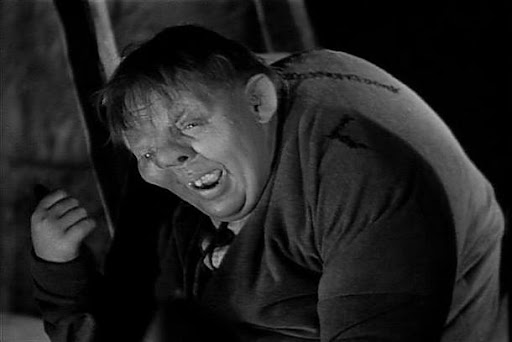
The fact that Lorelai describes the hunchback as “circular” is a possible indication she might be thinking of the 1939 film, starring Charles Laughton as Quasimodo [pictured]. This version gives Quasimodo a very pronounced hump on his back, so that in some scenes he does look almost circular, while later versions tone it down quite a bit.

Ya-Ya Sisterhood

RORY: And the next thing I know, I’m being pulled out of my bed in the middle of the night and I’m blindfolded and then before I know it, I end up here with the Ya-Ya Sisterhood, reciting poetry and lighting candles, and now I’m gonna be suspended because I was trying to do what you told me?

Rory is referring to the 1996 novel, Divine Secrets of the Ya-Ya Sisterhood, by American author Rebecca Wells, the sequel to a 1992 short story collection, Little Altars Everywhere. The story is about the disintegrating relationship between an unusual mother and daughter named Vivi and Sidda.

While Sidda is holed up in a cabin the woods to think things through, Vivi’s childhood friends intervene to bring the pair back together by convincing Vivi to mail Sidda her childhood scrapbook, Divine Secrets of the Ya-Ya Sisterhood – the Ya-Ya Sisterhood being the secret society Vivi and her friends formed in 1930s Louisiana, in rebellion against Southern social codes of the times. The Ya-Ya Sisterhood devised its own bizarre initiation rites, based on an imaginary Native American mythos.

The novel was well reviewed and reached #1 on the New York Times Best Seller List. It was famous enough that Rory doesn’t need to have read it to know about it, but I can’t see any reason why she wouldn’t have. The focus on a powerful but flawed mother-daughter relationship would surely have attracted both Lorelai and Rory to the novel. Rory’s derogatory comment might suggest that if she did read it, she didn’t think much of it.

The book was made into a film starring Sandra Bullock which was released in June 2002, but Rory can’t be referring to that, because it hasn’t happened yet.