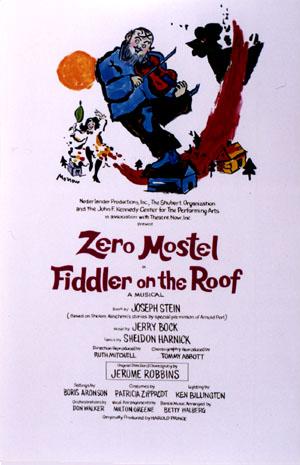
Fiddler on the Roof

LORELAI: We can’t get married Christopher. We don’t know each other as adults.
CHRISTOPHER: So let’s get married and get to know each other as adults.
LORELAI: Well, that’s very Fiddler on the Roof of you.

Fiddler on the Roof is a 1964 musical with music by Jerry Bock, lyrics by Sheldon Harnick, and book by Joseph Stein. Set in a Jewish community in Russia in 1905, the play is based on Tevye and His Daughters, a series of short stories written in Yiddish by Russian author Sholom Alecheim.

Tevye (played by Zero Mostel in the original Broadway production), a poor man, wants to arrange the marriages of his daughters, with the idea that although the couple may not know each other very well before marriage, they will learn to know each other after marriage. This was the case in his own happy marriage to his wife Golde, but his daughters have other ideas.

Fiddler on the Roof was a massive hit with both critics and audiences, and won nine Tony Awards, including Best Musical. For many years it was the longest-running musical on Broadway, and has had numerous revivals. Successfully adapted to film in 1971, it remains popular around the world.
Whoville

CHRISTOPHER: Well, I know you well enough to know that when you say no to coffee, especially in the morning, all is not right in Whoville.

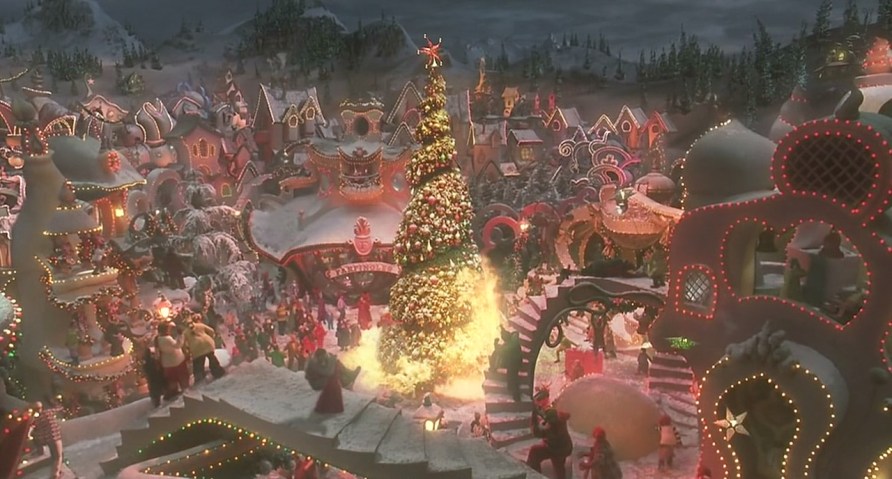
Whoville is the setting for the 2000 Christmas film How the Grinch Stole Christmas, earlier discussed – a charming little place where the denizens all really love Christmas.

It’s interesting that Lorelai referenced it to Rory at the start of Concert Interupptus, and now about a month later, Christopher is referencing it to Lorelai as if it is something they shared together. It suggests the possibility that when Christopher came to Hartford for Christmas in 2000, he and Lorelai took Rory to the movies to see The Grinch. If so, it’s rather touching that they went on a family outing together, and chose a movie to which you’d generally take a younger child than Rory.

(There is a Who-ville in the Dr. Seuss book Horton Hears a Who, but you can see from the books they are two quite different places with different characters, just similar names. The Horton Who-ville exists within a speck of dust on a clover flower, and the Grinch movie pays tribute to that by having their Whoville contained within a single snowflake).

Citizen Kane

LORELAI: You know all those crazy people saying those horrible things were directing them at me, not you.
RORY: They were directing them at you because you had me.
LORELAI: No, they were directing them at me because I screwed up their big Citizen Kane plans.

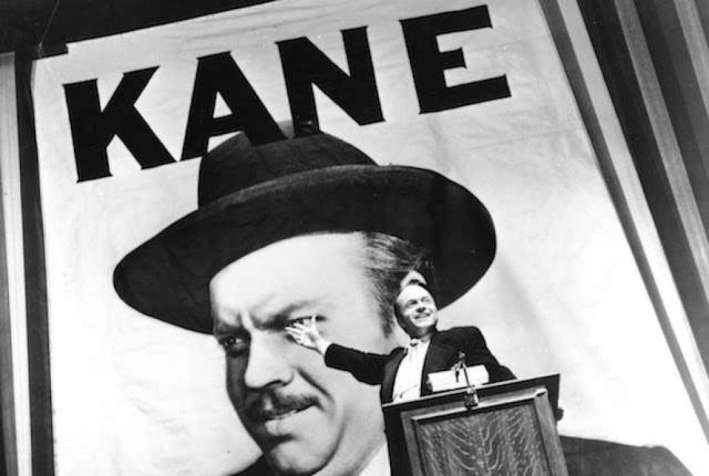
Citizen Kane is a 1941 drama film by Orson Welles, who produced, directed, co-wrote the screenplay, and starred in it; it was his first feature film. The film examines the life of wealthy news publisher Charles Foster Kane (Orson Welles), partly based upon newspaper magnate William Randolph Hearst, and other businessmen, as well as Welles’ own life.

Citizen Kane received an enthusiastic response from critics, but had trouble with publicity because William Randolph Hearst ran an aggressive campaign against it, and it made a loss at the box office. It was nominated for nine Academy Awards, but only won Best Writing (Original Screenplay). Revived on television in the 1950s, the film was re-evaluated, and is now considered one of the greatest films ever made. Its comments on the power of the media have only become more relevant with time.

In the film, Kane’s humble family becomes unexpectedly wealthy, and his mother sends him away to live with a stranger so that he can be properly educated. Lorelai might see this as a parallel with Christopher’s parents wanting him to attend Princeton, on his way to becoming a success.

Schnickelfritzes

Lorelai refers to the Haydens as “the Schnickelfritzes”. This is a variant of the slang snickelfritz, Pennsylvsania German slang given as an endearment to a child, most likely with the meaning “chatty kid, mischevious little imp”. Despite its affectionate use, Lorelai seems to refer to anyone she considers a massive pain in the rear as Schnickelfritz.

It may be a reference to Billy Wilder’s 1953 war film Stalag 17, set in German POW camp. To pass the time, the American airmen held in the camp bet on a “horse” race, where the horses are actually mice. One mouse named Schnickelfritz wins the race, even though the main characters were betting on another one. Lorelai may feel that the people she calls Schnickelfritz are similarly likely to ruin the fun and succeed where she’d prefer them to fail.

The film stars William Holden, who we later discover is one of Lorelai’s favourite actors, and on whom she has a celebrity crush. Holden won the Academy Award for Best Actor for his role as J.J. Sefton, and Stalag 17 was a commercial success, now recognised as one of the great war films of its era.

“The monolith from 2001”

ANDREW: [bringing a very large and heavy book] Here you go.
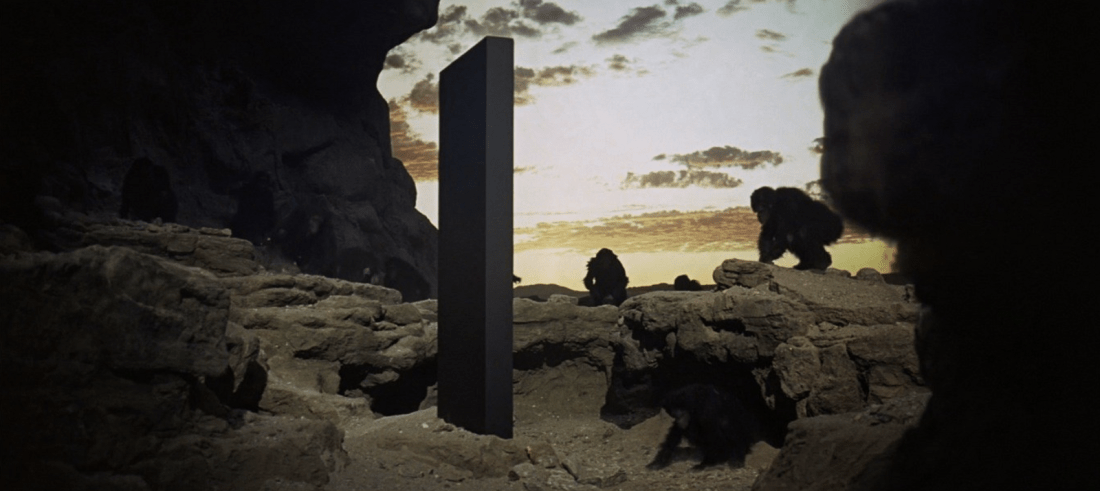
CHRISTOPHER: Holy mother. This is the monolith from 2001.

Christopher is referring to the 1968 science-fiction film 2001: A Space Odyssey, directed by Stanley Kubrick, and partially inspired by a short story called “The Sentinel” by British sci-fi author Arthur C. Clark, who co-wrote the screenplay.

The film features a mysterious flat black monolith which seems to have affected human evolution from prehistoric times by somehow artificially speeding up intellectual development. The Compact Oxford English Dictionary is nowhere near as as large as the monolith in the film, but has similar intellect-stimulating properties. The writer may have referenced the film as it was now 2001.

On release, 2001: A Space Odyssey received mixed, or even polarised, reviews from critics, but gained a cult following. It went on to become the #1 film of 1968, and won the Academy Award for Best Visual Effects. It is now regarded as one of the greatest and most influential films of all time.

Christopher’s Alleged Doppelgangers

JACKSON: Boy I gotta tell you, did they get your description wrong.
CHRISTOPHER: Really?
JACKSON: Oh yeah, much more George Clooney than Brad Pitt. Hey Andrew.
ANDREW: Yup.
JACKSON: Don’t you think he’s much more George Clooney than Brad Pitt?
ANDREW: I’m going with the Billy Crudup comparison myself.

George Clooney (born 1961) is an American award-winning actor, director, producer, screenwriter, activist, businessman, and philanthropist. He made his television debut in 1978, and found fame on the medical drama ER from 1994 to 1999. During this time he took major roles in films such as Batman and Robin (1997) and Out of Sight (1998). In 1999 he had the lead role in Three Kings, a satire about the Gulf War. Clooney is generally seen as one of the handsomest men in Hollywood.

Brad Pitt (born William Bradley Pitt in 1963) is a multi award-winning actor and producer. He first gained recognition as a cowboy hitchhiker in Thelma & Louise (1991), and had leading roles in A River Runs Through It (1992), Legends of the Fall (1994), and Interview with the Vampire (1994). He received critical acclaim for Seven (1995), and Twelve Monkeys (1995), and starred in the cult film Fight Club (1999). At the peak of his career, he was seen as one of the sexiest men in Hollywood.

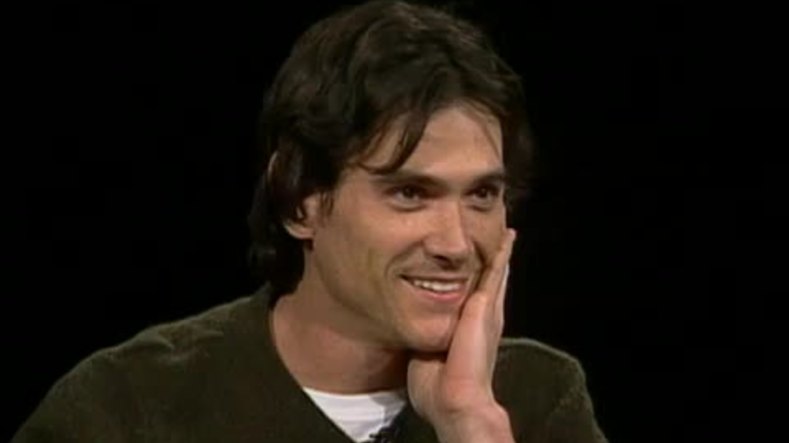
William “Billy” Crudup (born 1968) [pictured] is an American actor with extensive experience on the stage, mostly on Broadway. He has had supporting roles in films such as Sleepers (1996), and Almost Famous (2000). He gained financial success narrating the “Priceless” campaign for MasterCard from 1998 to 2005. Unless it’s cut very short or slicked back, Crudup has wavy hair, which may have reminded Andrew of Christopher’s locks; he’s also from a similar upper-middle class background to Christopher, who is identified as looking as if he comes from “money”.

Which of these actors Christopher most looks like is a matter of opinion. To me he doesn’t strongly resemble any of them, but presume that the Stars Hollow townsfolk are referring to different types of masculine good looks – handsome sophisticate, sexy charmer, or preppy hipster. Christopher apparently has elements of all these in his appearance.

Alfalfa

LUKE: Doesn’t even resemble clever [Kirk’s heckling].
KIRK: I’m dumbing it down for you, Alfalfa.

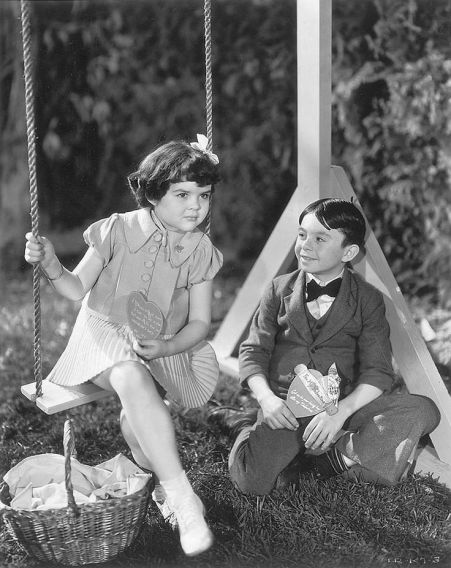
Alfalfa was a character from the Hal Roach’s Rascals short comedy films, made from 1922 to 1944, popularly known as the Our Gang films, after the first short in the series. The stories are about a group of poor children, and their adventures around their neighbourhood. The films were notable for showing children acting naturally, and ground-beaking for showing black and white children playing together as equals.

Alfalfa, played by Carl Switzer, was one of the most popular characters from the 1935-1940 era, eventually going from sidekick to lead character. His romance with a cute spunky little girl named Darla, played by Darla Hood, was an an ongoing source of comedy in the films. Kirk may identify Luke with Alfalfa because of his obvious romantic interest in Lorelai.

Packaged as The Little Rascals, the shorts were syndicated to television in the 1950s, shown on cable in the 1980s, and from 2001-2003 were on the American Movie Classics network. During the 1980s, The Little Rascals became an animated television show that was part of the Saturday morning cartoon line-up with Julie McWhirter voicing Alfalfa.

In 1994, a feature film of The Little Rascals was released, directed by Penelope Spheeris, and with Bug Hall in the role of Alfalfa Switzer. The movie has a heavy focus on Alfalfa’s romance with Darla (Brittany Ashton Holmes).

Joan and Melissa Rivers

EMILY: Lorelai, you’re being morbid.
LORELAI: I’m being morbid? … Joan and Melissa Rivers here think I’m being morbid.

Joan Rivers, born Joan Molinsky (1933-2014) was an American comedian, actress, writer, producer, and television host. She was known for her controversial comedic persona, which was often viciously insulting towards celebrities and politicians. Actress Melissa Rivers (born Melissa Rosenberg in 1968) is her daughter, who worked alongside her mother on several occasions.

Joan and Melissa Rivers appeared as themselves in the 1994 television movie Tears and Laughter: The Joan and Melissa Rivers Story, which we learn in the next season is favourite viewing for a mocking Lorelai and Rory.

In the film Joan and Melissa recreate the anguish they went through after the suicide of Joan’s husband and Melissa’s father, Edgar Rosenberg – who had often been the butt of his wife’s jokes during her comedy routine, and whose death was also milked for humour by Joan.

Lorelai equates Richard and Emily’s glee at getting their hands on their dead acquaintance’s house at a good price as being in a similar vein of poor taste.

Joan Rivers was one of Amy Sherman-Palladino’s favourite comedians, and her later TV show, The Marvelous Mrs. Maisel, is about a female comedian in the 1950s who is partly inspired by Rivers.

Michael Douglas

LORELAI: Okay, so now the fact that I suggested painting Luke’s diner also means that I wanted to get him in bed. All of a sudden I’m trying to get any poor, unsuspecting person in bed with me. I’m like – I’m Michael Douglas!

Michael Douglas (born 1944) is a multi award-winning American actor and producer, with a long career in theatre, film, and television. He is married to Catherine Zeta-Jones, earlier discussed as one of the “pretty women” that Lorelai wonders if Luke’s ex-girlfriend Rachel resembles.

In 1993 it was widely reported that Michael Douglas was a sex addict and had entered rehab to be treated for his addiction (leading to much mockery). He refuted these claims, saying that he had gone into rehab to be treated for alcohol addiction, but the rumours persist – they were even published again in his 2012 biography by Marc Eliot, Michael Douglas: A Biography.

Diagnosed with cancer in 2010, Douglas told the public he had throat cancer caused by giving cunnilingus to many women, which did nothing to calm down the sex addiction rumours. In 2013 Douglas revealed he had actually had tongue cancer, and denied that there was any link with performing oral sex.

In January 2018, journalist Susan Braudy went public with claims that she had been sexually harassed by Michael Douglas in 1989 while working for him, including that he used inappropriate sexual language, and masturbated to orgasm in front of her. Douglas denies the allegations, although Braudy has shared corroborating evidence with the press. This has reignited the “sex addiction” rumours all over again.

Lorelai seems to have the common belief that people with “sex addiction” must be constantly trying to get random people to have intercourse with them, although such behaviour is probably rarer in real life than people think.

(Note: “Sex addiction” has not been accepted as a diagnosis by any mainstream psychological or psychiatric body, but there are support groups and treatment programs for it).

Vivien Leigh and Jessica Tandy

LORELAI: Streetcar Named Desire [explaining Stella the chicken’s name].
SOOKIE: Vivian Leigh or Jessica Tandy?
LORELAI: Hello – Tandy.
SOOKIE: Of course. Continue.

Vivien Leigh, born Vivian Hartley (1913-1967) was an English stage and film actress. She played Blanche DuBois in the 1949 London West End production of A Streetcar Named Desire, and was chosen to reprise the role in the 1951 film version of the play, which was directed by Elia Kazan, who had also directed the Broadway production. Leigh won Best Actress at the Academy Awards for her role, as well as from the BAFTA, The New York Film Critics Circle, and the Venice Film Festival. A Streetcar Named Desire was the #4 film of 1951, and won three other Academy Awards, while gaining high praise from critics.

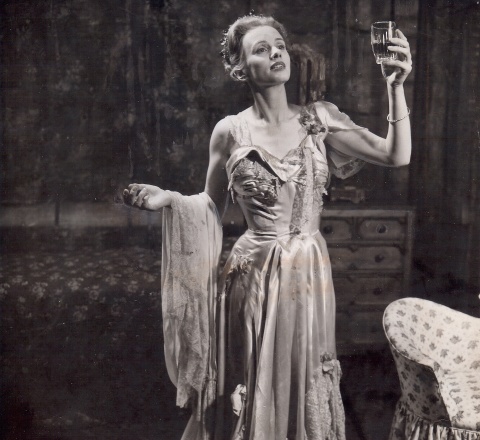
Jessica Tandy, born Jessie Tandy (1909-1994) [pictured] was a British stage and screen actress who appeared in over 100 theatre productions and had more than 60 roles in film and television; she moved to the US in 1940 and lived most of her life in Connecticut. Tandy played the lead role of Blanche DuBois in the original 1948 Broadway version of A Streetcar Named Desire, for which she won a Tony Award. The play itself, which first opened in New Haven, Connecticut was awarded The Pulitzer Prize for Drama, and Best Play from the New York Drama Critics Circle.

Lorelai’s response indicates that she is privileging Broadway over the West End, and perhaps the stage over the screen version. Possibly there is a little local pride involved too. I can’t see how Lorelai could judge the difference in their performances as the Broadway production was twenty years before she was born. It is notable that Sookie immediately agrees with her, maybe suggesting the Connecticut connection is well known and a source of some pride.