Pamela Des Barres

LORELAI: Do you need any help, please?
RORY: I’m good, Pamela Des Barres.

Pamela Des Barres (born Pamela Miller in 1948), rock and roll groupie, writer, musician, and actress. She is also a former member of the experimental Frank Zappa-produced music group, the GTOs.

Des Barres is best known for her 1987 memoir, I’m with the Band: Confessions of a Groupie, which details her experiences in the Los Angeles rock music scene of the 1960s and 1970s, and she was the model for the Penny Lane character, played by Kate Hudson, in Almost Famous.

Pamela was married to English actor and singer Michael Des Barres from 1977 to 1991. You may recall that Michael Des Barres played the role of Claude in “A Deep-Fried Korean Thanksgiving”.

Rory calls Lorelai this as a tease because Zack is flirting with her. Lorelai does everything she can to deflect this unwanted attention, even though she was flattered when Dean’s dimwitted friend Todd fancied her, and he was a few years younger than Zack is now. She must be feeling a lot more confident about herself now.
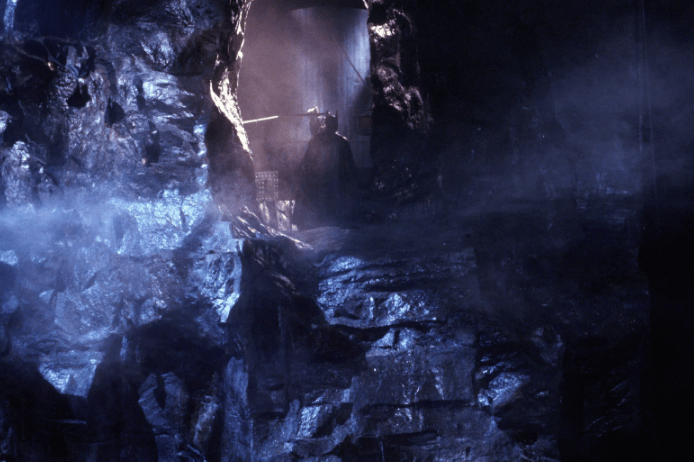
Bad Moon Rising

This is the song that Sookie puts on for Jackson, because it’s one of his favourites, although she is not a fan.

“Bad Moon Rising” is a 1969 song written by John Fogerty, and performed by his band, Creedence Clearwater Revival, often known as CCR. Fogerty was inspired by scenes of a hurricane in the 1941 fantasy film, The Devil and Daniel Webster, and the apocalypse that Fogery claimed was going to be visited upon us.

It was the lead single from their Green River album, received glowing reviews, and went to #2 in the US and #1 in the UK, Ireland, New Zealand, and South Africa. It is considered one of the greatest rock songs of all time.

“We’ll have it in an Italian restaurant”

LORELAI: Do you want me to talk to her? You know, arrange a sit-down? … Come on. We’ll have it in an Italian restaurant. You’ll get up, go to the bathroom – thanks – and come out shooting, and then I’ll send you to Italy.

RORY: Well, I do wanna go to Italy.

A reference to a famous scene in The Godfather, previously discussed. After Michael Corleone takes out a corrupt chief of police at the restaurant, his family send him to Sicily for his protection.

Later on, Rory does get to fulfil her dream of going to Italy, travelling there with Lorelai, and then again with Emily.

Fencing Class

In this episode, Rory, Paris, Louise, and Madeline have a fencing class. This may remind the viewer that Richard Gilmore was a keen fencing athlete when he was at Yale – something which Emily found very attractive about him.

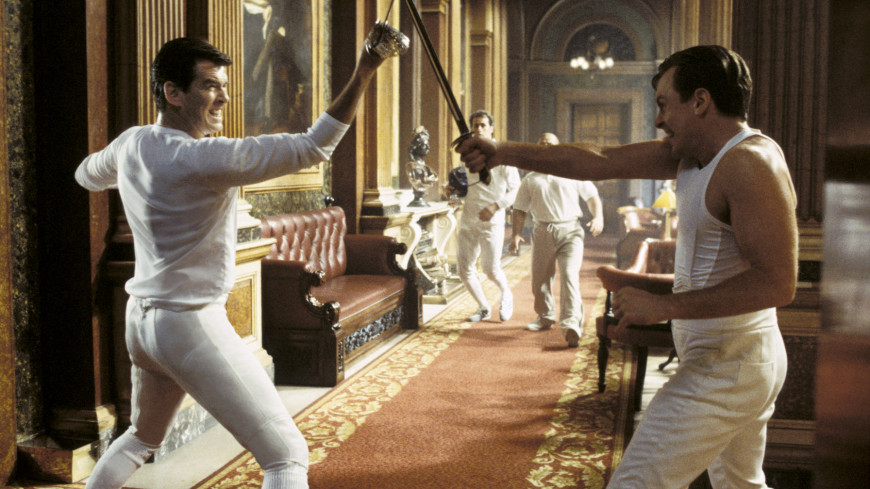
It doesn’t seem like a coincidence that the James Bond film Die Another Day had come out the previous year, in 2002, directed by Lee Tamahori, and starring Pierce Brosnan as the title character.

It has a notable fencing scene in it [pictured], where James Bond has an unexpectedly aggressive fencing bout with the villain, Gustav Graves, played by Toby Stephens. The fencing instructor in the film is played by Madonna, one of Lorelei’s favourite celebrities (she also sings the film’s theme song). Less than a month after this movie’s release, UK fencing clubs saw an increase in the number of people interested in taking up the activity.

Die Another Day was a box-office smash, and the #6 film of 2002. It received reasonable reviews at the time, but is now considered one of the worst of the films in the series. It was heavily criticised by Pierce Brosnan.

The fencing instructor at Chilton is played by Teigh McDonough, whose background was in the Chicago theatre scene.

Express Yourself

LORELAI: Okay. Well, do you remember the rowing scene in Ben-Hur? … I’m sorry, did that reference date me? Should I have gone with the “Express Yourself” video?

“Express Yourself” is a 1989 song by Madonna, a single released from her Like a Prayer album, witten and produced by Madonna and Stephen Bray. A tribute to funk band Sly and the Family Stone, it’s an upbeat dance-pop and deep-funk song about female empowerment. The song went to #2 in the US, and # 1 on the US dance charts, becoming the #55 song of 1989. It went to #1 in Canada, Italy, and Switzerland.

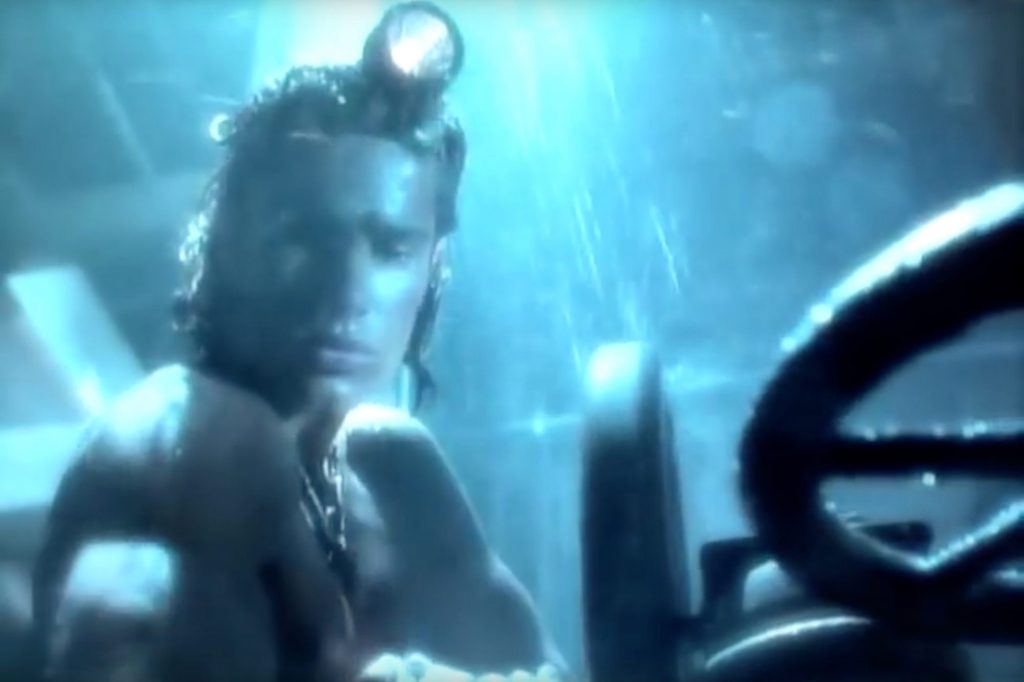
The music video, dircted by David Fincher, was inspired by the 1927 Fritz Langer film, Metropolis. With a budget of $5 million, it was the most expensive music video made until then, and remains the third-most expensive to this day.

The video portrayed a city full of tall skyscrapers and railway lines. Madonna played the part of a glamorous lady, with muscular men in chains acting as her workers (slaves?). Madonna is then shown as a masochist in chains. In the end, she picks one of the workers/slaves (played by Iranian-British model Cameron Alborzian) as her lover.

It’s interesting that Lorelai implies with both her references that Emily is gaining some sort of sado-masochistic sexual pleasure from her treatment of staff.

To me, Lorelai’s reference of “Express Yourself” dates her more than Ben-Hur. Ben-Hur is a classic that had been released on DVD only two years before this episode, while Madonna’s music video was 14 years old at the time – a hit song from Lorelai’s youth.

Ben-Hur

RORY: Please describe how your mother runs her household.
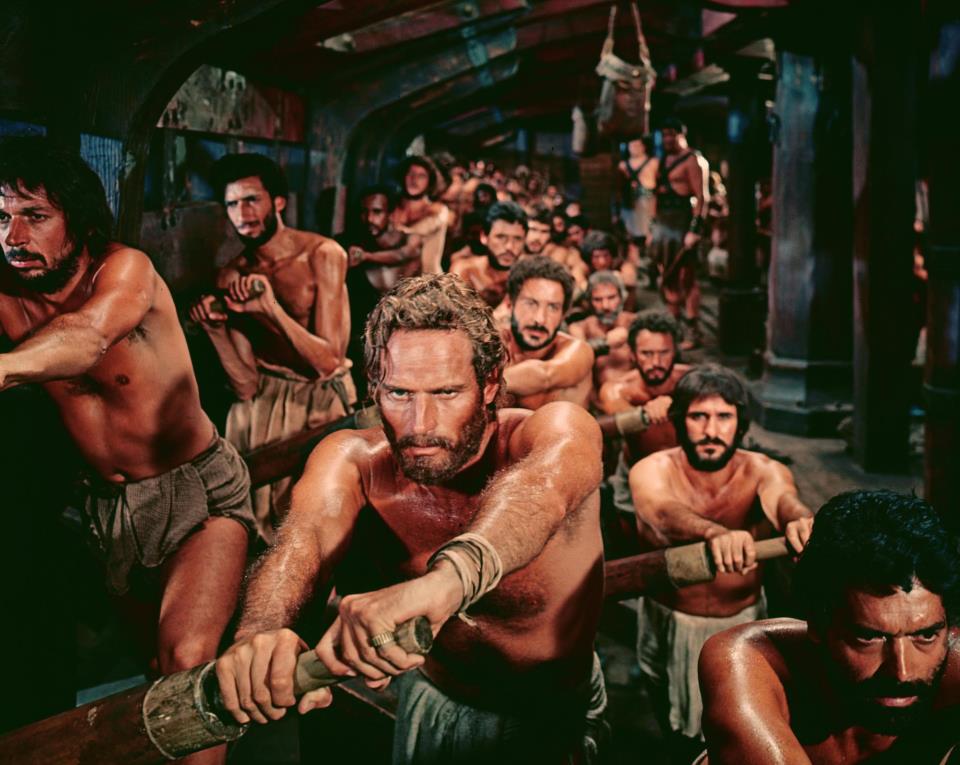
LORELAI: Okay. Well, do you remember the rowing scene in Ben-Hur?

Ben-Hur, previously discussed.

In the film, Ben-Hur is unfairly condemned to be a galley slave for three years, and in the famous galley scene, the slaves are shown working in time to the beat of a drum, and sometimes being whipped to make them work harder. Meanwhile the consul in charge simply sits back and watches them, apparently for sadistic pleasure, since there is no need for him to even be down there in the galley, which is dark and hot.

The Great Gatsby

LORELAI: He’s liked you for ten years? … Wow. That is some serious Great Gatsby pining … You’re his Daisy.

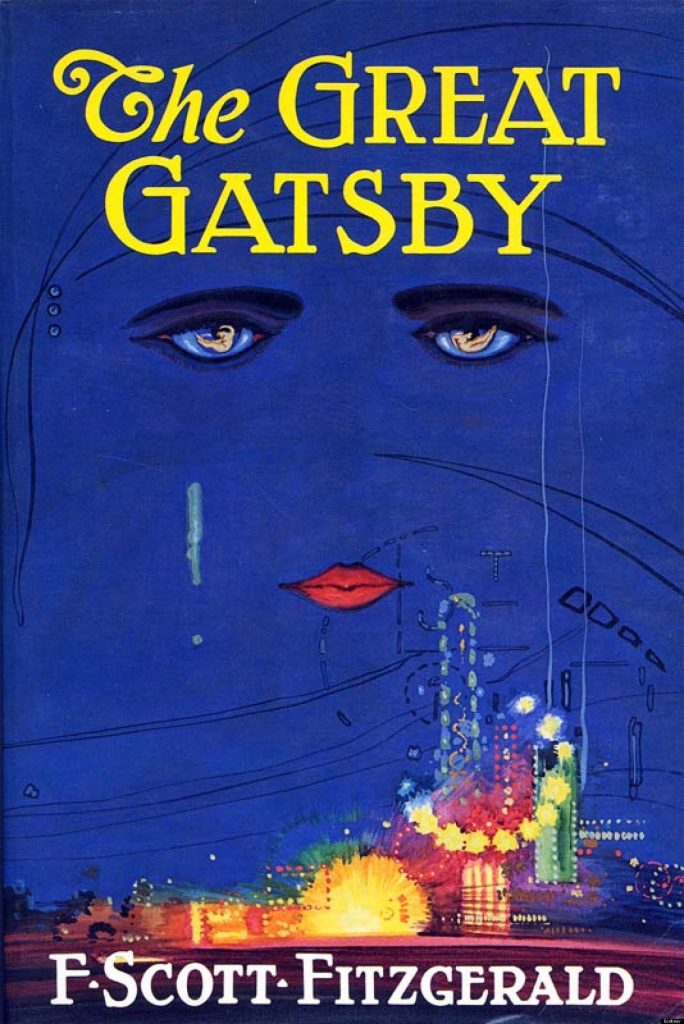
The Great Gatsby, 1925 novel by F. Scott Fitzgerald. Set in the Jazz Age on Long Island, near New York City, the novel depicts first-person narrator Nick Carraway’s interactions with mysterious millionaire Jay Gatsby, and Gatsby’s obsession to reunite with his former lover, Daisy Buchanan. The novel was inspired by a youthful romance Fitzgerald had with a socialite named Ginevra King, and the riotous parties he attended on Long Island’s North Shore in 1922.

The novel received generally favourable, if restrained, reviews, but was a commercial disappointment, selling less than 20 000 copies in the first six months. When F. Scott Fitzgerald died in 1940, be believed himself a failure, and his work forgotten.

During World War II, the novel experienced an abrupt surge in popularity when the Council on Books in Wartime distributed free copies to American soldiers serving overseas. This new-found popularity launched a critical and scholarly re-examination, and the work soon became a core part of most American high school curricula and a part of American popular culture. Numerous stage and film adaptations followed in the subsequent decades.

Gatsby continues to attract popular and scholarly attention. Contemporary scholars emphasise the novel’s treatment of social class, and its cynical attitude towards the American Dream. The Great Gatsby is widely considered to be a literary masterwork and a contender for the title of the Great American Novel.

The 1974 film version of The Great Gatsby, starring Robert Redford as Gatsby, featured Richard Hermann, who plays Richard Gilmore, in the minor role of Ewing Klipspringer, the mooching party guest who decides to simply never leave.

Joe Mastoni and Alex Lesman

Just as Lorelai and Sookie are leaving their night class and at the cookie table, they run into Joe, an old friend of Sookie’s, and his business partner Alex, who are there to learn about starting their own chain of coffee shops.

Joe is played by Joe Fria. He may be recalled by some viewers as the actor who played the waiter at the French restaurant on the double date Sookie and Lorelai had with Jackson and Rune. Joe Fria has more recently done voice work, including for the Goosebumps series, and for Miraculous: Tales of Ladybug and Cat Noir.

Alex is played by Billy Burke. He had several small roles in film and television before this, and has become best known for playing Charlie Swan, the father of Bella Swan, in the Twilight film series.