Dowry

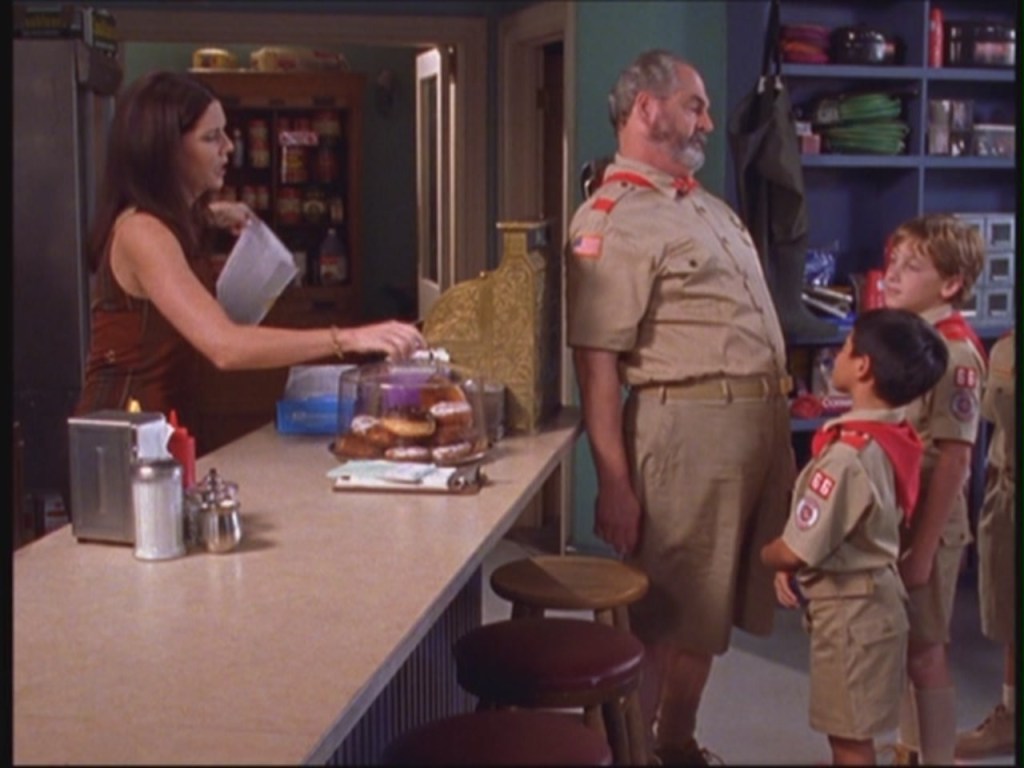
LORELAI: Well, you have a dress. You need a dowry, I guess. There you go.

A dowry is a payment of money or property given by a bride’s family to a groom’s family when the couple get married. It is an ancient custom, with a long history, which probably began with the idea of a dowry helping to give a married woman some level of financial security. It is still practised around the world, but not often in modern western countries.

As Lorelai says this, she passes Rory the pitcher shaped like a cow they have on their kitchen table – in some cultures, and certainly in the past, livestock could be part of a dowry. It’s a joke which is also a reminder that Lorelai doesn’t have much money with which to endow Rory.

The dress that Rory has is the one that Lorelai would have worn to her own debutante ball when she was sixteen, if she hadn’t got pregnant.

(Lorelai and Rory seem to like cow-shaped things – Rory bought Sookie a kitchen timer shaped like a cow which mooed when the time was up for Christmas in 2000).

Henry the Eighth and the Roman Empire

SOOKIE: I want everything to be perfect. We are gonna make this kid think that he died and went to heaven.
JACKSON: Or Henry the Eighth’s house.

Another mention of Sookie’s cooking being compared to one of Henry VIII’s Tudor feasts.

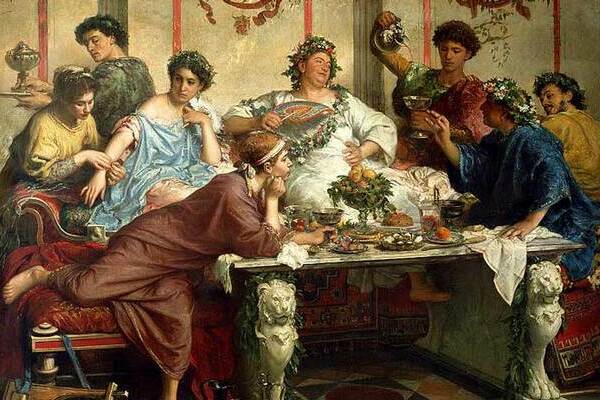
A little later, Lorelai says Sookie is about to break her own record for the most food cooked outside the Roman Empire. The Roman Empire also has a reputation for sustained and lavish eat-a-thons – their banquets could last ten hours, and multiple courses were the rule. Of course, this was only for the wealthy.

Lorelai seems to get straight into the historical feast spirit, by calling Rory “Milady”.

“Burning a little Huck Finn”

TAYLOR: That’s right. She’s breaking the rules, and people who break the rules end up very lonely with no friends because they have become society’s outcasts.
LORELAI: Planning on burning a little Huck Finn after lunch, Taylor?

Lorelai refers to the Mark Twain novel, The Adventures of Huckleberry Finn, previously discussed. The novel has been banned and even burned in the US at various times during its history; in the past it was considered vulgar in tone, and today it draws ire for the use of the n-word.

Lorelai is probably equating book burning with Nazi Germany, and is more or less calling Taylor a Nazi, just as she called Headmaster Charleston a Fascist. Anyone who has the audacity to suggest a Gilmore follow the rules is immediately a Nazi and a Fascist, according to Lorelai.

Lewis and Clark

LUKE: Hey!
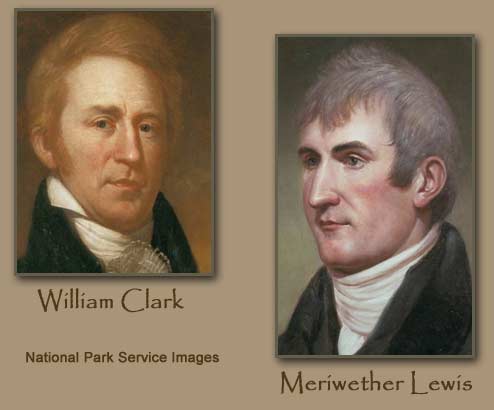
LORELAI: Lewis and Clark have returned.

Captain Meriweather Lewis and his close friend Second Lieutenant William Clark were American explorers who formed an expedition which ran from 1804 to 1806. It was the first American expedition to cross the western portion of the United States, beginning in St. Louis, Missouri, and ending on the Pacific Coast.

Seneca

RORY: That’s because Stoicism was not about giving up things, of money and luxuries and stuff.
PROFESSOR: That’s right. By the time he was in his early forties, Seneca had earned enough money to acquire villas, farms, he ate well, he loved expensive furniture, but he didn’t consider that a non-philosophical way to live.

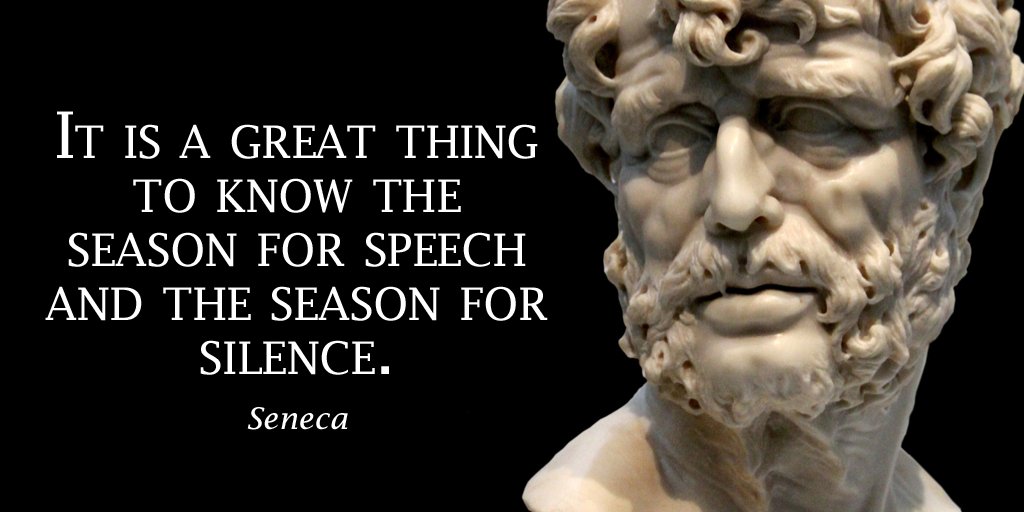
Seneca the Younger, born Lucius Annaeus Seneca, usually just known as Senca (c4BC-65AD) was a Roman Stoic philosopher, statesman, and playwright. A tutor and later adviser to the Emperor Nero, he was forced to take his own life for allegedly taking part in a conspiracy to assassinate Nero; Seneca was most likely innocent.

Senca was a prolific writer on Stoicism, a popular philosophy for upper-class Romans of his era. He wrote about the need to control the destructive emotions, to confront one’s own mortality, and be willing to practice poverty and use wealth wisely. His plays however, are all tragedies, and filled with intense emotions. Even while he was alive, Seneca was accused of hypocrisy because he was essentially a wealthy and powerful man advocating the simple life.

Highly popular in his day, Seneca’s enduring reputation is most likely because he was greatly admired by the early Christian church, which led to him becoming a favourite in the medieval era and during the Renaissance. Today he is seen as an important part of Western thought.

Note that Rory is very quick to grab onto the idea that wealth and luxury don’t preclude one from living an intelligent, rational, philosophically rich life.

Past Graduates of Harvard

LORELAI: Past graduates. Henry James … isn’t that a beer?
RORY: And a novelist. Go on.
LORELAI: John Adams. That’s a beer!
RORY: Our second president. He’s very in right now.
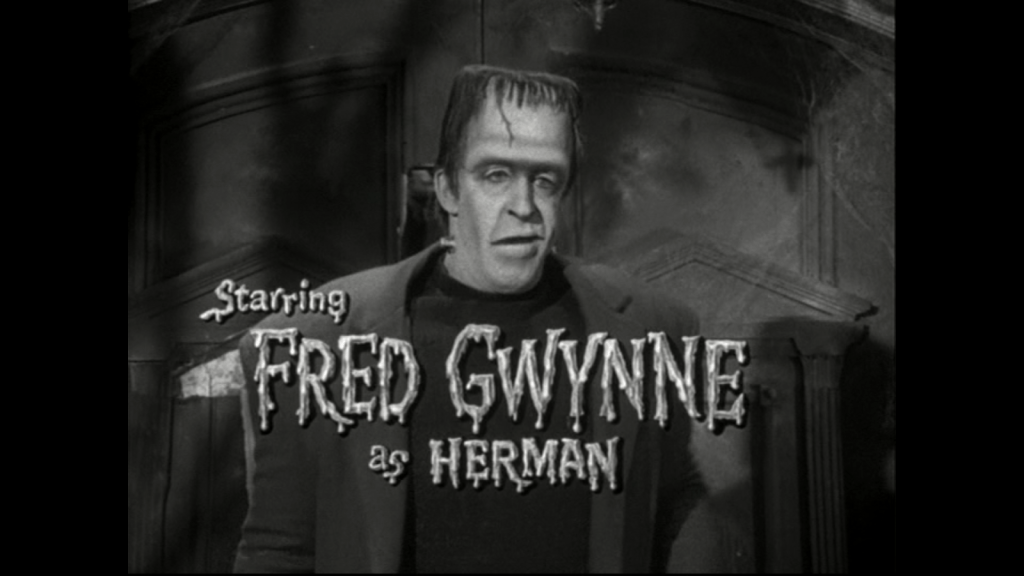
LORELAI: W.E.B. Du Bois, Yo-Yo Ma. Oh cool! Fred Gwynne.
RORY: Who?
LORELAI: Herman Munster. Now I’m impressed.

Henry James (1943-1916), earlier mentioned, was an American-born British author, often considered one of the greatest novelists of all time. He is best known for his novels and stories depicting interactions between Americans, English people, and Continental Europeans, such The Portrait of a Lady, and The Ambassadors. Henry James’ style closely examines the psychology of his characters in an ambiguous or contradictory way. There is no beer named Henry James that I know of. Henry James attended Harvard Law School in 1862, but soon discovered he had no interest in law, and pursued a literary career instead, so he isn’t actually a graduate.

John Adams (1735-1826) was an American statesman and Founding Father of the United States who served as the Vice-President of the US, and as the second President of the US from 1797 to 1801. Adams tended to be a rather obscure president for many years, with many Americans knowing nothing about him, until the publication of his biography John Adams by popular American historian David McCullough in May 2001. It was very favourably received, and brought about a resurgence in Adams’ reputation. Rory seems to be referring to this book by saying Adams “is very in right now”, and has almost certainly read it. There is actually a beer named John Adams. John Adams entered Harvard in 1751, graduating in 1755 with a Bachelor of Arts degree.

William Edward Burghardt “W.E.B.” Du Bois (1868-1963) was an American sociologist, historian, civil rights activist, and writer. He was one of the founders of the National Association for the Advancement of Colored People in 1909, and was the leader of the Niagara Movement who worked for equal rights for blacks. A prolific author, Du Bois’ 1903 essay collection The Souls of Black Folk was a seminal work in African-American literature, and his 1935 Black Reconstruction in America was his greatest work. The Civil Rights Act, embodying many of the reforms for which Du Bois had campaigned, was enacted the year after his death. W.E.B. Du Bois attended Harvard from 1888 to 1890, where he received his second bachelor’s degree, graduating cum laude.

Yo-Yo Ma (born 1955) is a French-born American cellist. A child prodigy, he has performed as a soloist with orchestras around the world, recorded more than 90 albums, and received 18 Grammy Awards. He has received several prestigious awards, including the Presidential Medal of Freedom in 2011. Yo-Yo Ma received his bachelor’s degree from Harvard in 1976, and in 1991 Harvard awarded him an honorary doctorate.

Frederick “Fred” Gwynne (1926-1993) was an American actor, singer, artist, and author, best-known for his roles in 1960s sitcoms such as The Munsters, where he played Herman Munster, who resembled Frankenstein’s monster. He also sang professionally, painted, and was a successful children’s author. Fred Gwynne graduated from Harvard in 1951, and was highly involved in Harvard life, including as a member of the Hasty Pudding Theatricals.

 

Places on the Map

RORY: Well, I didn’t want to drive around aimlessly again today. [pulls out map]
LORELAI: I got it, I got it. So what’s near?

Concord is a town in Massachusetts, part of the Greater Boston area, with a population of around 17 000. It is important historically as the scene of the first battle in the American Revolutionary War, the Battle of Lexington and Concord in 1775. In the 19th century it became a focus for literary life as the home of Ralph Waldo Emerson, Nathaniel Hawthorne, Amos Bronson Alcott, Louisa May Alcott, and Henry David Thoreau. The Concord grape was developed here, hence Lorelai’s implication that there’s nothing to do there except eat grapes (in fact there are a plethora of interesting activities in Concord, and it’s a popular tourist destination).

Manchester is probably referring to Manchester-by-the-Sea, a small coastal town of around 5000 on Cape Ann in Massachussets. Blessed with scenic beaches, it has been a fashionable summer resort since the 19th century.

Salem is a historic coastal city in Massachusetts with a population of around 40 000. One of the most important seaports in Puritan history, its cultural identity comes from the fact it was the scene of the infamous Salem witch trials in 1692, as featured in Arthur Miller’s play The Crucible, previously discussed. Witchcraft history and culture is a major tourist drawcard to the city, and Lorelai seems quite interested in visiting it for that reason.

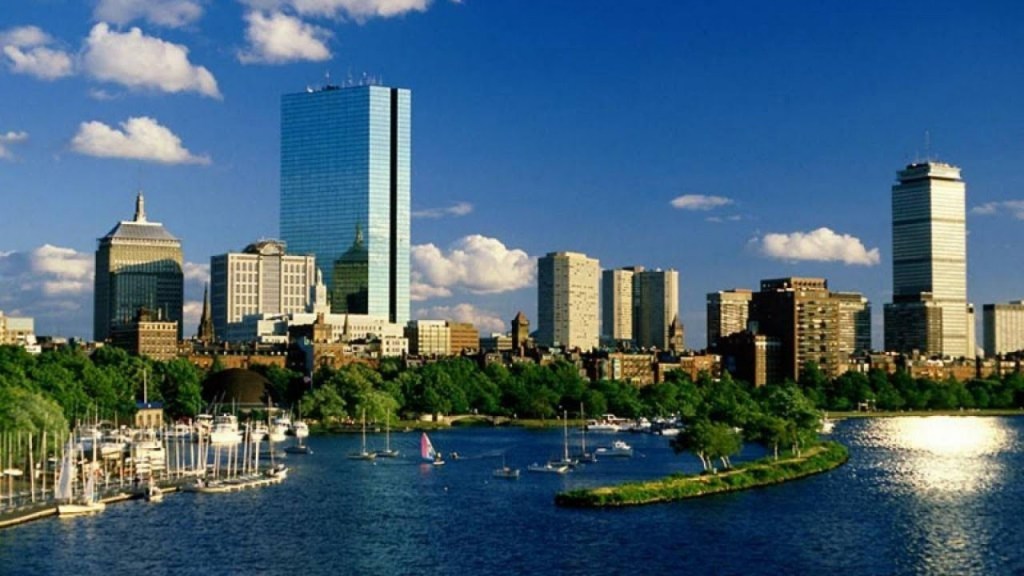
Boston [pictured] is the capital of, and largest city in Massachusetts; with a population of around 685 000, it is the largest city in the whole of New England, and the Greater Boston area contains more than 4.5 million people. It was founded in 1630 on the Shawmut Peninsula by Puritan settlers from England, making it one of the oldest cities in the US. It was the scene of numerous major events during the American Revolutionary War, including the Boston Massacre, Boston Tea Party, and the Battle of Bunker Hill. Historically a major port and manufacturing hub, it is also a centre of education and culture with numerous colleges and universities, and attracts many tourists. Boston has the first and oldest state school in the US (Boston Latin School, founded 1635), the first and oldest public park (Boston Common, established 1634), and the first and oldest subway system (Tremont Street Subway, built 1897).

Newton is a city in Massachussets, one of the suburban districts of Boston, with a population of around 85 000.

Needham is a town in Massachusetts, a suburb of Boston, with a population of around 28 000. The mention of Newton and Needham are clues that Lorelai is looking at the suburbs of Boston.

All these locations are around an hour’s drive from Portsmouth, making them easy day trips.

Cocktails

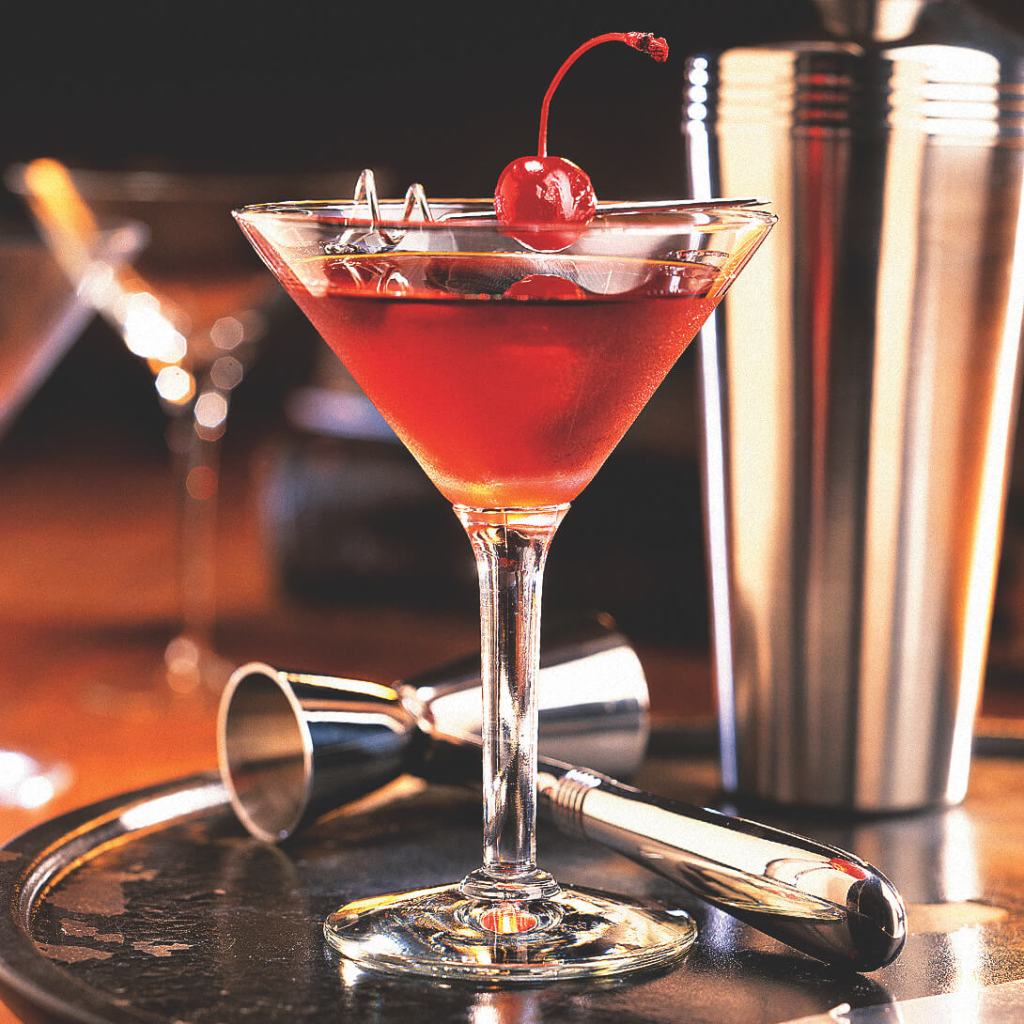
Emily is already drinking a Manhattan [pictured]; a cocktail made from whiskey, vermouth, and bitters, usually served in a cocktail glasss with a Maraschino cherry. It seems to date from the mid-19th century, and to have originated in bars around the Manhattan area. There are many variations on the drink. Because Emily praises her Manhattan for not being too sweet, it may be a Dry Manhattan made with dry vermouth, or a Perfect Manhattan, made with a mixture of dry and sweet vermouth.

Lorelai orders a Rum and Coke; it is not certain who for, but because she orders it first and without asking, it may be for Sookie. Rum and coke is a mixture of rum and cola with a dash of lime juice served with ice. It originated in Cuba, where it is called a Libre Cuba (“Free Cuba”), and dates to the early 20th century after Cuba won its independence in the Spanish-American War of 1898.

Lorelai orders a Margarita without salt, possibly for Miss Patty. A margarita is a mixture of tequila, Cointreau, and lime juice, traditionally served in a special cocktail glass that looks like a champagne glass. Originating in Mexico (its name is Spanish for “Daisy”), it became popular in the 1930s, when Prohibition gave Americans a reason to go over the border into Mexico to get a drink.

Lorelai orders a Martini with an olive, previously discussed. I feel that the martini may be for Michel – as he didn’t tell Lorelai what he wanted, she may have chosen the standard cocktail at the elder Gilmore residence for him.

Lorelai orders a Shirley Temple, previously discussed. This now seems to be Rory’s go-to mocktail, which she drinks with ice. Note that even as a supposed 18 year old, Rory is unable to drink alcohol in a bar, as the drinking age is 21 in the US. As Rory is the only person not drinking, I presume she is the designated driver.

Lorelai orders herself a giant Long Island Iced Tea. This drink is a mixture of vodka, tequila, rum, triple sec, gin, and a splash of cola, which gives it the amber tea-colour it gets its name from, often decorated with a lemon and a straw. It has a very high alcohol content, due to the small amount of mixer in it.