LORELAI: An invitation to what? Oh, is it the White House again? Those boys never give up.
The White House is the official residence and workplace of the president of the US. It is in Washington DC, and has been the residence of every US president since John Adams in 1800. The term “White House” is often used to refer to the president and his advisers.
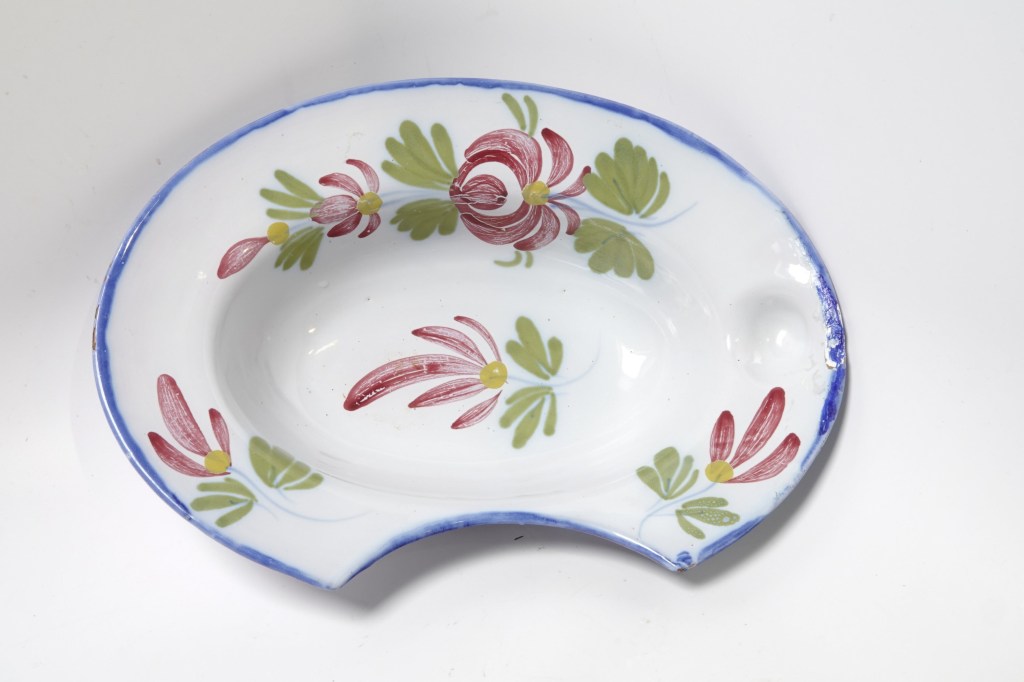
MICHEL: An eighteenth century bleeding bowl … When doctors bled patients, the blood had to go somewhere, no?
Michel refers to bloodletting, taking blood from a patient in order to prevent or cure illness. It is said to have been the most common medical treatment performed from antiquity until the late 19th century, for more than 2000 years. The main reason for its long-lived popularity is that it was very affordable, and almost anyone could perform it. Bloodletting is almost never used in modern medicine, and in the past, was almost overwhelmingly harmful to the patient.
A bleeding bowl is simply the bowl used to collect the blood during bloodletting, and this is what Michel bought at the auction. Notice in the picture that there is crescent piece missing from the bowl, to give the physician something to hold onto.
LORELAI: Come here a sec, you’ve got some dirt on your forehead. I’m sorry, it’s just the sign of the devil, my mistake.
Lorelai refers to the Mark of the Beast which is mentioned in the Bible in Revelation 13:16-17.
He causes all, both small and great, both rich and poor, both free and slave, to receive a mark on their right hand or on their forehead, so that no one may buy or sell, except he who has the mark or the name of the beast or the number of his name.
The “beast” is also called “the false prophet” or Antichrist who “speaks like a dragon” – that is, speaks arrogantly, as if to place himself even above God. The meaning of the text has been hotly debated, but many biblical scholars think that “the beast” is the Roman Empire, the Emperor Nero, and the ruling elites. However, there is a popular view that “the beast” is the Devil himself. (See the entry for Antichrist for information on how the Antichrist and Devil have become conflated).
The Greek word translated as “mark”- charagma (χάραγμα) – can mean a mark that is engraved, imprinted, or branded. The word is the same one used to refer to stamped money, documents, or coins. As Roman coins carried the image of the emperor, it seems to fit in with the idea of “the beast” being the Roman Empire and emperor.
During the time when Nero was emperor, in 66 AD, the Jews revolted against the Romans and coined their own money so that they did not need to carry around this symbol of oppression to do business. This is about the same time that scholars believe Revelation was written, and some believe that these verses pertain to that, or are informed by it.
LORELAI: He sounds very cool, and not just ’cause he owns his own jet.
RORY: Well, remember to tell him that the way to get to you is through your daughter, who desperately wants to go to Amsterdam.
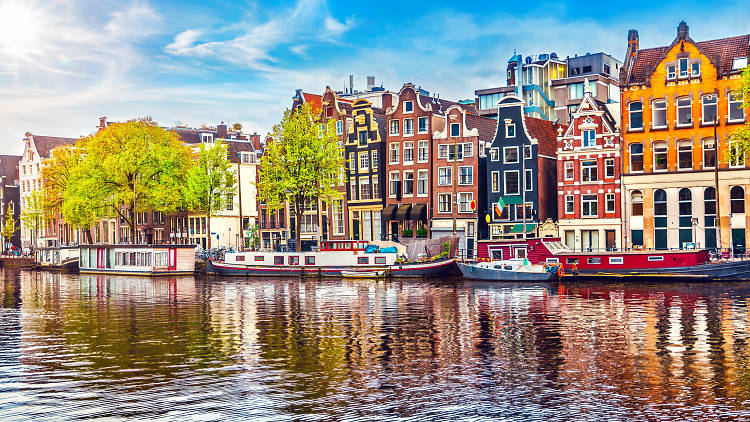
Amsterdam, the capital of the Netherlands, famous for its canals, earning it the moniker, “Venice of the North”. Although it has numerous attractions, including the Van Gogh Museum and the Royal Palace, my hunch is that Rory probably most wants to see the Anne Frank House, a museum dedicated to the celebrated Jewish wartime diarist Annelies “Anne” Frank (1929-1945), who hid from the Nazis in an Amsterdam attic for two years, before being arrested with her family and taken to a concentration camp, where she died a few months later.
Not only is Anne Frank’s story tragic and compelling in itself, her dream of becoming a writer was fulfilled when her edited diary was published posthumously in 1947 – in English in 1952, as The Diary of a Young Girl. Rory nearly always seems to be drawn to places which have some literary connection, and I’m guessing that in the case of Amsterdam, it would be the chance to visit the place where lived another bright teenage girl who was a talented writer. In A Year in the Life, Rory becomes a writer herself.
This is now the third city that Rory has said she wants to visit. In Season 1, it was Fez, in Season 2 it was Prague, and now in Season 3, it is Amsterdam.
Lorelai always calls anyone who stands in her way a Nazi or a Fascist – first Taylor and Headmaster Charleston, now it’s actual children. Lorelai has a disturbing tendency to verbally attack or insult teenagers, as if she was one of them.
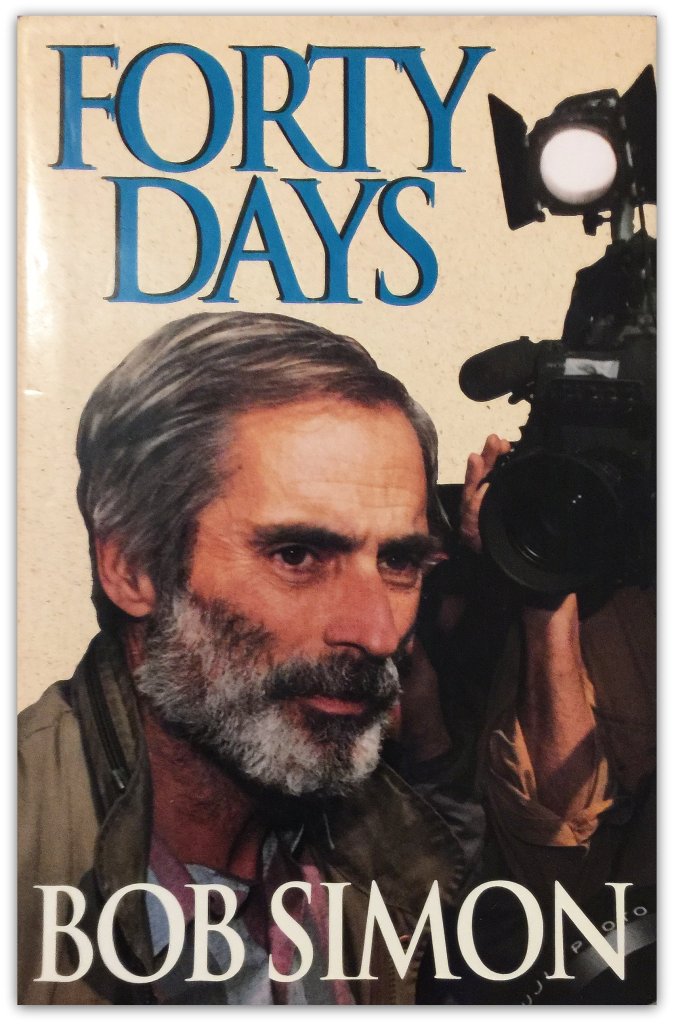
This book is on Luke’s book shelf. Forty Days is a 1992 non-fiction book by Bob Simon, an award-winning veteran journalist for CBS News. The book describes the forty days he spent being imprisoned and tortured by the Iraqis after being captured, along with four of his crew, during the Persian Gulf War in 1991.
It’s not clear whether Luke or Jess is reading the book – but like Lorelai and Rory, there is a good chance that they share books anyway. If it’s Luke’s book, it shows that, like Jess, he has an interest in journalism. (It feels as if everyone is interested in journalism on Gilmore Girls!).
DARREN: What about the year of Germany’s victory in the Franco-Prussian War?
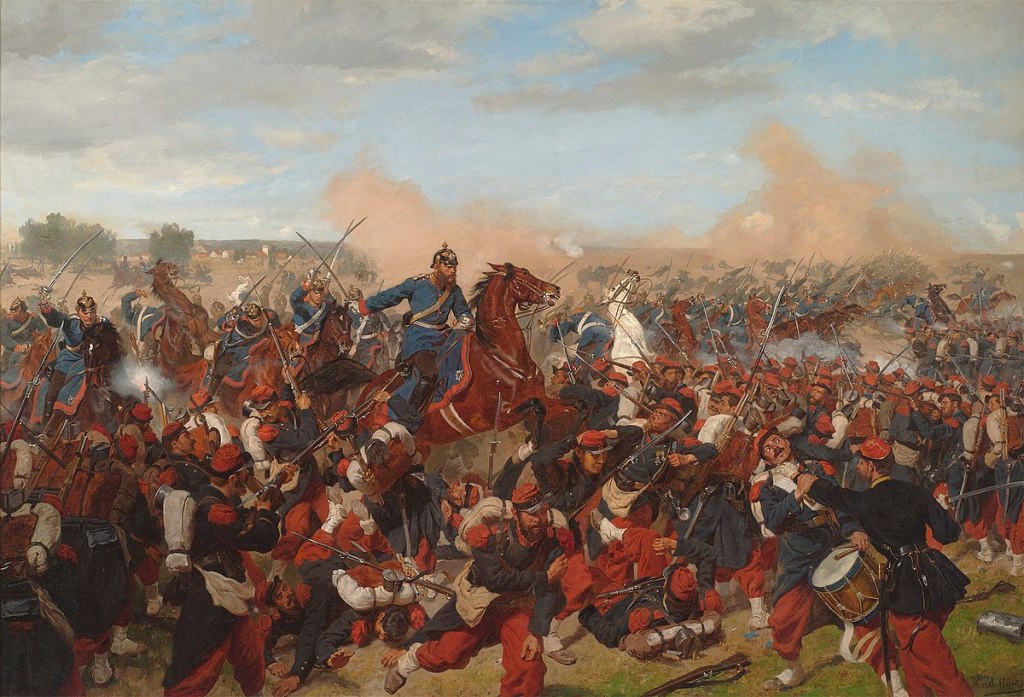
The Franco-Prussian War, often referred to in France as the War of 1870, lasted from 19 July 1870 to 28 January 1871. Germany won after besieging Paris for more than four months, and one of the main consequences of the war was the unification of Germany, leading to the formation of the modern German state, which became the dominant world power in Europe.
[Painting is Battle of Mars-le-Tour, August 16 1870 by Emil Hünten, 1870]
DARREN: Do you know which French city famous for its water was the capital of collaborationist France?
LORELAI: Oh, me? Um, Evian, Perrier, uh, Le Crystal Geyser?
JENNIFER: Vichy.
Vichy is a city in central France on the river Allier, a spa town and resort famous for its warm mineral springs, the direct result of historical volcanic activity – although the volcanoes have been dormant for more than a century. During World War II, it was the seat of government for Vichy France from 1940 to 1942. Officially independent, Vichy France adopted a policy of collaboration with Nazi Germany.
Lorelai quickly says the first brands of mineral water she can think of. Evian has been bottling mineral water from Évian-les-Bains in the French Alps since 1829. Perrier bottles its carbonated mineral water from Vergèze in Southern France, beginning production in 1898. Crystal Geyser is actually an American company, founded in Calistoga, California in 1977.
DARREN: Patience . . . became Prime Minister of his country?
JACK: Paderewski.
Frédéric Chopin, born Fryderyk Chopin (1810-1849), Polish composer and virtuoso pianist of the Romantic period, who wrote primarily for solo piano. He was one of the earliest musical celebrities, and he has maintained his reputation as a poetic genius and one of the great musicians of his generation.
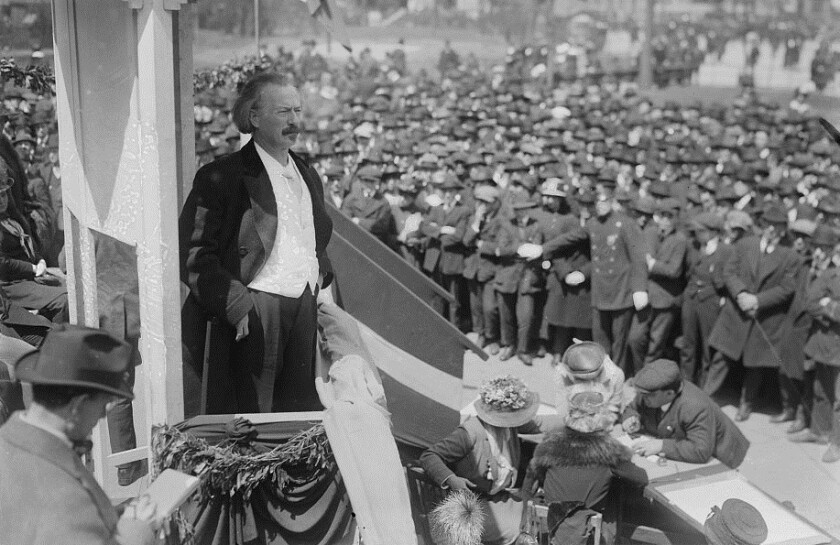
Ignacy Jan Padarewski (1860-1941) [pictured], Polish pianist and composer who became a spokesman for Polish independence. He was appointed prime minister in January 1919, and signed the Treaty of Versailles, which ended World War I. He resigned in November 1919, and continued his musical career, rarely visiting Poland again.
PARIS: But this year – everything changes, starting with the library. It’s completely out of proportion with its subjects. I mean, there’s five hundred volumes on the French Revolution, yet only three on the Crusades.
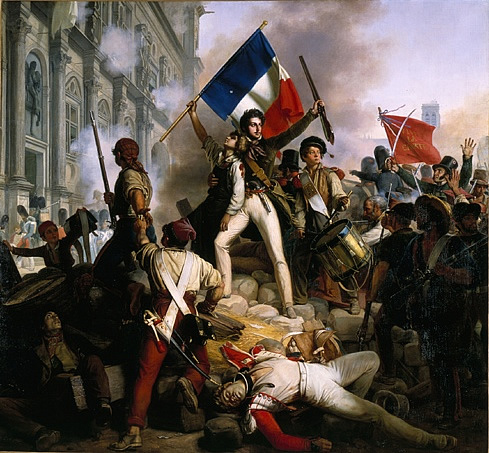
The French Revolution, previously mentioned. A period of radical political and societal change in France from 1789 to 1799. Many of its ideas are considered fundamental principles of liberal democracy, while phrases like liberté, égalité, fraternité reappeared in other revolts, such as the 1917 Russian Revolution, and inspired campaigns for the abolition of slavery and universal suffrage. The values and institutions it created dominate French politics to this day.
The Crusades, a series of religious wars initiated, supported, and sometimes directed by the Roman Catholic Church in the medieval period. Beginning with the First Crusade which resulted in the recovery of Jerusalem in 1099, dozens of Crusades were fought, providing a focal point of European history for centuries.




 The Annotated Gilmore Girls