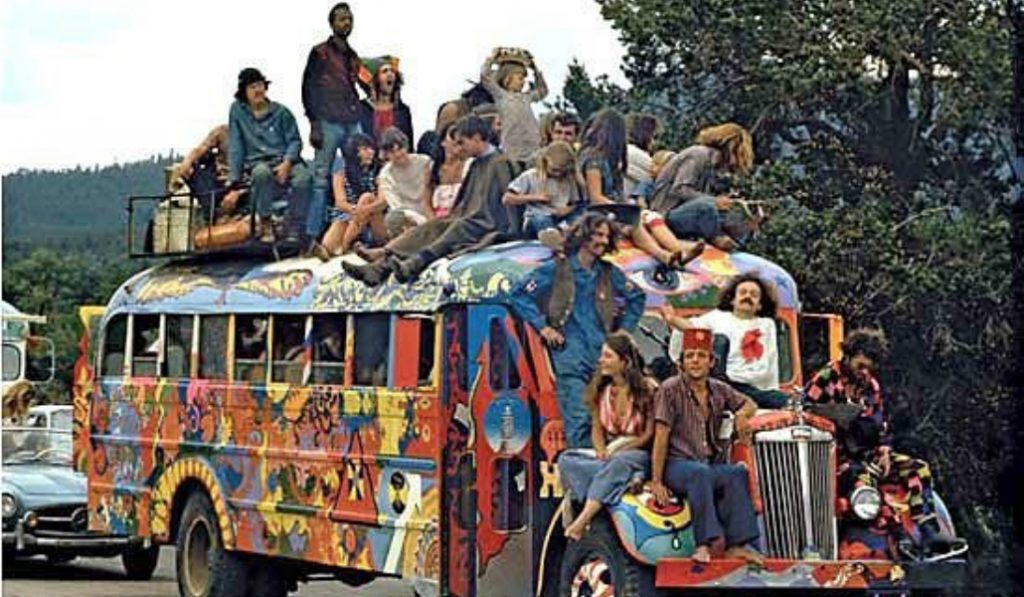
LORELAI: Maybe we should do like a movie marathon weekend. You know, just show one movie after the other for three days and charge everyone a fortune, gouge them for bottled water, have those really disgusting little bathrooms – it’d be like our own Woodstock.
Woodstock Music and Art Fair, commonly known as Woodstock, was a music festival held August 15-18 in 1969, held on a dairy farm in Bethel, New York, 40 miles from the town of Woodstock. It attracted an audience of 400 000, and 32 acts performed outdoors, despite sporadic rain. The festival has become widely regarded as a pivotal moment in popular music history as well as a defining event for the counterculture generation.
PARIS: First, let me say that I’m glad to see you all here today, at the beginning of what I think is going to be a very exciting experiment.
BRAD: She doesn’t have a baseball bat in her hands, does she?
A reference to the 1987 crime film The Untouchables, directed by Brian De Palma, screenplay by David Mamet. It is based on the 1957 book of the same name, a memoir by Prohibition agent Eliot Ness. The film follows Eliot Ness, played by Kevin Costner, as he forms his Untouchables team to bring Al Capone, played by Robert De Niro, to justice during Prohibition.
The Untouchables was a commercial success, and received positive reviews from critics. While the film is based on historical events, it is a work of fiction.
Brad is referring to a scene in the film where Al Capone beats a henchman to death with a baseball bat while they are seated at a dinner table. In real life, Capone beat three associates with a baseball bat in 1928 before having them shot when he received word they were plotting to kill him. It did occur at the dinner table, after Capone made sure they were thoroughly drunk.
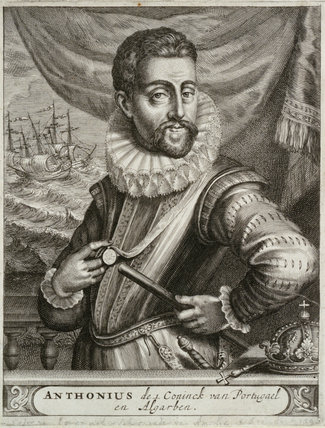
An obvious play on epithets historically given to royalty – Ivan the Terrible, James the Just, Alfred the Great, Gerald the Fearless, Philip the Handsome, and so on.
There was a real royal with this epithet – Antonio the Determined [pictured], who managed to rule Portugal as Antony I for at least twenty days during a succession crisis. Although Philip II of Spain prevailed, Antonio did not gracefully admit defeat, but attempted to rule Portugal from the Azores, where he established an opposition government that clung on for three more years. He went into exile in France and England, taking the crown jewels with him.
In Antonio’s case, “determined” seems to be a polite word for “desperate”, or even “delusional”. Dean will likewise do his darnedest to grimly hang onto Rory, even when he knows he’s lost.
LOUISE: Just that Rory’s the leader of this group, Napoleon, and you’re not.
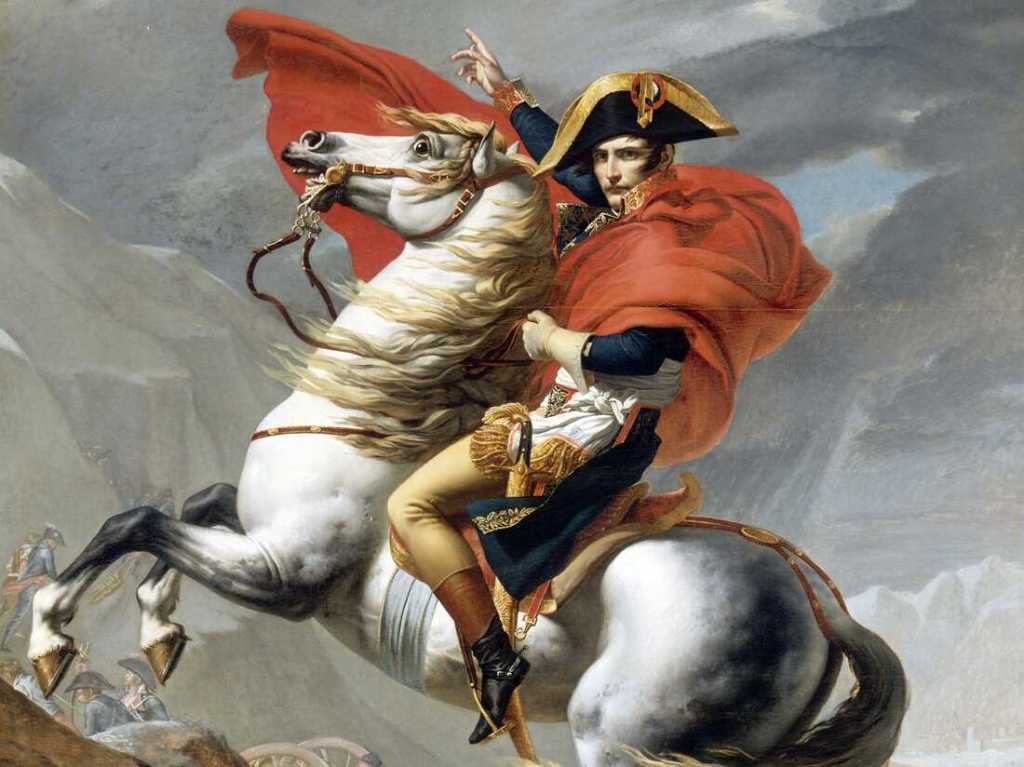
Napoleon Bonaparte, born Napoleone di Buonaparte (1769-1821), French military and political leader who rose to prominence during the French Revolution, becoming Emperor of France in the early 19th century. He was one of the greatest military commanders in history, and his wars and campaigns are studied in military schools worldwide.
After Napoleon was forced to abdicate in 1814 he was exiled to the island of Elba, between Corsica and Italy. Louise is saying that now that Rory is leader of their group, Paris is like a great leader forced into the political wilderness.
In fact, Napoleon didn’t waste his time on Elba, improving the island with his usual energy and vision. He escaped from it nine months later and briefly took control of France again before being defeated at Waterloo. Like Napoleon, Paris is unlikely to languish in the background for too long.
[Picture shows Napoleon Crossing the Alps by Jacques-Louis David (1800)]
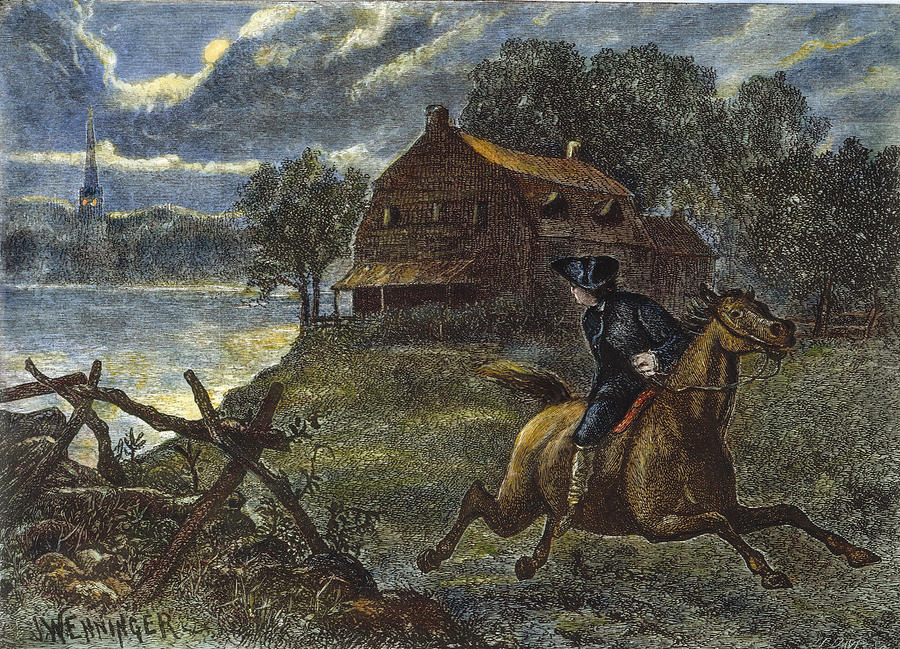
TROUBADOUR #2: Hey Taylor, cool threads. Very “One if by Land.”
A phrase from the poem Paul Revere’s Ride, by Henry Wadsworth Longfellow, previously mentioned. It was a reference to the secret signal orchestrated by Revere during his historic ride from Boston to Concord on the verge of American Revolutionary War.
The signal was meant to alert patriots about the route the British troops chose to advance to Concord, with one lantern on a church steeple to signify they were coming the longer way, over land, while two lanterns meant they were coming the shorter way, by sea.
Despite its importance in the cultural landscape, the lantern signals were only a back-up plan if the messenger was not able to get through, but Paul Revere did manage to leave Boston safely to make his historic ride. The popular myth was that the lanterns, now redundant, were intended for Revere, waiting for the signal across the river.
EMILY: I’ll see you for dinner tonight, Lorelai. And Luke, I’m sure I’ll see you again soon. What do you think of the Romanovs?
LUKE: They probably had it coming.
EMILY: A match made in heaven.
The House of Romanov, the reigning imperial family of Russia from 1613 to 1917. They became prominent after the first Tsar of Russia, Ivan the Terrible, married Anastasia Romanova, the first Tsarina. It is from Anastasia’s name that the family became known as the Romanovs.
The abdication of Tsar Nicholas II during the Russian Revolution on 15 March 1917 ended 304 years of Romanov rule and paved the way for the formation of the Russian Republic. In July 1918, Bolshevik officials executed Nicholas and his family.
Although Lorelai refers to their murder as “the firing squad”, they were shot and bayoneted, then the bodies taken to the forest to be stripped, buried, then mutilated with grenades to prevent identification. This is what Luke thinks they “probably had coming”.
The Romanov burial site was discovered in 1979 by an amateur sleuth, but not officially confirmed by Russia until 1989. The remains were identified by forensic and DNA analysis, assisted by British experts, and in 1998 the remains were re-interred in a state funeral in the Peter and Paul Cathedral in St Petersburg. In 2000, Nicholas II was canonised as a saint by the Russian Orthodox Church.
After the assassination of Nicholas and his family, the remaining 47 members of the Romanov family went into exile abroad, still claiming the former Russian throne. Since 1991, the line of succession has been in dispute.
[Picture shows Nicholas II of Russia with his wife Alexandra (Alix of Hesse), his son Alexei, and four daughters Olga, Tatiana, Maria, and Anastasia].
EDIT: A date edited with the kind assistance of reader Omar.
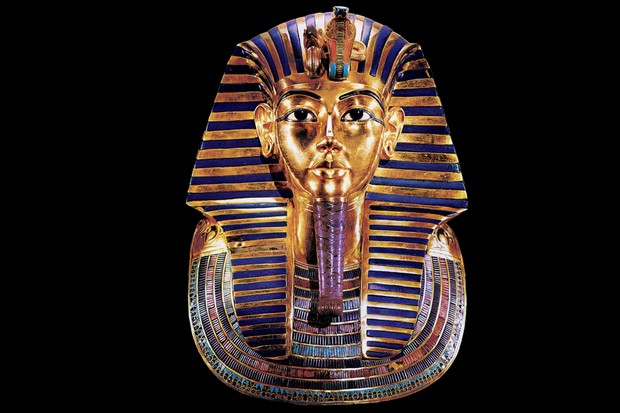
LUKE: My uncle, King Tut, has to take all of them to the afterlife with him!
Tutankhamun, commonly referred to as King Tut, ancient Egyptian pharaoh who was the last of his royal family to rule during the 18th Dynasty (ruled circa 1332-1323 BC). His tomb was discovered in 1922, sparking a renewed public interest in ancient Egypt. He was buried with over 5000 artefacts, with some of his treasures being exhibited around the world at various times.
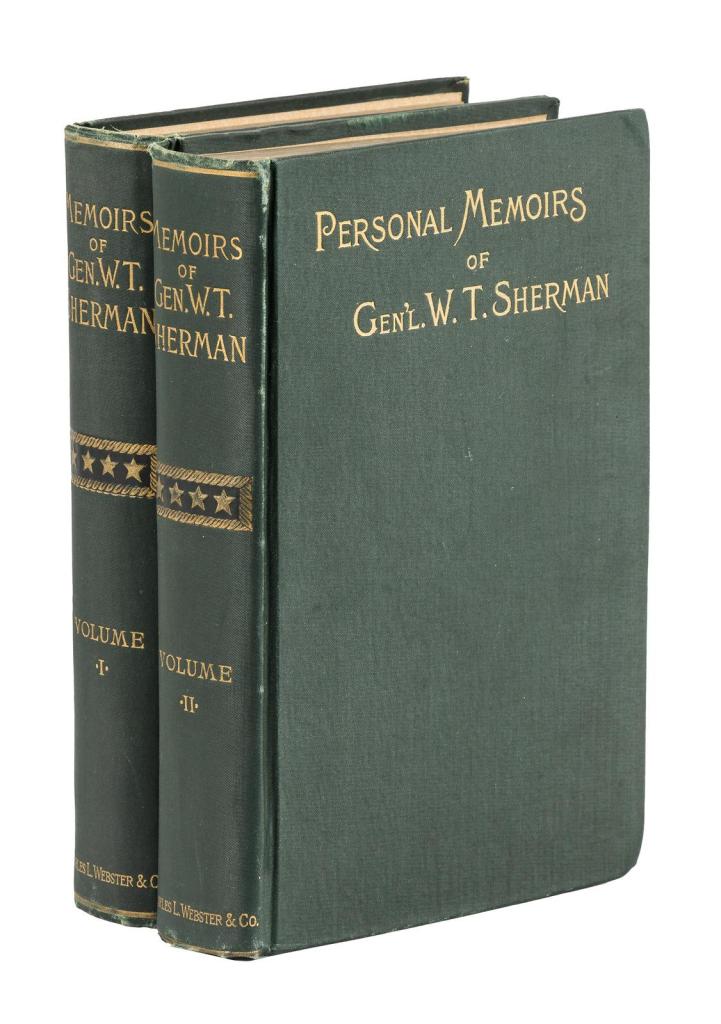
William Tecumseh Sherman (1820-1891), general in the Union Army during the American Civil War, recognised for his military strategy and criticised for his harsh scorched earth policies against the Confederate States. His memoirs were published in 1875, becoming one of the best-known first-hand accounts of the Civil War.
Football signed by Johnny Unitas
John “Johnny Unitas (1933-2002) football quarterback from 1956 to 1973, primarily playing with the Baltimore Colts. He is consistently listed as one of the greatest NFL players of all time, and was inducted into the Pro Football Hall of Fame in 1979.
Gas mask (from World War I or II?)
Pith helmet (safari helmet worn by European travellers and explorers, routinely issued to European armed forces in hot climates in both world wars)
Baseball card collection
Lou Gehrig (Henry Louis Gehrig, born Heinrich Ludwig Gehrig, 1903-1941), played with the New York Yankees from 1923 to 1939. Known as “The Iron Horse” for his durability, he still has the highest ratio of runs scored plus runs batted among Hall of Fame players, being inducted in 1939. His career was brought to a tragic end by motorneurone disease, still often called Lou Gehrig’s disease in the US.
Joe DiMaggio (born Joseph DiMaggio, 1914-1999), played for the New York Yankees from 1936-1951. Widely considered the greatest baseball player of all time, his 56-game hitting streak is a record which still stands. He was inducted into the Baseball Hall of Fame in 1955. He is well known for his marriage to Marilyn Monroe, and lifelong devotion to her.
Willie Mays (born 1931), played for the New York/San Francisco Giants (1951-1972), before finishing his career with the New York Mets (1972-1973). Regarded as one of the greatest players of all time, he was inducted into the Baseball Hall of Fame in 1979. He was awarded the Presidential Medal of Freedom in 2015.
Louie’s interests seem to be fishing, bowling, drinking, watching baseball and football, and collecting war memorabilia and sporting memorabilia. Some of the items he’s being buried with are quite valuable.
JACKSON: Remember that sweet, simple, affordable little wedding Sookie and I agreed on with minimal disagreement … Gone. Ancient history. It’s the Library of Alexandria, it’s the Colossus of Rhodes, it’s Pop Rocks, it’s over.
Library of Alexandria
The Great Library of Alexandria in Alexandria, Egypt was one of the largest and most significant libraries of the ancient world, part of a larger institution called The Musaeum, dedicated to the nine Muses, and the source of the modern word “museum”.
It is said to have been founded by Ptolemy II Philadelphus around 285 BC, in an attempt to bring together the best minds of the Hellenistic world and collect all books known at the time – at its height, it may have had as many as 400 000 scrolls. Due mostly to the Great Library, Alexandria became known as the capital of knowledge and learning.
Although there is a popular modern belief that the Library was destroyed in a cataclysmic fire, in fact it gradually declined over the course of several centuries. It was accidentally burned by Julius Caesar in 48 BC, but it is not known how much damage was done. Under the Romans, the Library dwindled from lack of funding, and an invasion by Palmyra in 270 AD probably destroyed what little was left of it.
Colossus of Rhodes
The Colossus of Rhodes was a statue of the Greek sun god Helios, erected in the city of Rhodes on the island of the same name by Chares of Lindos in 280 BC. One of the Seven Wonders of the Ancient World, it was constructed to celebrate a military victory against Macedon. According to descriptions at the time, the statue was 108 feet high – about the same size as the Statue of Liberty – making it the tallest statue in the ancient world. The statue was destroyed in 653 AD by Arab forces. Since 2008, discussions have been underway about building a new Colossus in Rhodes Harbour, so it may not be ancient history for much longer.
Pop Rocks
A candy with bubbles in it, causing a small popping sensation when it dissolves. First offered to the public in 1976 by General Foods, sales were withdrawn in 1983, citing its lack of success and short shelf life. After that, Kraft licensed the product to a Spanish company called Zeta Espacial S.A., who distributes it in the US through Pop Rocks Inc., in Atlanta, Georgia. Jackson seems to think Pop Rocks are gone, but they aren’t.




 The Annotated Gilmore Girls