Visions of Cody

This is the book that Jess is reading when Rory runs into him while she’s panicking about the water issue.

Visions of Cody is an experimental novel by Jack Kerouac, previously discussed and frequently mentioned. It was written in 1951-52, with excerpts from it published in 1959, but not published in its entirety until 1972 – by then, it already had an underground reputation.

Visions of Cody is derived from experimental spontaneous prose inserts that Kerouac added to the original manuscript of On the Road in 1951–52. Although the narrative of the novel is meandering, consisting of short stream-of-conscious essays, transcriptions of taped conversations, and writing exercises, it focuses on the friendship between Jack Kerouac and Neal Cassady (named Jack Duloz and Cody Pomeroy in the text). The book has been described as an early example of New Journalism.

Jess loves Kerouac, the Beat writers, and writing which contains journalism and fiction, so this book is a natural fit for him. Like Rory, he likes to delve deeper into novels he likes, and it makes sense that he would want to read this as a companion to On the Road.

Jess is able to read a book while walking. It’s interesting to speculate why he is wandering along Rory’s street, reading a Kerouac book. Is he mildly stalking Rory, or hoping he’ll run into her? How often does Jess do this “casual stroll near Rory’s house reading an underground classic” routine?

“Sign of the devil”

RORY: I like the brown.

LORELAI: Come here a sec, you’ve got some dirt on your forehead. I’m sorry, it’s just the sign of the devil, my mistake.

Lorelai refers to the Mark of the Beast which is mentioned in the Bible in Revelation 13:16-17.

He causes all, both small and great, both rich and poor, both free and slave, to receive a mark on their right hand or on their forehead, so that no one may buy or sell, except he who has the mark or the name of the beast or the number of his name.

The “beast” is also called “the false prophet” or Antichrist who “speaks like a dragon” – that is, speaks arrogantly, as if to place himself even above God. The meaning of the text has been hotly debated, but many biblical scholars think that “the beast” is the Roman Empire, the Emperor Nero, and the ruling elites. However, there is a popular view that “the beast” is the Devil himself. (See the entry for Antichrist for information on how the Antichrist and Devil have become conflated).

The Greek word translated as “mark”- charagma (χάραγμα) – can mean a mark that is engraved, imprinted, or branded. The word is the same one used to refer to stamped money, documents, or coins. As Roman coins carried the image of the emperor, it seems to fit in with the idea of “the beast” being the Roman Empire and emperor.

During the time when Nero was emperor, in 66 AD, the Jews revolted against the Romans and coined their own money so that they did not need to carry around this symbol of oppression to do business. This is about the same time that scholars believe Revelation was written, and some believe that these verses pertain to that, or are informed by it.

Letters of Ayn Rand

This is the book that Rory is reading on her bed when Lorelai comes in before her date with Peyton.

Letters of Ayn Rand is a collection of letters written by the novelist and philosopher Ayn Rand, edited by Michael Berliner with the approval of the Rand estate. It was first published in 1995, 13 years after Rand’s death, and the paperback version that Rory is reading was published in 1997. It received generally positive reviews from Rand scholars and fans, but was judged “tedious” by The Washington Post.

Although Rory said she only liked Ayn Rand because of her novel The Fountainhead, reading her letters seems to suggest a stronger interest in Rand and her ideas than she let on.

Amsterdam

LORELAI: He sounds very cool, and not just ’cause he owns his own jet.

RORY: Well, remember to tell him that the way to get to you is through your daughter, who desperately wants to go to Amsterdam.

Amsterdam, the capital of the Netherlands, famous for its canals, earning it the moniker, “Venice of the North”. Although it has numerous attractions, including the Van Gogh Museum and the Royal Palace, my hunch is that Rory probably most wants to see the Anne Frank House, a museum dedicated to the celebrated Jewish wartime diarist Annelies “Anne” Frank (1929-1945), who hid from the Nazis in an Amsterdam attic for two years, before being arrested with her family and taken to a concentration camp, where she died a few months later.

Not only is Anne Frank’s story tragic and compelling in itself, her dream of becoming a writer was fulfilled when her edited diary was published posthumously in 1947 – in English in 1952, as The Diary of a Young Girl. Rory nearly always seems to be drawn to places which have some literary connection, and I’m guessing that in the case of Amsterdam, it would be the chance to visit the place where lived another bright teenage girl who was a talented writer. In A Year in the Life, Rory becomes a writer herself.

This is now the third city that Rory has said she wants to visit. In Season 1, it was Fez, in Season 2 it was Prague, and now in Season 3, it is Amsterdam.

Norton Critical Edition

RORY: A really bad punchline.

LORELAI: No one asked for the Norton Critical Edition.

W.W. Norton & Company is a publishing company based in New York City. Established in 1923, it has been owned wholly by its employees since the early 1960s. The company is known for its Norton Anthologies (particularly The Norton Anthology of English Literature) and its texts in the Norton Critical Editions series, both of which are frequently assigned in university literature courses.

Norton Critical Editions provide reprints of classic literature and in some cases, classic non-fiction works. However, unlike most critical editions, all Norton Critical Editions are source books that provide a selection of contextual documents and critical essays along with an edited text. Annotations to the text are provided as footnotes, rather than as end notes.

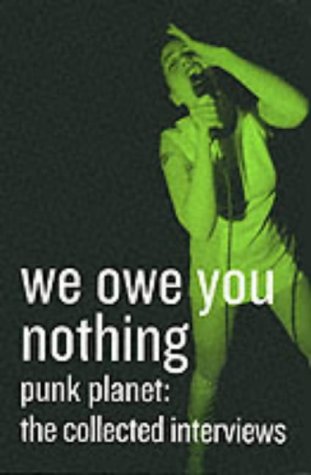
We Owe You Nothing

When Luke gets home, he finds Jess reading this book.

We Owe You Nothing: Punk Planet – The Collected Interviews is edited by Daniel Sinker, and was published in 2001. It’s a collection of interviews from Punk Planet zine, which we already know Jess is a fan of, and a nice bit of continuity. There are interviews with people such as Jello Biafra, Kathleen Hanna, Henry Rollins, Ian MacKaye from Fugazi, and Noam Chomsky.

“Zip-a-Dee-Doo-Dah”

LORELAI: Oh, we’re happy to be here, right?

LUKE: Yup, zip-a-dee-doo-dah.

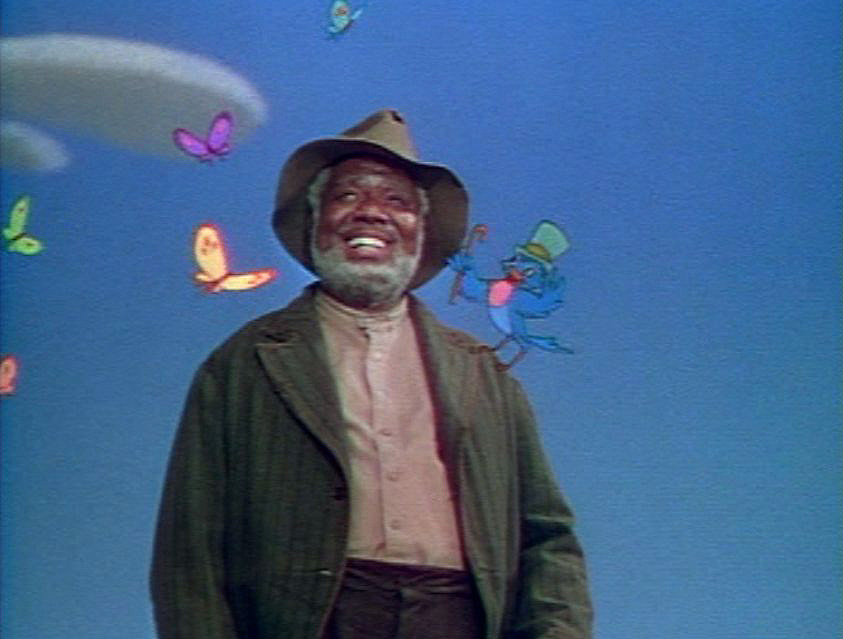
“Zip-a-Dee-Doo-Dah”, a song composed by Allie Grubel with lyrics by Ray Gilbert for the 1946 Disney film, Song of the South. The film combines live action and animation, and is based on the Uncle Remus stories adapted by Joel Chandler Harris, taking place in the Reconstruction era of the South, after the Civil War.

The song is sung by James Baskett in the film, who stars as Uncle Remus, and it won the Oscar for Best Original Song, while Baskett received an Honorary Academy Award, making him the first male black performer to win an Oscar. Song of the South was controversial upon its release for its portrayal of African-Americans, and has remained so.

The song has very upbeat lyrics:

Zip-a-dee-doo-dah, zip-a-dee-ay
My, oh, my, what a wonderful day
Plenty of sunshine headin’ my way
Zip-a-dee-doo-dah, zip-a-dee-ay!

Naturally Luke is being sarcastic.

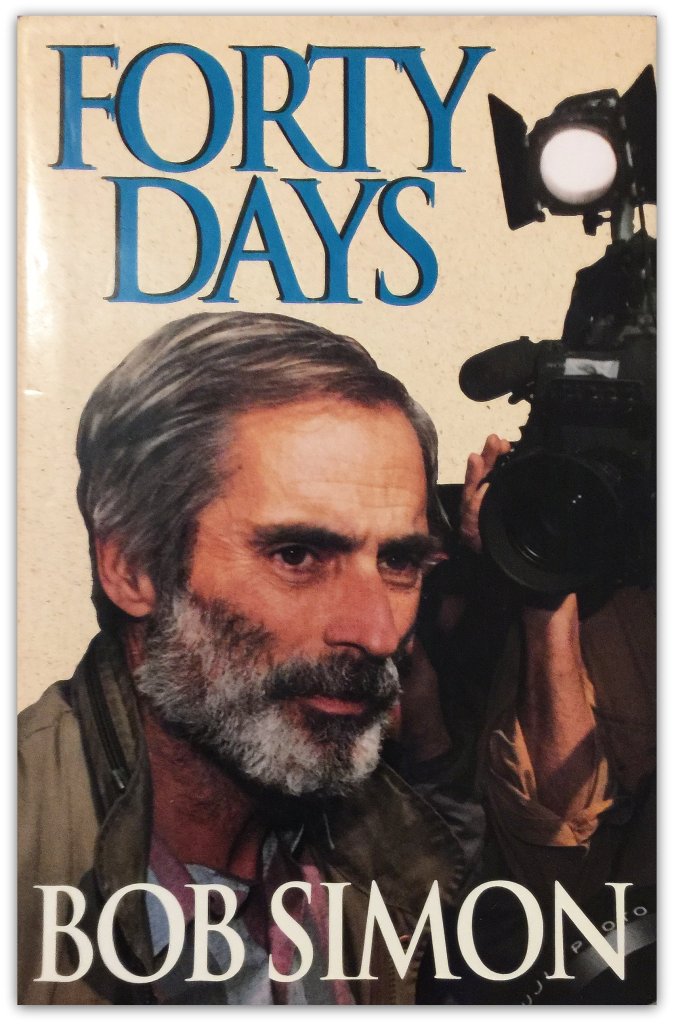
Forty Days

This book is on Luke’s book shelf. Forty Days is a 1992 non-fiction book by Bob Simon, an award-winning veteran journalist for CBS News. The book describes the forty days he spent being imprisoned and tortured by the Iraqis after being captured, along with four of his crew, during the Persian Gulf War in 1991.

It’s not clear whether Luke or Jess is reading the book – but like Lorelai and Rory, there is a good chance that they share books anyway. If it’s Luke’s book, it shows that, like Jess, he has an interest in journalism. (It feels as if everyone is interested in journalism on Gilmore Girls!).

Harry Potter

RORY: I’ve dreamt of going to Harvard since I was a little girl.

CAROL: Yeah, a lot of four year olds dream of that. It comes right after meeting Harry Potter.

Harry Potter, the schoolboy wizard who is the protagonist of the popular Harry Potter book and film series, the novels written by English author J.K. Rowling, previously mentioned. In the films, he is played by English actor Daniel Radcliffe.

Rory was four years old in 1988-1989, and the first Harry Potter book was published in 1997, so Rory could hardly have been interested in him as a toddler anyway. Presumably Carol is thinking of her young clients in the present day.

There’s a little mistake in the writing here. Rory never actually tells Carol that she’s been dreaming of Harvard since she was four – only that she was a little girl. We know she was four because Lorelai told Max in Season 1, but somehow Carol knows about it too.

Manticore

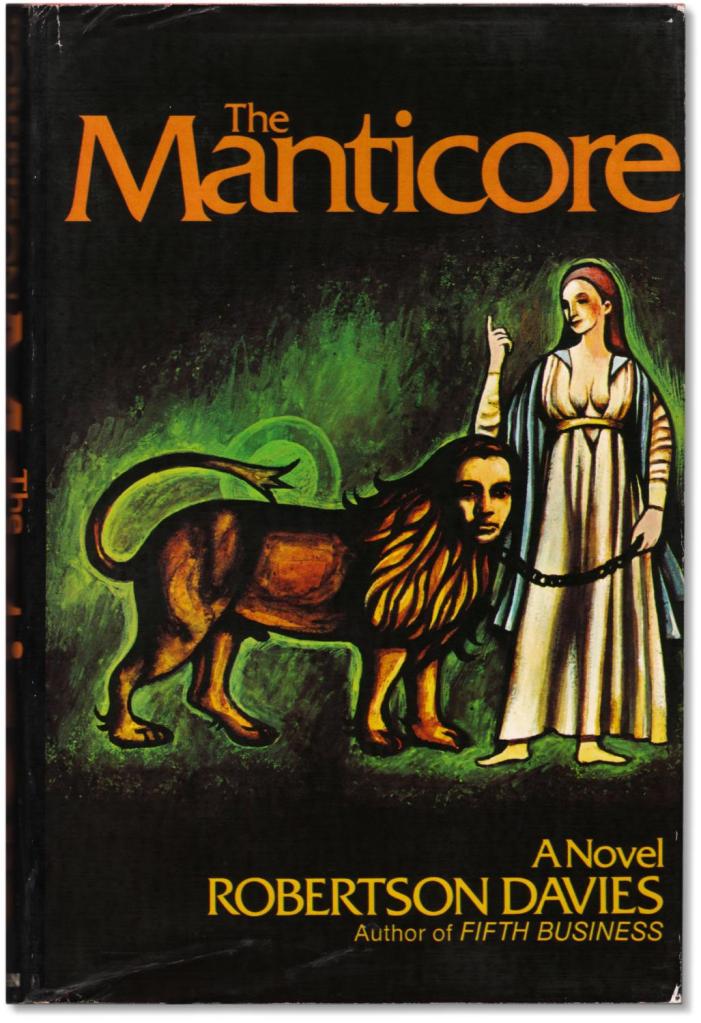
DARREN: Open question – which mythological figure has the head of a man, the body of a lion, and the tail of a scorpion? Here’s a hint – it’s also the title of a novel by Robertson Davies.

RORY: Oh, manticore.

The manticore is a Persian mythological creature with a human head, body of a lion, and a tail of venomous spines – some depict it as like porcupine quills, while others give it a scorpion tail, as Darren says. There are some accounts that the spines can be shot like arrows, making the manticore a lethal predator. It devours its prey whole, using its triple rows of teeth, leaving no traces of its victim behind. Its name comes from the Persian for “man eater”.

The Manticore is a 1972 novel by Canadian author Robertson Davies. It is the second volume in his Deptford Trilogy, three interrelated works set in the fictional town of Deptford, Ontario. The plot of The Manticore revolves around themes of Jungian psychology and psychoanalysis, and the journey towards becoming fully human.