Poe Stories

LORELAI: Well, welcome to the Independence Inn. There will be a complimentary cask of amontillado on the table in your room, and if you’re expecting your friends Doctor Tarr and Professor Fether, I’ll send up another one.

Lorelai references two other short stories by Poe here:

“The Cask of Amontillado” is set in an unnamed Italian city at carnival time, and is about a man taking revenge on a friend who, he believes, has insulted him. Like several of Poe’s stories, and in keeping with the 19th-century fascination with the subject, the narrative follows a person being buried alive – in this case, by trapping him in the family vaults, which serve as catacombs. As in “The Tell-Tale Heart”, Poe conveys the story from the murderer’s perspective. The story was first published in Godey’s Lady’s Book in 1846.

“The System of Doctor Tarr and Professor Fether” is a dark comedy short story which centres on a naïve and unnamed narrator’s visit to a mental asylum in the southern provinces of France, where staff and patients have exchanged roles. It was first published in Graham’s Magazine in November 1845.

The Tell-Tale Heart

LORELAI: Okay, I’ve got you right here. Well, once again, welcome, and let me assure you there are no human body parts buried in the floor of your room to keep you awake tonight. Sound good?
MR. HATLESTAD: I guess …
LORELAI: The Tell-Tale Heart. That’s a Poe story. Did they not get that?

“The Tell-Tale Heart”, a short story by Edgar Allan Poe. It is related by an unnamed narrator who endeavors to convince the reader of the narrator’s sanity while simultaneously describing a murder of an old man the narrator committed.

The narrator emphasizes the careful calculation of the murder, attempting the perfect crime, complete with dismembering the body in the bathtub and hiding it under the floorboards. Ultimately, the narrator’s actions result in hearing a thumping sound, which the narrator interprets as the dead man’s beating heart.

The story was first published in The Pioneer in 1843. It is considered a classic of Gothic fiction, and is one of Poe’s best known short stories.

Edgar Allan Poe Society

LORELAI: Oh, is this everyone from the Edgar Allan Poe Society?

The Edgar Allen Poe Society was established in Baltimore, Maryland on January 19 1923, the 114th anniversary of Poe’s birth. Their headquarters are The Edgar Allan Poe House and Museum, which was the home of Poe during the 1830s. The Poe Society are all volunteers who aim to provide educational resources on the author, and are not as quirky as this episode portrays. Perhaps the ones in this episode are a different Edgar Allan Poe Society.

A Tale of Poes and Fire

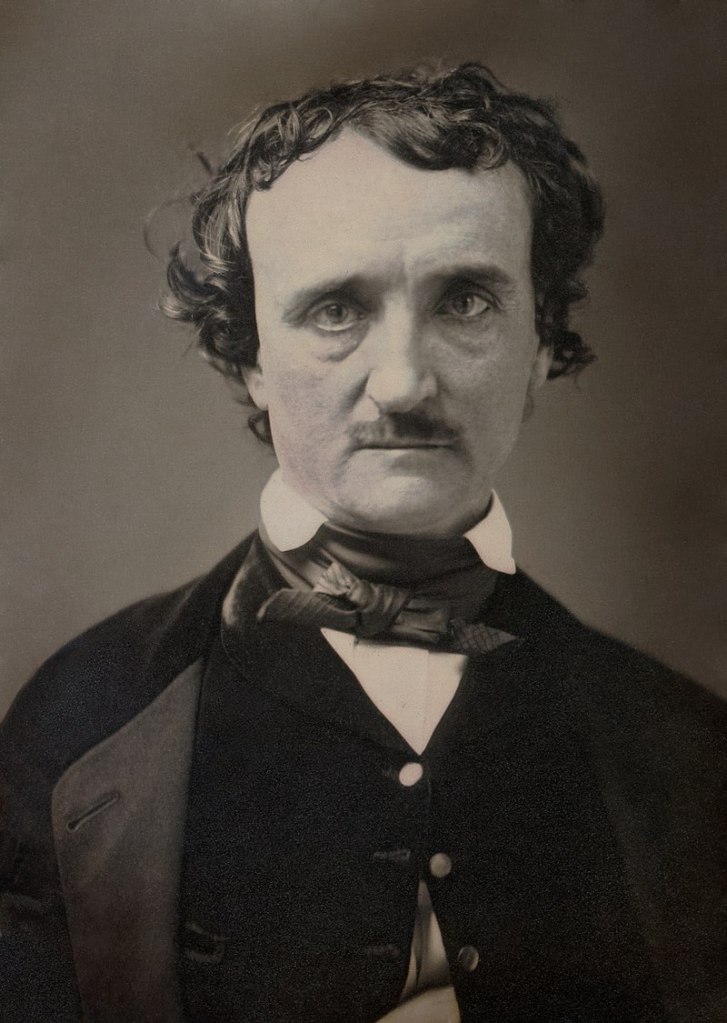
Edgar Allan Poe, born Edgar Poe (1809-1849), writer, poet, editor, and literary critic, best known for his poetry and short stories, particularly his tales of mystery and the macabre. He is widely regarded as a central figure of Romanticism in American literature. He was one of the country’s earliest practitioners of the short story, and is considered the inventor of the detective fiction genre, as well as a significant contributor to the emerging genre of science fiction. He was the first well-known American writer to earn a living through writing alone.

This episode features the Edgar Allan Poe Society coming to the inn on the night it catches fire, and the famous poet receives several mentions.

Rory’s Quotes

RORY: “Apply yourself. Get all the education you can, but then do something. Don’t just stand there, make it happen.” Lee Iacocca. “Education’s purpose is to replace an empty mind with an open one.” Malcolm Forbes. “Education is an admirable thing, but it is well to remember from time to time that nothing that is worth knowing can be taught.” Oscar Wilde.

Lido “Lee” Iacocca (1924-2019), [pictured] automobile executive best known for the development of the Ford Mustang, Continental Mark III, and Ford Pinto cars while at the Ford Motor Company in the 1960s, and for reviving the Chrysler Corporation as its CEO during the 1980s. He attended Lehigh University in Pennsylvania, then went to Princeton to do his masters in mechanical engineering. The quote comes from Iacocca: An Autobiography (written with William Novak).

Malcolm Forbes (1919-1990), entrepreneur and politician most prominently known as the publisher of Forbes magazine, founded by his father B.C. Forbes. He was known as an avid promoter of capitalism and free market economics and for an extravagant lifestyle. He served two terms as a member of the New Jersey Senate. He received his degree from Princeton University. The quote comes from Forbes magazine.

Oscar Wilde, previously discussed. He was educated at Trinity College in Dublin, and at Oxford University. The quote comes from his collection of essays, Intentions.

Encyclopædia Britannica

MAX: Well, I’m glad to hear it. And Rory’s good?
LORELAI: Oh, yeah, she’s the Encyclopædia Britannica definition of good.

Encyclopædia Britannica, (Latin for “British Encyclopædia”) is a general knowledge English-language encyclopædia, first published in the 18th century in Edinburgh, Scotland. Though published in the US since 1901, the Britannica has for the most part maintained British English spelling. Since 2016, it has been published exclusively as an online encyclopaedia.

If you look up “Good” in the Encyclopædia Britannica, you will find an article on Gnostic philosophy and spirituality, where the Good is a transcendent deity. Probably not what Lorelai was thinking of!

Ruth Reichl

SOOKIE: They sent it back. My food. My four star, ‘you haven’t lived ’til you’ve eaten there, says Ruth Reichl,’ food.

Ruth Reichl (born 1948), chef, food writer and editor. In addition to two decades as a food critic, mainly spent at the Los Angeles Times and The New York Times, Reichl has also written cookbooks, memoirs and a novel, and been co-producer of PBS’s Gourmet’s Diary of a Foodie, culinary editor for the Modern Library, host of PBS’s Gourmet’s Adventures With Ruth, and editor-in-chief of Gourmet magazine. She has won six James Beard Foundation Awards.

Reichl was a food critic for The New York Times from 1993 to 1999, so if she ever visited the Independence Inn to review Sookie’s cooking for this publication, it would have been in the late 1990s. From 1999 to 2009, she was the editor of Gourmet magazine.

Les Mis and Cats

MADELINE: What about your costumes, ’cause that seems great.
LOUISE: Ooh, unless you’re doing Les Mis.
MADELINE: Or Cats.
LOUISE: Furry spandex with a tail and jazz shoes?

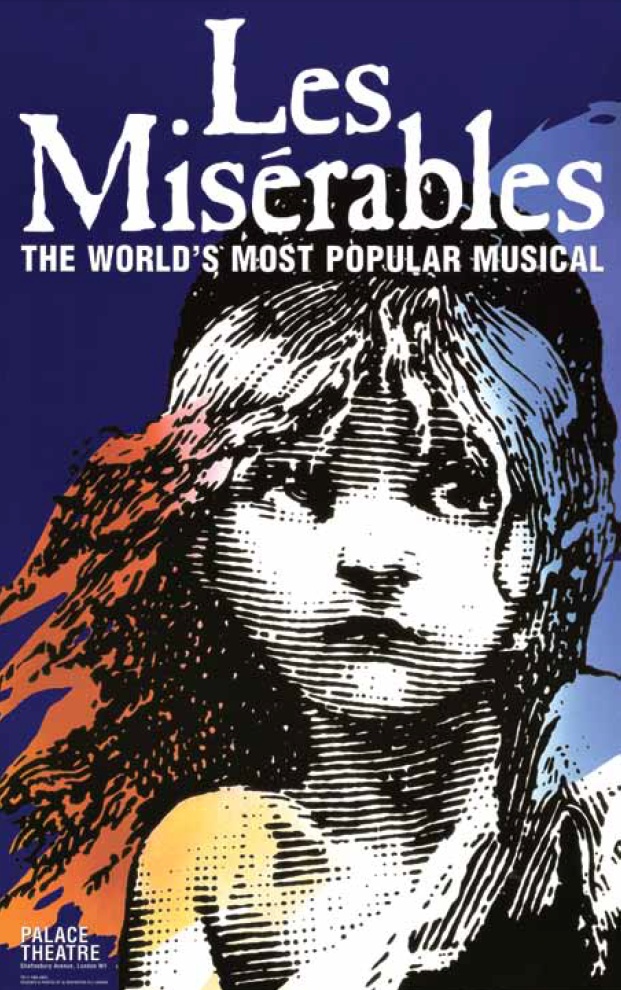
Les Misérables, colloquially known as Les Mis, musical and adaptation of Victor Hugo’s 1862 novel of the same name, by Claude-Michel Schönberg (music), Alain Boublil, Jean-Marc Natel (original French lyrics) and Herbert Kretzmer (English lyrics). The original French musical premiered in Paris in 1980; its English-language adaptation has been running in London since 1985, making it the longest-running musical in the West End. It ran on Broadway from 1987 until 2003 – it had been due to close in March 2003, but a surge of interest postponed its closure until May.

Cats, musical composed by Andrew Lloyd Webber, based upon the 1939 poetry collection Old Possum’s Book of Practical Cats by T. S. Eliot. Cats opened to positive reviews in the West End in 1981 and to mixed reviews on Broadway in 1982. It won numerous awards including Best Musical at both the Laurence Olivier and Tony Awards. Despite its unusual subject matter, the musical turned out to be an unprecedented commercial success. The London production ran for 21 years, closing in 2002, while the Broadway production ran for 18 years, closing in 2000.

Louise and Madeline probably don’t think the costumes for these productions would be great to keep, because in Les Misérables, the costumes are mostly the rags of convicts and peasants, while in Cats, they are cat costumes.

Into the Woods

TEACHER: Oh, I almost forgot to welcome back Brad Langford. He returns to us fresh from Broadway where he’s just completed a successful run of Into the Woods. Welcome back, Brad.

Into the Woods, 1987 musical with music and lyrics by Stephen Sondheim and book by James Lapine. The musical intertwines the plots of several Brothers Grimm fairy tales, exploring the consequences of the characters’ wishes and quests. It won three Tony Awards, and has been produced many times since.

There was a revival of the musical in Los Angeles in February and March 2002, with the same cast that later ran on Broadway. The 2002 Broadway revival began previews on April 13, 2002 and opened April 30, 2002 at the Broadhurst Theatre, closing on December 29 after a run of 18 previews and 279 regular performances.

Adam Wylie, who plays Brad Langford, really was in the cast of Into the Woods, performing the role of Jack. This doesn’t quite fit into the timeline of the show, because Brad last returned to Chilton after a school transfer in late April 2002 – when he would have already been in Los Angeles for two months, and the musical’s main run was just about to begin.

However, it does explain why we haven’t seen him since then. Apparently he wasn’t frightened off by Paris after all – he was having a successful acting career. He has really come along since his first appearance on Gilmore Girls, when he said he couldn’t act in a school play because he got so nervous he threw up. Quite a transformation.

I’m not sure how Brad can take a year off school to do Broadway, and then simply come back to his senior class like nothing happened. Perhaps there was a private tutor attached to the Broadway production??? Also, Into the Woods finished at the end of January and it’s now the end of March – what was he doing for the past two months?