Shaft

LORELAI: I’m going to be so cool in there you will mistake me for Shaft.

John Shaft is a fictional African-American private detective based in New York City. He first appeared in the 1970 detective novel Shaft by Ernest Tidyman, adapted into a film of the same name in 1971 which was directed by Gordon Parks with Richard Roundtree in the title role; Ernest Tidyman was one of the screenwriters. The movie was successful and well-received by both white and black audience members, in large part because of John Shaft’s elegant flair, and the excellent score by Isaac Hayes, which won an Academy Award.

John Shaft detective novels continued being published through the 1970s, and Shaft went on to become a television series from 1973-74, with Richard Roundtree continuing in the role of John Shaft. Two sequels to Shaft were produced in the 1970s.

Shaft came out in June 2000 – not a remake or reboot, but another sequel. In this film, Samuel L. Jackson plays John Shaft II, the nephew of the original John Shaft. It did well at the box office and received generally positive reviews.

Lorelai and Rory could easily have seen the new Shaft the preceding summer, but knowing Lorelai’s love of 1970s cinema, she is probably (mostly) referring to the original film here. The 2000 Shaft soundtrack is R&B and hip-hop – I don’t know if this helps explain Lorelai’s supposed “love of rap” or not.
Freud

LORELAI: You’re going to quote Freud to me? ‘Cause I’ll push you in front of a moving car.

After Luke says it’s not surprising that Rory is attracted to a boy who reminds Lorelai of Rory’s dad Christopher, she believes he might be thinking of Freud.

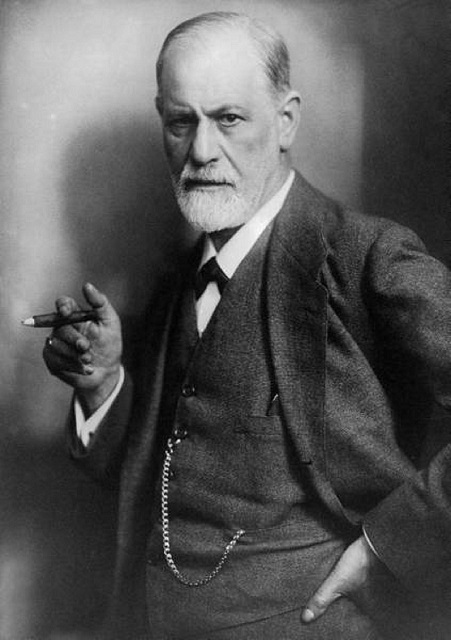
Sigmund Freud (1856-1939) was an Austrian neurologist and the founder of psychoanalysis. The Oedipus complex – named after the play Oedipus Rex by Sophocles – was a theory he coined in 1910, to describe a child’s unconscious sexual desire for their opposite-sex parent. Some modern psychologists broadly agree with his theory, while others find no evidence it exists. Studies apparently suggest that we are more likely to seek partners with vague physical similarity to our parents.

Luke says that he just meant that Lorelai and Rory are quite alike in their tastes, and it shouldn’t come as a surprise they would be attracted to similar men.


Lothario

LUKE: OK. We need to get you out of here.
LORELAI: No. That Lothario over there has wormed his way into my daughter’s heart and mouth and for that he must die!

A Lothario is a man who is an unscrupulous seducer of women. It comes from a character of that name in The Impertinent Curious Man, a story-within-a-story in the 1615 novel Don Quixote by Spanish writer Miguel de Cervantes.

The Crucible

LUKE: I’m not gonna say you look concerned.
LORELAI: I’m not gonna talk about how good you’d look dressed like one of the guys from The Crucible.

The Crucible is a 1953 play by American playwright Arthur Miller. It is a a dramatised version of the Salem witch trials which took place in Massachusetts in 1692-93, the play serving as an allegory of the McCarthy era, when the US government accused people of subversion or treason based on a suspicion of communist sympathies. It won the Tony Award for Best Play in 1953, and has gone on to become a classic of American drama.

The Crucible was adapted into a film in 1996, with Arthur Miller writing the screenplay. Lorelai could easily have seen the film when it came out, if she had never seen it on stage. The Puritan clothing worn by characters in The Crucible remind Lorelai of Thanksgiving Pilgrim costumes.

“Smell a rose”

MRS. KIM: Maybe you should be less busy. Then you can remember to pick up chairs.
LORELAI: Right. Absolutely. Smell a rose, got it.

Lorelai is referring to the cliched advice to “stop and smell the roses”, meaning to slow down and allow yourself to notice and enjoy the beauty of life.

The saying appears to come from golfer Walter Hagen’s 1956 book of golfing memoirs, The Walter Hagen Story. In it he advises his readers: “You’re only here for a short visit. Don’t hurry, don’t worry. And be sure to smell the flowers along the way. ”

It was further popularised by American singer-songwriter Mac Davis, in his 1974 pop song Stop and Smell the Roses, from his album of the same name. Davis got the idea for the song from the bandleader on The Tonight Show, whose doctor had said the phrase to him.

Note the implication from Lorelai that she is so busy she only has time to smell one rose.

“Sing for your supper”

RORY: OK, the whole concept a free soda is that it’s free, you don’t have to work for it.
DEAN: Sorry you gotta sing for your supper.

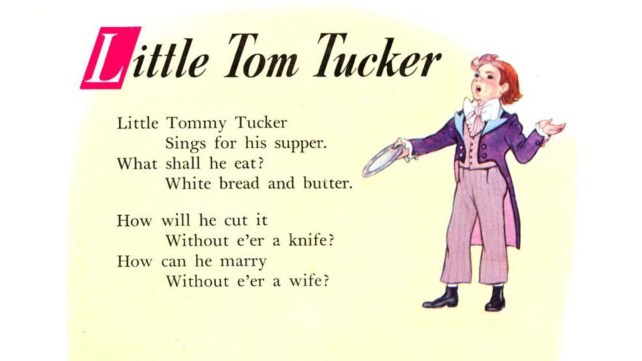
To sing for your supper means to provide a service for someone in order to earn a favour from them. The saying is well known from the 18th century English nursery rhyme Little Tommy Tucker, although it was in use before that.

“My pod’s defective”

TAYLOR: You have lived in Stars Hollow for a long time, young man. It’s time you became one of us.

LUKE: Sorry, I guess my pod’s defective.

A reference to the 1956 sci-fi horror film Invasion of the Body Snatchers, directed by Don Siegel and based on the novel The Body Snatchers by Jack Finney. In the film, residents of a Californian town discover that they are being replaced with exact duplicates of themselves, grown from giant seed pods as part of an alien invasion. The duplicates are devoid of emotion and have no sense of individuality. Ignored by critics on its release, this 1950s political allegory is now considered a classic sci-fi film.

The fact that both Lorelai and Luke use 1950s sci-fi films as a reference in their conversation is a sign of their compatibility. We earlier saw Luke is concerned for the environment, and the environmental message of Invasion of the Body Snatchers, as the pod people are there to use up resources and destroy ecosystems, may have appealed to him.

Kiss and Tell

The episode title is a common phrase referring to betraying secrets, especially sexual ones. The idiom comes from the 1695 play Love for Love by William Congreve, with the quote being: “And if he needs must kiss and tell, I’ll kick him headlong into Hell”.

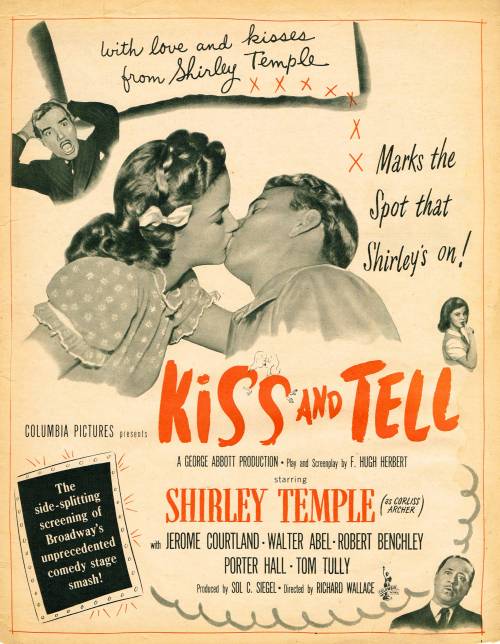
Kiss and Tell is also the name of a 1945 comedy film directed by Richard Wallace and starring Shirley Temple in the lead role of Corliss Archer. It was based on a 1943 Broadway play by F. Hugh Herbert, in turn based on his Corliss Archer short stories; Herbert wrote the screenplay to the film. The movie is about two teenage girls, and the trouble that ensues in their families when they become interested in boys, just as there are ructions when Rory gets a boyfriend.

Freaky Friday

RORY: I’m sorry I snapped at Grandma.
LORELAI: Yeah, huh? That was a pretty Freaky Friday moment we had back there.

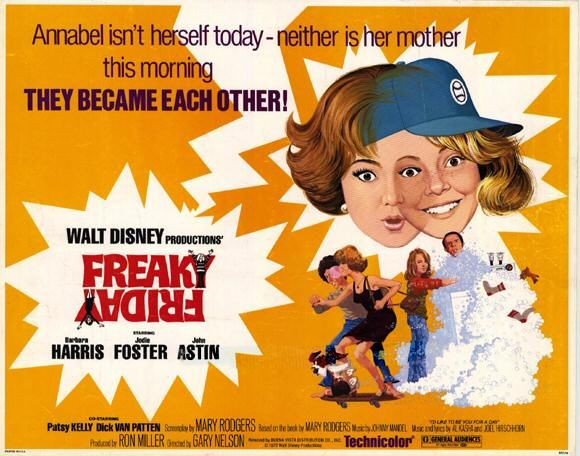
Freaky Friday is a 1976 fantasy-comedy Walt Disney film about a mother and teenage daughter who switch bodies after wishing that they could trade places; the mother and daughter are played by Barbara Harris and Jodie Foster respectively. The film is based on the 1972 novel of the same name by Mary Rodgers, who wrote the screenplay for the movie.

In the movie, the daughter Annabel gains a new understanding of her mother’s life which brings them closer together, just as in this episode Rory gets an insight into Lorelai’s life growing up with Emily, and how difficult that must have been at times.

Lorelai would have been eight years old when Freaky Friday came out. Walt Disney did a made-for-television remake of the film in 1995 when Rory was eleven, so the movie could easily have been part of both their childhoods.

Edith Wharton

EMILY: Well I wanted everything to be perfect. What do you think?
LORELAI: I think Edith Wharton would have been proud, and busy taking notes.

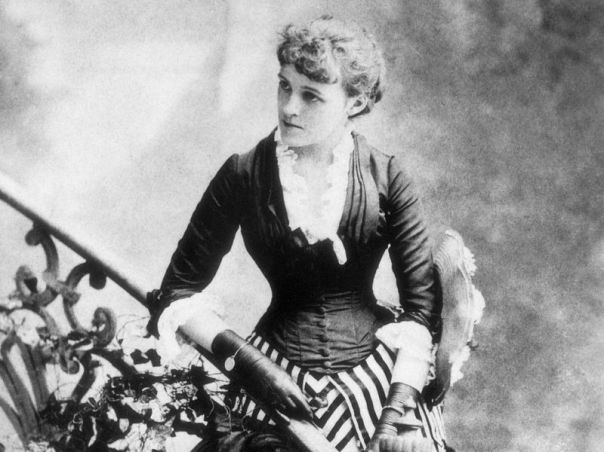
Edith Wharton (1862-1937) was a Pulitzer Prize-winning American author whose work centres on the lives on the American upper classes in the late 19th century. Her novels and stories are noted for their ironic tone, and the critical eye she turns on a world which was fading away. Most of the wealthy people in Wharton’s works lead quietly miserable, empty lives, which is probably a dig from Lorelai at Emily.