PARIS: We’re fencing Rory, not playing patty cake.
Patty cake or Pat-a-cake, a clapping game which accompanies the nursery rhyme, “Pat-a-cake, Pat-a-cake, Bakers Man”. It alternates between a normal individual clap by one person with two-handed claps with the other person. The hands may be crossed as well. This allows for a possibly complex sequence of clapping that must be coordinated between the two.
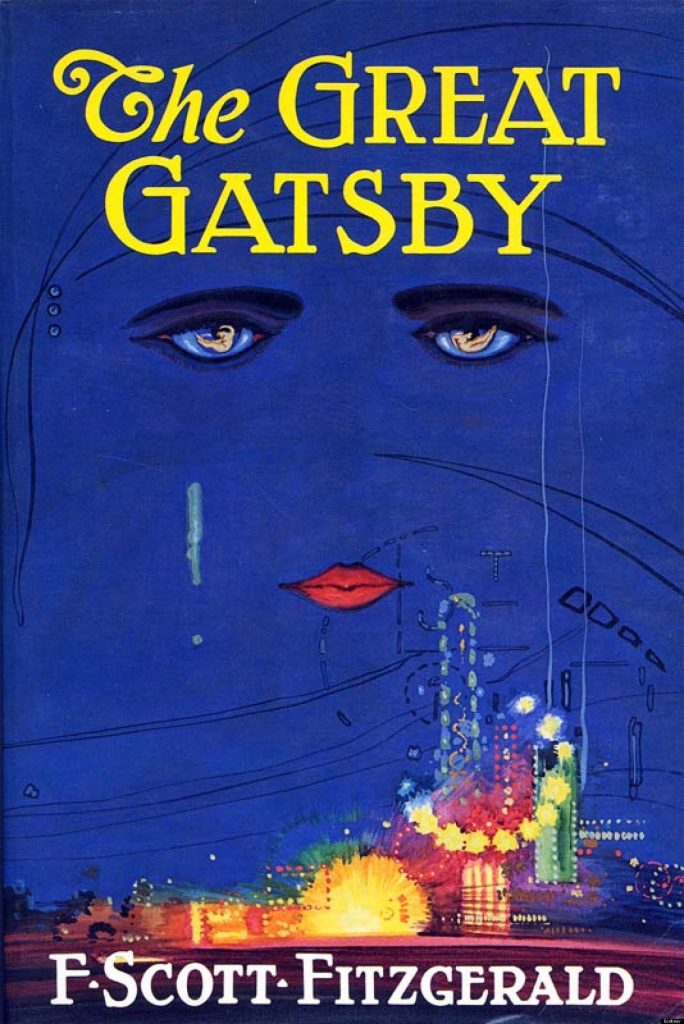
LORELAI: He’s liked you for ten years? … Wow. That is some serious Great Gatsby pining … You’re his Daisy.
The Great Gatsby, 1925 novel by F. Scott Fitzgerald. Set in the Jazz Age on Long Island, near New York City, the novel depicts first-person narrator Nick Carraway’s interactions with mysterious millionaire Jay Gatsby, and Gatsby’s obsession to reunite with his former lover, Daisy Buchanan. The novel was inspired by a youthful romance Fitzgerald had with a socialite named Ginevra King, and the riotous parties he attended on Long Island’s North Shore in 1922.
The novel received generally favourable, if restrained, reviews, but was a commercial disappointment, selling less than 20 000 copies in the first six months. When F. Scott Fitzgerald died in 1940, be believed himself a failure, and his work forgotten.
During World War II, the novel experienced an abrupt surge in popularity when the Council on Books in Wartime distributed free copies to American soldiers serving overseas. This new-found popularity launched a critical and scholarly re-examination, and the work soon became a core part of most American high school curricula and a part of American popular culture. Numerous stage and film adaptations followed in the subsequent decades.
Gatsby continues to attract popular and scholarly attention. Contemporary scholars emphasise the novel’s treatment of social class, and its cynical attitude towards the American Dream. The Great Gatsby is widely considered to be a literary masterwork and a contender for the title of the Great American Novel.
The 1974 film version of The Great Gatsby, starring Robert Redford as Gatsby, featured Richard Hermann, who plays Richard Gilmore, in the minor role of Ewing Klipspringer, the mooching party guest who decides to simply never leave.
PARIS: Any questions, Mr. Christian? I mean, Mr. Hunter.
Paris refers to Fletcher Christian (1764-1793), master’s mate on board HMS Bounty during Lieutenant William Bligh’s voyage to Tahiti during 1787–1789. In the mutiny on the Bounty, Christian seized command of the ship from Bligh on 28 April 1789. Some of the mutineers were left on Tahiti, while Christian, eight other mutineers, six Tahitian men and eleven Tahitian women settled on isolated Pitcairn Island, and Bounty was burned.
Fletcher Christian was portrayed by Clark Gable [pictured] in the 1935 film version and Marlon Brando in the 1962 film version, both adpated from the 1932 novel, Mutiny on the Bounty, by Charles Nordhoff and James Norman Hall.
Paris is saying that Mr Hunter was mutinous in his support of Francine.
PARIS: I knew that suggestion box was a bad idea. Watch Choate get Joan Didion while we’re being read “Eloise at the Plaza”.
Paris refers to Eloise: A Book for Precocious Grown-Ups, a 1955 book by Kay Thompson, illustrated by Hilary Knight. Originally marketed to adults, in 1969 it was released as a children’s book as Eloise, with no changes to the text or illustrations.
Eloise is a mischievous six-year-old girl who lives in the penthouse of the Plaza Hotel in New York City with her nanny, pet pug dog and pet turtle. Thompson based Eloise on an imaginary friend she had in childhood, although it has been speculated that her goddaughter Liza Minelli may have been a possible model. There are several books in the Eloise series, but Eloise never ages. In April 2003, a Disney television film was broadcast called Eloise at the Plaza, with Sofia Vassilieva in the title role.
A fan theory, which you may take with as many grains of salt as you wish, is that Louise was named after the character Eloise. I cannot think of any way that could be confirmed or denied, but it doesn’t seem that implausible. Louise and Eloise both have blonde hair, are rich and spoiled, rather bratty, and have unavailable, neglectful parents.
Kay Thompson died in 1998, so could not have been the commencement speaker, and famously hated her fans, so would be unlikely to agree to it anyway. Hilary Knight is still alive, but it doesn’t seem likely that he would have done it either.
Joan Didion (1934-2021), journalist and author, considered one of the pioneers of New Journalism, along with such figures as Tom Wolfe and Hunter S. Thompson. Didion’s career began in the 1950s when she won an essay contest sponsored by Vogue.
Her writing in the 1960s and ’70s focused on the counterculture, Hollywood lifestyle, and Californian culture and history. In the 1980s and ’90s, her writing concentrated on the subtext of political and social rhetoric. In1991, she wrote the earliest mainstream media article to suggest the Central Park Five, previously discussed, were innocent.
She won the 2005 National Book Award for her memoir about the year following the death of her husband, The Year of Magical Thinking. In premiered as a Broadway play in 2007. In 2013, she was awarded the National Humanities Medal by President Barack Obama.
At this time, Didion had just won the St Louis Literary Prize in 2002, and had recently released her 2001 book of essays, Political Fictions. Her essays on the history and culture of California, Where I Was From, was due to be published in September 2003.
Joan Didion was the first woman to give the commencement address at the University of California in 1975, which is presumably why Paris thinks of her. Her address began with a few charming anecdotes about her own youth, before she launched into a blistering attack on her generation in the 1960s, and its refusal to face up to reality.
A quote from the speech that I think Paris would have warmed to:
“Planting a tree can be a useful and pleasant thing to do. Planting a tree is not a way of life. Planting a tree as a philosophical mode is just not good enough.”
There is no record of her giving a speech at Choate at any time, so it seems as if they didn’t get her after all.
PARIS: Are the [votes] for Princess Diana’s butler jokes or real?
Paris refers to Paul Burrell (born 1958), English former servant of the British Royal Household, and Princess Diana‘s butler from 1987 until her death in 1997.
In 2003 he released a memoir called A Royal Duty, detailing his life as a royal servant, and in particular focusing on Princess Diana, who he claimed had called him “the only man she ever trusted”. Princess Diana’s sons, Princes William and Harry, accused Burrell of betraying their mother’s confidences, and called the book, “a cold and overt betrayal”.
The book didn’t come out until October, but pre-publicity probably went on for a long time before that, as reviewers called it “the long-awaited” memoir. Burrell had also been in the news in November 2002, in court for theft of Diana’s possessions. The case collapsed when he was granted immunity from prosecution by the Crown.
JESS: Like you’re standing with an ax next to a cherry tree.
Jess refers to a popular legend about George Washington – that when he was six years old, he received a hatchet as a gift (mm, great present for a small kid!). He used it to chop down one of his father’s cherry trees, and when his father confronted him angrily, George said something to the effect of, “Father, I cannot tell a lie. I did it with my little hatchet”. Instead of being angry about it, his father warmly praised him for his honesty. He should have been happy the tot didn’t cut his own leg off or something.
The story was published in the 1806 fifth edition of The Life of George Washington by Mason Locke Weems, popularly known as Parson Weems. He claimed to have been told the story by an anonymous elderly woman who was a friend of the family, but there isn’t a shred of evidence that it’s true, and official sources all say it isn’t.
JESS: I can’t concentrate with your annoying midget voice. It’s like having Stuart Little shoved in my ear.
Stuart Little, 1999 live action/computer animation family comedy film directed by Rob Minkoff in his directorial debut with screenplay by M. Night Shyamalan and Greg Brooker, loosely based on the 1945 children’s novel of the same name by E.B. White. The story is about a young anthropomorphic mouse named Stuart Little who is adopted by a couple in New York. The character of Stuart Little is voiced by Michael J. Fox. The film was commercially successful and received positive reviews.
RORY: You wanna play rough, fine. I’ve read The Art of War.
The Art of War, ancient Chinese military treatise dating from roughly 5th century BC. The work, attributed to the military strategist Sun Tzu (“Master Sun”), is composed of 13 chapters. Each one is devoted to a different set of skills or art related to warfare and how it applies to military strategy and tactics.
The Art of War remains the most influential strategy text in East Asian warfare and has influenced both Far Eastern and Western military thinking, business tactics, legal strategy, politics, sports, lifestyles and beyond.
RICHARD: Wonderfully. They’re spoiling me rotten. [takes Emily’s hand] Emily got me the most beautiful humidor. It’s from 1917, and was owned by a lieutenant in World War I.
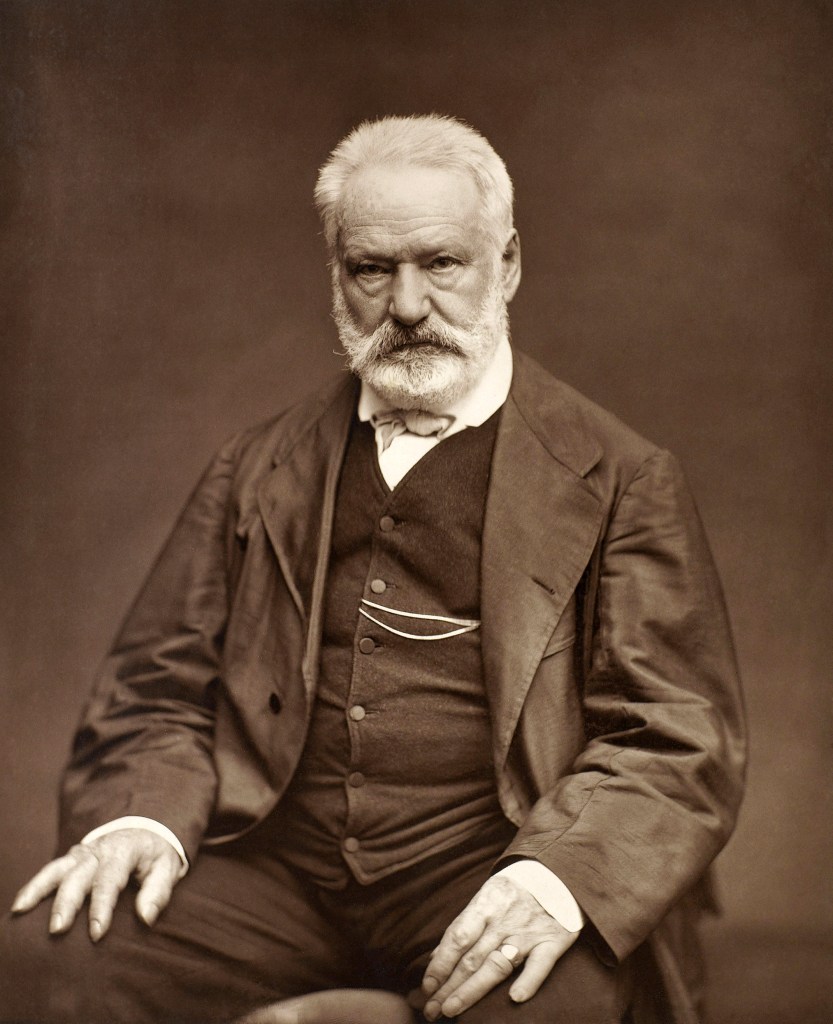
TRIX: You know, your father had a humidor that was owned by Victor Hugo. I still have it if you’d like it.
RICHARD: Well, I’d love it [drops Emily’s hand]
Victor-Marie Hugo (1802-1885), French Romantic writer and politician. During a literary career spanning more than sixty years, he wrote in a variety of genres and forms. He is considered to be one of the greatest French writers of all time. His most famous works are The Hunchback of Notre-Dame(1831) and Les Misérables (1862).
Victor Hugo was a keen smoker, even saying that “Tobacco … converts thoughts into dreams”. I presume he smoked cigars, although it seems pertinent to mention that Victor Hugo is a famous brand of cigars. Is it possible that Richard’s father actually owned a humidor that was made by the company, I wonder? It seems much more likely.
Richard always seems to choose his mother over Emily. Even after he tries to show Trix what a thoughtful gift Emily has chosen for him, he drops her hand and says he’d prefer to have his father’s humidor instead. He can be very hurtful to Emily, and shows her no loyalty when it comes to Trix.







 The Annotated Gilmore Girls