“Tiny fellow on that M*A*S*H* program”

RICHARD: Hm, maybe we should start a tab with them so we don’t have to pay cash everyday.

LORELAI: Already done.

RICHARD: Amazing. You’re like the tiny fellow on that M*A*S*H* program, always anticipating.

M*A*S*H* (an acronym for Mobile Army Surgical Hospital), a war comedy-drama television series set during the Korean War in the early 1950s which aired from 1972 to 1983. It was adapted from the 1970 film of the same name, which in turn was based on the novel MASH: The Story of Three Doctors by Richard Hooker, based on the author’s own experiences as a doctor in a field hospital in Korea.

Richard refers to the character Corporal Walter “Radar” O’Reilly on the TV sitcom M*A*S*H*, portrayed by Gary Burghoff. He seems to have extra-sensory perception, appearing at his commander’s side, with whatever paperwork is required, before being called, and finishing his sentences before the officer is anywhere near the end of them. Young and naïve, Radar tends to look up to his superiors as father figures, something Richard would probably like from Lorelai.

Although M*A*S*H* took a while to find its feet, by its second season it was one of the top 10 programs of the year, and stayed in the top 20 for the rest of its run. Becoming an allegory for the Vietnam War, it is considered one of the greatest TV shows of all time, and is still broadcast in syndication.
Napoleon and Elba

LOUISE: Someone’s not taking to Elba too kindly.

PARIS: What does that mean?

LOUISE: Just that Rory’s the leader of this group, Napoleon, and you’re not.

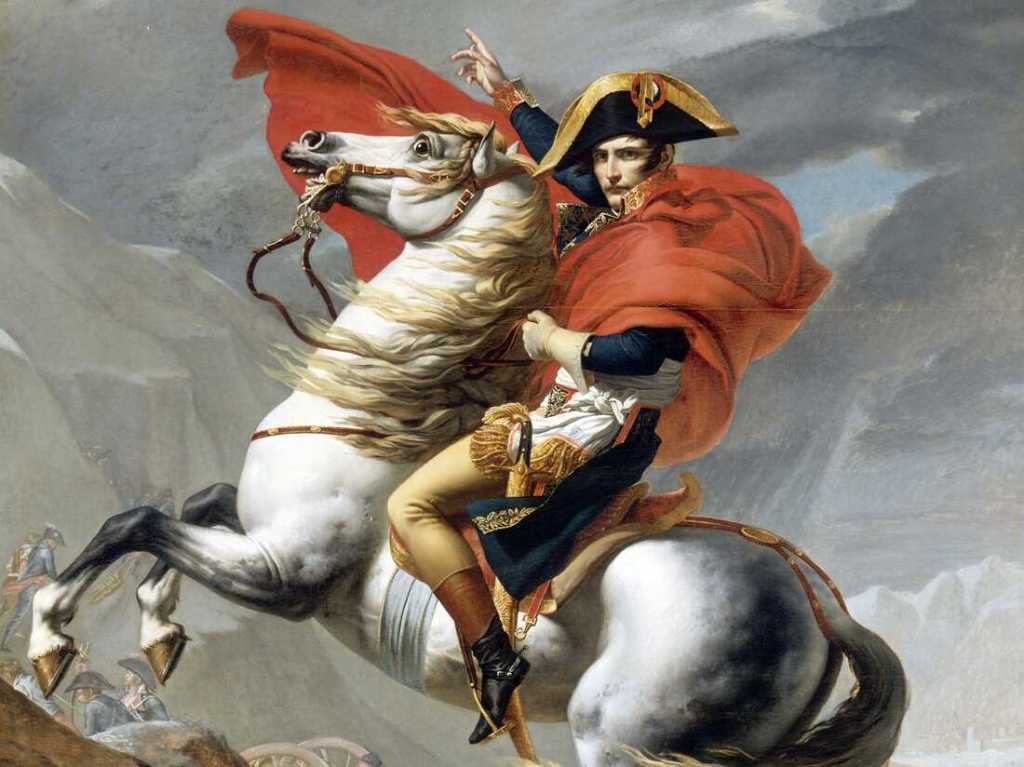
Napoleon Bonaparte, born Napoleone di Buonaparte (1769-1821), French military and political leader who rose to prominence during the French Revolution, becoming Emperor of France in the early 19th century. He was one of the greatest military commanders in history, and his wars and campaigns are studied in military schools worldwide.

After Napoleon was forced to abdicate in 1814 he was exiled to the island of Elba, between Corsica and Italy. Louise is saying that now that Rory is leader of their group, Paris is like a great leader forced into the political wilderness.

In fact, Napoleon didn’t waste his time on Elba, improving the island with his usual energy and vision. He escaped from it nine months later and briefly took control of France again before being defeated at Waterloo. Like Napoleon, Paris is unlikely to languish in the background for too long.

[Picture shows Napoleon Crossing the Alps by Jacques-Louis David (1800)]

Navy Shower

RICHARD: I’ll be right back.

LORELAI: Right back, Dad, like right back. In fact, change on the way upstairs. And make it a Navy shower – quick soap, quick rinse and no excessive posing!

A Navy shower is a method of showering that saves water and energy by turning off the water while lathering, and then turning the water back on to rinse off. The total running time of this kind of shower can last less than two minutes. Navy showers originated on naval ships, where supplies of fresh water were often scarce.

In US naval parlance, the opposite of a Navy shower is a Hollywood shower, which is a long shower that uses up a lot of water – I think this is what Lorelai is referring to when she says “no excessive posing” (like a movie star posing for photographs).

Most likely, Lorelai talks about a Navy shower because Gomer Pyle, previously mentioned in this episode, became the star of his own show, Gomer Pyle, U.S.M.C., which ran from 1964 to 1969. In this spin-off sit-com, the good-hearted Gomer Pyle joins the Marines, where he exasperates his drill sergeant with his frequent mistakes and misunderstandings.

Geneva Convention

LORELAI: You know, you’re bound by the rules of the Geneva Convention, Mother, just like everyone else.

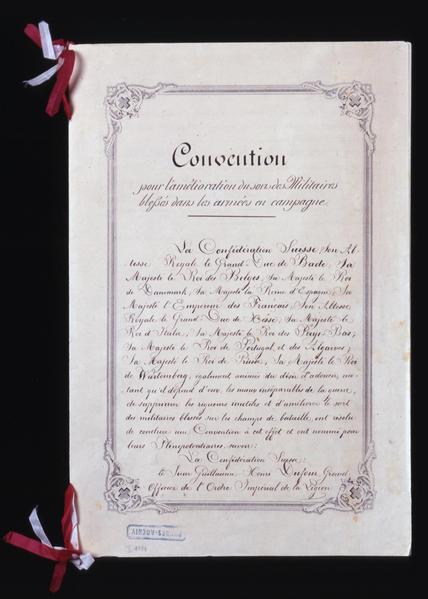
The Geneva Conventions are treaties and protocols that establish international legal standards for humanitarian treatment during war. The singular Geneva Convention refers to the agreements of 1949, negotiated in the aftermath of World War II. Lorelai melodramatically compares her being asked to wait for a meal to someone being tortured during wartime.

“One if by Land”

TROUBADOUR #2: Hey Taylor, cool threads. Very “One if by Land.”

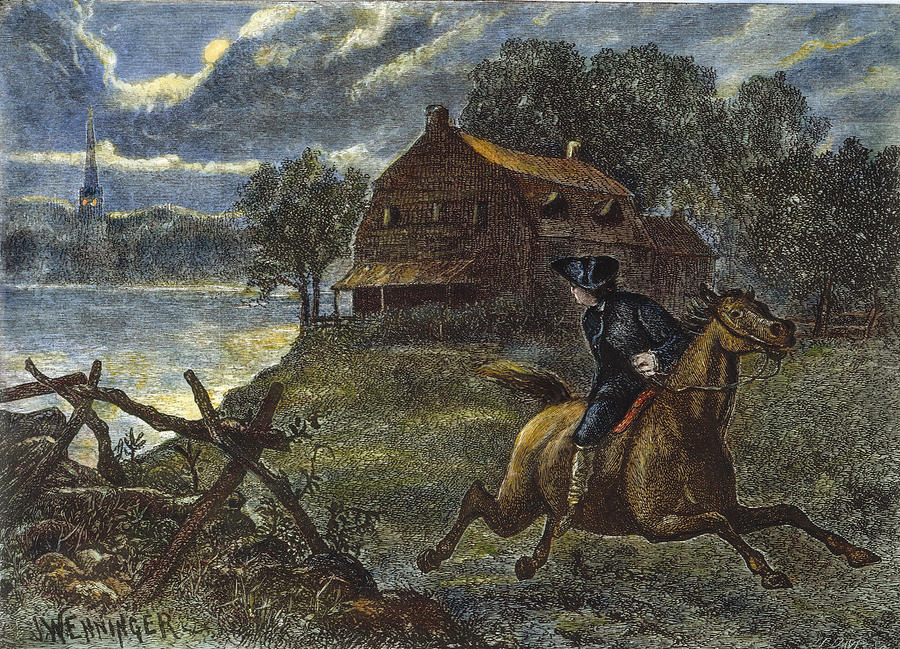
A phrase from the poem Paul Revere’s Ride, by Henry Wadsworth Longfellow, previously mentioned. It was a reference to the secret signal orchestrated by Revere during his historic ride from Boston to Concord on the verge of American Revolutionary War.

The signal was meant to alert patriots about the route the British troops chose to advance to Concord, with one lantern on a church steeple to signify they were coming the longer way, over land, while two lanterns meant they were coming the shorter way, by sea.

Despite its importance in the cultural landscape, the lantern signals were only a back-up plan if the messenger was not able to get through, but Paul Revere did manage to leave Boston safely to make his historic ride. The popular myth was that the lanterns, now redundant, were intended for Revere, waiting for the signal across the river.

Bye, Bye, Birdie

JESS: It’s really that big a deal?
RORY: What do you mean?
JESS: I mean, I know it’s got an ‘I’ve been pinned’ Bye Bye Birdie kind of implication to it, but it was just a bracelet.

Bye Bye Birdie, 1963 musical comedy film directed by George Sidney, based on the award winning 1960 Broadway musical of the same name, with music by Charles Crouse, lyrics by Lee Adams, and book by Michael Stewart.

Set in 1958, the story was inspired by Elvis Presley’s draft into the US army in 1957. Jesse Pearson plays Conrad Birdie, a teen idol based on Elvis, his name a play on Conway Twitty, Presley’s rival at the time.

Conrad Birdie is giving a farewell performance in Columbus, Ohio, to end with his song, “One Last Kiss”. It is arranged for him to kiss a randomly chosen high school girl at the end of the song before going into the army. The teenager chosen is Kim MacAfee (played by Ann-Margret) from the town of Sweet Apple, but Kim’s boyfriend Hugo Peabody (played by Bobby Rydell) isn’t thrilled, as he and Kim have got “pinned” – he’s given her his fraternity pin to wear, indicating a serious commitment between them. When Birdie kisses Kim in a rehearsal, she swoons.

Elvis Presley himself was the first choice for the role of Birdie, but his manager Colonel Tom Parker wouldn’t allow it. The film helped make Ann-Margret such a star that in 1964 she appeared with Elvis himself in Viva Las Vegas.

Jess is saying that Rory and Dean are the small-town teenage sweethearts, and he is the sexy outsider. It seems slightly egotistical, and a bit demeaning to Rory, as if he has randomly chosen her for a meaningless encounter; it strongly suggests Jess doesn’t intend to stick around.

The film ends with Hugo knocking Birdie out before he can kiss Kim on stage, which might be what Jess is expecting from Dean – that he’ll punch Jess before he gets a chance with Rory. In the stage musical, the story continues with Kim going off to hang out with Birdie, and he is arrested for attempted statutory rape. Kim claims to have been intimidated by Birdie, and gladly returns to Hugo.

Quite a few warnings for Rory in this apparently casual reference! Foreshadowing, on multiple levels.

The reference to Birdie being about to go into the army makes me wonder if this reference was originally meant for Tristan, who went off to military school. Jess is much more of a Birdie than Tristan, however.

Shipping Off to ‘Nam

DEAN: Don’t go.
JESS: Oh geez man, she’s not shipping off to ‘Nam.

Jess sardonically compares Dean’s distress over Rory going on a picnic with him to someone being sent to the Vietnam War (1955-1975).

Although the US had been involved since World War II in a very limited capacity, the first US ground troops arrived in Vietnam in 1965, reaching a peak in 1969, by which time more than half a million Americans were stationed in Vietnam. This was also the year in which the dreaded draft lottery began, where young men were called up for service based on their birthdate.

Opposition to the war played a key role in sparking the Civil Rights Movement and the hippie counterculture, as well as wide-ranging changes in popular culture. The last American troops pulled out of Vietnam in 1973, by which time there had been more than 58 000 US casualties.

Minutemen

TAYLOR: Ladies and gentlemen, I give you the new uniforms of the fabulous fighting Minutemen.

The Stars Hollow basketball team is called the Minutemen. They are patriotically named after the Minutemen from American history – civilian colonists who independently formed their own militia groups during the American Revolutionary War, so called because they were ready to fight at a minute’s notice. They were among the first to fight during the war, comprising perhaps a quarter of all troops. Generally young, they provided a highly mobile, rapidly deployed force that could respond immediately to threats.

We knew of the Minutemen way back in Series 1, Episode 1, in the Pilot. When Rory is talking to Dean for the first time at school, there is a sign outside the high school saying Go Minutemen, listing them as the champion team of the 1997-98 season.

Biloxi Naval Base

LORELAI: So it was the uniform, huh?
MISS PATTY: Aw, it’s the Biloxi Naval Base all over again.

Biloxi is a coastal city in Mississippi. There isn’t actually a naval base there – there’s a military base for the air force though. Miss Patty might be thinking of the Naval Construction Battalion Center in nearby Gulfport, about ten miles further down the coast – the cities are so close that they share the same airport, and other facilities, and the air force and naval bases are close together.

Both these military bases provided training to new recruits in the second half of the twentieth century, beginning in World War II. It’s possible that Miss Patty, who seems to have been a New Yorker before she moved to Stars Hollow, entertained the troops at one or both of these bases, perhaps during the Vietnam War, when she would have been in her early twenties.