Bohemian Rhapsody

LANE: Once, a guy in our town named Kirk was practicing “Bohemian Rhapsody” with his band, the Kirk Gleason Five, and my mom shut them down so fast that the band fled without their instruments and never came back for them. To this day, Kirk can’t listen to Queen without tearing up.

“Bohemian Rhapsody”, a 1975 song by English rock band Queen, previously discussed, released as a single from their fourth album, A Night at the Opera. Written by lead singer Freddie Mercury, it is a complex six-minute suite, one of the few progressive rock songs of the 1970s with mainstream appeal that to achieved widespread commercial success.

Initial critical reaction to the song was mixed, with the UK music press disdainful or indifferent. Several of them, even ones who disliked it, did predict it would be a hit, and it went to #1 in the UK, and several other countries. It went to #9 in the US. It is now one of the most revered rock songs in history, and “Bohemian Rhapsody” was inducted into the Grammy Hall of Fame in 2004. It is consistently voted in by the public as a favourite song, and is regarded as one of the greatest songs of all time.

“Bohemian Rhapsody” enjoyed renewed popularity after it featured in the 1992 comedy film Wayne’s World, and went to #2 in the US (most popular in the Netherlands at #1). Chances are that Kirk and his band discovered the song through the movie.

Lawrence Welk

ZACK: Dude, Lawrence Welk cranked louder than this.

Lawrence Welk (1903-1992), accordion player, bandleader, and host of The Lawrence Welk Show on TV from 1951 to 1982. His style of music became known as champagne music, that is, light and bubbly. He had numerous hits, the most popular being “Calcutta”, which went to #1. For many years, he was a byword for “lame old people music”.

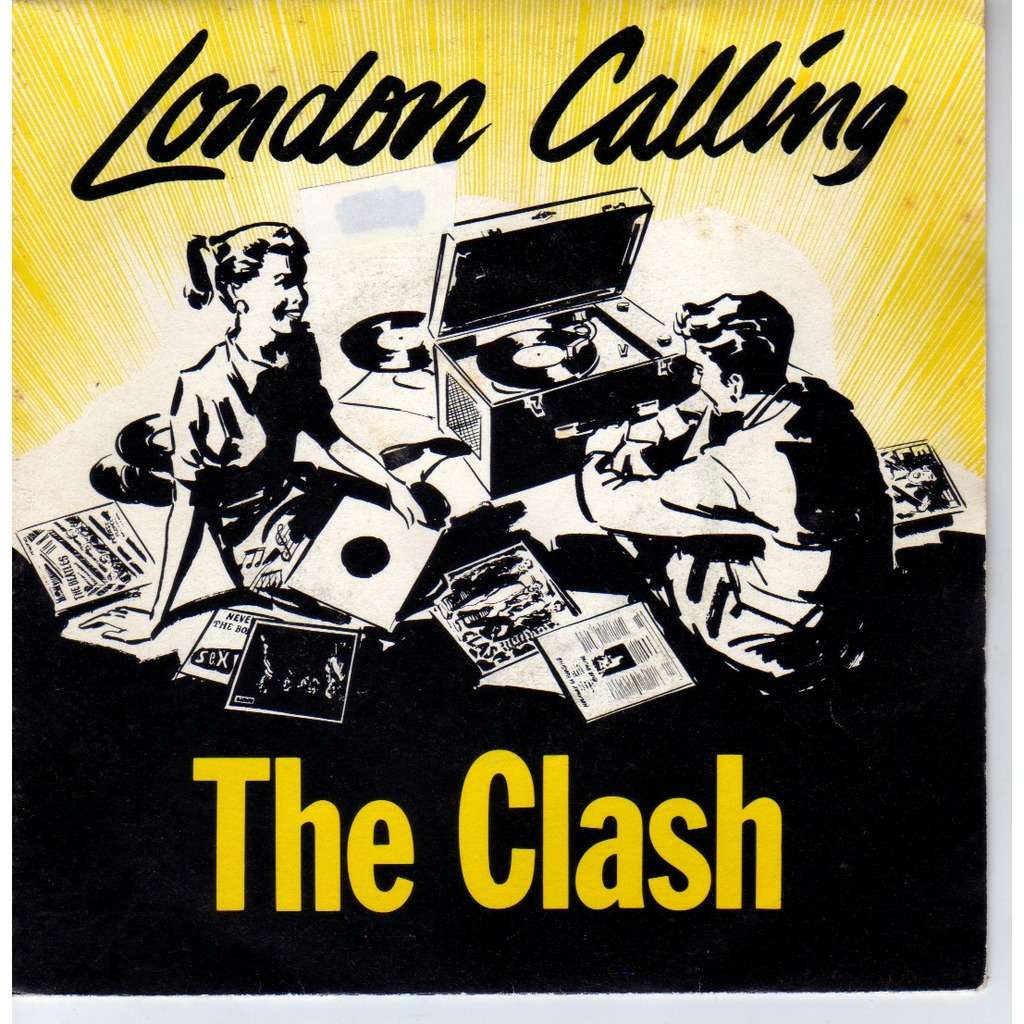
London Calling

The song that Lane’s band is rehearsing at band practice. Zack (very quietly) sings the song’s opening lyrics:

London calling to the faraway towns
Now war is declared and battle come down
London calling to the underworld
Come out of the cupboard, you boys and girls

“London Calling” is a 1979 song by English punk band The Clash, previously discussed. It is the title track from the band’s third album, a double album, written by Joe Strummer and Mick Jones. The song’s title comes from the BBC’s World Service station identification, “This is London calling …”, used during World War II, especially in broadcasts to occupied countries. The lyrics reflect the band’s concerns with world events, such as nuclear disaster, flooding, police brutality, and casual drug use. The song ends with the Morse code signal for S-O-S, to reiterate the sense of urgency.

The song went to #11 in the UK, becoming their highest-charting single to that point. It didn’t chart in the US, but was the first song by The Clash to chart outside the UK, reaching the Top 20 in Ireland and Top 30 in Australia and New Zealand. The song is regarded by many critics as the band’s finest, and it is consistently rated as one of the greatest rock songs of all time.

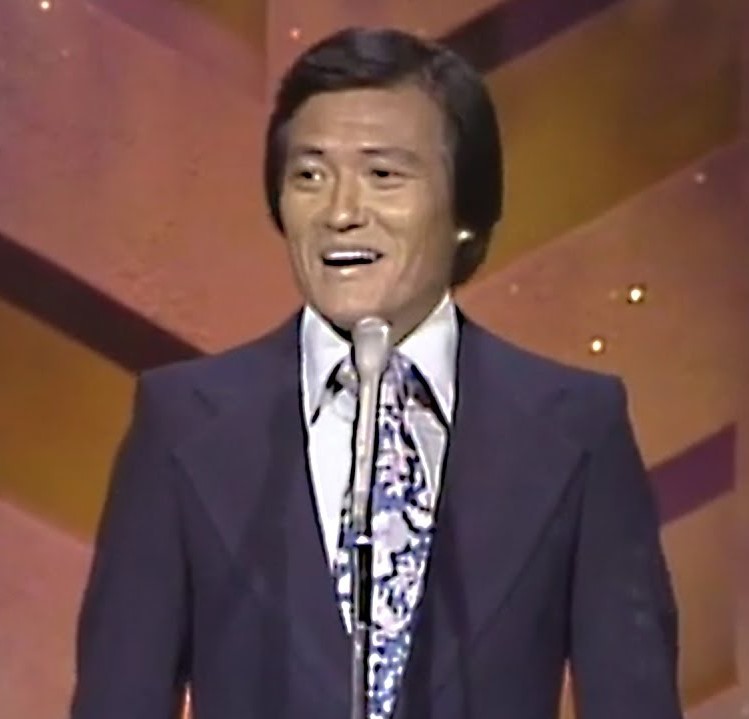
Johnny Yune

LANE: We practice for two hours, I’m home in time to watch reruns of Johnny Yune’s talk show on Korean television with my mom, who thinks I hooked up with you guys – which I did, so I’m not even lying.

Johnny Yune, born Yoon Jong-seung (1936-2020), Korean-American actor, singer, and comedian. He began performing stand up in 1964, and got his big break appearing on The Tonight Show With Johnny Carson in 1979. He was one of the show’s most frequent comedy guests. He is best known for playing the lead role in the 1980s comedy films, They Call Me Bruce, and They Still Call Me Bruce.

From 1989-90, he hosted The Johnny Yune Show, the first Americanised talk show in Korea The show was a hit, but after only a year, Yune decided to leave due to limited freedom of the media.

Mrs Kim is watching reruns of his talk show on KBS America, the local platform for Korean Broadcasting System, South Korea’s national broadcaster.

Band Practice

LANE: Hello Stars Hollow, are you ready to rock?

LORELAI: Let me guess, band practice tonight?

Lane was given permission by Sophie to use the music store to practice drumming two evenings a week, on Wednesdays and Fridays at 6 pm (evenings when she knew her mother would be out doing church activities). Lane is now really pushing that generous offer by finding a band that needs a drummer and letting them use Sophie’s music store as a free rehearsal space! It sounds like a pretty awful way to repay Sophie, but maybe Lane already fixed this up with Sophie offscreen. I hope so.

You may be wondering whether this episode starts on a Wednesday evening – it can’t be Friday, because Lorelai and Rory are having dinner at the diner, instead of heading off to Hartford for Friday Night Dinner with Richard and Emily. It appears to be a Saturday, oddly enough, so perhaps Lane also got Sophie to agree to a third evening of band practice per week. How Sophie would have agreed to all these changes to the orginal agreement, I don’t know.

This scene shows how happy Lane is to finally be in a band and playing music, she is absolutely radiating joy as she bounces into the diner and starts eating Rory’s dinner. Lane isn’t making any effort to keep her activities a secret, and even though Stars Hollow is super gossipy, she doesn’t seem worried about Mrs Kim finding out. Maybe that’s how confident she feels now she’s actually living her dream.

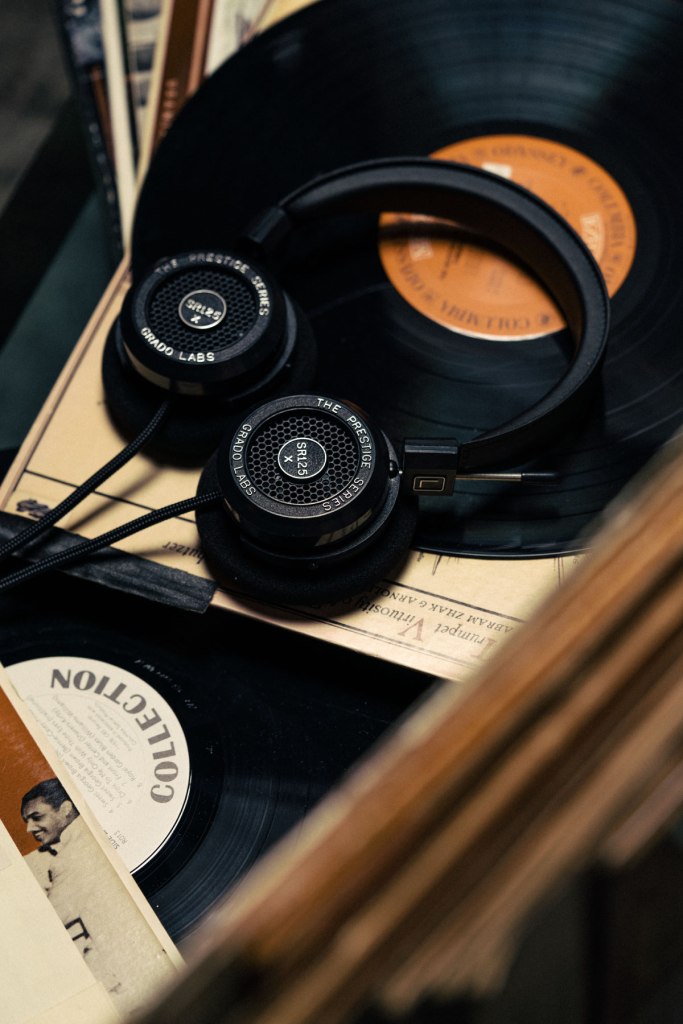
Headphone Amp, Grado 125s

DAVE: Well, this is a headphone amp and it just boosts the volume and makes the clarity off the hook, and then these are Grado 125s, which is just really, killer, killer portable sound.

A headphone amplifier, or headphone amp, is a low-powered amplifier that raises the low-voltage signal from an audio device so that it can be converted into sound waves by the speakers inside headphones. It works like the amps used to power full-sized speakers at a lower scale.

Grado 125s [pictured] are headphones made for the home market by Grado Labs in Brooklyn. They are stylish, reasonably priced, and good quality, but apparently not very comfortable to wear.

Demo, Drum Machine

DAVE: I can play you a song we demo’d a couple weeks ago using a drum machine.

A demo (short for demonstration) is a song or group of songs recorded by a band that can be handed on to record labels, producers, or other artists. Bands also record demos for their own use and reference.

A drum machine [pictured] is an electronic musical instrument that creates percussion sounds, drum beats, and patterns. Drum machines may imitate drum kits or other percussion instruments, or produce unique sounds, such as synthesised electronic tones. A drum machine often has pre-programmed beats and patterns for popular genres and styles, such as pop music, rock music, and dance music. They have been commonly in use since 1980.

Dave’s band obviously used a drum machine on their demo because they didn’t have a drummer – now they do.

The Clash, The Kinks

LANE: So, um, what’s your band like?

DAVE: We do a lot of cool covers – uh, the Clash, the Kinks, et cetera.

The Clash, English rock band formed in 1976, previously mentioned. Billed as “The Only Band That Really Matters”, they were key players in the original wave of British punk rock, contributed to the post-punk and new-wave movements, and used elements of a range of genres, including reggae, funk, and rockabilly. Their classic line-up was Joe Strummer (lead vocals, rhythm guitar), Mick Jones (lead guitar, vocals), Paul Simonon (bass), and Nicky “Topper” Headon (drums). The Clash achieved critical and commercial in the UK with their first two albums The Clash (1977) and Give Them Enough Rope (1978). Their third album, London Calling, gained them success in the US; released in 1979 in the UK, it was released in 1980 in the US and was named the best album of the 1980s by Rolling Stone. Combat Rock (1982) was even more successful in the US. The band broke up in 1986. The Clash were inducted into the Rock and Roll Hall of Fame in 2003, shortly after the death of Joe Strummer. They are regarded as one of the best bands of all time.

The Kinks [pictured], English rock band formed in 1963 by brothers Ray and Dave Davies. Regarded as one of the most influential bands of the 1960s, they emerged during the period of British R&B and Merseybeat, and were briefly part of the British Invasion of the US, until they were banned from touring in America in 1965 because of their rowdy on-stage behaviour. Their 1964 single “You Really Got Me”, became an international hit, going to #1 in the UK and Top 10 in the US. The Kinks have had numerous hit singles in both the UK and US, and among numerous honours received the Ivor Novello Award for “Outstanding Service to British Music”. The original members of The Kinks were inducted into the Rock and Roll Hall of Fame in 1990, and the UK Music Hall of Fame in 2005.

Malcolm in the Middle, the Butthole Surfers

DAVE: Or maybe Malcolm in the Middle fronting for the Butthole Surfers.

Malcolm in the Middle [pictured], sitcom which ran from 2000 to 2006. It stars Frankie Muniz as the title character Malcolm, one of four sons (later five) in a comically dysfunctional lower middle-class family. When Malcolm’s oldest brother is sent to military school, that leaves Malcolm as the middle child of the three boys still at home. Malcolm is an adolescent with a genius IQ of 165, forced into special classes for gifted children that are made fun of by the other students. The show was critically acclaimed and highly influential.

Francisco “Frankie” Muniz (born 1985) was one of the most popular teen actors at the height of his career. He gave up acting in 2008 to pursue a career in open-wheel car racing. From 2012 to 2014, he was the drummer for indie rock band Kingsfoil, so he did actually end up in a band.

Butthole Surfers, rock band formed in San Antonio, Texas in 1981 by singer Gibby Haynes and guitarist Paul Leary. Emerging from the 1980s hardcore punk scene, Butthole Surfers quickly became known for their chaotic live shows, black comedy, and a sound that incorporated elements of psychedelia. Although respected and with a loyal fan base, Butthole Surfers had little commercial success until their 1996 album Electriclarryland, containing the hit single “Pepper”, which went to #1.

“Urkel joining the Wu-Tang Clan”

LANE: Yeah, what’s next – Urkel joining the Wu-Tang Clan?

Steven “Steve” Urkel [pictured], fictional character from the sitcom Family Matters, which aired from 1989 to 1998. The sitcom revolved around a middle-class African-American family called the Winslows who lived in Chicago, and Steve Urkel was their nerdy neighbour. Originally scripted as a one-off character, he proved so popular that he quickly became part of the regular cast, and eventually, the main character.

The charter was portrayed by actor Jaleel White (born 1976). He has gone on to have a successful career in film and television, as well as bringing out his own strain of cannabis products called Purple Urkel.

Wu-Tang Clan, previously discussed.