LORELAI: My mother will be there, too. She’s terrific . . . All right, I’ll see you this weekend . . . Mm, bye. [hangs up]
RORY: You’re no Danny Gans.
Daniel “Danny” Gans (1956-2009), singer, comedian, and vocal impressionist. He was a performer in Las Vegas since 1996, billed as “The Man of Many Voices”, and was named Las Vegas Entertainer of the Year for ten years in a row until 2008.
LORELAI: [on answering machine] Hey, you’ve reached Suffragette City, and if you’re calling about Lane Kim’s ad, sorry we’re not in, but don’t commit rock and roll suide – just crank a message with some feedback.
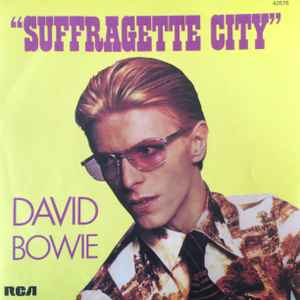
“Suffragette City”, 1972 glam rock song by David Bowie. Originally released as the B-side to “Starman”, and appeared on the classic album The Rise and Fall of Ziggy Stardust and the Spiders from Mars. It was re-released as a single in the US in 1976, where it failed to chart. Influenced by Little Richard and The Velvet Underground, it references Anthony Burgess’ novel A Clockwork Orange, and contains the famous line, “Oooohh wham bam, thank you, ma’am”. Acclaimed by music critics, it is considered one of Bowie’s greatest songs.
“Rock ‘n’ Roll Suicide”, 1972 song by David Bowie, the closing track to The Rise and Fall of Ziggy Stardust and the Spiders from Mars. Bowie suggested the poet Baudelaire and James Brown as inspirations for the song, although it appears to reference a poem by Manuel Machado and a song by Jacques Brel. It has been described as an avant-garde show song. Released as a single in 1974, it got to #22 in the UK.
TAYLOR: I’m telling you, Luke, if we don’t quickly furnish these skateboarding Z-boys with a moral distraction, they’re gonna turn Stars Hollow into Dogtown.
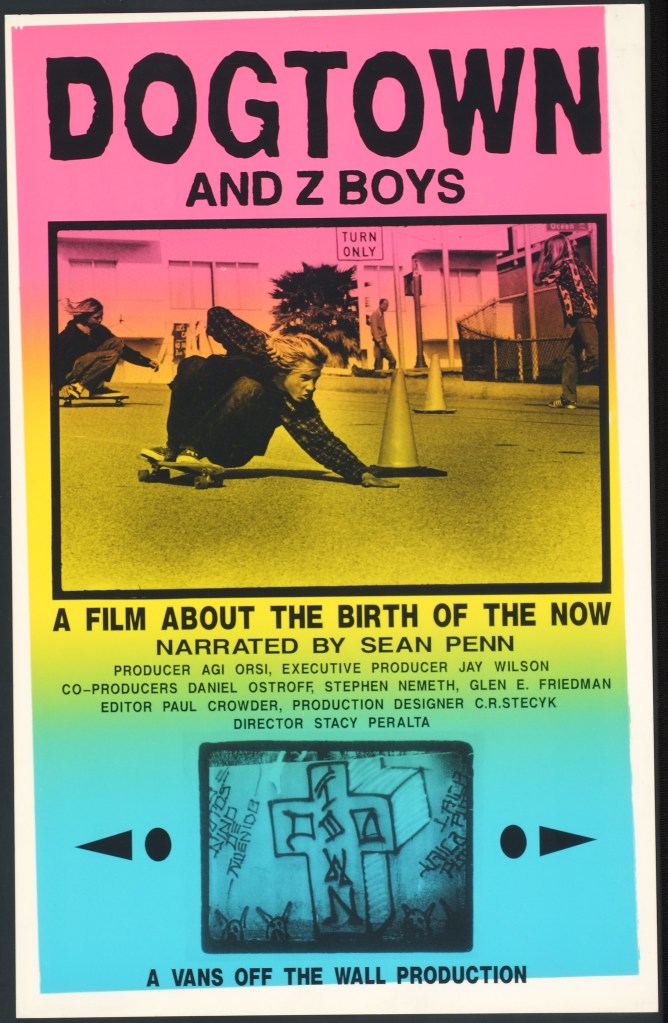
Taylor refers to the 2001 documentary, Dogtown and Z-Boys, directed by Stacy Peralta and narrated by Sean Penn. It explores the pioneering Zephyr skateboarding team in southern California of the 1970s (of which Peralta was a member), using archival footage, contemporary interviews, and a rock and roll soundtrack. The documentary received good reviews, and won two awards at the Sundance Film Festival, as well the Independent Spirit Award for Best Documentary. It was also a commercial success, making over a million dollars at the box office by 2002, and selling almost 2 million videos and DVDs by 2004.
I can only speculate that Taylor watched the documentary in order to familiarise himself with the horrors of youth culture – a sort of “know your enemy” information session. It clearly gave him a disturbing glimpse into what depths Stars Hollow could sink without his intervention.
LANE: You are not telling me that you did not know that Kim Deal was in the Pixies before the Breeders! I refuse to accept that! [hangs up] These kids have no sense of history.
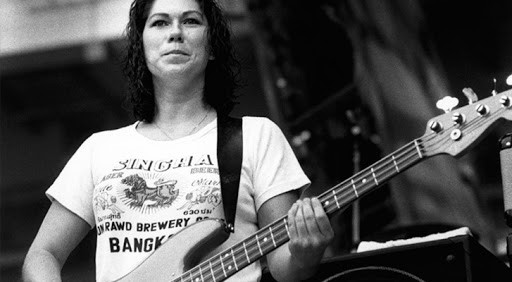
Kimberley “Kim” Deal (born 1961), singer-songwriter and multi-instrumentalist. She was the bassist and co-vocalist in alternative rock band Pixies, previously discussed, joining in 1986. During the band’s hiatus, she formed the alternative rock band the Breeders in 1989. After the Pixies broke up in 1993, she returned her focus to the Breeders, who themselves went into hiatus in 1994, during which time Deal formed the short-lived rock band the Amps, performing under the name Tammy Ampersand. She reformed the Breeders in 2002, then returned to the Pixies when the band reunited in 2004. In 2013, she left the Pixies to concentrate on the Breeders, who released their fifth album, All Nerve, in 2018.
One of the reasons the person on the phone may not have known that Kim Deal was previously in the Pixies is because she performed under the stage name Mrs John Murphy while in the band.
Lane is not just looking for any band to drum for – it needs to be a band who shares her obsession with alternative rock and indie music, and knows their music history.
LORELAI: Hey, maybe instead of going to college, you should drop out and I could quit my job and we can form an all-girl band with Lane, you know, like Bananarama.
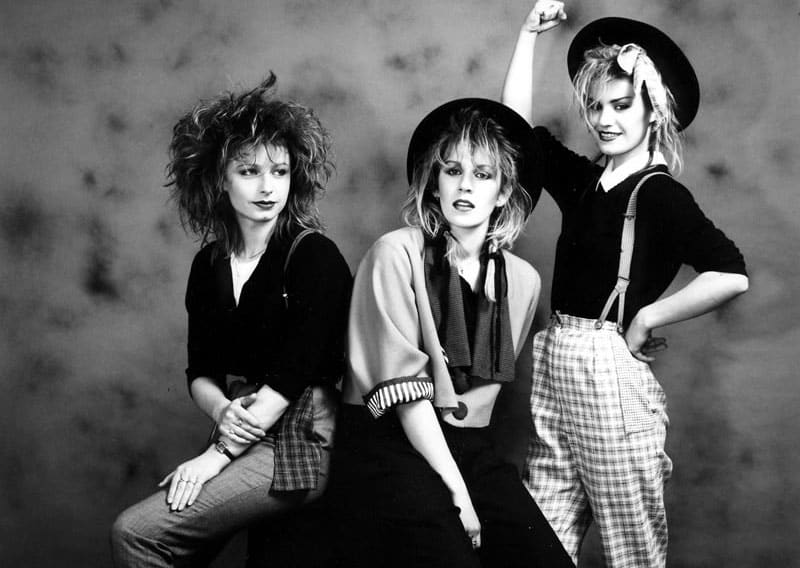
Bananarama, English pop group, formed in 1980 by Sara Dallin, Siobhan Fahey, and Keren Woodward. Their success on both pop and dance charts saw them listed in the Guinness World Book of Records for achieving the world’s highest number of chart entries by an all-female group. Between 1982 and 2009, they had 30 singles reach the Top 50 of the UK Singles Chart, including “Shy Boy” (1982), “Cruel Summer” (1983), and “Robert de Niro’s Waiting” (1984). They performed on the 1984 charity record, “Do They Know It’s Christmas?”. They had eleven singles reach the top 10 in the US, including their #1 hit, a cover of “Venus”, (1986).
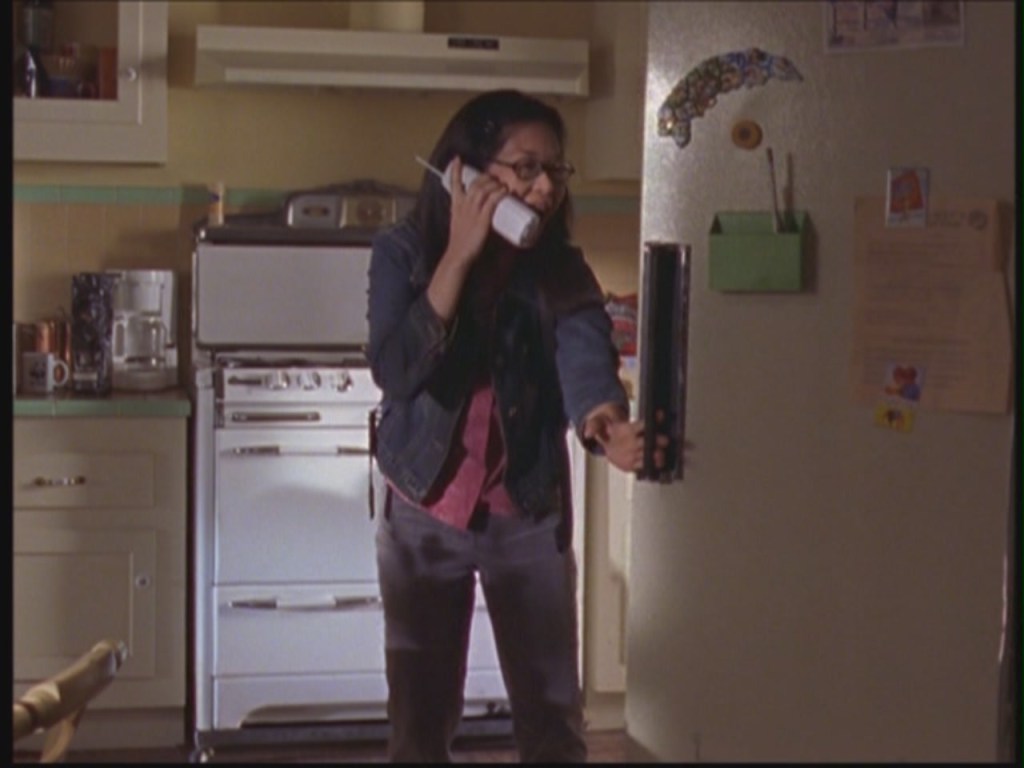
LANE: [on phone] I mean, I contend that you can draw a straight line from Yes to Jethro Tull to The Jam to Nirvana, bing bang boom . . . Who are the Jam? [to Rory and Lorelai] That’s disturbing.
Yes: English progressive rock band formed in 1968 by lead singer and frontman Jon Anderson, bassist Chris Squire, guitarist Peter Banks, keyboardist Tony Kaye and drummer Bill Bruford. It has had numerous lineup changes since then. Yes have explored several musical styles over the years and are regarded as progressive rock pioneers. They had a move towards more commercial, pop-oriented rock, and had their highest-selling album in 1983, 90125, with its #1 single, “Owner of a Lonely Heart”. Yes are one of the most successful, influential, and longest-lasting progressive rock bands, selling tens of millions of records, winning a Grammy, and being inducted into the Rock and Roll Hall of Fame in 2017.
Jethro Tull: British rock band formed in 1967, and forging a signature progressive rock sound. The group’s bandleader, founder, primary composer and only constant member is Ian Anderson (no relation to Jon Anderson), a multi-instrumentalist who mainly plays flute and acoustic guitar, and is also the lead vocalist. Their first commercial success was Stand Up (1969), which went to #1 in the UK, while Thick as a Brick (1972) is regarded as a classic. They have sold 60 million albums, won a Grammy, and are one of the most commercially successful and eccentric progressive rock bands of all time.
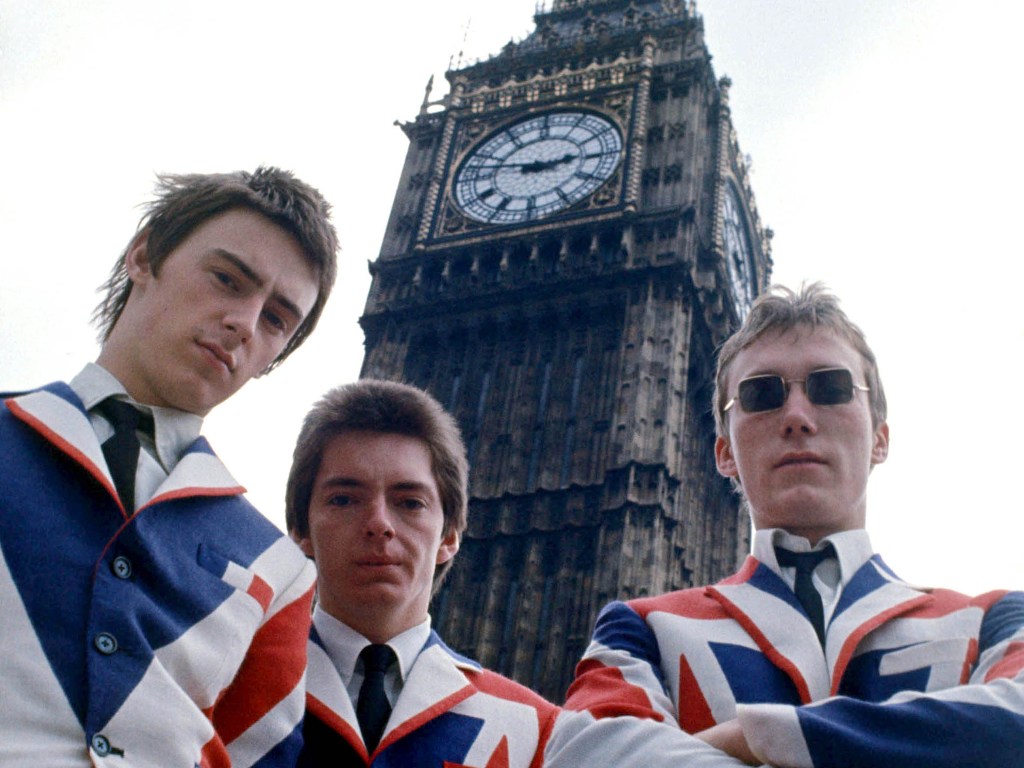
The Jam [pictured]: English mod revival and punk rock band which formed in 1972, led by Paul Weller on bass and lead vocals, and broke up in 1982. While The Jam shared the angry social protest and fast tempo of punk, they wore tailored suits and were influenced by 1960s bands such as The Who and The Kinks, as well as Motown, and were at the forefront of the Mod Revival movement in the UK. They released six studio albums, and had eighteen consecutive Top 40 singles in the UK, of which “Going Underground”, “Start!”, Town Like Malice”, and “Beat Surrender” all went to #1. The guy on the phone hasn’t heard of The Jam, because they broke up twenty years earlier, and were not well known in the US – their biggest hit there was “Town Like Malice”, which got to #31.
Nirvana: Rock band founded in 1987 in Aberdeen, Washington, by lead singer and guitarist Kurt Cobain, previously discussed, and bassist Krist Novoselic; Dave Grohl, previously mentioned, was recruited as drummer in 1990. They established themselves as part of the Seattle grunge scene and found unexpected mainstream success with “Smells Like Teen Spirit”, the first single from their landmark second album Nevermind (1991). Nirvana’s success popularised alternative rock, and they were often referenced as the figurehead band of Generation X. Their music maintains a popular following and continues to influence modern rock culture. Nirvana is one of the best-selling bands in the world, had five #1 hits, received a Grammy Award, and were inducted into the Rock and Roll Hall of Fame in 2014.
You can’t actually draw a straight line from Yes to Jethro Tull to The Jam to Nirvana (the difficulty of drawing one from Yes to Jethro Tull seems quite enough, when Jethro Tull came first!). However, they’d all fit into some sort of Venn diagram with psychedelic rock, so Lane’s bold assertion is incorrect, but not completely crazy.
LANE: [on phone] No, wait, wait, wait, progressive rock is a really passé style now but I listed it as an influence because it was a progenitor of great things that came afterwards.
Progressive rock, usually shortened to prog rock or just prog, a broad genre of rock music developed during the mid-to late 1960s, peaking in the early 1970s. Initially termed “progressive pop”, the style grew out of psychedelic bands who abandoned standard pop traditions in favour of instrumentation and composition more often associated with jazz, folk, or classical music.
Additionally, lyrics were more poetic, technology was harnessed for new sounds, music approached the condition of “art”, and the studio, rather than the stage, became the focus of musical activity, which often involved creating music for listening rather than dancing. Examples of prog rock bands include Emerson Lake & Palmer, Genesis, King Crimson, The Moody Blues, and Pink Floyd.
Lane says that progressive rock is passé, in that its heyday was in the 1970s, but in fact there were a wave of bands in the 2000s who revived the genre, such as System of a Down and Thirty Seconds to Mars. Perhaps that’s what she means by it being a progenitor of great things?
Lane is receiving responses to the advertisement she posted looking for a band that needed a drummer. Naturally she is deluged with enquiries, beginning early in the morning! Yes, the local area is filled with bands looking for a drummer, scanning the advertisements for one, and eagerly calling before breakfast to find them! We are in complete fantasy land here. Instead of being stunned that she gets any answers at all, Lane is irritated that they aren’t all on her musical wavelength.
LORELAI: Then prepare yourself for an evening of magazine recitations by Emily “DJ Doom-meister” Gilmore.
Lorelai is jokingly giving Emily a rapper name based on hip hop artists with DJ at the start of their professional name, such as DJ Jazzy Jeff, DJ Disco Whiz, and DJ Cash Money (born Jeffrey Townes, Luis Cedeño, and Jerome Hewlett, respectively).




 The Annotated Gilmore Girls