RORY: So I guess you’re still grounded over that whole Henry thing, huh? LANE: Are you kidding? It’s the mother of all groundings. My mom’s done everything but slap a Dr. Dre ankle bracelet on me.
Dr. Dre, professional name of Andre Young (born 1965), rapper, record producer, and entrepreneur. He found fame as a member of the gangsta rap group N.W.A., became president of Death Row Records, and brought out a Grammy-winning single “Let It Ride”, from his debut 1992 album, The Chronic. In 1993 he left Death Row Records to establish his own label, Aftermath Entertainment, which signed Eminem, and his most recent album at this point was the 1999 solo album, 2001.
He committed a number of violent crimes in the 1990s. In 1992, he was found guilty of breaking the jaw of aspiring rap producer, Damon Thomas, and placed under electronic house arrest for 90 days with a tagging device around his ankle. He served a further 30 days after pleading guilty to the battery of a police officer during a brawl in a New Orleans hotel lobby. There was another period of house arrest in 1994 after leading police on a 90 mph car chase with a blood alcohol reading double the legal limit.
Amusingly, Dr. Dre brought out a line of highly successful headphones called Beats in 2008, so that Lane’s comment now sounds as if it is referring to a piece of technology made by Dr. Dre, rather than for him.
RORY: Tempting. Do you know that on a clear day you can see all the way to the garbage cans behind Al’s Pancake World?
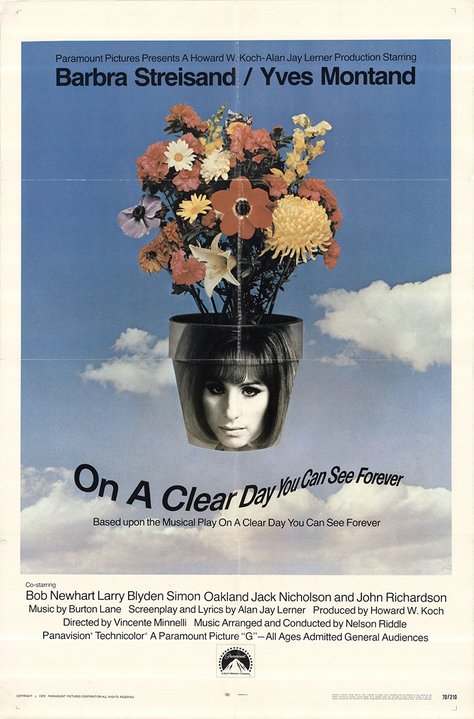
A possible allusion to the 1970 comedy-drama musical film, On a Clear Day You Can See Forever, directed by Vincente Minnelli, and based on the 1965 stage production of the same name, with lyrics by Alan Jay Sherman and music by Burton Lane. It stars Barbra Streisand, a favourite of Lorelai’s, as a woman who undergoes hypnotherapy to give up smoking, but in the process discovers she is the reincarnation of a seductive Regency lady.
The film received mixed reviews, but its reputation has endured over time.
LUKE: I am going to the diner, I am going to get us some edible food and I’m gonna bring it back here for us to eat. LORELAI: That is so not the point of today. I made this. I am insulted. I will now proceed to pout. LUKE: I’ll bring back some brownies. LORELAI: Ooh, the pouting has left the building.
Lorelai is referencing the phrase, “Elvis has left the building”. It’s a phrase that was often used by announcers at the end of Elvis Presley concerts, in order to disperse crowds who were waiting for another encore. It’s since become a catchphrase and a punchline to refer to anyone or anything that has made a final exit.
Dean puts a $5 bid on Rory’s basket, even though Taylor set the bidding at $3. He is expecting that to be the end of the matter, but is shocked when Jess begins bidding against him. Eventually Jess gets Rory’s basket for $90 – Dean, who has only come prepared with a small amount of money, expecting to win the bid straight away, cannot compete.
Rory’s is actually the most expensive basket we see at the auction, even though it’s tiny with only a few leftovers in it. Even Taylor tries to dissuade the boys from bidding so much, despite the fact the money is being raised for charity.
This interaction is an homage to the box social auction scene from the 1955 musical film, Oklahoma!, based on the 1943 stage musical by Rodgers and Hammerstein, which was based on the 1931 play Green Grow the Lilacs by Lynn Riggs.
The film focuses on the love triangle between virginal farm girl Laurey (Shirley Jones), charming cowboy Curly (Gordon MacRae), and unchivalrous farm hand Jud (Rod Steiger). Laurey goes to the box social with Jud to teach Curly a lesson, and the two men end up in a bidding war for Laurey’s picnic hamper at the auction. It seems as if Jud has won, but then Curly sells everything he has in order to raise enough money to get the winning bid.
The clean cut Dean and outsider Jess are clear analogies to Curly and Jud, but unlike the film, Dean has no way of instantly raising the money to get the highest bid. It does suggest that Rory accepts the lunch date with Jess because she’s fed up with Dean, as Laurey accepts Jud’s invitation because she’s tired of the way she’s being match-made with Curly. It also hints at Jess’ obsession with Rory, as Jud becomes obsessed with Laurey.
However, in the film, Laurey and Curly end up married, and Jud is killed in a fight with Curly. Perhaps this is meant reflect a bit of wishful thinking from Dean!
LORELAI: Oh, hey, one of them’s seen Ghostbusters 124 times.
Ghostbusters is a 1984 supernatural comedy directed by Ivan Reitman, and written by Dan Akroyd and Harold Ramis. It stars Akroyd, Ramis, and Bill Murray as a trio of eccentric parapsychologists who start a ghost-catching business in New York City.
The film was released to critical acclaim, becoming a cultural phenomenon. It was the #2 film of 1984, one of the most successful comedy films of the 1980s, and the highest-grossing comedy ever at the time. It’s theme song, “Ghostbusters” by Ray Parker Jr, was also a #1 hit. It is considered to be an iconic 1980s movie, and one of the most important comedy films ever made.
With its dedicated fan following, it launched a multibillion dollar multimedia franchise, including an animated television series and its sequel, video games, board games, books, comics, clothing, music, and haunted attractions.
The 1989 sequel Ghostbusters II was less successful. It was rebooted in 2016 with an all-female main cast, and amusingly, Melissa McCarthy, who plays Sookie, was chosen as one of the stars of the film; it was a commercial failure and received mixed reviews. A second sequel to the 1984 film, Ghostbusters: Afterlife, was released in 2021.
Watching the film 124 times between 1984 and 2002 doesn’t even seem that out there – it’s less than once a month. As usual, Lorelai’s obsessions with films are seen as cool and quirky, while anyone else’s are sad and pathetic!
The episode is named for an English nursery rhyme, first recorded in the US in 1879 as a children’s game, to be sung while children danced in a circle. One child would run around the circle and drop a handkerchief; the nearest child to them would then pick it up and chase them. If caught, the child who dropped the handkerchief would either be kissed, join the circle, or had to confess the name of their sweetheart.
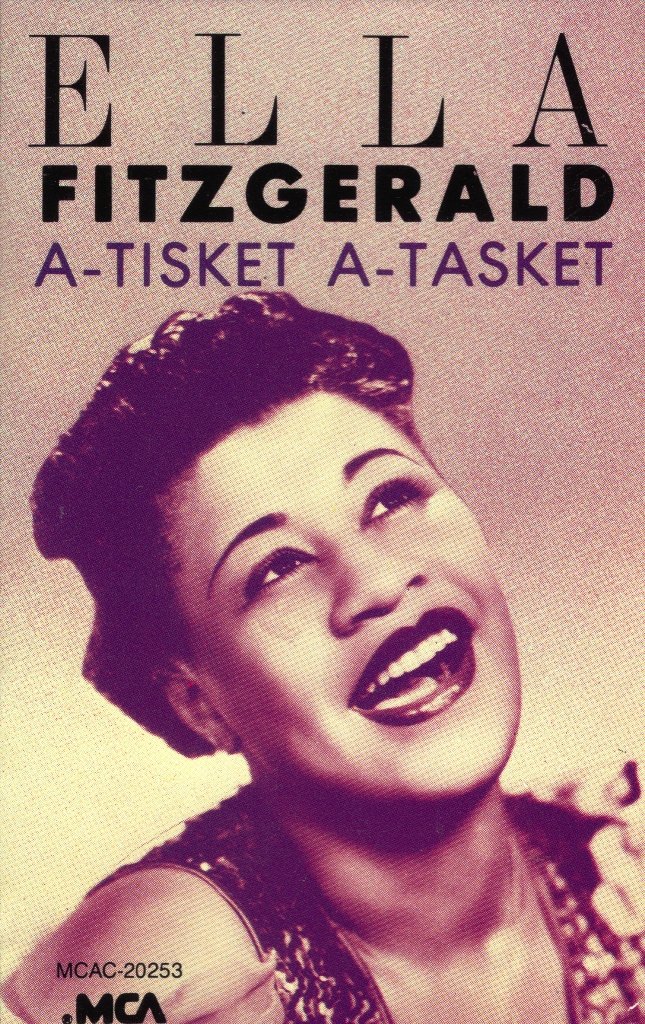
The rhyme was turned into a highly popular 1938 song by Ella Fitzgerald, in conjunction with Al Feldner (later known as Van Alexander). It has since become a jazz standard, often used in film and television soundtracks.
The lyrics to the rhyme are usually given as:
A-tisket, a-tasket A green and yellow basket I wrote a letter to my love And on the way I dropped it, I dropped it, I dropped it, And on the way I dropped it. A little boy he picked it up And put it in his pocket.
It’s suitable for an episode all about baskets, romance, and miscommunication. The episode will also include something being dropped that a “little boy” picks up.
This is the song playing on the stereo when Richard returns home from Stars Hollow. It plays over him looking sad while alone in his study, until the end of the episode.
The opening lyrics are in tune with Richard’s melancholy mood:
I was a stranger in the city Out of town were the people I knew I had that feeling of self pity What to do, what to do, what to do? The outlook was decidedly blue
A Foggy Day was composed by George Gershwin, with lyrics by Ira Gershwin. It was introduced by Fred Astaire in the 1937 musical comedy film A Damsel in Distress, loosely based on the 1919 novel of the same name by P.G. Wodehouse, and the 1928 stage play written by Wodehouse and Ian Hay. Astaire’s recording was very popular in 1937.
The song has been covered numerous times, and Richard listens to a Frank Sinatra version. Richard may be listening to his 1954 album Songs for Young Lovers, produced by Voyle Gilmore (!), or from the 1961 Ring-a-Ding-Ding! The second one, which was well-reviewed and went to #4 in the charts, seems more likely, as Richard would been about eighteen when it came out.
RORY: The only videos not behind that curtain are Bambi and Dumbo. I mean, they actually had a meeting earlier about whether or not Babe should be behind the curtain so as not to offend people who keep kosher.
Dumbo [pictured], 1941 animated fantasy film produced by Walt Disney. It is about a young circus elephant named Jumbo who is bullied with the nickname Dumbo, and mocked for his very large ears. However, it turns out he can actually fly with the help of his ears. It was a financial success and received positive reviews. It won an Academy Award for its musical score. It was the first Disney movie to be released on home video, in 1981. A live-action remake was released in 2019, directed by Tim Burton.
Babe, 1995 comedy-drama directed by Chris Noonan, produced by George Miller, and written by both, based on the 1983 novel The Sheep-Pig, by Dick King-Smith. The human stars of the film are James Cromwell and Magda Szubanski, and the animal characters are played by real animals and animatronic puppets. Christine Cavanaugh provides the voice of Babe, a pig who can talk to sheep and works as a sheep-dog. The film was a box-office success and critically acclaimed, winning numerous awards internationally. It was initially banned in Malaysia in order to avoid upsetting Muslims, but the ban was overturned a year later. The film helped to increase rates of vegetarianism, with star James Cromwell becoming a vegan himself.
RICHARD: Who’s going to help her get into Harvard? LORELAI: Reese Witherspoon.
Laura Jeanne Reese Witherspoon (born 1976), multi-award winning actress and producer. She has an Academy Award, two Golden Globes, a BAFTA, a Screen Actors Guild Award, and an Emmy. One of the highest-paid actresses in the world, she has been named one of the most powerful women in the world, and one of the most influential.
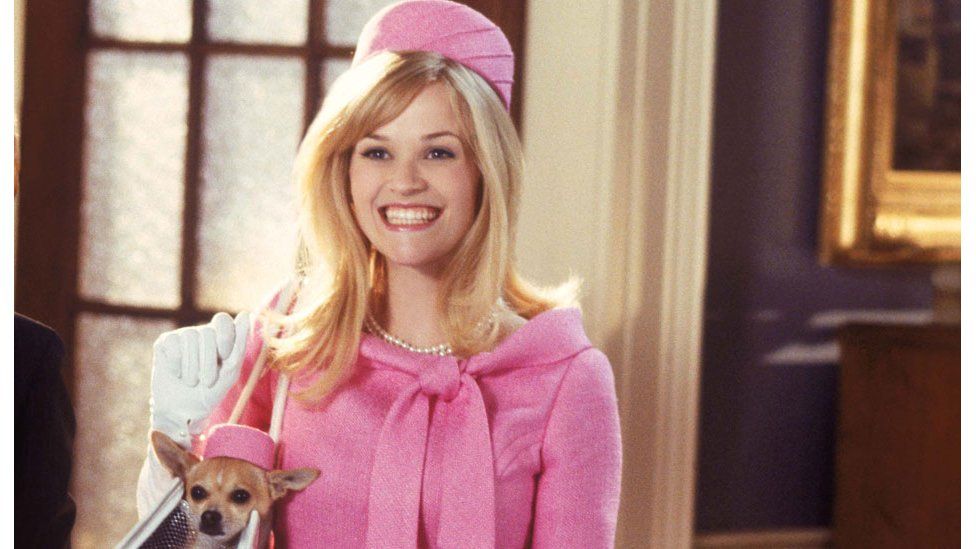
Lorelai refers to Witherspoon’s 2001 comedy, Legally Blonde, directed by Robert Luketic, and based on the 2001 novel of the same name by Amanda Brown. Witherspoon plays Elle Woods, a sorority girl who attempts to win back her ex-boyfriend by becoming a Doctor of Law at Harvard University. In the process, she overcomes stereotypes about pretty blondes, and triumphs as a successful lawyer through unflappable self-confidence and fashion/beauty know-how.
Legally Blonde was a box-office hit which led to a sequel, a direct to DVD spin-off, and a stage musical. It received generally favourable reviews, and Reese Witherspoon received the 2002 MTV Award for Best Female Performance. Another film in the series is scheduled for 2022.
When Rory shows Richard her bedroom, he checks out her bookshelf. Here are some of the books we can see:
Summer of Fear
A 1993 serial killer novel by T. Jefferson Parker, who writes bestselling police procedural novels set in California. Parker is a journalist who turned novelist – perhaps a tiny hint of where Rory’s career is eventually headed.
The Scarecrow of Oz
A 1915 children’s book by L. Frank Baum, the ninth in his series of Oz books. The Wizard of Oz is a touchstone for Gilmore Girls, and this seems to be a little nod to the land of Oz. The Scarecrow from the original story is the magical helper (the one who didn’t have a brain, but was actually quite smart), and the human protagonists are a man and a little girl from California.
Contact
A 1985 science novel by scientist Carl Sagan. The heroine is a scientist named Ellie who showed a strong aptitude for science and mathematics from a young age, and has been left emotionally bereft by the loss of her father, with a problematic relationship with her mother. Contact with an alien civilisation allows Ellie a strange chance to reconnect with her memories of her father. It feels like something that would resonate with Rory. Ellie is also from California. The novel was a bestseller, and made into a film in 1997, starring Jodie Foster. The film might have given Rory an interest in reading the novel.
The Apocalyptics: Cancer and the Big Lie
Edith Efron was a journalist who began her career at the New York Times Magazine, became a member of Ayn Rand’s circle and wrote for her magazine, and then became editor of TV Guide at the height of its popularity. She was critical of what she perceived as “liberal bias in the media”, but provided a strong voice on race relations (Efron had a biracial son during 1950s segregation). She later wrote for the libertarian publication, Reason. The Apocalyptics is a 1984 exposé of the cancer industry and a criticism of environmental policy which Efron saw as being based on “bad science” (basically saying Rachel Carson etc were all a bunch of doom-merchants). It’s an obscure, controversial, and extremely heavy-going work. An intriguing insight into Rory’s interests.
Working: People Talk About What They Do All Day and How They Feel About What They Do
A 1974 non-fiction book by oral historian and radio broadcaster Louis “Studs” Terkel. An exploration of what makes work meaningful for people, based on interviews with people from all walks of life. It was a bestseller, and turned into a Broadway musical in 1977, and a graphic novel in 2009.
A book by “Tobias Allcot”
This seems to be a fictional book which would have been created by the props department as a slightly odd joke. Tobias Allcot is the name of a Pulitzer Prize-winning author in the film The Man from Elysian Fields, directed by George Hinkenlooper; James Coburn portrays Allcot. The film wasn’t released until September 2002, but had been shown at the Toronto Film Festival in September 2001.






 The Annotated Gilmore Girls