LORELAI: I don’t think I’ve ever loved you quite as much as I love you right now. RORY: Ah, ribs cracking, organs crushing. LORELAI: Yeah, well, love hurts.
Probably a reference to the song Love Hurts, written by Boudloux Bryant, and originally recorded by the Everly Brothers in 1960. It is best known from the 1974 version by Scottish band Nazareth, who turned it from a country song into a hard rock power ballad. It became an international hit, and reached #8 in the US in 1976. It went to #1 in Belgium, Canada, the Netherlands, Norway, and South Africa. It was less successful in their own country, reaching #46 in the UK.
It has been covered numerous times, including by Cher, and often used in advertisements, films, and television. It is on the soundtrack to Sid and Nancy.
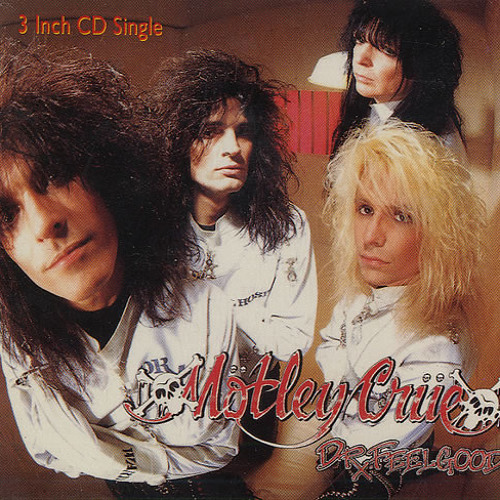
PARIS: What about that guy over there? What’s his story? LUKE: Reverend Nichols? PARIS: Reverend Nichols, huh? What is that, like Dr. Feelgood?
A reference to the 1989 song Dr. Feelgood, by heavy metal band Mötley Crüe. It was the lead single from their album of the same name, and went to #6 in the US. It is their most successful single, and the only one which went gold.
The song is about a L.A. drug dealer named Jimmy who is known as “Dr. Feelgood”. The original lyrics were on a different subject, but bassist and songwriter Nikki Sixx based it on his experiences with different drug dealers, so that Dr. Feelgood is a composite of several real-life characters. Nikki Sixx, who almost died from a heroin overdose in 1987, declared himself clean and sober in 2004.
RICHARD: Oh, I always start my breakfast off with half a grapefruit. LORELAI: Hm, do the Florida people know about you? Because Anita Bryant left this huge gap that has yet to be filled.
Anita Bryant (born 1940), previously mentioned. Singer who had a string of hits in the late 1950s and early 1960s, and was Miss Oklahoma 1958.
In 1969, she was chosen as the ambassador for the Florida Citrus Commission, with commercials featuring her singing Come to the Florida Sunshine Tree, and saying the tagline, “Breakfast without orange juice is like a day without sunshine”.
In 1977 she became a controversial figure as an anti-gay rights activist, leading a coalition of conservative Christians who wished anti-discrimination legislation to be repealed. They were successful, but earned the ire of gay-rights activists, who organised a ban against orange juice. She became an object of ridicule, and after her divorce in 1980, the Florida Citrus Commission allowed her contract to lapse. This is the “huge gap” that Lorelai suggests Richard might like to fill. It also seems to be another comment about censorship.
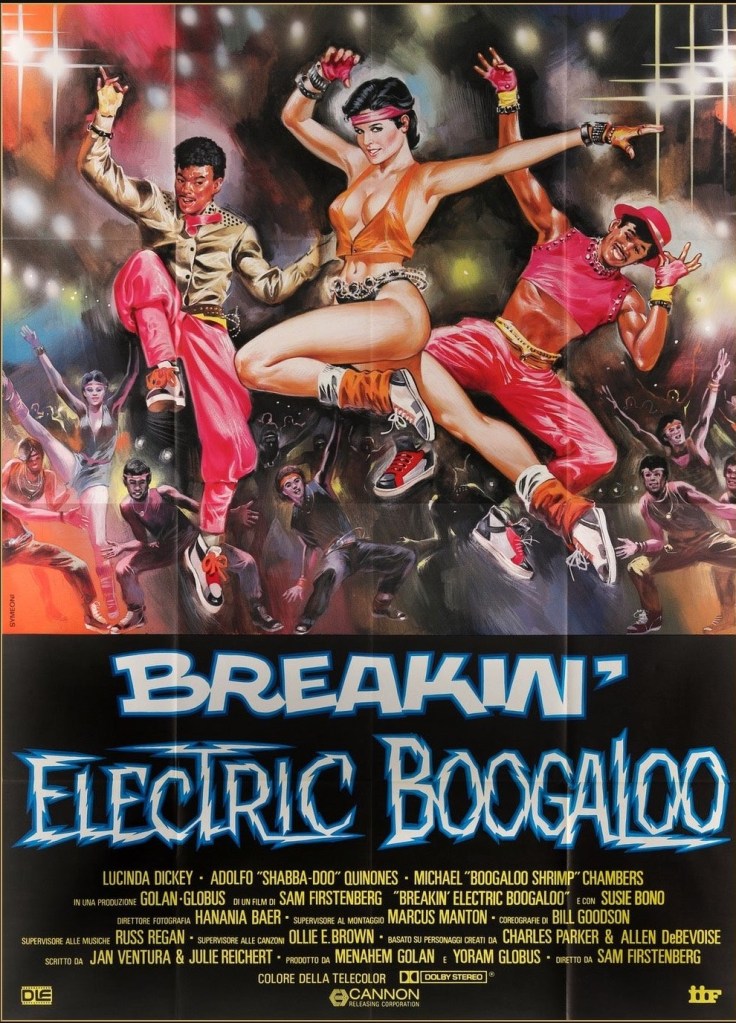
LORELAI: Got it. The worst film festival ever. Cool as Ice, Hudson Hawk, and Electric Boogaloo. RORY: Sold.
Lorelai chooses a triple feature of poorly-received or ill-regarded films.
Cool as Ice, 1991 romantic musical comedy directed by David Kellogg and starring rapper Vanilla Ice in his film debut. The story is about a free-wheeling motorcycling rapper named Johnny who arrives in a small town and meets a student named Kathy (played by Kristin Minter), whose father disapproves of Johnny, but ends up needing his help when Kathy’s brother Tommy is kidnapped. It was a box office failure and received negative reviews. Vanilla Ice won Worst Actor at the Razzies. Kellogg later disowned the movie.
Hudson Hawk, 1991 action comedy film directed by Michael Lehmann and starring Bruce Willis in the title role; Willis also co-wrote the script and the theme song. Willis plays Eddie “Hudson Hawk” Hawkins, a master cat-burglar and safe-cracker trying to save the world from an evil corporation using a machine designed by Leonardo da Vinci. It’s a cartoonish slapstick comedy with surreal humour based on conspiracy theories, secret societies, and historic mysteries. A recurring plot device is Hudson Hawk singing songs with his partner to time and synchronise their exploits. It received harsh reviews, and failed at the box office, but did well on home video, and performed better outside the US. It received Worst Film, Worst Director, and Worst Screenplay at the Razzies. It spawned a video game.
Breakin’ 2: Electric Boogaloo, 1984 dance musical directed by Sam Firstenberg, the sequel to 1984 break dancing movie, Breakin‘. The story is about three dancers who try to save their community recreation centre from being demolished to make way for a shopping mall. The rapper Ice-T plays a role in it. There is a third film in the series, and none of them are connected, except for featuring Ice-T. It had a lacklustre performance at the box-office, and received mostly negative reviews, with a few notable exceptions, such as Roger Ebert. “Electric Boogaloo” has entered the pop culture lexicon to refer to a ridiculous sequel title, or a sequel to an obscure or eclectic film (or other work).
LORELAI: The three faces of Costner – Bull Durham, Dances with Wolves, The Postman. Tom Petty playing Tom Petty, that great big speech about “Once upon a time there was a thing called mail”. It’ll make you laugh, it’ll make you cry, it’ll make you wanna mail something.
Kevin Costner (born 1955), award-winning actor and filmmaker. The three faces of Costner seem to be the first big success of his career, the greatest success of his career, and what seemed at the time to be the fading of his career with a failed film. In fact, he was to have renewed success with The Open Range in 2003, and received his star on the Hollywood Walk of Fame that same year, so his comeback was just around the corner.
Bull Durham, 1988 romantic comedy sports film. It’s partly based on writer/director Ron Shelton’s experiences in the baseball minor leagues, and depicts the players and fans of the Durham Bulls from Durham, North Carolina. Kevin Costner plays a veteran catcher brought in to teach a rookie pitcher (played by Tim Robbins) about the game in preparation for moving to the major leagues. It was a commercial and critical success, and was named the #1 sports film ever by Sports Illustrated. It’s also considered one of the best comedies. It helped solidify Costner as an A-list celebrity.
Dances with Wolves, 1990 epic western which stars, and was produced and directed by, Kevin Costner, in his directorial debut. It’s based on the 1988 novel of the same name by Michael Blake, and tells the story of a Union Army Lieutenant who travels to the American frontier to find a military post, and his dealings with a group of Lakota (much of the dialogue is in Lakota with English subtitles). It was a box office hit, and the #4 film of the year. It was also favourably reviewed, and won seven Academy Awards, including Best Picture and Best Director. It is credited with revitalising the western genre in film.
The Postman, 1997 post-apocalyptic action adventure film, which was also produced and directed by Kevin Costner, who plays the lead role. It is based on the 1985 novel of the same name by David Brin. Set in a neo-western version of a disestablished US in the near future of 2013, an unspecified apocalyptic event has led to war and plagues, leaving a huge impact on human civilisation and erasing most technology. A nomadic drifter finds an old uniform of a US Postal Services mail carrier, and unwittingly inspires hope, becoming a national hero. It failed at the box office and was heavily criticised in reviews.
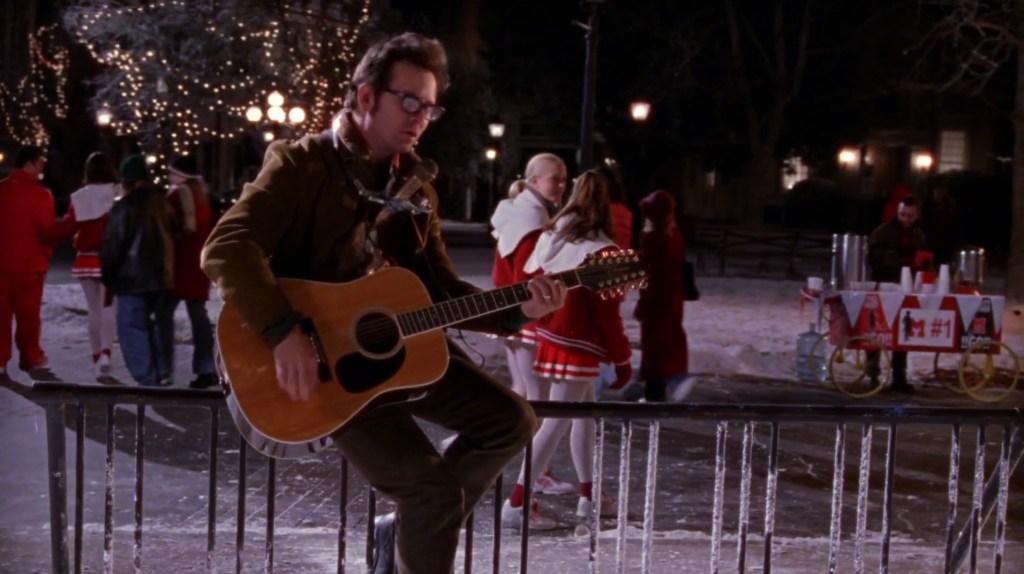
Thomas “Tom” Petty (1950-2017), singer, songwriter, and musician. He was the lead vocalist and guitarist for Tom Petty and the Heartbreakers, formed 1976, and was a member of the supergroup The Traveling Wilburys, as well as performing as a solo artist. He sold more than 80 million records worldwide, making him one of the most successful music artists of all time. He was inducted into the Rock and Roll Hall of Fame in 2002.
He seemingly plays himself as the mayor of Bridge City in The Postman, as Kevin Costner’s character immediately recognises him as a famous person. Tom Petty had a post-apocalyptic themed story in his 1982 song I Got Lucky, and mentioned wanting to have a small part in a futuristic postwar movie. He finally got the chance in this film. [Picture shows Petty as the mayor].
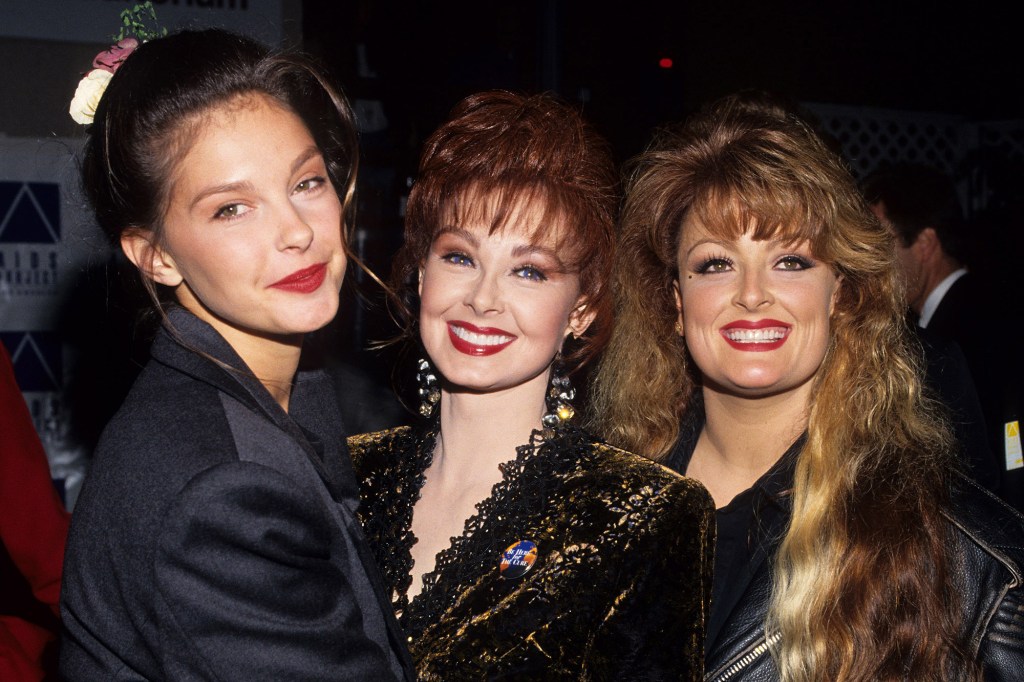
LORELAI: How are you Mom? EMILY: Also fine. LORELAI: Oh, look at that. All three of us fine, just like The Judds.
The Judds were a country music duo composed of Naomi Judd and her daughter Wynonna Judd. They were one of the most successful country music acts in history, releasing six studio albums between 1986 and 1991, winning five Grammy Awards and eight Country Music Associations, and had 25 singles in the charts, 14 of which went to #1. They were inducted into the Country Music Hall of Fame in 2021.
The third Judd is Naomi’s other daughter, Ashley Judd, an actress with a long career starring in several successful films. Her most recent film at this time was Someone Like You, earlier mentioned as one of the possible “disgusting cow movies” of 2001.
[In the picture, Naomi is in the middle, Ashley on the left, and Wynonna on the right].
This is the song that the Town Troubadour is singing at the end of the scene, just as Rory and Lane walk off together, and most people are leaving.
It was written by Brian Wilson and Mike Love for the Beach Boys, released as a single from their 1963 album Little Deuce Coupe. It is an early example of a concept album, as all of the tracks are about cars in some way.
The song talk about being proud of your school, and not letting people look down on it, and specifically refers to cheerleading as part of showing school spirit. Each line of the song’s coda begins with “Rah rah”, like a cheerleading chant. The show focuses so much on Chilton, Rory’s school, and this is rare chance for Stars Hollow High School to be showcased.
The Troubadour seems to singing the song for all the school, but especially the cheerleaders, and perhaps Lane in particular. She hasn’t had much to be proud of, with golden girl Rory getting all the plaudits, so being able to feel proud of her cheerleading and her school seems pretty important. It’s the first time Lane has made a deliberate choice to break away from Rory and start leading a life of her own – and it’s something involving music, which she loves. It might be only “one step step beyond”, but it’s a significant one.
LANE: I want you rest assured that I remain me. I mean, Nico-obsessed, Exene wannabe with forty Korean bibles under her bed. I just bounce a little more.
Exene Cervenka (born Christene Cervenka in 1956), is a singer, artist, and poet, best known as lead singer of the Californian punk band X, founded in 1977.
This comment from Lane doesn’t sound quite in character to me. Lane always wanted to be a drummer, not a singer, and she was usually a fan of British punk rather than American. It feels as if the writer has calculated girl who likes punk = likes punk band with a girl singer, rather than thinking of what Lane as a character would most admire.
RORY: So the music selection, yours I assume? LANE: Yeah, there was a bit of an education process going on. RORY: I liked it. Very John Waters.
John Waters (born 1946), filmmaker, actor, writer and artist. He rose to fame in the 1970s making transgressive cult films such as Pink Flamingos (1972), often starring his childhood friend and muse, the drag queen Divine. His films became more mainstream in the 1980s, and his 1988 musical Hairspray became an international success and was turned into a Broadway stage musical. His most recent film in 2002 was the box-office failure, Cecil B. Demented (2000). All his films are set in his home town of Baltimore, Maryland.
Rory is probably suggesting that the cheerleader routine had the same surreal, kitschy appeal as a John Waters film.
This is the song which Lane and the other cheerleaders perform their routine to. It was written by Jamaican ska singer Prince Buster, and he released it as a B-side in 1964.
The version Lane is using is the cover version by English ska band Madness, the title track of their 1979 debut album. The single went to #7 in the UK, and #76 on the Billboard Hot Dance Club Play chart in the US. It had its greatest success in France, where it went to #1.





 The Annotated Gilmore Girls