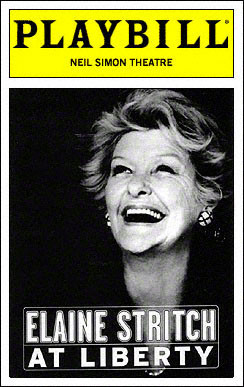
MISS PATTY: It’s part stories, part songs. Kind of like what Elaine Stritch did on Broadway, but without the bitterness. My working title – Buckle Up, I’m Patty.
Elaine Stritch (1925-2014), actress, known for her work on Broadway and later, television. She made her professional stage debut in 1944 and appeared in numerous stage plays, musicals, feature films and television series. Stritch was inducted into the American Theater Hall of Fame in 1995.
Patty refers to her autobiographical one-woman show, Elaine Stritch at Liberty, composed of anecdotes from Stritch’s life, as well as showtunes and Broadway standards that mirror Stritch’s rise and fall both on and off the stage. It ran on Broadway from November 2001 to May 2002, after which Stritch continued to perform it at regional and international venues.
The Broadway production was recognised with the 2002 Tony Award for Best Special Theatrical Event and the 2002 Drama Desk Award for Outstanding Book of a Musical. A recording of the show was released in 2002, and a TV documentary of the show was later broadcast, in 2004.
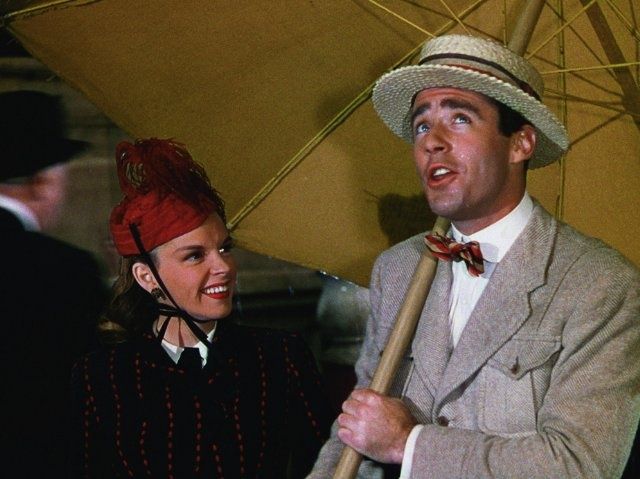
LORELAI: Hey, you know what Gran needs? … A fella. RORY: With or without an umbrella.
Rory references the song, “A Fella With an Umbrella”, written by Irving Berlin and sung by Judy Garland in the film Easter Parade, previously discussed. This suggests the film is one that Lorelai and Rory have watched together several times.
Lorelai sings the theme song to the film Easter Parade, previously discussed, as she starts setting up the new DVD player for Emily – perhaps partly to block out Emily’s complaints!
The song “Easter Parade” was written by Irving Berlin in 1933 – the melody was written in 1917, and was originally for a song called, “Smile and Show Your Dimple”, intended to cheer up girls who had to send their husbands and sweethearts off to war. A 1918 recording by Sam Ash had modest success.
The Easter lyrics for the tune were written in 1933 for a Broadway musical called As Thousands Cheer, first sung by Marilyn Miller and Clifton Webb. It has featured in several films, including Holiday Inn, while the film Easter Parade is constructed around the song, and performed by Judy Garland and Fred Astaire. Several artists have had hits with the song, including Bing Crosby and Liberace.
In the final flashback, we see Emily and Richard coming downstairs, ready to go out. Emily comments that for the first time in a year, she hasn’t tripped over Rory’s baby stroller, which Lorelai never puts away. Emily finds a note on the hall table and begins to cry – it is obviously the note that Lorelai wrote when she left home, taking Rory with her.
It’s interesting to speculate as to where this flashback comes from. It can’t be Lorelai’s memory, because she never saw this happen. Is it Emily’s memory? Or is it Lorelai’s imagining what must have happened, based on what she knows? Or is it somehow an objective picture from the past of that moment?
The seven flashbacks in this episode encapsulate the central conflict in Gilmore Girls – that Lorelai got pregnant as a teenager, and then left home with her baby, leaving only a note.
It seems clear during the episode that Lorelai, through Sherry’s birthing of Georgia, gets to relive and re-examine some of her past behaviour and choices. We get to see that Richard and Emily may not have been perfect parents, but they are by no means monsters who deserved to be abandoned and shunned by their daughter.
Emily was a staunch advocate for Lorelai when she discovered she was pregnant, and stood up for her against the cruel insults of Christopher’s parents. Richard and Emily never rejected Lorelai, or kicked her out. She still had a home with them, and they continued supporting her and baby Rory.
Obviously Lorelai was very unhappy, and wanted to make a life for herself, but in retrospect, some of her decisions seem cruel – I think even to herself. She left for the hospital to give birth by herself, not allowing her parents any role in that, and she left home the same way, leaving only a note.
We already know that Emily was so devastated by Lorelai’s leaving that she was confined to bed for a month, and much of the coldness and harshness that we see from Emily and Richard in the present stem from this rejection by their daughter, which they have never really got over.
I think Lorelai’s generous and thoughtful gift of the DVD player and nine musicals on DVD that are a combination of Emily’s favourites and hers is her way of trying to … not to erase the past, but to make a kind gesture to her mother and to try to connect with her by sharing something they both enjoy, in recognition that Emily’s life is far lonelier than Lorelai’s.
1952 musical romantic comedy film, directed and choreographed by Gene Kelly and Stanley Donen, and starring Gene Kelly, Donald O’Connor and Debbie Reynolds.It offers a lighthearted depiction of Hollywood in the late 1920s, about performers caught up in the transition from silent films to “talkies”. The film was only a modest hit when it was first released, but has now reached legendary status, often considered the greatest musical ever made.
1949 musical film, directed by Charles Walters, with music by Irving Berlin, and starring Judy Garland and Fred Astaire. The story revolves around a Broadway actor trying to turn an ordinary dancer into a star. A critical and commercial success, Easter Parade was the highest-grossing musical film of 1948, and the second-highest grossing MGM musical of the 1940s.
An American in Paris
1951 musical comedy film, inspired by the 1928 orchestral composition An American in Paris, by George Gershwin. Directed by Vincente Minnelli, it stars Gene Kelly and Leslie Caron in her film debut. The film is set in Paris, and is about an American World War II veteran trying to succeed as an artist. The music is by George Gershwin, with lyrics by his brother Ira Gershwin. The film was the #8 film of 1951 and won Best Picture at the Academy Awards, but its reputation today is of being pleasant and attractive, rather than a really good film.
The song Lorelai is listening to while waiting to give birth at the hospital.
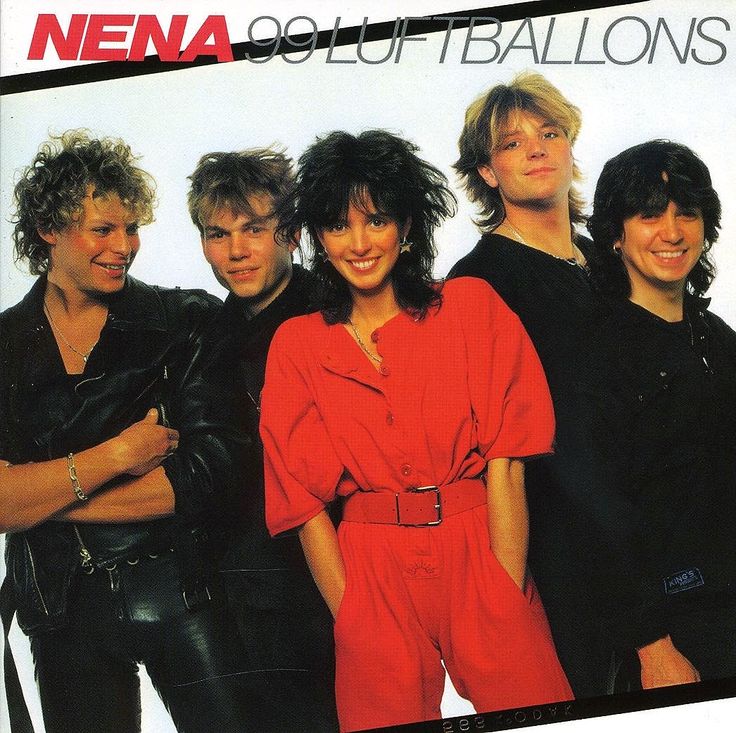
“99 Luftballons” (in German, “99 Balloons”) is a 1983 song by the German band Nena from their self-titled album. It is an anti-war song, telling the story of a devastating war without victors which was originally sparked by the release of 99 balloons, believed to be UFOs. Written by guitarist Carlos Karges, he was inspired by balloons released at a Rolling Stones concert in West Berlin, noticing that they looked like spacecraft as they changed shape in the air. He wondered what might happen if they floated over the Berlin Wall into the Soviet-controlled East Berlin.
“99 Luftballons” went to #1 in West Germany, and many other countries around the world, including Australia, New Zealand, and Japan. It reached #2 in the US.
An English-language version called “99 Red Balloons” was written by Irish musician Kevin McAlea, and recorded by Nena. It went to #1 in the UK, Ireland, Canada, and Australia, but wasn’t a hit in either West Germany or the US. Australia is the only country where both versions went to #1. The band did not care for the English-language version, and thought the lyrics were “silly”.
Not only was this song popular the year before Lorelai had Rory, it also provides a little callback to the scene in this episode where Lorelai and Rory talk about visiting the Berlin Wall.
RORY: [on phone] So, we’ll see you next Friday at three. And once again, sorry for the short notice. Okay, bye. [hangs up] SHERRY: Great, who’s next? RORY: Um, Sheldon Harnick.
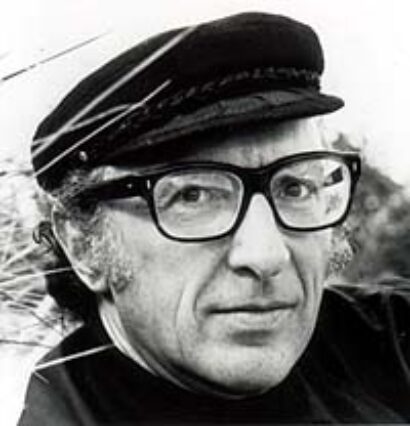
Sheldon Harnick (born 1924), award-winning lyricist and songwriter best known for his collaborations with composer Jerry Bock on musicals such as Fiddler on the Roof. His musical Dragons was performed in New Jersey in late 2003, and this is possibly what Sherry is working on promoting.
Sherry says that Sheldon Harnick “hates pregnancy”, so Rory suggests they tell him Sherry has a plumbing issue instead. In real life, Sheldon Harnick is married to actress Margery Gray and is a father, so it doesn’t seem likely he’s really that panicked by pregnancy. In 2011, he was a special guest to a performance of his songs by Kate Baldwin who was seven months pregnant at the time, and they sang a duet together.
Sherry now has Rory handling her business calls at the hospital! Yes, at night! Rory is a people pleaser, specifically an adult pleaser, who genuinely likes to help, so she complies with this obviously terrible treatment.
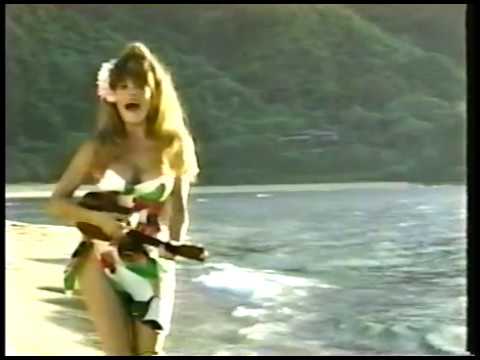
The Spanish-American music star moved to Hawaii in the 1980s, where she produced and starred in the variety show Tropical Heat at the Hilton Hawaiian Village Resort in Waikiki. For ten years, it was the most successful show in Hawaii. She moved back to Beverley Hills in the 1990s.
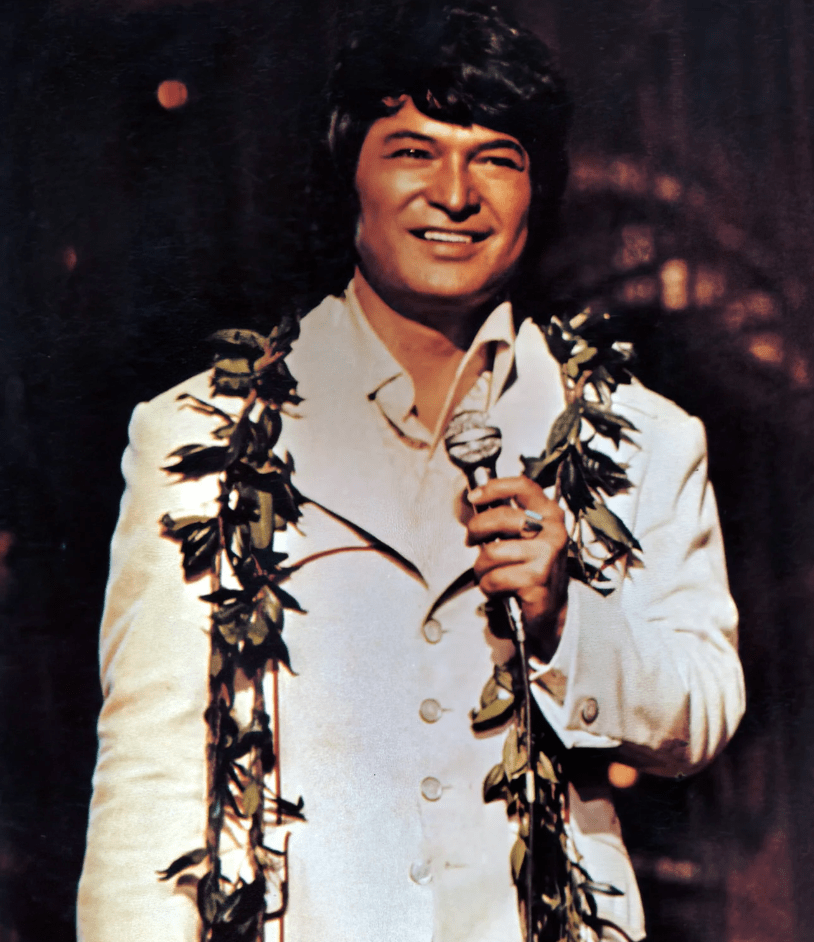
EMILY: She’s from Honolulu. LORELAI: Cool. Does she know Don Ho?
Donald “Don” Ho (1930-2007), Hawaiian traditional pop musician, singer and entertainer. His signature song and biggest hit was “Tiny Bubbles”, which went to #57 in the US in 1967.
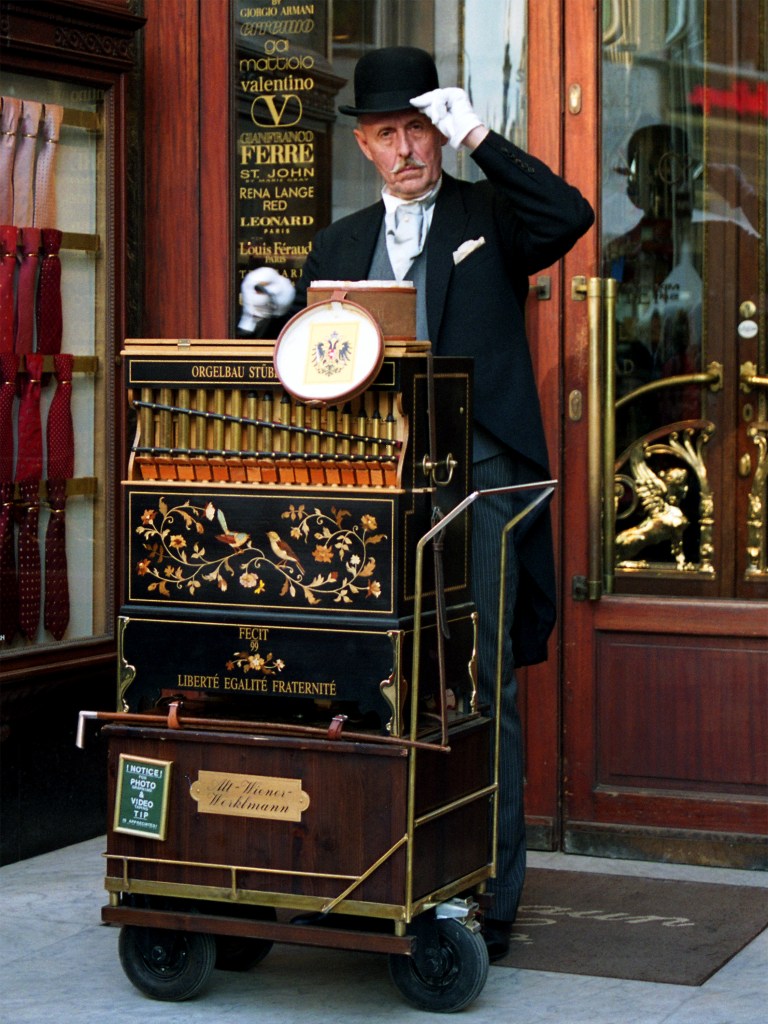
LORELAI: Now we just have to figure out how we’re gonna pay for it. Hey, how good’s your organ grinding?
An organ grinder is a novelty street performer who plays a street organ or barrel organ, a French-German automatic mechanical pneumatic organ designed to be mobile enough to play its music in the street. In the 19th and early 20th centuries, they were played as a means of begging for money, while circumventing laws against outright asking people for money.


 The Annotated Gilmore Girls