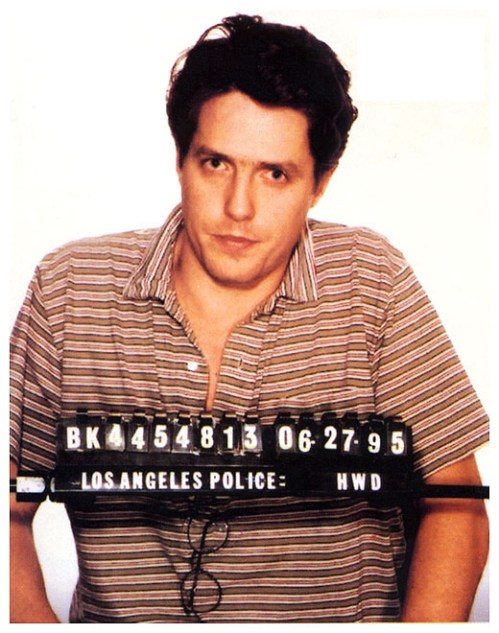
Rick James and Hugh Grant

RORY: Her [Paris’] dad’s like this big wig at a huge pharmaceutical company and they’re printing all the sordid details about it [his divorce] in the paper.
LORELAI: Ooh how sordid?
RORY: Well, it’s not the Rick James incident, but Hugh Grant should be feeling pretty good about himself.

American R&B singer Rick James (1948-2004) had several public scandals. In 1991, he and his wife were accused of holding a woman hostage for several days during a cocaine binge, tying her up, and forcing her to perform sexual acts. In 1993, while out on bail, he and his wife were accused of kidnapping and assaulting a female business associate for several hours. He was found guilty in both cases, sentenced to two years prison, and ordered to pay his second victim $2 million in damages in a civil suit. Released from prison in 1996, he was accused of sexually assaulting a woman in 1998, but charges were later dropped. It may be this final “incident” that Rory is alluding to.

British actor Hugh Grant (born 1960) [pictured] was arrested in Los Angeles in 1995 for receiving oral sex in a car from a Hollywood prostitute named Divine Brown. He was fined, placed on two years probation, and ordered to complete an AIDS education program. The incident occurred just before his film Nine Months was released, but he was able to gain public appreciation by speaking honestly about what he’d done and not making any excuses for his behaviour. As a result, no major damage was done to his career or reputation.

Mr. Geller’s scandalous exploits are apparently significantly worse than an encounter with a prostitute, but not as bad as the sexual assault allegations levelled at Rick James. We know that they must be sexual in nature, and of enough public interest to be reported in the newspaper. Other than that, they must be left to our imaginations.
Ricky Martin

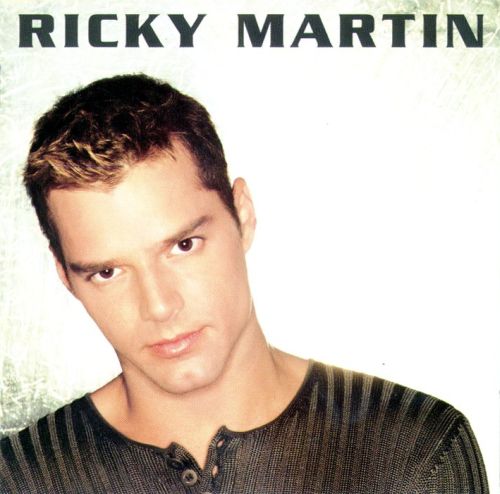
To accompany the cha-cha-cha dance that Sookie says Lorelai is doing, Sookie begins singing songs by the Puerto Rican singer Ricky Martin at her.

Sookie sings parts of two songs: Livin’ la Vida Loca, and Shake Your Bon-Bon. They are both from Ricky Martin’s 1999 self-titled album, which was his first in the English language. A massive hit world-wide, the album reached #1 and went seven times platinum in the US; it remains Ricky Martin’s most successful album to date.

Livin’ la Vida Loca was a #1 hit for Martin, was #10 for 1999, and is his biggest-selling single. It made him an international star, and has become his signature song. La vida loca is Spanish for “the crazy life”.

Shake Your Bon-Bon peaked at #22 in the US, but was #2 on the dance charts. The song was used in commercials for Toyota Corolla in 2000, which showed Hollywood actor Brad Pitt driving the car.

Most unusually, Sookie singing Ricky Martin is the only commercial music used in this episode.

Paris is Burning

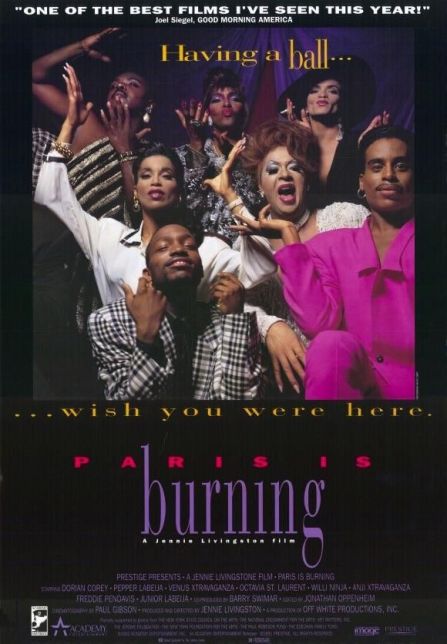
The episode title may be a reference to the 1990 documentary film Paris is Burning, directed by Jennie Livingston. The documentary is about the drag ball culture in New York City, and the drag competitions which take place at the balls. The documentary film received rave reviews and several awards at film festivals; it remains relevant in discussions on LGBT, youth, class, and racial issues.

The film’s title comes from drag performer Paris Dupree (1950-2011), who gave a drag ball with the name. It may have been partially inspired by Adolf Hitler’s reported question during World War II, “Is Paris burning?”, when he wished the city to be completely destroyed rather than re-taken by the Allies.

This episode centres on Paris Geller, who we learn more about in this episode, and who does indeed “burn down” or destroy the relationship between Lorelai and Max. She does so to deflect public attention from her own problems, thus playing a role like the drag performers in the film.

Charo

LORELAI: Rory, there are only two things that I totally trust in this entire world. The fact that I will never be able to understand what Charo is saying no matter how long she lives in this country – and you.

Charo (born Maria Martinez Molina Baeza in perhaps 1941) is a Spanish-American actress, comedian, and flamenco guitarist. In the late 1960s and 1970s Charo frequently appeared on American television as a guest star, and she has had a successful musical career in Latin America for five decades.

Her stage persona has an exuberant manner, wears flamboyant costumes, speaks broken English with a heavy Spanish accent, and uses the meaningless catchphrase “cuchi-cuchi” a lot – hence Lorelai’s difficulty in understanding her.

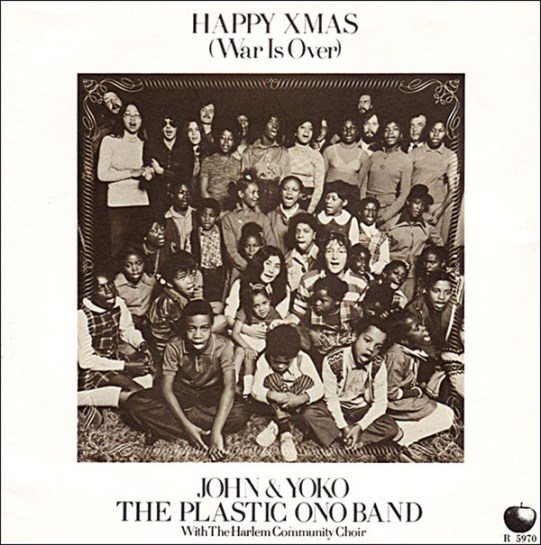
Happy Xmas (War is Over)

This 1971 Christmas song plays while Lorelai and Rory make up their fight at the vending machine.

With lyrics by John Lennon and Yoko Ono, set to the tune of the traditional English English ballad Skewball, Happy Xmas (War is Over) was released as a single by John & Yoko/Plastic Ono Band with The Harlem Community Choir. Also a protest song against the Vietnam War, it has become a Christmas standard which has charted several times in the UK, and been re-recorded many times.

The song signals that the conflict between Lorelai and Rory has come to an end, and that a happy Christmas is coming now that their war is over.

“Where’s the scarecrow?”

LUKE: Okay, we’re supposed to follow the blue line, around the corner and then we should be –
LORELAI: Where’s the scarecrow when you need him?

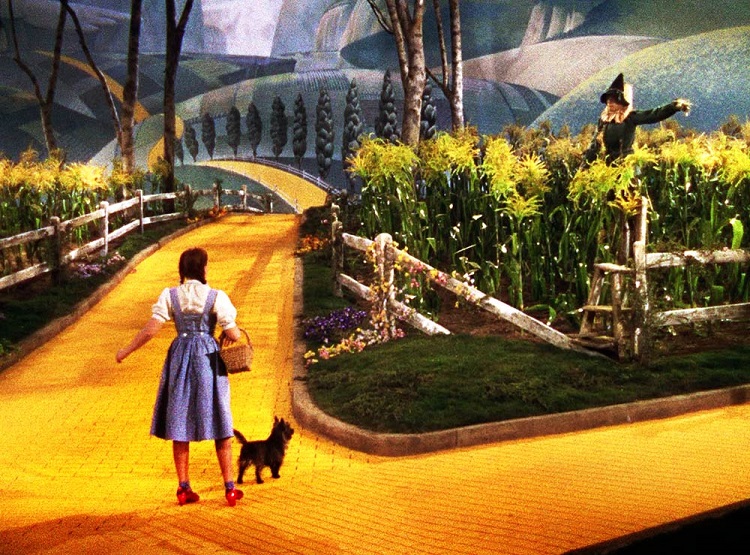
Lorelai is referring to the 1939 musical fantasy film The Wizard of Oz, produced by Metro-Goldwyn-Mayer, and based on L. Frank Baum’s 1900 children’s book The Wonderful Wizard of Oz. It was the #9 film of 1939, and a critical success on release, although so expensive to make that it didn’t make much of a profit for MGM. It won two Academy Awards for its music. After being broadcast on TV in 1956, and annually from 1959 to 1991, the film became one of the most famous in history, and is recognised as a cultural icon and one of the best films ever made.

Luke’s comment about following the blue line seems to remind Lorelai of the song Follow The Yellow Brick Road, where Dorothy (Judy Garland) is sent on her journey to find the Wizard by the diminutive Munchkins, after she is given the instruction to follow the Yellow Brick Road by Glinda the Good Witch of the North (Billie Burke). The Scarecrow (Ray Bolger) makes his appearance in the next scene, when the Yellow Brick Road branches off in two different directions, just as the hospital’s blue line does.

There will be many more references to the movie throughout the run of Gilmore Girls, and it serves as an inspiration for the show. Like The Wizard of Oz, Gilmore Girls creates a specifically American fantasy land which is both cosy and uncomfortable, with a story line which contains comedy and drama. Like Gilmore Girls, The Wizard of Oz is a quirky journey of growth where the lesson to be learned is that you already have everything you need before you even set out.

Hark! the Herald Angels Sing

This is the Christmas carol that the carol singers are singing as they walk into Luke’s.

Hark! the Herald Angels Sing was written by Charles Wesley, and first published in 1739. It was originally a slow, solemn hymn, and the opening lines were different; it was Wesley’s co-worker George Whitefield who changed it to the familiar Hark! the Herald Angels Sing in 1758. The joyful music we know today was supplied by composer Felix Mendelssohn in 1840, adapted by English musician William H. Cummings to fit the words of the carol.

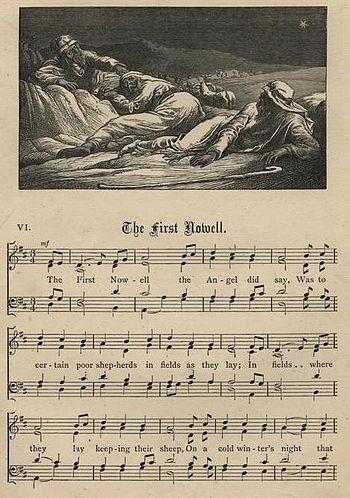
The First Noel

This is the Christmas carol that the bell ringers are practicing when Lorelai walks past them on her way to Luke’s.

The First Noel or The First Nowell is a traditional English Christmas carol, dating to perhaps the 15th century, but possibly earlier. It tells the story of the shepherds and the three wise men being led to the baby Jesus by a wondrous star, taken from different parts of the Gospels. The carol is of Cornish origin, and was first published in 1823, although today the 1871 arrangement is more common.

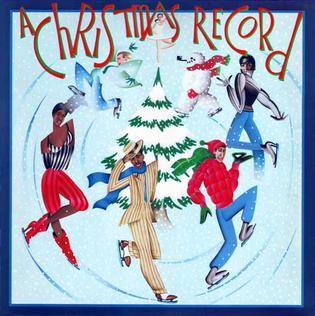
Christmas Wrapping

Lorelai has this song playing in the background while she waits for her pizza to arrive, until Dean knocks on the window.

Christmas Wrapping is a Christmas song by American new wave band The Waitresses. It was written for a 1981 compilation album called A Christmas Record, put out by ZE Records, a New York “hipster” record label. The album was re-released in a “special edition” in 1982. Christmas Wrapping didn’t chart in 1981, but reached #45 in the UK after the 1982 re-release. It has often been included on Christmas albums in the UK, and re-recorded several times.

The song is about a busy single woman who decides not to bother with Christmas that particular year, turning down invitations and planning to spend the day alone. On Christmas Eve she runs into a man she had earlier made a connection with, and winds up having a happy Christmas with him after all.

Lorelai is also planning to give the Christmas party a miss to be alone for the evening, but she does end up spending time, not just with a man that she likes, but with her daughter and parents as well. The song is letting us know that a happy ending is ahead.

(Lorelai’s choice of Christmas music is also a nice contrast with her parents’)