LORELAI: Oh God, I hope they [Richard and Emily] go [on vacation] over Christmas. That would be as holly jolly as it gets.
A reference to “A Holly Jolly Christmas”, a 1962 Christmas song written by Johnny Marks. First recorded by the Quinto Sisters, it was featured in the 1964 animated Christmas television special Rudolf the Red-Nosed Reindeer.
It was sung by Burl Ives, who was also the narrator, and released on the soundtrack album. Burl Ives re-recorded it for his own Christmas album, and released it as a single. Of enduring popularity, the Burl Ives version continues to chart on the current charts, and has peaked at #4 in the years since 1998.
RORY: Looks like Italy for us! LORELAI: Mamma mia!
Mamma mia, an Italian interjection of surprise, literally meaning “my mom/mum”, possibly in reference to the Virgin Mary.
Lorelai may be thinking of the 1975 ABBA song, “Mamma Mia”, from their self-titled third album. It went to #32 in the US, but was #1 in the UK, Ireland, Australia, Switzerland, and West Germany. It is widely considered one of their best songs, although in a deleted scene of Gilmore Girls, Lorelai refers to it as an earworm.
It is possibly a little insensitive to say this is front of Emily, given that Lorelai ran away from home to work for Mia, who she regards as a beloved mother figure.
RORY: But we want to be spontaneous. Jump a train to Paris, head off to Spain. LORELAI: Oh no, it’s raining in Spain. But since the rain in Spain stays mainly in the plain . . .
Lorelai quotes from the song, “The Rain in Spain”, from the musical film, My Fair Lady, previously discussed.
The line is used in the film purely to teach elocution, and is not geographically accurate. The plains in Spain are parched and arid, and most of the country’s rainfall is in the north.
This is the song at James’ wedding, performed by Dave Rygalski, and sung by Ho Kyung.
Composed by Franz Schubert in 1825, it was originally part of his 1825 Op. 52 a setting of seven songs from Walter Scott’s 1810 popular narrative poem The Lady of the Lake, loosely translated into German, where it is known as “Ellens dritter Gesang” (Ellen’s Third Song, in English).
It is often performed and recorded by many singers under the title “Ave Maria” (the Latin name of the prayer Hail Mary, and also the opening words and refrain of Ellen’s song, a song which is itself a prayer to the Virgin Mary), in musically simplified arrangements and with various lyrics that commonly differ from the original context of the poem. It was arranged in three versions for piano by Franz Liszt.
One of Schubert’s most popular works, it has become a fixture at weddings. Although an overtly Catholic song, it is sometimes performed at Seventh Day Adventist weddings, although with a certain amount of disapproval from strict quarters. Apparently Mrs Kim is not as strict in her religion as you might think – perhaps she simply loves beautiful music.
I presume that the pastor performing the wedding service is “Reverend” Melmin (he would actually be a pastor), previously mentioned as helping Mrs Kim select a suitable college for Lane to attend.
RORY: Look, we’re not always going to like the same things. Like, you like Smashing Pumpkins and I don’t. LANE: But that’s only ’cause you’re close-minded and blind.
The Smashing Pumpkins, often just called Smashing Pumpkins, alternative rock band from Chicago. Formed in 1988 by frontman and guitarist Billy Corgan, who has been the sole constant member since its inception.
Their debut album Gish was released in 1991, and was a minor success. Siamese Dream came out in 1993, and despite the band being torn apart by personal problems, including drug addiction and severe depression, it debuted at #10 on the album charts. Their biggest success was the 1995 album Mellon Collie and the Infinite Sadness, which went to #1, and was the best-selling double album of the decade. It had several hit singles, including “Bullet with Butterfly Wings”, “1979”, and “Zero”.
The band broke up in 2000, but reformed in 2005, and are still recording and performing.
[Lane retrieves some makeup from under her floorboard] LANE: Well, I’ve got the good stuff right here, right next to the Peggy Lee.
Norma Egstrom, known professionally as Peggy Lee (1920-2002), jazz and popular music singer, songwriter, composer, and actress, over a career spanning seven decades. From her beginning as a vocalist on local radio to singing with Benny Goodman’s big band, Lee created a sophisticated persona, writing music for films, acting, and recording conceptual record albums combining poetry and music. Called the “Queen of American pop music,” Lee recorded over 1,100 records and composed over 270 songs.
Peggy Lee has a star on the Hollywood Walk of Fame. She has been cited as an inspiration for the cocktail called the Margarita, the Spanish version of Margaret, which Peggy is short for. She was also the inspiration for Miss Piggy from The Muppet Show – the muppet was originally called Miss Piggy Lee.
MRS. KIM: This is Ho Kyung, she’ll sing with you … Watch the high notes, she’s a runner.
In singing, a run is when a singer starts off at a very high note and drops quickly down the scale on a single syllable. It’s quite a showy move, designed to feature the vocalist’s performance over the music.
You might remember Ho Kyung from the episode, “A Deep-fried Korean Thanksgiving”.
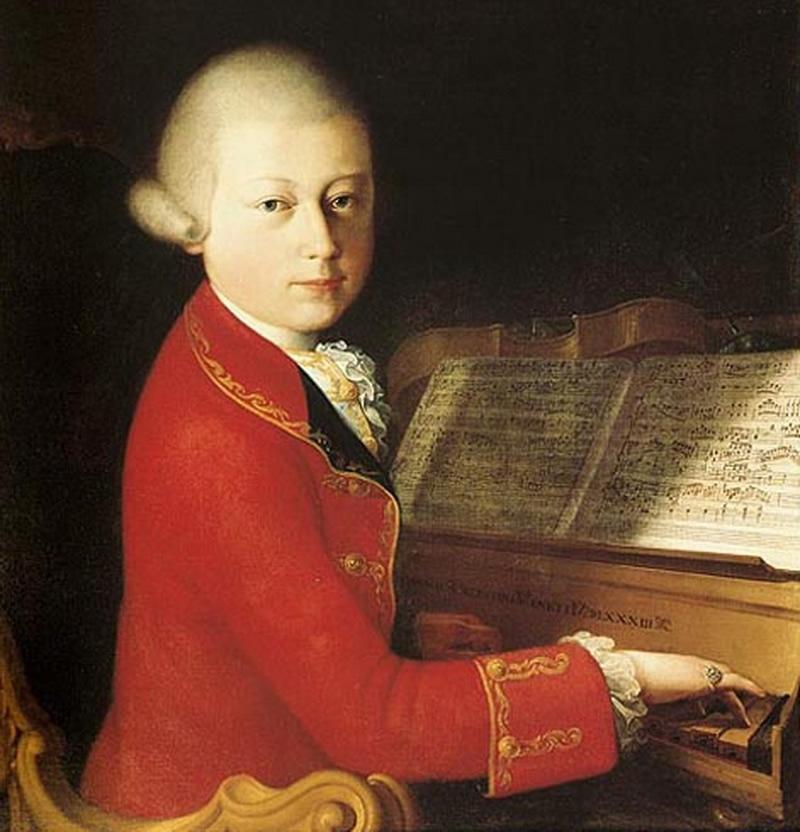
LORELAI: And what if I am a really great fisher? … And all this time I’ve been sitting here with the gift to fish and I am squandering it. It’s like if Mozart walked right by the piano store and never played a note.
As a child, Mozart learned to play several instruments, began composing music at the age of five, and went on an international concert when only six. He could play the piano blindfolded and with crossed hands, but is is said that his favourite instrument was the viola.
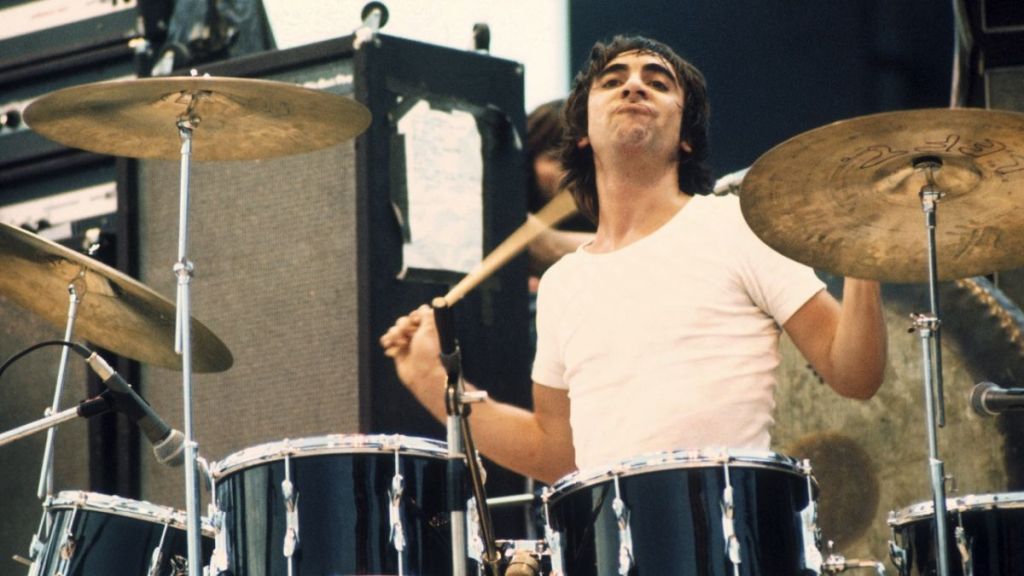
DAVE: I mean, you’ve got the potential, but you’re sloppy. I need a clean roll on the toms but powerful, like Moon.
The toms refer to tom drums a cylindrical drum with no snares, named from the Anglo-Indian and Sinhala language of Sri Lanka, derived from thammattama, from the Tamil word thappu, a type of drum.
Referring to Keith Moon, previously discussed, drummer for The Who, and one of Lane’s drum heroes.
Dave and Lane have come up with a plan to keep their relationship a secret from their bandmates – Dave will put Lane down in public, patronise her, and insult her. Lane is totally into it, as she loves zany schemes and keeping secrets.
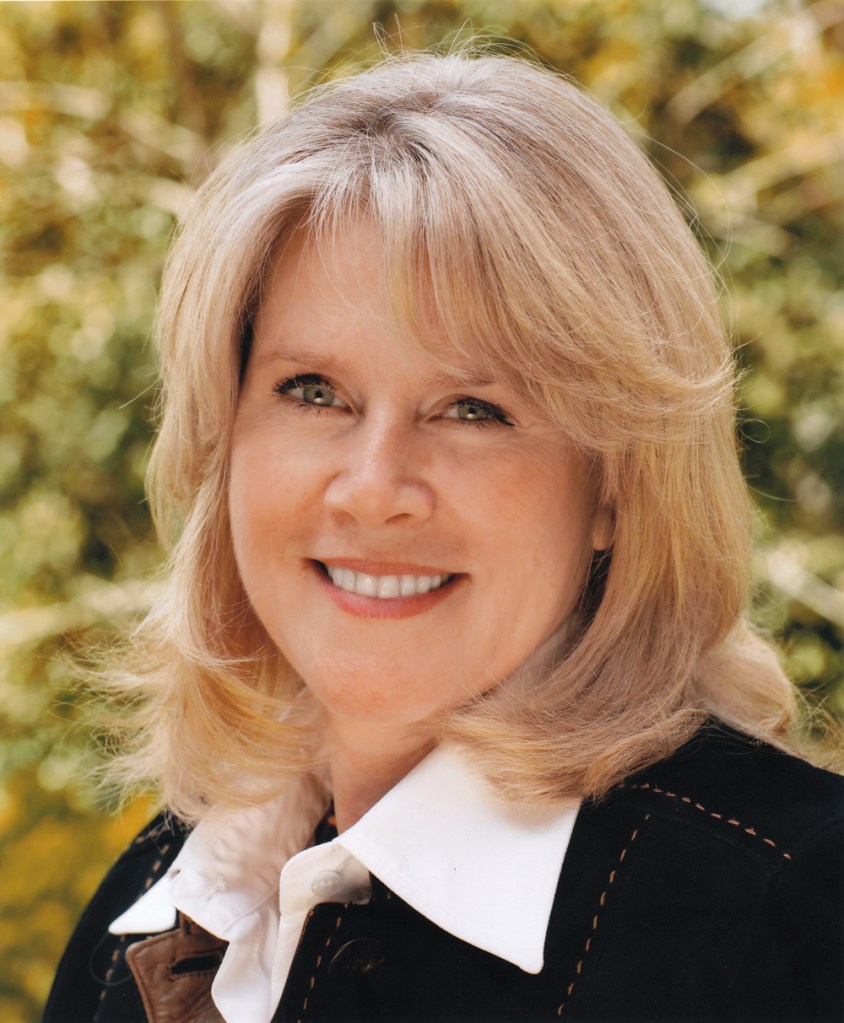
LORELAI: Thanks for the invite, I’m sure it’s gonna be great. Uh, so, uh, you guys have a good rehearsal. I’m gonna go on inside and write to Tipper. Great gal. See you guys later.
Mary “Tipper” Gore (born Mary Aitcheson in 1948), social issues advocate, activist, photographer and author who was the second lady of the United States from 1993 to 2001. She was married to Al Gore, the 45th vice president of the United States, although they separated in 2010.
In 1985, Gore co-founded the Parents Music Resource Center, which advocated for labelling of record covers of releases featuring profane language, especially in the heavy metal, punk, and hip hop genres of music.
Lorelai pretends she supports Tipper Gore to try to put Zack off being attracted to her. It doesn’t seem to work. Perhaps he didn’t listen.


 The Annotated Gilmore Girls