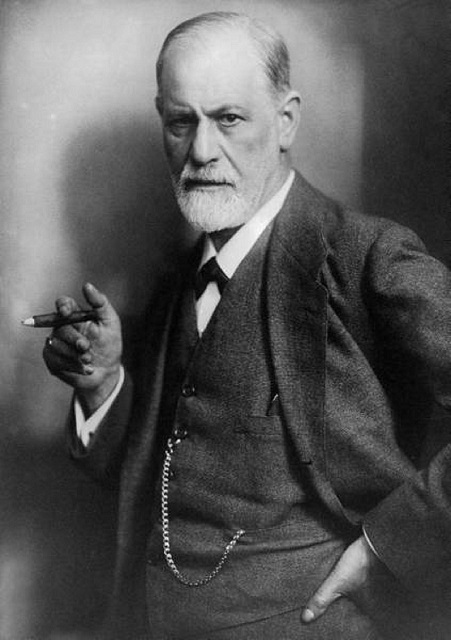
Emily Dickinson

MAX: [on answering machine] Lorelai, it’s Max … Medina. Maaaax Medina. And once again we miss each other. It’s now 2 o’clock in the afternoon on Thursday and I’m in my office grading a paper titled Emily Dickinson: Get a Life.

Emily Dickinson (1830-1886) was an American poet. She lived most of her life in reclusive isolation, and was considered an eccentric. By the end of her life she was reluctant to even leave her bedroom. This probably explains the title of the paper on Emily Dickinson that Max is grading – which seems most unlikely as the work of a Chilton student.

Dickinson was a prolific poet, but less than a dozen of her poems were published during her lifetime, and were usually altered to fit the poetic conventions of the day. Dickinson’s work was unique for her time, with short lines, slant rhymes, and unconventional capitalisation and punctuation. They are rarely titled, and many are on the themes of death and immortality.

Her poems were first published in 1890, but it wasn’t until 1955 that the complete unedited collection was published.
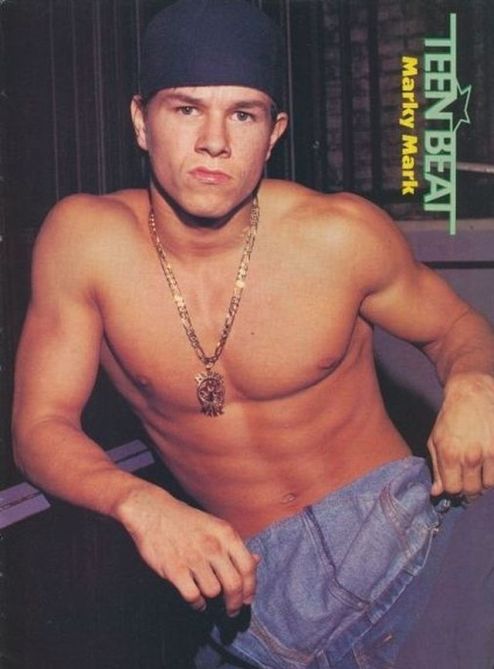
Marky Mark

RORY: You’ll never get that [watching Boogie Nights] past Lorelai.
DEAN: Not a Marky Mark fan?

Dean assumes that Lorelai’s veto of Boogie Nights is because she dislikes Mark Wahlberg (born 1971). In the early 1990s, Mark Wahlberg was in a hip-hop group called Marky Mark and the Funky Bunch; their song Good Vibrations went to #1 in 1991. Wahlberg dropped the stage name Marky Mark after he began his acting career in 1993.

Chuck Heston

BABETTE (referring to Dean): Oh, he’s so cute … And that Chuck Heston chin of his.

Charlton Heston, sometimes known by the nickname Chuck, (1923-2008) was an American Hollywood star who appeared in one hundred films in a career spanning sixty years. He is famous for playing Moses in The Ten Commandments (1956), for starring in Ben-Hur (1959), and for the central role in Planet of the Apes (1968). During the 1980s he became an activist in conservative politics. Like Dean, Charlton Heston was from the Chicago area.

Elsa Klensch

LORELAI: Dab on some lip gloss, clear but fruity. Maybe a little mascara. Wear your hair down and your attitude high.
RORY: You’re like a crazy Elsa Klensch.

Elsa Klensch (born 1933) is an Australian-American journalist and author with a background in fashion. From 1980 to 2001 she was the producer and host of Style with Elsa Klensch, a weekly fashion and design show on CNN.

Gene Wilder


Dean correctly identifies actor Gene Wilder (1933-2016) as playing the title role in Willy Wonka & The Chocolate Factory, which is one of his best known films. Other notable performances are for the films he did with Mel Brooks, and those with Richard Pryor.

Like Gene Hackman, Gene Wilder became an author later in life, producing three novels, a book of short stories, and two memoirs. Wilder and Hackman both appeared in Bonnie and Clyde (1967), and Young Frankenstein (1974).

Gene Hackman

LORELAI: It’s Willy Wonka and the Chocolate Factory.
CASHIER: Oh, that’s nice. Isn’t that the one with Gene Hackman?

Gene Hackman (born Eugene Hackman in 1930) is a retired actor. His career in Hollywood spanned five decades, and he won Best Actor for The French Connection (1971), and Best Supporting Actor for Unforgiven (1992). Hackman became a writer in 1999, and has written five novels.

He tended to do tough guy roles in action and crime films, so that the idea of him playing the whimsically flamboyant Willy Wonka is slightly ludicrous.

Nancy Walker

Rory warns Lorelai she isn’t allowed to do any Nancy Walker impressions when she meets Rory’s new boyfriend.

Nancy Walker (1922-1992) was an American actress and comedian. Rory is most likely thinking of Walker’s role in the award-winning 1970s sitcom, The Mary Tyler Moore Show. In the show, Walker played Ida Morgenstern, the overbearing mother of Mary’s best friend Rhoda Morgenstern; she reprised the role in the spin-off show Rhoda.

Rory’s comment suggests that Lorelai had previously done impressions of Nancy Walker as a joke, pretending to be the sort of interfering mother that she tried so hard not to be.

James Dean

Rory warns her mother she doesn’t want her to make any jokes about James Dean when she meets Rory’s boyfriend Dean.

James Dean (1931-1955) was an American actor, an icon of teenage disillusonment and 1950s cool, best known for his 1955 film Rebel Without a Cause. His early death in a car accident meant that his youth and beauty remained intact forever, and he is regarded as one the great stars of the Golden Age of Hollywood.

James Dean may have been one of the influences on the choice of Dean’s name in Gilmore Girls, especially since James Dean was from the Midwest and loved cars and motorcycles, just like Dean Forester. Along with Dean Moriarty from Jack Kerouac’s On the Road, the name suggests coolness and rebellion – nothing at all like Dean Forester really, but more what Lorelai feared Dean could be, as her comments about tattoos and motorcycles in the Pilot demonstrated.

Freud

LORELAI: You’re going to quote Freud to me? ‘Cause I’ll push you in front of a moving car.

After Luke says it’s not surprising that Rory is attracted to a boy who reminds Lorelai of Rory’s dad Christopher, she believes he might be thinking of Freud.

Sigmund Freud (1856-1939) was an Austrian neurologist and the founder of psychoanalysis. The Oedipus complex – named after the play Oedipus Rex by Sophocles – was a theory he coined in 1910, to describe a child’s unconscious sexual desire for their opposite-sex parent. Some modern psychologists broadly agree with his theory, while others find no evidence it exists. Studies apparently suggest that we are more likely to seek partners with vague physical similarity to our parents.

Luke says that he just meant that Lorelai and Rory are quite alike in their tastes, and it shouldn’t come as a surprise they would be attracted to similar men.


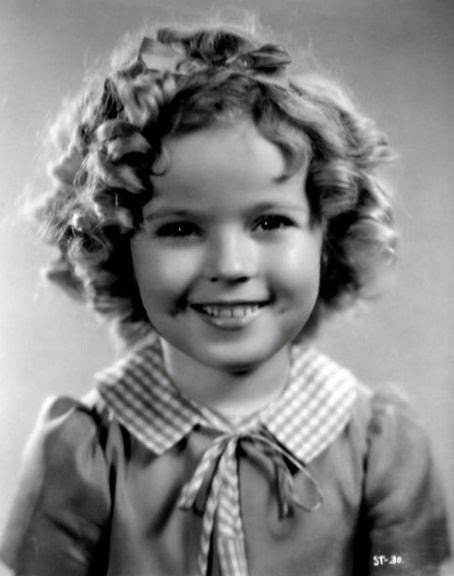
Shirley Temple

LORELAI: Here. [hands Rory a drink]
RORY: What is it?
LORELAI: Shirley Temple.
RORY: What are you drinking?
LORELAI: A Shirley Temple Black.
(Lorelai lets Rory smell her drink.)
RORY: Wow.
LORELAI: I got your Good Ship Lollipop right here, mister.

Shirley Temple (1928-2014) was a multi award-winning box office-topping American Hollywood child star who began her career at the age of three. In 1934, she became famous starring in the film Bright Eyes, written specifically as a vehicle for Temple. On the Good Ship Lollipop is Temple’s musical number from the film, which became her signature song.

Later in life after leaving Hollywood, Shirley married a wealthy businessman named Charles Black so that her name became Shirley Temple Black. Strongly interested in conservative politics, she was US ambassador to Ghana and Czechoslavakia, and was the first female Chief of Protocol of the United States.

The Shirley Temple Lorelai hands Rory is a non-alcoholic cocktail, made for children and named after the child actress. Traditionally it’s made from ginger ale with a splash of grenadine, decorated with a cocktail cherry. Modern versions may be made with lemonade, lemon-lime soda or orange juice. Shirley Temple herself disliked the cocktail, finding it too sweet.

Lorelai indicates that her own drink is the grown-up version of a Shirley Temple (or just a very grown-up cocktail). It is possibly a Dirty Shirley, a Shirley Temple with vodka or rum added to it.