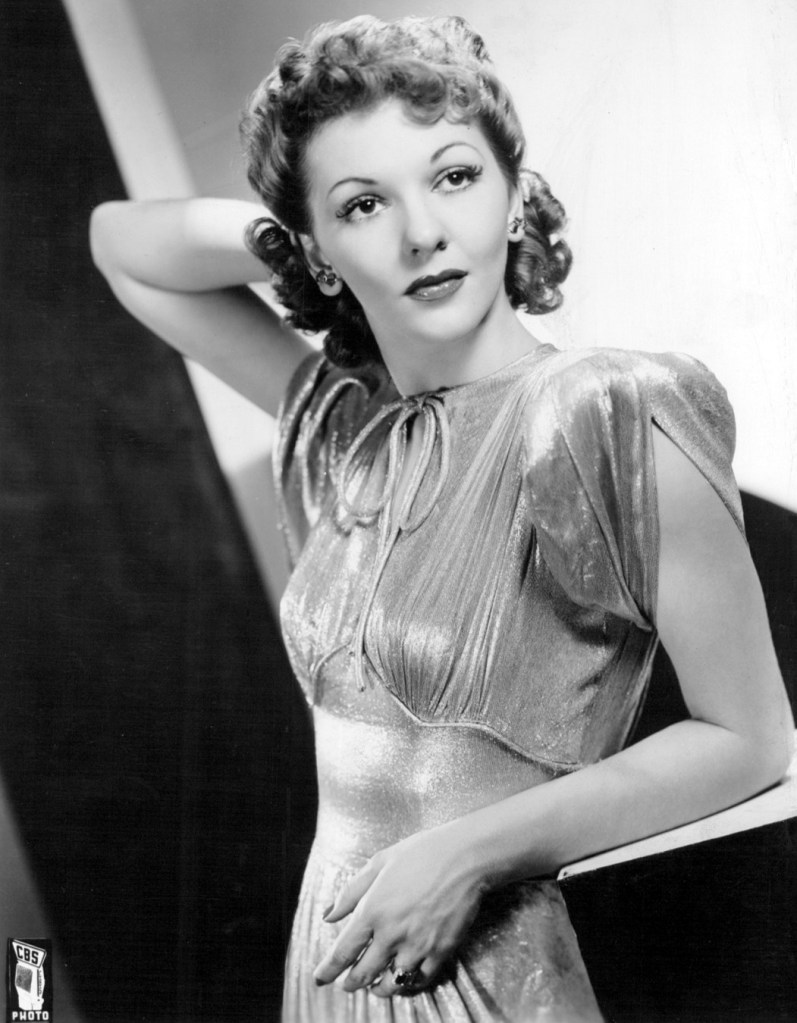
BRAD: Thank you. It’s good to be back. PARIS: Sit down, Mary Martin.
Mary Martin (1913-1990), actress and singer. A muse of Rodgers and Hammerstein, she originated many leading roles on stage over her career, including Nellie Forbush in South Pacific (1949), the title character in Peter Pan (1954), and Maria von Trapp in The Sound of Music (1959). She was inducted into the Theatre Hall of Fame in 1973, and named a Kennedy Center Honoree in 1989. She was the mother of actor Larry Hagman.
TEACHER: Oh, I almost forgot to welcome back Brad Langford. He returns to us fresh from Broadway where he’s just completed a successful run of Into the Woods. Welcome back, Brad.
Into the Woods, 1987 musical with music and lyrics by Stephen Sondheim and book by James Lapine. The musical intertwines the plots of several Brothers Grimm fairy tales, exploring the consequences of the characters’ wishes and quests. It won three Tony Awards, and has been produced many times since.
There was a revival of the musical in Los Angeles in February and March 2002, with the same cast that later ran on Broadway. The 2002 Broadway revival began previews on April 13, 2002 and opened April 30, 2002 at the Broadhurst Theatre, closing on December 29 after a run of 18 previews and 279 regular performances.
Adam Wylie, who plays Brad Langford, really was in the cast of Into the Woods, performing the role of Jack. This doesn’t quite fit into the timeline of the show, because Brad last returned to Chilton after a school transfer in late April 2002 – when he would have already been in Los Angeles for two months, and the musical’s main run was just about to begin.
However, it does explain why we haven’t seen him since then. Apparently he wasn’t frightened off by Paris after all – he was having a successful acting career. He has really come along since his first appearance on Gilmore Girls, when he said he couldn’t act in a school play because he got so nervous he threw up. Quite a transformation.
I’m not sure how Brad can take a year off school to do Broadway, and then simply come back to his senior class like nothing happened. Perhaps there was a private tutor attached to the Broadway production??? Also, Into the Woods finished at the end of January and it’s now the end of March – what was he doing for the past two months?
RICHARD: Oh, if only I could’ve seen Emily hiding in the bushes. It’s like a play by Moliere.
Jean-Baptiste Poquelin (1622-1673), known by his stage name Molière, French playwright, actor, and poet, widely regarded as one of the greatest writers in the French language and world literature. His works include comedies, farces, tragicomedies, comédie-ballets, and more. His plays have been translated into every major living language and are performed at the Comédie-Française more often than those of any other playwright.
Richard may be thinking of his 1665 comedy Don Juan, where Don Juan’s servant hides in the bushes, claiming that he needed to relieve himself there.
ALEX: This is the worst piece of crap I’ve ever seen … I saw Moose Murders. This stinks worse.
Moose Murders, a play by Arthur Bicknell, self-described as a mystery farce. A notorious flop, it is now widely considered the standard of awfulness against which all Broadway failures are judged, and its name has become synonymous with those distinctively bad Broadway plays that open and close on the same night. It had its single performance (excluding 13 previews) at the Eugene O’Neill Theatre on February 22, 1983.
Despite the scathing reviews and its bad reputation, it has been staged by community theatre groups a number of times – it’s possible Alex saw one of these, rather than the original Broadway show in the early 1980s, which seems a bit unlikely.
“Broadway Baby”, a song from the musical Follies, with music and lyrics by Stephen Sondheim and book by James Goldman. First performed in 1971, it takes place in a crumbling Broadway theatre, and follows a reunion of former showgirls who performed in the 1920s and ’30s. It won seven Tony Awards, and “Broadway Baby” has become a popular standard.
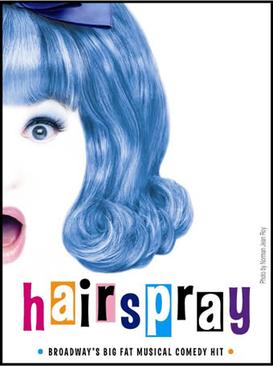
LORELAI: I cannot picture you watching Hairspray. LUKE: It was okay. I liked The Producers better.
Hairspray, musical with music by Marc Shaiman and lyrics by Marc Shaiman and Scott Wittman, with book by Mark O’Donnell and Thomas Meehan, based on John Water’s 1988 film of the same name. Set in 1962 Baltimore, the story follows teenage Tracy Turnblad’s dream to dance on a local TV dance program. When Tracy wins a role on the show, she becomes a celebrity overnight, leading to social change as Tracy campaigns for the show’s racial integration.
The musical opened in Seattle in 2002 and moved to Broadway later that year. In 2003, Hairspray won eight Tony Awards, including one for Best Musical. It ran for 2,642 performances before closing in 2009. Hairspray has also had national tours, a West End production, numerous foreign productions, and was adapted as a 2007 musical film.
The Producers, previously discussed. Lorelai mentioned wanting to see this musical, but thought it was too hard to get tickets. Luke and Nicole don’t seem to have had any trouble – a sign of Luke leaving Lorelai behind a little bit through his relationships with Nicole.
LUKE: Oh, what show? LORELAI: Levittown, it’s a new musical.
The musical that Lorelai is going to see with Alex, Sookie, and Jackson is fictional. Levittown is a hamlet on Long Island, New York, built by Levitt & Sons as a planned community for returning World War II veterans between 1947 and 1951.
It was the first mass-produced suburb, and became a symbol of the American Dream, and of racial discrimination – the Levitts would only allow whites to buy in the suburb, and as late as the 1990s, only a tiny portion of the community were non-white. They built other Levittowns in Pennsylvania, New Jersey, and Puerto Rico.
Oddly enough, a real play called Levittown – a drama, not a musical – opened off-Broadway in 2009, to lukewarm response, although successful enough to be staged a few times since then.
In real life, there weren’t any new musicals debuting in New York in February 2003.
RORY: How was work? JESS: I toted the barge, lifted the bale.
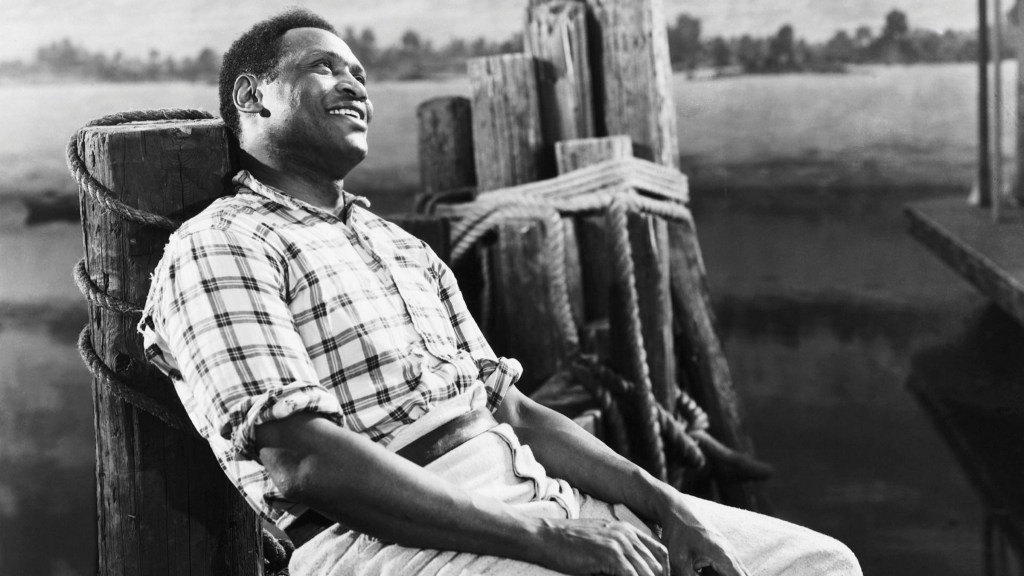
Jess refers to the show tune “Ol’ Man River”, with music by Jerome Kern and lyrics by Oscar Hammerstein III, from the 1927 musical Showboat. The song contrasts the struggles and hardships of African Americans with the endless, uncaring flow of the Mississippi River. It is sung from the point of view of a black dock worker on a showboat, and is the most famous song from the show.
Jules Bledsoe sang the song in the original stage version, and William Warfield in the 1951 film version. In 1928, Paul Robeson recorded the most famous version, which was sung at dance tempo; Robeson’s recording was recorded into the Grammy Hall of Fame in 2006.
The lyrics say, Tote that barge! Lift that bale!, to indicate the hard work undertaken on the river by black workers.
MISS PATTY: I was a chorus girl in a bus-and-truck tour of Guys and Dolls. Beantown, I love that town. And there I was, me and the girls backstage after the show, and in she comes. And who does [Bette Davis] walk right up to, but little old me. And she sized me up, exhaled some smoke from that regal mouth of hers, and said, “Doll, you don’t got the high notes but you sure got the gams.” I’ll always treasure that moment with Bette and I wanna dedicate this song to her.
Guys and Dolls, a 1950 Broadway musical, with music and lyrics by Frank Loesser, and book by Jo Swerling and Abe Burrows. It is based on several short stories of the 1920s and ’30s by Damon Runyon.
The musical received overwhelming critical acclaim, and praise for its faithfulness to Runyon’s stories. It won several Tony Awards, including Best Musical, and had multiple Broadway and London revivals, as well as a 1955 film adaptation starring Marlon Brando, Jean Simmons, and Frank Sinatra. In 1998, the original cast was inducted into the Grammy Hall of Fame. It is considered one of the most significant musicals of all time.
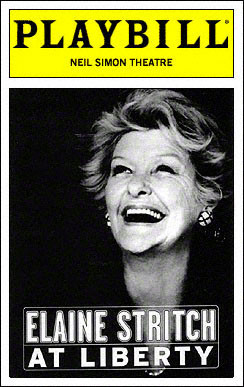
MISS PATTY: It’s part stories, part songs. Kind of like what Elaine Stritch did on Broadway, but without the bitterness. My working title – Buckle Up, I’m Patty.
Elaine Stritch (1925-2014), actress, known for her work on Broadway and later, television. She made her professional stage debut in 1944 and appeared in numerous stage plays, musicals, feature films and television series. Stritch was inducted into the American Theater Hall of Fame in 1995.
Patty refers to her autobiographical one-woman show, Elaine Stritch at Liberty, composed of anecdotes from Stritch’s life, as well as showtunes and Broadway standards that mirror Stritch’s rise and fall both on and off the stage. It ran on Broadway from November 2001 to May 2002, after which Stritch continued to perform it at regional and international venues.
The Broadway production was recognised with the 2002 Tony Award for Best Special Theatrical Event and the 2002 Drama Desk Award for Outstanding Book of a Musical. A recording of the show was released in 2002, and a TV documentary of the show was later broadcast, in 2004.




 The Annotated Gilmore Girls