A Slightly Confusing Timeline

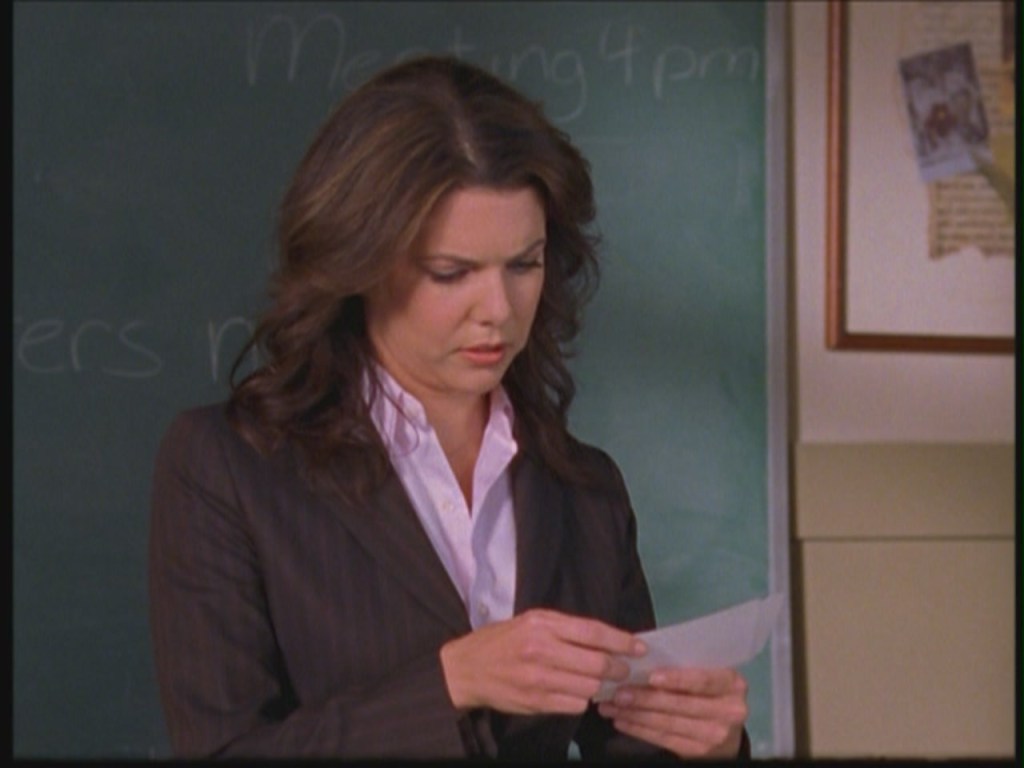
Lorelai seemed to meet Dwight on a Monday night, just before the auction on Tuesday. He asked if she could water his lawn, as he was leaving for a few days on an urgent last-minute business trip. As Rory was waiting for her with the pizza, Lorelai tried to put him off, saying that Dwight could show her some other time before he left on his trip. Dwight said he was leaving for his business trip at 6 am the next morning, so Lorelai reluctantly accompanied him to be shown how to use the spigot.

Even though Dwight supposedly left for his business trip on the morning of the day of the auction, Lorelai and Rory are not shown watering his lawn until about a week later – even though the business trip was only meant to be a few days. They have had Friday night dinner, and Rory is now wearing her school uniform, so they are past the weekend, and it is another Monday at the absolute earliest.

Somehow they just skipped an entire week of lawn watering and Dwight is still on his short business trip. I know I usually blame Daniel Palladino for these timeline inconsistencies and non-linear plotting, but this episode was written by Justin Tanner, a successful playwright, and a story editor on Gilmore Girls. This is the only episode he ever wrote.

Dwight

The Gilmore girls get a new neighbour in this episode, named Dwight, who moves into the house opposite them, previously occupied by a man named Beenie Morrison. Dwight is played by Jason Kravits, who had been involved with the Washington DC theatre scene, and then in a writer’s collective in New York City. From 1999 to 2001, he played the role of A.D.A. Richard Bray on medical drama The Practice.

As with so many of these characters, don’t expect to ever see or hear of Dwight again – he will disappear as mysteriously as Beenie Morrison after this episode.

Sardi’s

DEBBIE: Well, I felt obligated to tell the other moms about your little performance at school before they heard about it elsewhere.

LORELAI: Really, ’cause usually I like to meet up at Sardi’s after a performance, wait for the reviews. I hope The Times liked me.

Sardi’s, continental restaurant in the theatre district of Manhattan in New York City. It was founded by Vincent Sardi Sr and his wife Jenny Pallera, and first opened in 1927. It is known for the caricatures of Broadway celebrities on its walls, of which there are over a thousand. Sardi died in 1969, and the restaurant declined in the 1980s, being sold in 1986. After closing temporarily in 1990, it reopened with new staff.

The restaurant is considered an institution in Broadway theatre. It’s known as a place to gather before and after the theatre hangout, as well as a location for opening night parties, and was where the idea of the Tony Award was devised. Lorelai sarcastically puts herself in the role of an actor waiting at Sardi’s for the reviews of their performance in the New York Times.

Lorelai’s Careers Talk Goes Off Script

Lorelai begins giving her careers talk at Stars Hollow High, but it is almost immediately hijacked by students who are more interested in hearing about when she got pregnant with Rory, and whether she regrets it. You get the distinct impression that for these teens, Lorelai has long been a source of fascination (and probably of gossip), and they have been waiting for an opportunity to ask questions about her decision to keep Rory and commit to being a single mother.

Lorelai looks to Debbie Fincher for help, but receives absolutely none – it’s a supervised event organised by the PTA, and yet nobody steps in to ask the students to keep their questions only on the subject of Lorelai’s career, not her personal life. Lorelai could have said something along these lines herself, but she makes an attempt to answer their questions honestly, to show that she’s not ashamed. Unfortunately, she makes a bit of a mess of it – by the end she is very unwisely offering to take them all out for coffee to discuss her life in more depth. Boundaries, Lorelai!

One of the girls asking questions is Riki Lindhome (she’s the one with blonde pigtails), who would play the role of Juliet in later seasons of Gilmore Girls. At that time she had had a small role in Buffy the Vampire Slayer. She later got her big break in Tim Robbins’ hit play, Embedded, and was then cast in her first film role by Clint Eastwood in Million Dollar Baby (2004). She’s gone on to have a successful career in film and television, and performs in a comedy duo called Garfunkel and Oates with Kate Micucci.

Hello, Dolly!

The song that Lorelai sings in a Louis Armstrong voice to annoy Luke.

“Hello, Dolly!” is the title track to the popular 1964 musical of the same name, the song was written by Jerry Herman. It was first sung by Carol Channing in the original Broadway production, which opened to great success. Louis Armstrong‘s recording of the song was released shortly afterwards, which reached #1 in the US, ending The Beatles‘ streak of three chart-topping hits over fourteen weeks.

“Hello, Dolly!” is Louis Armstrong’s most commercially successful song. It won the Grammy Award for Song of the Year in 1965, and Armstrong received the Grammy for Best Vocal Performance, Male. Louis Armstrong performed the song with Barbra Streisand in the 1969 film version of Hello, Dolly! [pictured]

Falstaff

DARREN: In which play does Falstaff appear?

JACK: That would be plays … Henry the Fourth, Part One and Two, and The Merry Wives of Windsor.

DARREN: So that was a different Falstaff than Henry the Fifth?

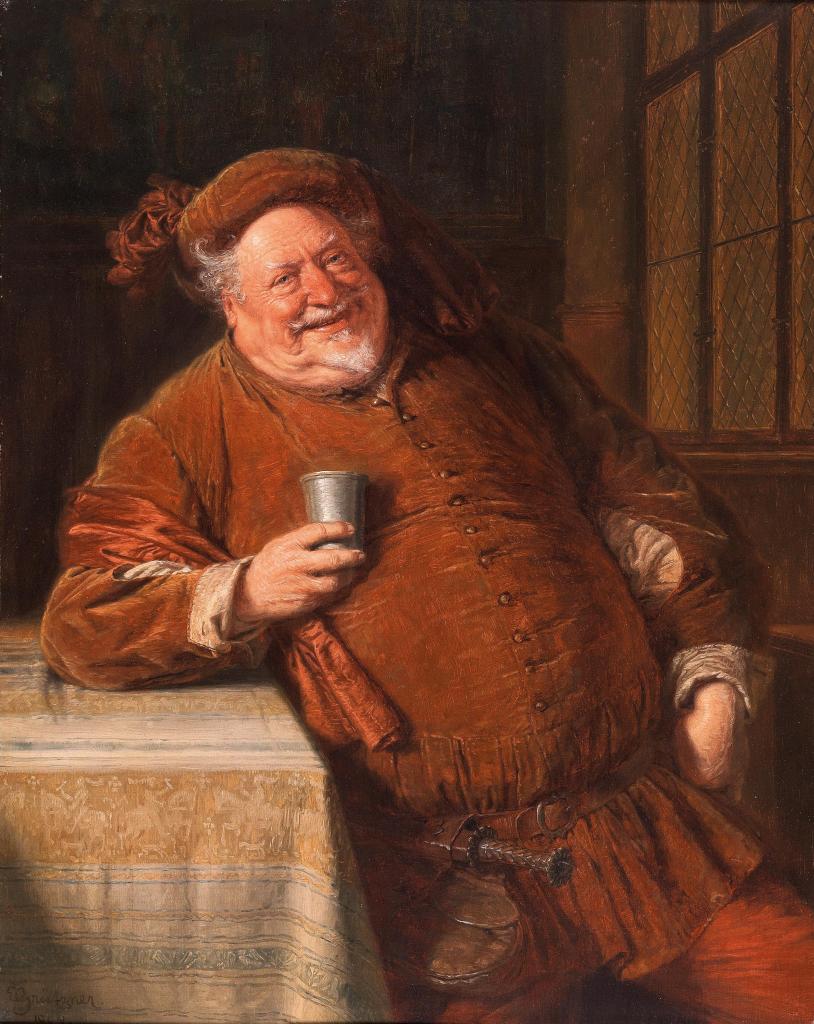
Sir John Falstaff is a comic character created by William Shakespeare. A fat, vain, and boastful knight, he spends most of his time drinking with petty criminals, living on stolen or borrowed money. He is best known from Henry IV, Part 1, where he is the companion of Prince Hal. Although Falstaff is a drunken, corrupt lowlife, he has charisma and a zest for life that the prince enjoys. In Henry IV, Part 2, Prince Hal is on his path to kingship, and ultimately rejects Falstaff as a companion. They meet briefly only twice in the play, and Falstaff is ageing and unwell.

Darren is incorrect that Falstaff appears in Henry V – he dies offstage, but another character memorably describes his death.

Sir John Falstaff appears in the comedy, The Merry Wives of Windsor. He is vaguely recognisable as the same character, but there is otherwise no connection to the earlier plays, and it has been argued that it isn’t the same Sir John Falstaff. Although nominally set during the reign of either Henry IV or Henry V, everything in the play suggests that it actually takes place in Shakespeare’s own time, around the late 1500s. Tradition has it that the play was written at the request of Queen Elizabeth I, who asked Shakespeare to write a play where Falstaff falls in love.

[Painting shown is Falstaff II by Eduard von Grützner, 1904]

Farmer John, The Butcher Lazar Wolf

LORELAI: So what do we call this guy, alumnus Darren, you know, like you’d say Farmer John or the butcher Lazar Wolf?

Farmer John: a 1959 song about marrying a farmer’s daughter, written and recorded by R&B duo Don and Dewey (Don “Sugarcane” Harris and Dewey Terry). It didn’t get much attention, but was reinvigorated in 1964 by garage rock band The Premiers, whose raw party sound made the song popular, reaching #19 on the charts. It has been covered since several times, including by Neil Young, where it appears on his 1990 album, Ragged Glory.

The Butcher Lazar Wolf: a character from the musical Fiddler on the Roof, previously discussed. The wealthy widower and butcher of the village.

A Confederacy of Dunces

This is the book Jess is reading when his girlfriend arrives to meet him.

A Confederacy of Dunces is a picaresque novel by John Kennedy Toole, written in 1963 but published in 1980, eleven years after Toole’s death by suicide. It became a cult classic, then a mainstream success, winning the Pulitzer Prize for Fiction in 1981. The title refers to an epigram from Jonathan Swift’s essay, Thoughts on Various Subjects, Moral and Diverting: “When a true genius appears in the world, you may know him by this sign, that the dunces are all in confederacy against him.”

The protagonist of the novel is Ignatius J. Reilly, an educated but lazy thirty-year-old man living with his mother in the Uptown district of New Orleans in the early 1960s. He has been called a modern Don Quixote, an eccentric and idealistic slob who disdains pop culture, and believes that his numerous failings are the working of a higher power. Due to a car accident his mother gets in, Ignatius must work for the first time in many years to pay off her damages bill, moving from one low-paid job to another and having various adventures with colourful characters in the French Quarter of the city.

The novel is famous for its rich depiction of New Orleans and its dialects, many locals seeing it as the best and most accurate fictional depiction of the city. A bronze statue of Ignatius J. Reilly is on Canal Street in New Orleans. It has been adapted for the stage, including as a musical comedy, and has often been planned as a film. These various attempts to adapt it for the screen have come to nothing (often with the slated lead actor dying, and once with a studio head being murdered, not to mention Hurricane Katrina devastating New Orleans in 2005), leading to the belief there is a “curse” on it as a film project.

The novel’s title is a comment on how Rory and Lorelai see Jess and his girlfriend in this scene, as a pair of “dunces” who can barely hold a conversation together. However, it is also believable as a modern American classic that Jess might read, complete with a male protagonist who is an intelligent failure railing against the world, his fate, and modern life. This seems to be the sort of hero that Jess can relate to. Note that it’s also set in the American South – a literary setting which Rory is also drawn to, underlining how much they have in common.

Nell

SOOKIE: So how are you planning on telling [your parents about Christopher]?

LORELAI: I thought I’d do it like Nell. You know, chicka chicka chickabee.

Lorelai refers to the 1994 drama film Nell, directed by British director Michael Apted, and starring Jodie Foster as Nell Kellty, a young woman who has to face people for the first time after being raised by her mother in an isolated cabin. It is based on the play Idioglossia by Mark Handler, inspired by his experiences living in the Cascade Mountains in the Pacific Northwest, and by identical twins Grace and Virginia Kennedy (born 1970), who invented their own language. Their story is told in the 1980 documentary Poto and Cabengo (the twins’ own names for themselves).

In the film, Nell likewise speaks her own language in a strange and unique accent. She says “Chicka chicka chickabee”, which is her way of saying “dear one, beloved” (a variation on chickadee and chickabiddy, both used as endearments in some regions of the US).

Nell was a commercial success and received mixed reviews, with Foster’s performance being warmly praised.

Oscar Wilde

SOOKIE: What do you think, manly [holding up statue]?

LORELAI: In an Oscar Wilde sort of way, absolutely.

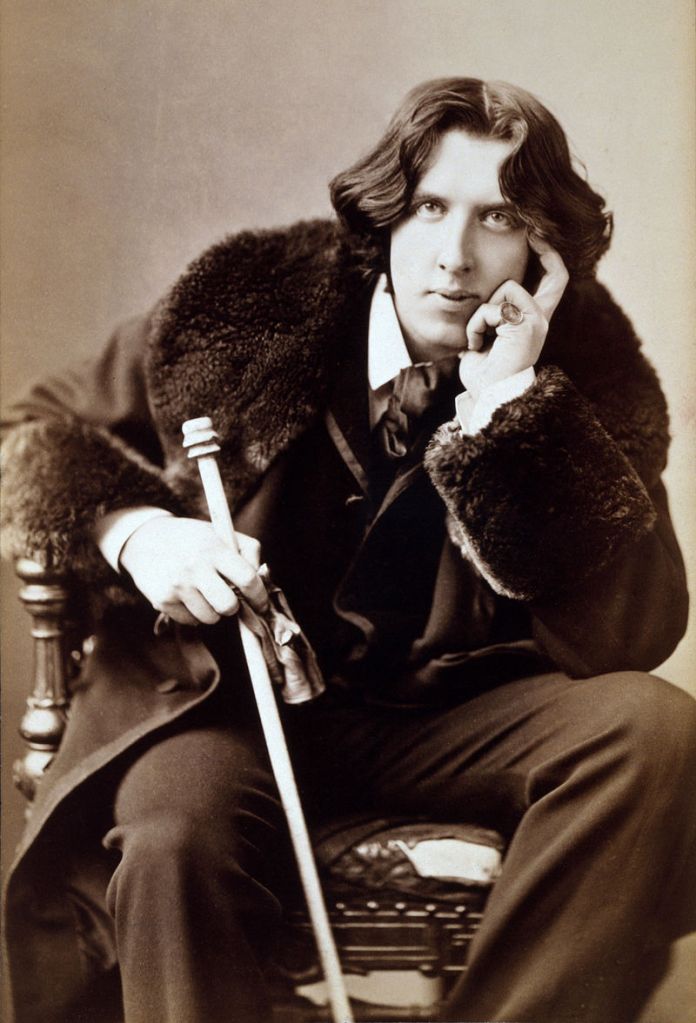
Oscar Wilde (1854-1900), Irish poet and playwright, and one of the most popular playwrights in London in the early 1890s. Best remembered for his sparkling comedies, witty epigrams, and his only novel, The Picture of Dorian Gray (1890).

At the height of his fame and success, while his play The Importance of Being Ernest (1895) was still being performed in London, Wilde prosecuted the Marquess of Queensberry (the father of Wilde’s lover, Lord Alfred Douglas) for libel, but the trial unearthed evidence that led to Wilde’s arrest for indecency with men and boys. He was convicted and sentenced to two years’ hard labour, and imprisoned from 1895 to 1897. On his release, he left for France, and never returned to Ireland or Britain.

The statue that Sookie holds up appears to be a cherub or some other sort of nude small boy. It certainly doesn’t look butch, but Lorelai seems to be saying, not so much that the statue seems “gay”, as slightly paedophilic, because of the subject matter.

Oscar Wilde did take teenagers as young as fourteen as his lover, although to my knowledge, not small children like the statue seems to be (Wilde’s trial was based on his activities with males because of their gender, not specifically with their ages). The full details of Wilde’s case had been published in 2001, with many people shocked, or at least uncomfortable, with how extensive Wilde’s interest in much younger males had been – something which would have seen Wilde imprisoned in our time as well. This may be what Amy Sherman-Palladino had in mind when she wrote this scene.