Jess and Dean Get Into a Bidding War

Dean puts a $5 bid on Rory’s basket, even though Taylor set the bidding at $3. He is expecting that to be the end of the matter, but is shocked when Jess begins bidding against him. Eventually Jess gets Rory’s basket for $90 – Dean, who has only come prepared with a small amount of money, expecting to win the bid straight away, cannot compete.

Rory’s is actually the most expensive basket we see at the auction, even though it’s tiny with only a few leftovers in it. Even Taylor tries to dissuade the boys from bidding so much, despite the fact the money is being raised for charity.

This interaction is an homage to the box social auction scene from the 1955 musical film, Oklahoma!, based on the 1943 stage musical by Rodgers and Hammerstein, which was based on the 1931 play Green Grow the Lilacs by Lynn Riggs.

The film focuses on the love triangle between virginal farm girl Laurey (Shirley Jones), charming cowboy Curly (Gordon MacRae), and unchivalrous farm hand Jud (Rod Steiger). Laurey goes to the box social with Jud to teach Curly a lesson, and the two men end up in a bidding war for Laurey’s picnic hamper at the auction. It seems as if Jud has won, but then Curly sells everything he has in order to raise enough money to get the winning bid.

The clean cut Dean and outsider Jess are clear analogies to Curly and Jud, but unlike the film, Dean has no way of instantly raising the money to get the highest bid. It does suggest that Rory accepts the lunch date with Jess because she’s fed up with Dean, as Laurey accepts Jud’s invitation because she’s tired of the way she’s being match-made with Curly. It also hints at Jess’ obsession with Rory, as Jud becomes obsessed with Laurey.

However, in the film, Laurey and Curly end up married, and Jud is killed in a fight with Curly. Perhaps this is meant reflect a bit of wishful thinking from Dean!

[Picture shows Laurey and Jud in Oklahoma!]
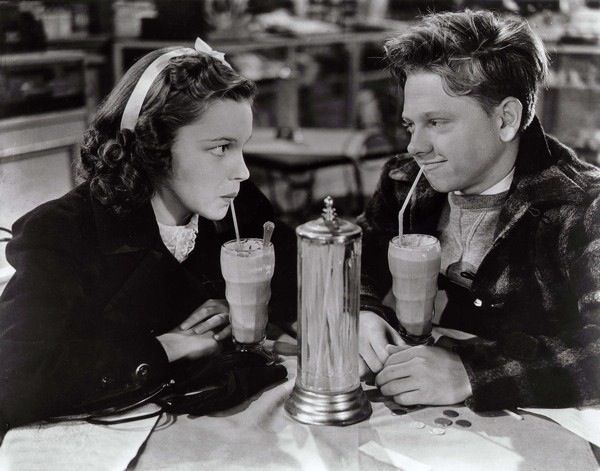
Andy Hardy

LORELAI: Ugh, every great relationship has its obstacles. You’d know that if you weren’t dating Andy Hardy.

Andrew “Andy” Hardy, fictional character played by Mickey Rooney in 16 films made by Metro-Goldwyn between 1937 and 1946 (and another in 1958, trying unsuccessfully to continue the series). The Hardy films, enormously popular in their day, were sentimental comedies set in a Midwestern town, celebrating ordinary American life.

The Hardy family first appeared in the 1928 play Skidding by Aurania Rouverol, with Charles Eaton as Andy. The first film was A Family Affair, based on the play, with Mickey Rooney as Andy, and he continued in the role from the ages of 16 to 25.

Andy Hardy soon became the central character, with the films focusing on the relationship between he and his father, Judge Hardy (a bit like Gilmore Girls focusing on Rory and Lorelai). The plot typically involved Andy getting in trouble with money or girls because of selfishness or trying to fudge the truth. He would then have a man-to-man talk with his father, a man of absolute integrity, and end up doing the right thing (very different to Gilmore Girls).

Lorelai seems to be teasing Rory about Dean, suggesting that she’s dating a wholesome, inexperienced teenage boy from the Midwest, like Andy Hardy. Meanwhile, Lorelai is looking for a real man, like William Holden.

Interestingly, the cast of A Family Affair were plucked straight from the 1935 comedy, Ah, Wilderness! The plot involves a well-read teenage boy named Richard (played by Eric Linden) from a Connecticut town, graduating as valedictorian and going to Yale, just like Rory. The film also features a box social!

[Picture shows Mickey Rooney and Judy Garland in Love Finds Andy Hardy, 1938].

A Foggy Day (In London Town)

This is the song playing on the stereo when Richard returns home from Stars Hollow. It plays over him looking sad while alone in his study, until the end of the episode.

The opening lyrics are in tune with Richard’s melancholy mood:

I was a stranger in the city
Out of town were the people I knew
I had that feeling of self pity
What to do, what to do, what to do?
The outlook was decidedly blue

A Foggy Day was composed by George Gershwin, with lyrics by Ira Gershwin. It was introduced by Fred Astaire in the 1937 musical comedy film A Damsel in Distress, loosely based on the 1919 novel of the same name by P.G. Wodehouse, and the 1928 stage play written by Wodehouse and Ian Hay. Astaire’s recording was very popular in 1937.

The song has been covered numerous times, and Richard listens to a Frank Sinatra version. Richard may be listening to his 1954 album Songs for Young Lovers, produced by Voyle Gilmore (!), or from the 1961 Ring-a-Ding-Ding! The second one, which was well-reviewed and went to #4 in the charts, seems more likely, as Richard would been about eighteen when it came out.

Reese Witherspoon

RICHARD: Who’s going to help her get into Harvard?
LORELAI: Reese Witherspoon.

Laura Jeanne Reese Witherspoon (born 1976), multi-award winning actress and producer. She has an Academy Award, two Golden Globes, a BAFTA, a Screen Actors Guild Award, and an Emmy. One of the highest-paid actresses in the world, she has been named one of the most powerful women in the world, and one of the most influential.

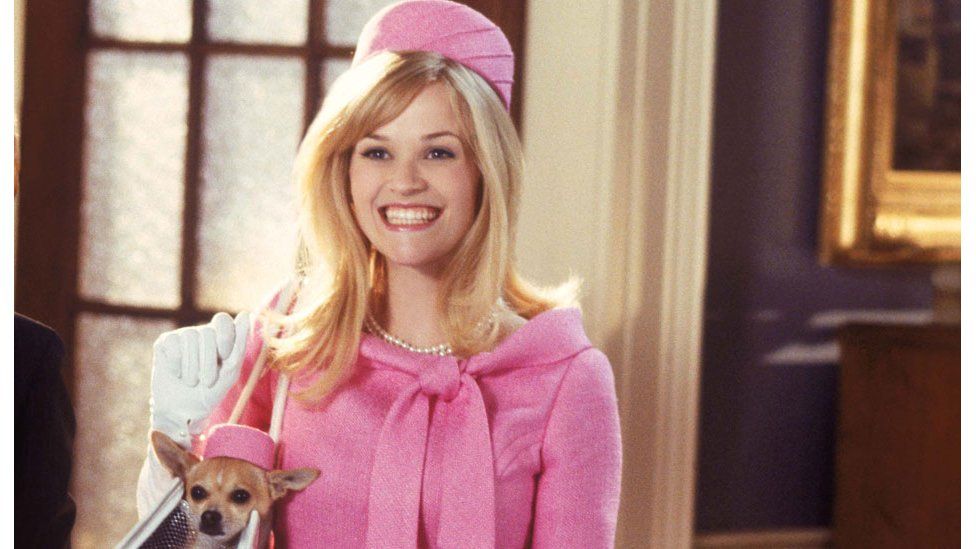
Lorelai refers to Witherspoon’s 2001 comedy, Legally Blonde, directed by Robert Luketic, and based on the 2001 novel of the same name by Amanda Brown. Witherspoon plays Elle Woods, a sorority girl who attempts to win back her ex-boyfriend by becoming a Doctor of Law at Harvard University. In the process, she overcomes stereotypes about pretty blondes, and triumphs as a successful lawyer through unflappable self-confidence and fashion/beauty know-how.

Legally Blonde was a box-office hit which led to a sequel, a direct to DVD spin-off, and a stage musical. It received generally favourable reviews, and Reese Witherspoon received the 2002 MTV Award for Best Female Performance. Another film in the series is scheduled for 2022.

Rory’s Bookshelf

When Rory shows Richard her bedroom, he checks out her bookshelf. Here are some of the books we can see:

Summer of Fear

A 1993 serial killer novel by T. Jefferson Parker, who writes bestselling police procedural novels set in California. Parker is a journalist who turned novelist – perhaps a tiny hint of where Rory’s career is eventually headed.

The Scarecrow of Oz

A 1915 children’s book by L. Frank Baum, the ninth in his series of Oz books. The Wizard of Oz is a touchstone for Gilmore Girls, and this seems to be a little nod to the land of Oz. The Scarecrow from the original story is the magical helper (the one who didn’t have a brain, but was actually quite smart), and the human protagonists are a man and a little girl from California.

Contact

A 1985 science novel by scientist Carl Sagan. The heroine is a scientist named Ellie who showed a strong aptitude for science and mathematics from a young age, and has been left emotionally bereft by the loss of her father, with a problematic relationship with her mother. Contact with an alien civilisation allows Ellie a strange chance to reconnect with her memories of her father. It feels like something that would resonate with Rory. Ellie is also from California. The novel was a bestseller, and made into a film in 1997, starring Jodie Foster. The film might have given Rory an interest in reading the novel.

The Apocalyptics: Cancer and the Big Lie

Edith Efron was a journalist who began her career at the New York Times Magazine, became a member of Ayn Rand’s circle and wrote for her magazine, and then became editor of TV Guide at the height of its popularity. She was critical of what she perceived as “liberal bias in the media”, but provided a strong voice on race relations (Efron had a biracial son during 1950s segregation). She later wrote for the libertarian publication, Reason. The Apocalyptics is a 1984 exposé of the cancer industry and a criticism of environmental policy which Efron saw as being based on “bad science” (basically saying Rachel Carson etc were all a bunch of doom-merchants). It’s an obscure, controversial, and extremely heavy-going work. An intriguing insight into Rory’s interests.

Working: People Talk About What They Do All Day and How They Feel About What They Do

A 1974 non-fiction book by oral historian and radio broadcaster Louis “Studs” Terkel. An exploration of what makes work meaningful for people, based on interviews with people from all walks of life. It was a bestseller, and turned into a Broadway musical in 1977, and a graphic novel in 2009.

A book by “Tobias Allcot”

This seems to be a fictional book which would have been created by the props department as a slightly odd joke. Tobias Allcot is the name of a Pulitzer Prize-winning author in the film The Man from Elysian Fields, directed by George Hinkenlooper; James Coburn portrays Allcot. The film wasn’t released until September 2002, but had been shown at the Toronto Film Festival in September 2001.

Angela Lansbury

LUKE: Who’s your friend?
RORY: Angela Lansbury.

Dame Angela Lansbury (born 1925), British-Irish-American actress with a long and prolific career on radio, stage, film, and television. Her first film role was in the 1944 movie Gaslight, previously discussed. She has received an Honorary Academy Award, a Lifetime Achievement BAFTA Award, A Lifetime Achievement Award from the Screenwriters Guild, five Tony Awards, a Laurence Olivier Award, and six Golden Globe Awards.

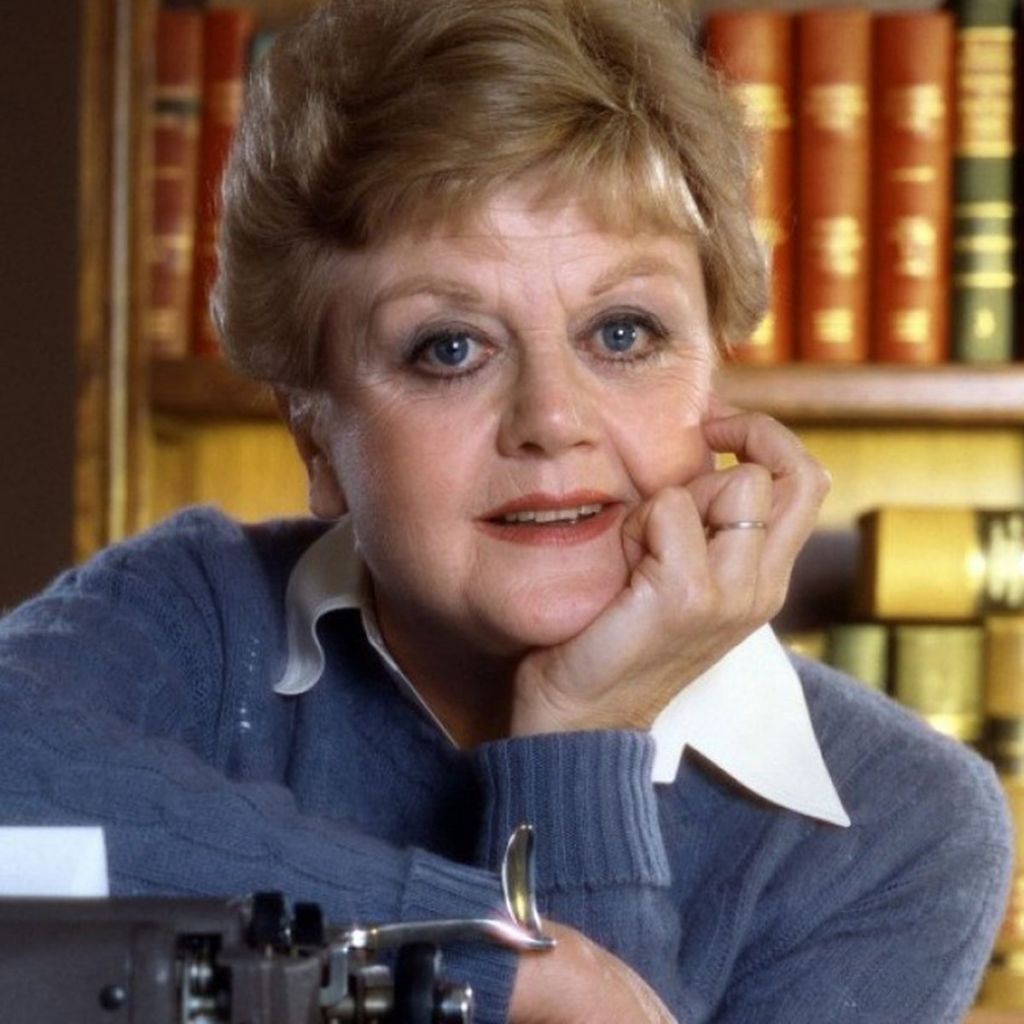
She is best known for starring as Jessica Fletcher in the television detective series Murder She Wrote (1984-96). Jessica Fletcher was a retired schoolteacher turned detective novelist who was often called upon to solve murders in her spare time. Although reviews were mixed, the show was very popular and rated extremely well, especially with older viewers.

Ruth Gordon Film Festival

RORY: Ooh, we could do a Ruth Gordon film festival. Harold and Maude, Rosemary’s Baby, and that really great episode of Taxi.

Ruth Gordon Jones (1896-1985), actress, screenwriter, and playwright. She was known for her nasal voice and distinctive personality, and became most successful in later life, being chosen for major screen roles in her 70s and 80s, and winning several awards. She seems to be a favourite of Rory.

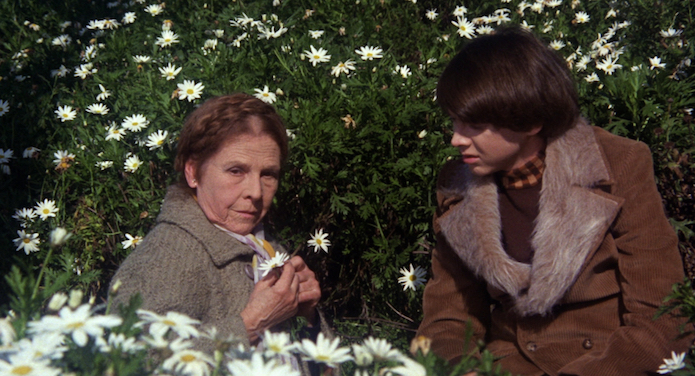
Harold and Maude [pictured], 1971 coming-of-age dark comedy/existentialist drama. Directed by Hal Ashby and written by Colin Higgins, it follows the exploits of Harold (played by Bud Cort), a 19-year-old from a wealthy but emotionally cold family who is obsessed with death. He develops a friendship, later a romance, with 79-year-old Maude (Ruth Gordon), a Holocaust survivor who teaches him about living life to the fullest. It initially received mixed reviews, but became a runaway cult favourite, and is now regarded as one of the best comedies, best romances, and greatest films of all time. Colin Higgins adapted the screenplay into a novel, then a stage play.

Rosemary’s Baby, previously discussed. For this film she won the Academy Award for Best Supporting Actress, as well as a Golden Globe Award and a Kansas City Film Critics Circle Award.

Taxi, award-winning sitcom which aired from 1978 to 1983, focusing on the lives of the employees of the fictional Sunshine Cab Company in Manhattan. Ruth Gordon made a guest appearance in the 1979 episode Sugar Mama, playing a woman who tries to solicit one of the taxi drivers as a male escort. She won an Emmy Award for Outstanding Lead Actress in a Comedy Series.

John Waters

RORY: So the music selection, yours I assume?
LANE: Yeah, there was a bit of an education process going on.
RORY: I liked it. Very John Waters.

John Waters (born 1946), filmmaker, actor, writer and artist. He rose to fame in the 1970s making transgressive cult films such as Pink Flamingos (1972), often starring his childhood friend and muse, the drag queen Divine. His films became more mainstream in the 1980s, and his 1988 musical Hairspray became an international success and was turned into a Broadway stage musical. His most recent film in 2002 was the box-office failure, Cecil B. Demented (2000). All his films are set in his home town of Baltimore, Maryland.

Rory is probably suggesting that the cheerleader routine had the same surreal, kitschy appeal as a John Waters film.

Lorelai’s Contributions to Stars Hollow

Made all the donkey outfits for the 2001 Christmas Festival – we never saw this, but presumably it’s the same festival that the Christmas pageant is a part of. Seems like a lot of people dressed up as donkeys for the festival, in typical quirky Stars Hollow fashion.

Organised the Save the Historic Oak Tree campaign. Apparently Stars Hollow has a historic oak tree, which we haven’t seen, and Lorelai saved it.

Played the role of Tevye in Fiddler on the Roof for the Stars Hollow Community Theater. Tevye is the father and patriarch in the musical, so Lorelai must have been great to beat any male competitors for the role (unless she was the only candidate, or they were doing a gender-flipped version). Either way, she obviously gave a standout performance. A reminder that Lorelai has to be both mother and father, as a single parent.

I don’t know why Sookie and Rory think any of these things will help Lorelai get a loan – do either of them know how banks work? They don’t give you loans based on how nice and community-minded you are.

Rocky Horror Picture Show

LORELAI: Okay. So we should celebrate. Hey, how about we get all dressed up tonight and hit The Rocky Horror Picture Show?

The Rocky Horror Picture Show, the 1975 musical comedy horror film, previously mentioned. Directed by Jim Sharman, it is based on the 1973 stage production of The Rocky Horror Show, with music, book, and lyrics by Richard O’Brien (who co-wrote the film’s screenplay and plays Riff Raff in the film).

The film begins with a young engaged couple named Brad and Janet who get lost one night and end up at the castle of a cross-dressing bisexual mad scientist named Dr Frank-n-Furter, who is from another planet. The film both parodies and celebrates science fiction and horror films from the 1930s to the 1970s, set against the backdrop of the glam rock era, which allowed much exploration and transgression of gender and sexuality.

The quirky film originally struggled to find an audience, but midnight screenings soon led to it gaining a cult following, especially in the LGBT community. Free admission was often given to those who arrived dressed as the characters, so it became an early example of cosplay fandom, and there is traditionally strong audience participation, with the audience encouraged to sing, dance, and shout lines from the film. Can you see why this is a film Lorelai would love?

The Rocky Horror Picture Show continues to be shown in cinemas, making it the longest-running release in cinema history. Midnight screenings are still popular, but Stars Hollow is showing it at the sensible time of 8 pm. Even so, I don’t believe Mrs Kim would have approved of Lane seeing the film on a school night, although Rory intends to invite her.