“You drive”.

LORELAI: I’m okay. I just . . . do I look shorter? ‘Cause I feel shorter.
RORY: Hey, how ’bout I buy you a cup of coffee?
LORELAI: Oh, yeah. You drive, though, okay, ’cause I don’t think my feet will reach the pedals.

In Connecticut, Rory would not be eligible to apply for her learner’s permit until she turned sixteen. This is still at least a month away, so it wouldn’t be legal for Rory to drive her mother home even under parental supervision.

“I stopped being a child the minute the strip turned pink”

LORELAI: You wanted to control me.
EMILY: You were still a child.
LORELAI: I stopped being a child the minute the strip turned pink, okay?

23750-virtus-miyy-2020-nutritional-box-images-600x250-fa3

Lorelai implies that she discovered she was pregnant using a home pregnancy testing kit, the kind where the woman urinates on a stick and waits for the test to change colour, a strip which turns pink indicates a positive test. In fact, these sort of lateral flow tests didn’t become available until 1988, and weren’t widely available until the 1990s, while Lorelai got pregnant in 1984. Previous to this, home pregnancy testing kits were more like mini chemistry labs, where you mixed urine and the solution together to see if it changed colour.

Lorelai claims that she stopped being a child the minute she became pregnant. Getting pregnant doesn’t turn a girl into an adult, so Lorelai is wrong on that count. In fact, we can see during the show that becoming a mother at an early age stunted Lorelai’s emotional development so that her maturity remained at the level of a wayward teenage girl even into her thirties. This is the other side of the conflict between Emily and Lorelai, with neither of them being completely in the right or completely wrong, and with both of them over-dramatising their situations and claiming victim status.

By the way, Lorelai was very far from being rare as a teenage mother in Hartford. By the early 1990s, one quarter of all births in the city were to a teen mother. She was definitely an unusual teenage mother though.

“Far away from us”

EMILY: Your father would have put [Christopher] in the insurance business and you’d be living a lovely life right now.
LORELAI: He didn’t want to be in the insurance business and I am living a lovely life right now.
EMILY: That’s right, far away from us.

Stars Hollow is only half an hour from Hartford, is on a bus route to the city, Lorelai visits it at least twice a week to attend college, and Rory will be going to school just five minutes from their house. Nevertheless, Emily still sees it as being “far away” from them. That gives the viewer some idea of the control Emily would like to have over her daughter and granddaughter, and is a hint of one of the reasons for the conflict between Lorelai and her mother.

Internet start-up

RICHARD: Speaking of which, Christopher called yesterday.
LORELAI: Speaking of which? How is that a speaking of which?
RICHARD: He’s doing very well in California. His internet start-up goes public next month. This could mean big things for him. [to Rory] Very talented man, your father.

The internet bubble of 1997-2001, also known as the dot-com boom, was a period of excessive speculation in internet-based services and businesses services. During this time there were huge numbers of internet startup companies, some providing internet access, others using the internet to provide services. Most of this startup activity was located in Silicon Valley in the Bay Area of San Francisco in California – nicknamed thus for its high concentration of tech-based companies. By their nature high-risk ventures, start-up companies have a high rate of failure.

Insurance

RORY: So, Grandpa, how’s the insurance biz?
RICHARD: Oh, people die, we pay. People crash cars, we pay. People lose a foot, we pay.

Richard Gilmore was written as having a job in the insurance industry because Hartford is known as “The Insurance Capital of the World”. Many insurance companies are based in the city or have major branches there.

M.I.T.

RICHARD: Lorelai, your daughter’s tall.
LORELAI: Oh, I know. It’s freakish. We’re thinking of having her studied at M.I.T.

M.I.T. is the Massachusetts Institute of Technology, a prestigious research university in Cambridge, Massachusetts.

The long gaps between visits to her grandparents – which are apparently at Christmas and Easter – mean that Richard is surprised to discover Rory’s height. She must have had a growth spurt since they last saw her the previous April.

Menéndez 

LORELAI: Okay, look, I know you and me are having a thing here and I know you hate me but I need you to be civil, at least through dinner and then on the way home you can pull a Menéndez.  Deal?

Lyle and Erik Menéndez (born 1968 and 1970) are two American brothers who were convicted in a high-profile criminal trial in 1994 for the 1989 murder of their wealthy parents José and Kitty, shooting them at their Beverley Hills mansion. The Menéndez brothers claimed that that they had killed their parents after years of sexual and physical abuse, but their defense was ruled inadmissible as evidence by the court. The lavish lifestyles they led after their parents’ deaths made it seem as if the motive was mainly financial. Both men are currently serving life sentences without parole at separate prisons.

The Little Match Girl

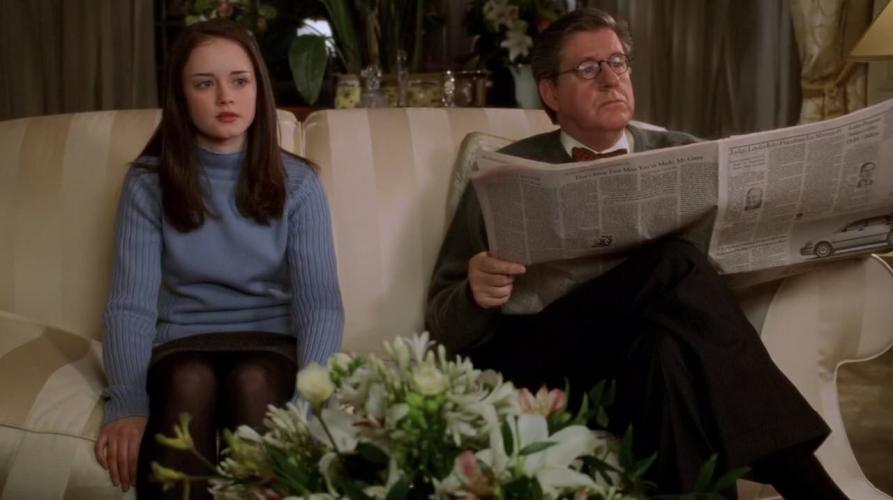
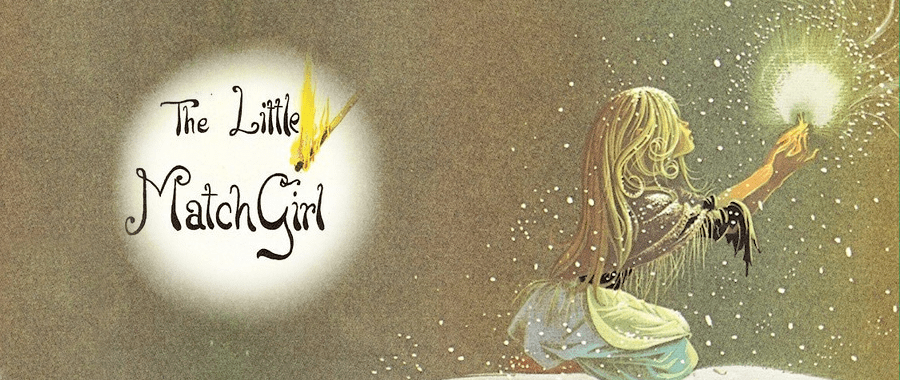
RORY: So, do we go in [to her grandparents’ house] or do we just stand here re-enacting The Little Match Girl?

The Little Match Girl is a short story by Danish writer Hans Christian Anderson, first published in 1845, and frequently included in books of Anderson’s fairy tales. The story is about a poor young girl, a seller of match sticks, freezing in the street on New Year’s Eve. As she huddles against the wall of a house, she sees visions of food, warmth and joy in the the flames of the matches she lights for comfort.

Like the little match girl, Rory has been excluded from the wealth and luxury that exists in the house she stands near. It is intriguing that the story’s ending involves a reunion with the little girl’s grandmother, who loved her deeply – a hint of the affection from the older generation that is awaiting Rory inside the house.

Mommie Dearest

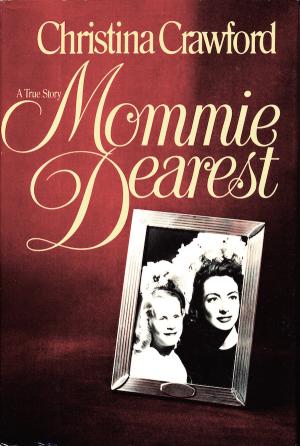
LORELAI: Aw, you’re not gonna give me the Mommie Dearest treatment forever, are ya?

Mommie Dearest is a best-selling 1978 memoir by Christina Crawford, the adopted daughter of Hollywood screen star Joan Crawford. In the book, Christina details the years of alleged physical and psychological abuse she received at the hands of her alcoholic and controlling mother Joan. When the book came out, even people who knew the Crawfords were divided on the accuracy of the book. Some friends of Joan said that Christina exaggerated details of her life, and Christina’s two younger sisters said her stories were untrue. On the other hand, other friends and colleagues of Joan’s said they witnessed many of the incidents in the book first-hand, Joan’s private secretary confirmed Christina’s stories of abuse, and Christina’s brother staunchly defended her. The book helped to raise awareness of child abuse.

The book was made into a film in 1981, directed by Frank Perry and with Faye Dunaway in the role of Joan Crawford. It was panned by critics, but a commercial success. Intended to be a serious biographical drama, Mommie Dearest became a cult classic due to its unintentional campy humour and over the top acting. It seems like the kind of film Lorelai and Rory would have loved to mock.

There are enough references to Rory writing a book about Lorelai one day during the show to suggest that it was a long-standing joke between them, perhaps initially triggered by either reading or watching Mommie Dearest.

“We never fight”

Lorelai

SOOKIE: It was a fight. Mothers and daughters fight.
LORELAI: No, we don’t fight. We never fight.

During the course of the show, Lorelai and Rory had their fair share of fights and arguments, during which the normally meek Rory could be shockingly rude and hurtful to her mother. If Lorelai is to be believed, they never had a single fight until Rory was a few weeks shy of her sixteenth birthday, which would mean that they lived in harmony until Rory began gaining some independence for herself. It’s telling that Rory forming an identity for herself apart from Lorelai is the beginning of their various quarrels.

Of course, Lorelai may be just conveniently forgetting all the fights they had before this one.