Hearst Castle

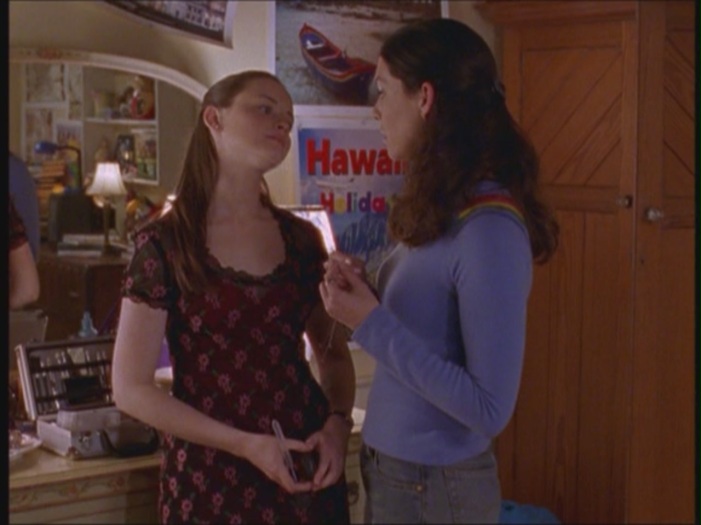
LANE: Is this what your grandparents house looks like?
RORY: No. I mean it’s big, but it’s not this Hearst Castle-ly.

Hearst Castle was built for newspaper magnate William Randolph Hearst on a family estate between 1919 and 1947. It is located near San Simeon, California, about halfway between Los Angeles and San Francisco, and is situated atop a hill, with dramatic views of the Pacific Ocean below.

Hearst Castle was designed by American architect Julia Morgan; it was originally meant to be a modest yet comfortable bungalow, but ended up a grand 56 bedroom, 61 bathroom, 19 sitting room mansion in an eclectic collection of styles that was based on the historical architecture of Europe. On 127 acres of garden, it had both indoor and outdoor swimming pools, tennis courts, a movie theatre, an airfield, and the world’s largest private zoo.

During the 1920s and ’30s, it was often visited by the political and Hollywood elite, including Calvin Coolidge, Franklin Roosevelt, Winston Churchill, Charles Lindbergh, Charlie Chaplin, The Marx Brothers, Cary Grant, Greta Garbo, Joan Crawford, Clark Gable, James Stewart, and Bob Hope. Hearst Castle was the inspiration for Xanadu, the mansion in the film Citizen Kane, although not filmed there.

Hearst died in 1951, and in 1954 Hearst Castle became a State park in 1954, being opened to the public in 1958. Since then it has operated as a public momument, and attracts millions of visitors every year. The Hearst family continue to use the original Victorian-era house on the estate as a private retreat.

The interior scenes of the party at Madeline’s house were filmed at the Greystone Mansion in Beverley Hills – the same building which is used for exterior shots of Chilton Academy. It’s nowhere near as big as Hearst Castle.

Where It’s At

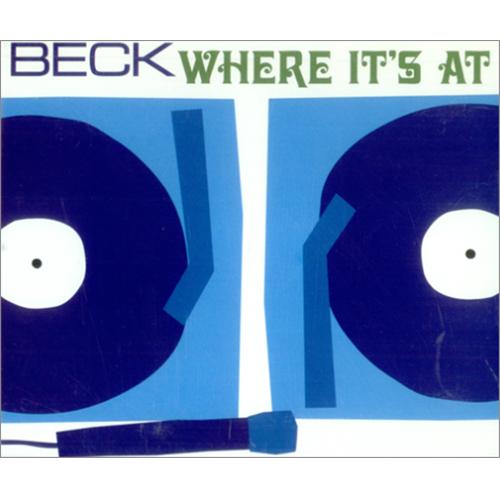
This song by Beck is playing in the background when Rory and Lane arrive at Madeline’s party and continues throughout the introductions to Madeline and Louise.

Where It’s At is from Beck’s acclaimed 1996 album Odelay, although he performed the song in concert earlier, including at Lollapalooza in 1995. The song went to #61 in the charts and #5 in the alternative music charts, earning Beck a Grammy Award for Best Male Rock Vocal Performance, while the music video won Best Male Video at the MTV Awards. The song uses samples from various sources, including one from a sex education album for teenagers – rather apt for Louise and Madeline’s later actions.

The cool alternative music at the party suggests they hired the same (rather implausible) DJ from the Chilton Winter Formal.

Creuset

SOOKIE (to Lorelai): Could you peek inside the kitchen for me and tell me if the orange Creuset is on the left burner?

Le Creuset is a French company which makes colourfully-enamelled cast iron premium cookware such as saucepans, casseroles and large covered pots. They began manufacturing in 1925, and their signature colour is orange, just like Sookie’s piece. This seems to be the pan that she wants used to sweat the onions.

“Sweat the onions”

SOOKIE: I’m just – do you hear something?
LORELAI: Like what?
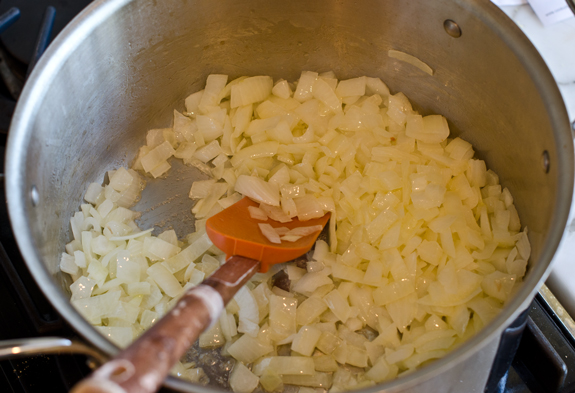
SOOKIE: Like someone using the wrong size pan to sweat the onions in.

In culinary terms, “sweating” means to cook something over a low heat in a small amount of fat or oil, usually in a covered pan or pot. It’s usually done with vegetables such as onions, carrots, and celery, and the idea is to soften them without browning before you add other ingredients. Sweating concentrates the flavour and releases sweetness, with the vegetables becoming tender, and onions in particular, translucent.

“The wrong sized pan” for sweating onions is probably one which is too small and would heat up too quickly.

Mad Money

LORELAI: Here is the phone and some mad money. If for any reason you think you’re not going to be home by twelve, you call me.

“Mad money” is an informal expression meaning a small amount of money to be used as an emergency fund. It is especially applied to girls and women who are out on a date or a night out, and may need extra money for a taxi home in case they have an argument with or become separated from their companion/s. The expression dates to around 1920, and the origin of it has not been made clear to me; I presume “mad” in case you and your date get mad (angry) at each other.

As Rory will be driving herself (at last by now she really does have her driver’s licence), Lorelai probably intends the money to be used for car fuel, or a taxi if the car breaks down.