Who’s the Boss?

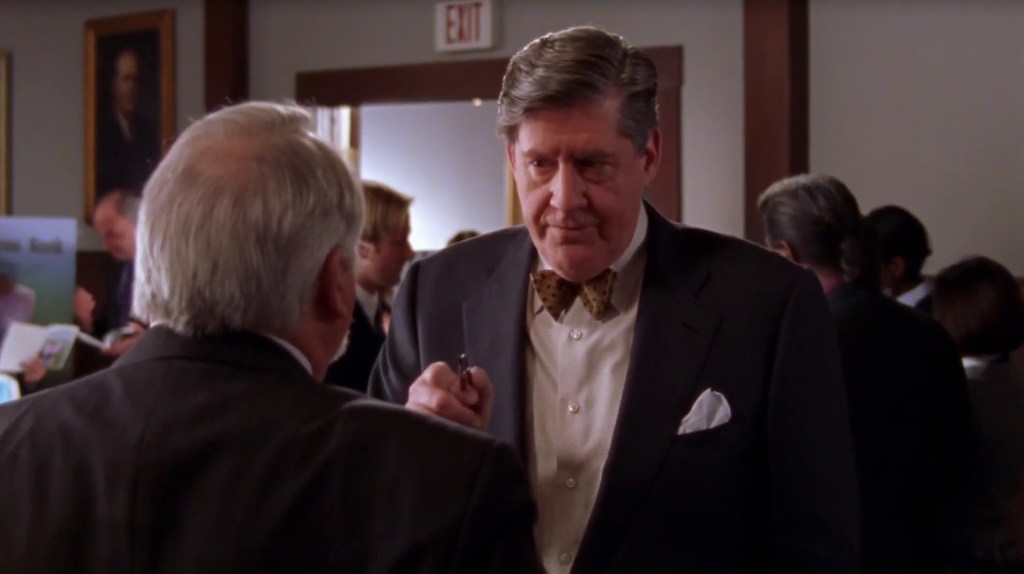
RICHARD: I think thirty five years of experience will qualify me to teach a course or two at that local business college of yours.

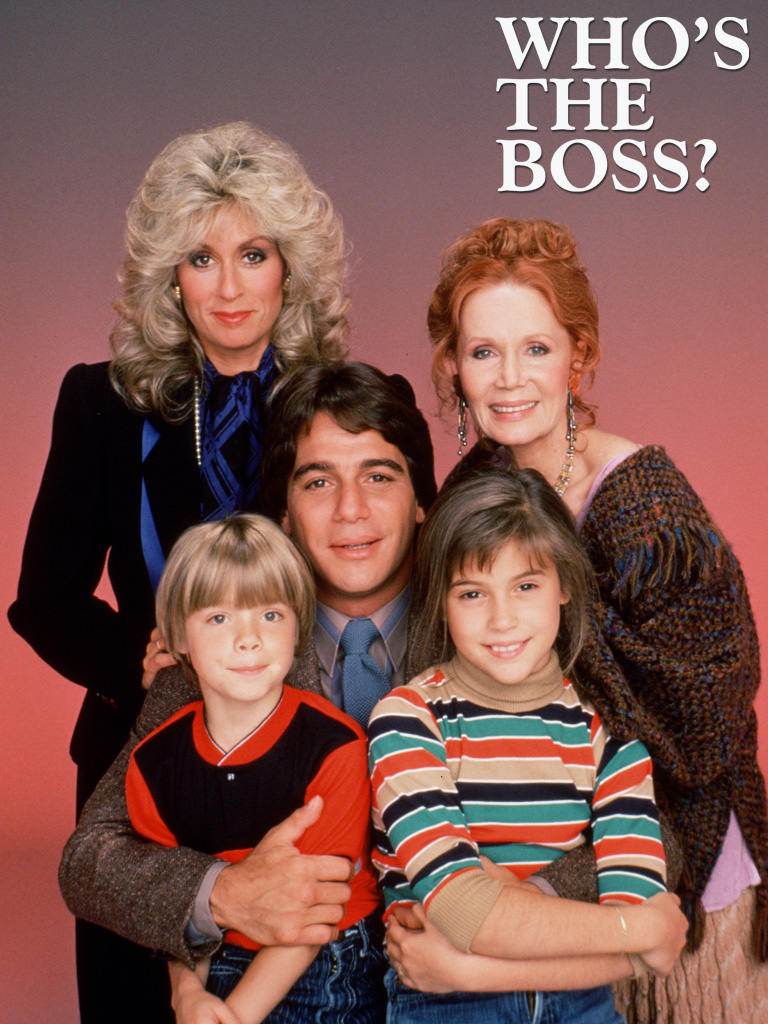
LORELAI: Oh my God. It’s Who’s the Boss?, the later years.

Who’s the Boss?, an award-winning sitcom which aired from 1984 to 1992. The series starred Tony Danza as Tony Micelli, a former baseball player who relocates to Fairfield, Connecticut to work as a live-in housekeeper to divorced advertising executive Angela Bower, played by Judith Light, and her son Jonathan, played by Danny Pintauro.

Tony had a daughter named Samantha, played by Alyssa Milano, and in Season 4, Tony goes back to school, enrolling at the same college his daughter would subsequently attend. By the later seasons, they are studying at the same institution.

Although it received lukewarm reviews, Who’s the Boss? was one of the most popular sitcoms of the mid-to-late 1980s, consistently rating in the top 10. It is still in syndication worldwide.
“This whole week”

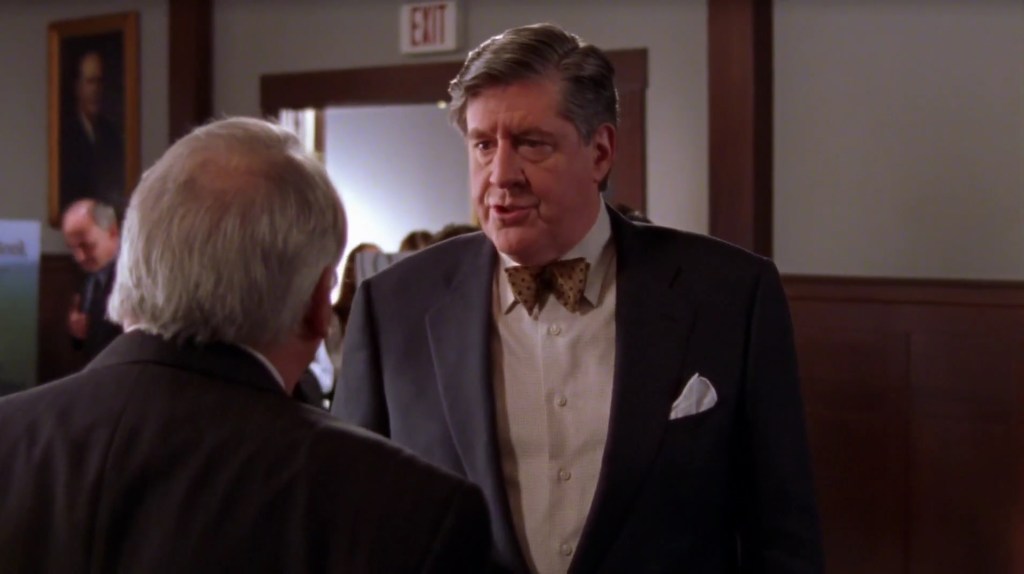
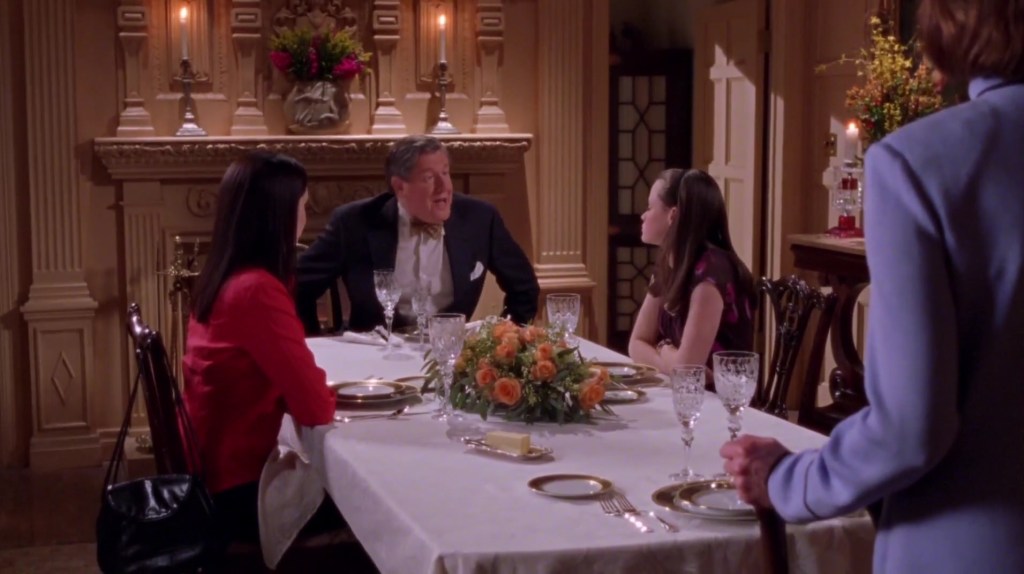
RICHARD: This whole week, this whole experience with Rory and the locker first aid kit – that is a damn good idea, by the way, no matter what those yarnheads at that school of yours say. Anyway, this whole week made me realize something – I don’t want to be retired.

When they were first discussing the Business Fair, Rory said they had three weeks to prepare for it. Yet Richard, who helped them develop and market a product right from the beginning, says that he worked with them for a week.

Richard retired in December and finished at work in January, being restless and miserable ever since. Now in April, he decides that he’s had enough of retirement and wants to return to working life in some capacity. After a winter of discontent, Richard is ready to emerge in the spring to begin life anew.

“Nothing but politics and religion”

RORY: Please help me out tonight – no mention of work or Chilton or school or retirement.

LORELAI: Nothing but politics and religion, got it.

A joking reference to the old saying never to discuss politics or religion in company, as these topics can lead to some heated arguments. Lorelai means that these supposedly contentious subjects are far preferable to discussing work, school, or retirement with Richard.

“It’s for the children”

RICHARD: This has nothing to do with me, it’s for the children!

CHARLESTON: But they’re not the ones who are causing the public scene right now, you are.

Yet another public meltdown by a disappointed Gilmore when they don’t get their own way. Richard has been stressed and unhappy for at least the past seven months, and Rory’s group not winning the Business Fair after all their hard work is the final straw.

“Spiking the ball and doing a backflip”

RICHARD: So how are we doing?

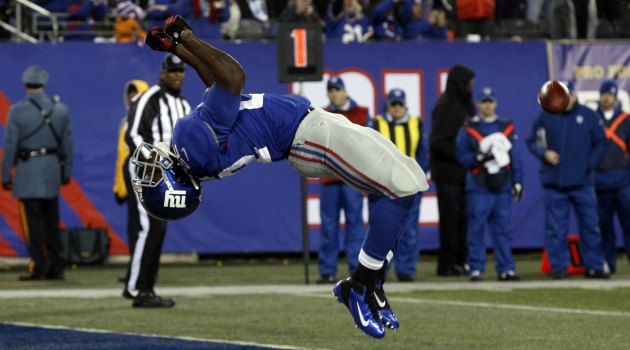
RORY: Paris is practically spiking the football then doing a backflip.

Another sporting metaphor. In American football, it is common to perform a celebration after making a touchdown, such as “spiking the ball” – throwing the ball at the ground. The manoeuvre is credited to Homer Jones of the New York Giants in 1965.

Doing a backflip as a celebration after a touchdown is another possibility. The NFL has at various times been strict and then more relaxed about these celebrations.

Buster Keaton

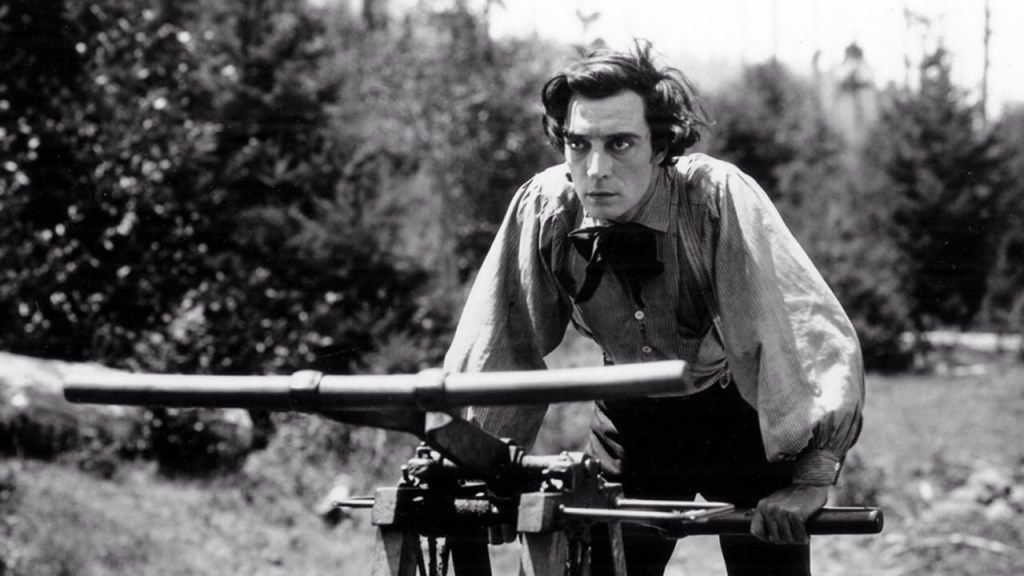
PARIS: Did you see the brilliant hose hook idea over at table five? A hook on your belt for your garden hose. There’s a Buster Keaton routine waiting to happen.

Joseph “Buster” Keaton (1895-1966), actor, comedian, and filmmaker. He is best known for his silent films of the 1920s, in which his trademark was performing comedy stunts with a stoic, deadpan expression – his stunts were so physical he once broke his neck without noticing. The General (1926) is regarded as his masterpiece [pictured]. Keaton received an Academy Honorary Award in 1959.

“Time-out”

PARIS: We are going to win.

RICHARD: Yes, we are.

RORY: Okay, the two of you need to take a time-out.

In sport, a time-out is a halt in play which stops the game clock and allows the coach to communicate with the team. In American football, asking for time-outs is a major part of strategy, extending the time a team has to score. Rory is saying that Richard and Paris need to take a break from their overconfidence.

[Picture shows the signal players give when calling for a time-out]