“You take them”

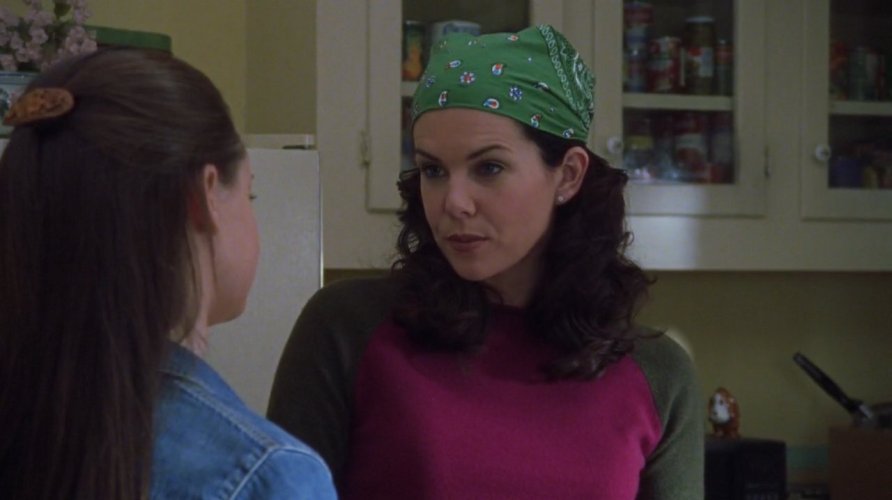
Seeing that Rory seems to be getting on fairly well with Paris, Madeline, and Louise, Lorelai offers to give the four girls her concert tickets, and she and Sookie will buy cheap tickets when they get there. It’s a generous offer from Lorelai, considering that she is a huge fan of The Bangles and Sookie has obtained excellent seats for them.

Some fans get upset that Lorelai gives away the concert tickets to virtual strangers without consulting Sookie (who earned them), but Sookie only got the tickets for Lorelai, and had given them to her – they were Lorelai’s tickets to do with as she wished. It would have been polite to ask Sookie first, but Lorelai is impulsive by nature, and Sookie never seems upset about the ticket situation.

It seems silly to give the tickets away because we know Madeline and Louise skip out on the concert, but Lorelai doesn’t know that’s what’s going to happen. In hindsight, it would have made more sense to just take Paris with them, but at the time, Rory thought that there was more friendship potential with Madeline and Louise.
“Pig’s blood”

LORELAI: Well, I think you’re actually making some friends here.
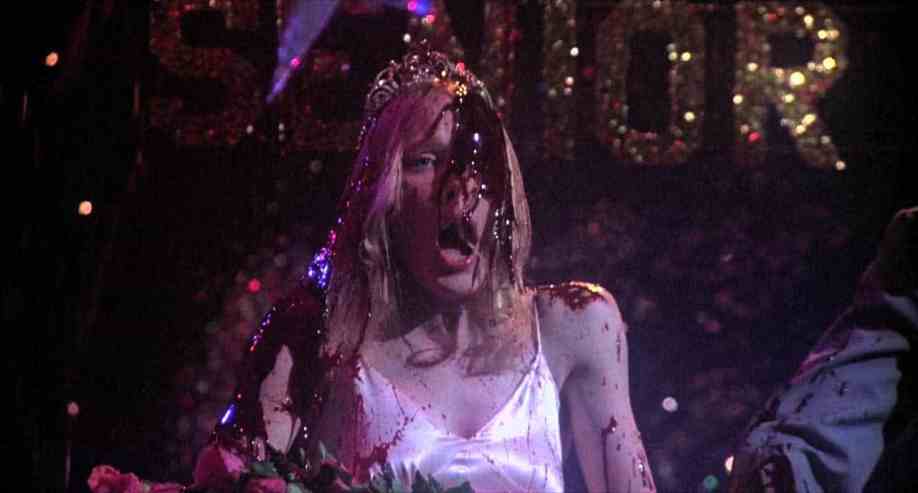
RORY: Let’s not get ahead of ourselves. They’ve basically just moved off the plan to dump the pig’s blood on me at the prom, that’s all.

Rory is referencing the 1976 horror film Carrie, based on the novel of the same name by Stephen King – his first novel to be adapted to film. It was directed by Brian De Palma, and starred Sissy Spacek in the title role. The film is about a shy, unpopular sixteen-year-old girl named Carrie who is regularly bullied at school.

When Carrie is persuaded to attend the school prom, some bullies rig the election so she is crowned Prom Queen, then dump a bucket of pig’s blood on her when she comes on stage to accept her crown. As Carrie has telekinetic powers, mayhem ensues as she takes her vengeance against everyone who witnessed her humiliation.

“Big sister”

LOUISE: I find your mother completely fascinating.
RORY: Funny – so does she.
LOUISE: It’s almost more like having a big sister.

Amy Sherman-Palladino reportedly wrote Lorelai and Rory to have a relationship that was more sisterly than like mother-and-daughter. Sherman-Palladino had a sister who died very young, and her imaginings of what their relationship might have been like (best friends who looked alike) was part of the basis for that between Lorelai and Rory. She also thought that if she ever had a child, she would want to be more like a friend than a parent, so that was another imagining which went into the relationship between Lorelai and Rory.

“I can’t eat dairy”

PARIS: I can’t eat dairy.
LORELAI: Okay, one [pizza] with cheese, one without. Cokes?

Paris later becomes quite an admirer of Lorelai, and I think this might have been the very beginning of it: her breezy acceptance of Paris’ dietary needs, and immediate problem solving. Lorelai works in the hospitality industry and is used to difficult customers, so she can easily handle Paris. That in itself is probably a refreshing change for Paris, and gets their relationship off to a good start.

Paul Bunyan

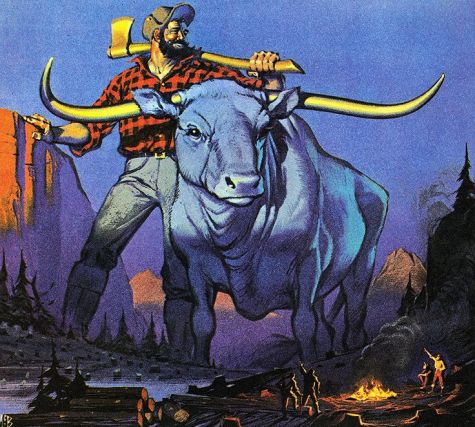
LOUISE: [referring to Dean] So how good of a kisser is Paul Bunyan anyway?

Paul Bunyan is a giant lumberjack from American folklore, apparently originating in the oral tradition of 19th century North American loggers, but spread via advertising campaigns for the logging industry in the 20th century. Tremendously strong and skilful, Bunyan is often depicted with Babe the Blue Ox as his companion. Paul Bunyan stories became very popular in children’s literature and entertainment.

Louise is making a comment on Dean’s height, but as Paul Bunyan is meant to be from New England and often associated with the Midwest, he is like Dean in having connections to both these regions.

“How long has it been?”

LOUISE: How long has it been [that Rory and Dean have been together]?
RORY: … About a month.
LOUISE: Oh, lifers.

It’s quite clearly been more than “about a month” since Rory and Dean got together. It’s been more than two months since they went to the school dance together, so Madeline and Louise must know it’s more than a month.

By Louise describing a couple in a one-month relationship as “lifers”, we can tell she’s never been in a relationship for more than a few weeks at most, and that she views (or affects to view) a long-term relationship in terms of a prison sentence.

Joanie Loves Chachi

LOUISE: So how’s that going? Are you two [Rory and Dean] still Joanie Loves Chachi?
RORY: God, I hope not.

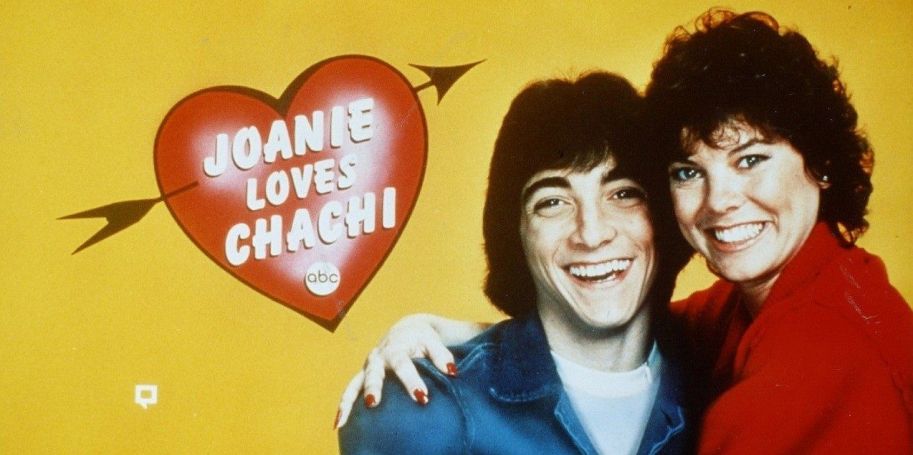
Joanie Loves Chachi was a sit-com which ran from 1982-1983. A spin-off from Happy Days, it starred Erin Moran as Joanie Cunningham (Richie Cunningham’s sister), and Scott Baio as her boyfriend Chachi Arcola (The Fonz’s cousin), with the pair becoming singer-songwriters in Chicago. The show quickly tanked as it turned out people weren’t watching Happy Days so they could see these two lovebirds warble at each other.

Rory’s disgusted response seems to indicate that she knows the show was a disaster and doesn’t want her relationship compared to it. The show ended before Rory and Louise were born, and was never popular, but reruns were shown on Nick at Nite (apparently all teenagers on Gilmore Girls watched Nick at Nite so they could keep up with 1980s cultural references).

Pucci

MADELINE: There’s this great store under my therapist’s office who has the best vintage clothes. I found an original Pucci top for practically nothing.
LOUISE: Oh Pucci is very big right now.

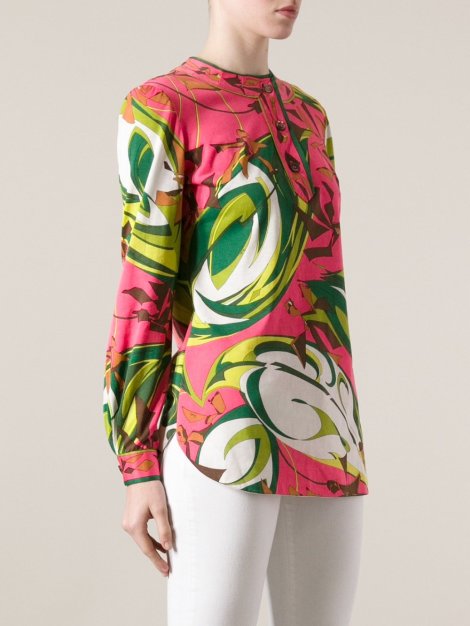
Pucci is an Italian fashion brand originally founded by Emilio Pucci (1914-1992). Pucci clothing is synonymous with stretch-knit clothing in bright, geometric designs, and when Madeline says she found an original Pucci top in a vintage store, she means one that would have been designed by Emilio Pucci himself.

There are quite a number of vintage clothing stores in Hartford where Madeline might have found the top, but it seems unlikely they would sell an original Pucci top for “practically nothing” (the one in the picture costs nearly $200 today). She got very lucky that day.

We also discover from Madeline’s casual statement that she regularly sees a therapist. This might come as a surprise, as Madeline seems to be very cheerful and unconflicted by nature, but perhaps that’s because of all the therapy?

House of Horrors

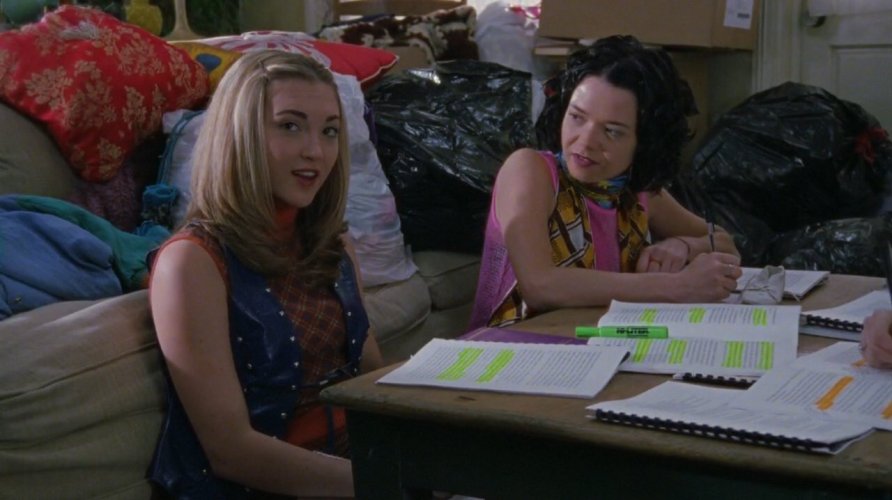
LORELAI: Okay, so, um sorry about the house of horrors here. Some crazy lady volunteered to lead this charity thing and we’re trying to get her some help, so make yourselves comfortable.

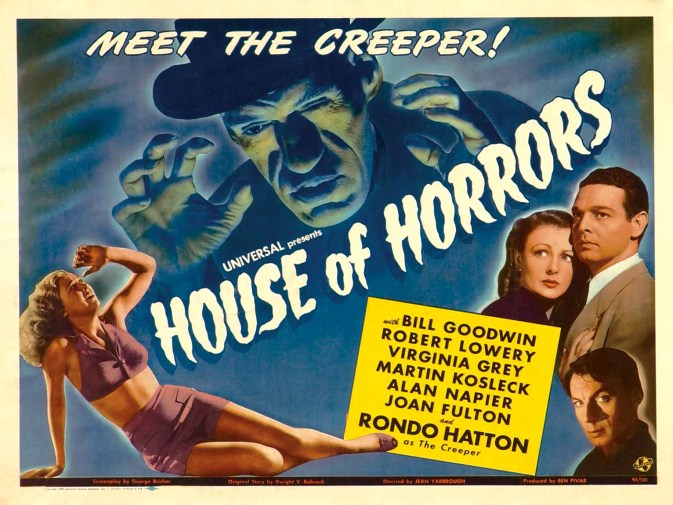
House of Horrors is 1946 horror film directed by Jean Yarbrough, and starring horror icon Rondo Hatton as a disfigured madman known as “The Creeper”. He is persuaded by a sculptor (Martin Kosleck) to go on a murderous rampage as revenge against art critics who have panned his work. The film is regarded as a B-Grade horror classic.